

News

Miro: A New Standard in Responsible Innovation

Miro: A New Standard in Responsible Innovation The Miro monitor arm is setting new benchmarks in sustainability. It offers a high-performance solution without compromising on environmental responsibility. Designed with careful material selection, local sourcing, and longevity in mind, Miro’s responsible approach to design and unique manoeuvrability set it apart from the competition. Sustainable Choices Miro is crafted from energy-efficient materials with a lower carbon impact....

Read more
HSE Advisor

Role Purpose Support in the development, implementation and maintenance of the company’s Health, Safety & Environmental policies, processes, operational procedures, and standards.  Ensuring best practice and championing a continually improving HSE culture within the business. Key Responsibilities Liaise with and provide support to all areas of the business to eliminate, mitigate or reduce identified HSE exposures. Partner with the production management team and team leaders,...

Read more
CMD Ltd LAUNCHES 48-HOUR TURNAROUND ON BETATRAK® RAPID ORDERING SERVICE

CMD Ltd, the specialist in power distribution systems, workstation power and monitor arms, has launched a rapid ordering service for its Betatrak® underfloor powertrack distribution systems and accessories, with a commitment to delivering within 48-hours of an approved purchase order*. The service enables customers to order up to 50 lengths of Standard or Clean Earth (C/E) low noise Betatrak, along with up to 25 feed...

Read more

CMD INVESTS £1/4 MILLION IN NEW MACHINE AS PART OF FACTORY UPGRADE

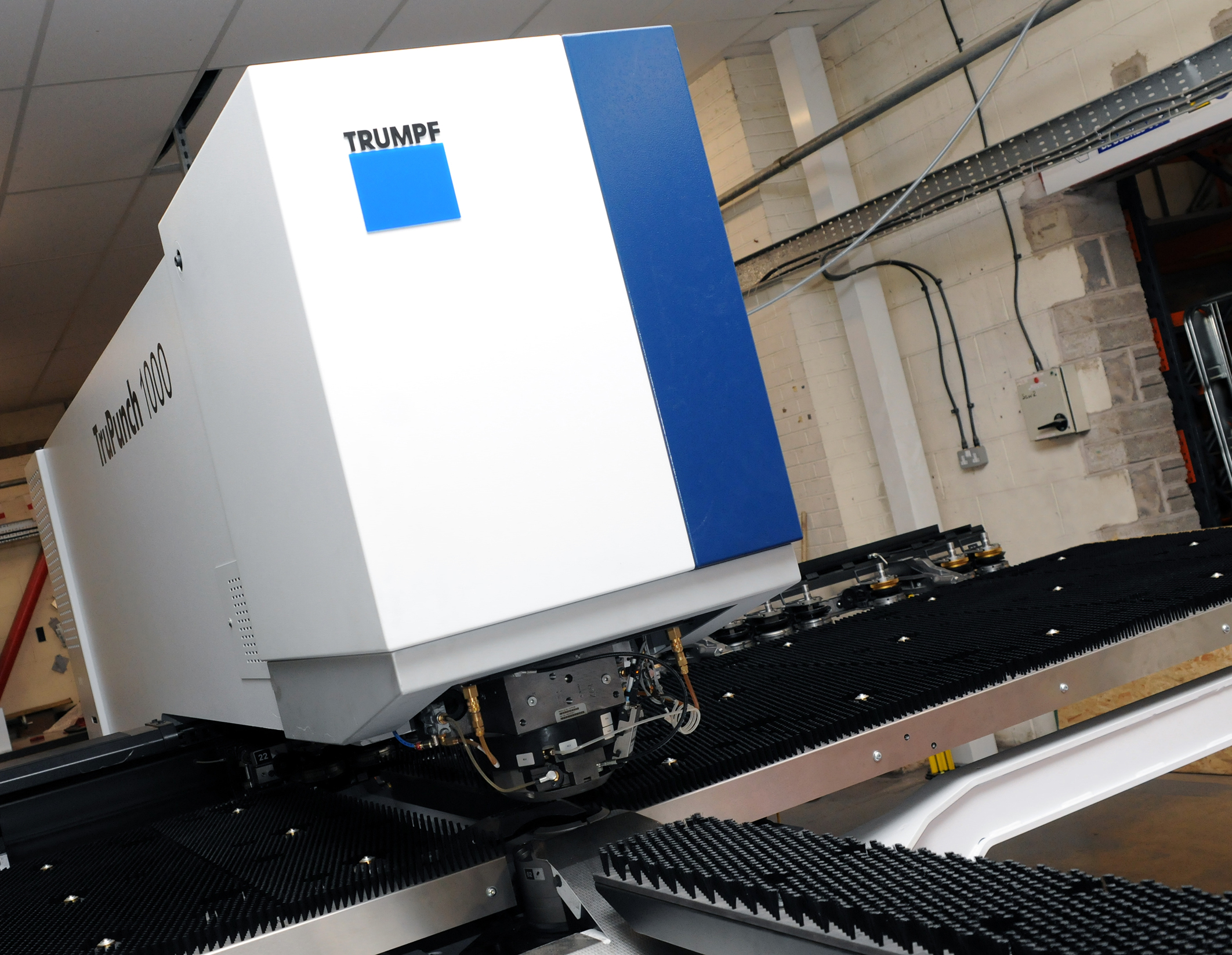
We have invested in a new £1/4m TRUMPF CNC metal punch as part of an asset renewal strategy for our UK manufacturing capability. The new machine will be used in the production of a wide variety of our power distribution systems and workstation power products at our Rotherham factory. Suitable for handling sheet metal between 0.9mm and 3.0mm thick, the new machine will replace one...

Read more
CMD CATALOGUE PROVIDES TECHNICAL POWER DISTRIBUTION GUIDE

CMD Ltd has released a new catalogue, providing an easy to follow technical guide to our power distribution systems and plug and play desk modules. Detailing CMD’s full range of UK-manufactured power distribution systems and plug and play desk modules, the catalogue will be a helpful source of information to M&E engineers and contractors alike to understand how our power distribution systems connect together and...

Read more

Power Distribution Catalogue
CMD Ltd PLAYS ESSENTIAL ROLE IN ELECTRICAL FIT OUT AT LONDON’S PRESTIGIOUS OFFICE DEVELOPMENT

CMD Ltd, specialist in workplace connectivity and ergonomic solutions, has provided a flexible and high-quality power distribution network for The Ray, a prestigious office development in London’s Farringdon. Well-known for being the former site of The Guardian newspaper, The Ray now stands as an 83,000ft² office development characterised by a modernised warehouse aesthetic, with level two now occupied by a global social media company. The...

Read more

The Ray
CMD plugs in to european opportunity with Schuko Capsule unit launch

CMD Ltd, the specialist in power and connectivity solutions for commercial environments, has launched a Schuko version of its popular fixed format Capsule workstation power module for export to mainland Europe and beyond. A popular on desk power module comprising two sockets and dual USB (type A and C) chargers, CMD’s Capsule unit is already widely specified in the UK as an off-the-shelf workstation power...

Read more

CMD White Schuko Capsule Desk Power Module
CMD LTD EXTENDS MONITOR ARM RANGE WITH THE LAUNCH OF REACH PLUS

CMD Ltd, the specialist in ergonomic and connectivity solutions for commercial interiors, has completed its Reach monitor arm range with the launch of the Reach Plus. Available in single or dual screen options, the Reach Plus has been designed to provide an ideal solution for both single and dual screen workstation configurations, or can be used with next generation of large format curved screens. Suitable...

Read more

CMD Ltd DEMONSTRATES THE ART OF POWER DISTRIBUTION AT THE UNIVERSITY OF WARWICK

CMD Ltd, the specialist in workplace connectivity and ergonomic solutions, has provided Betatrak busbar power distribution and a range of electrical accessories for two major capital investment projects at the University of Warwick. Designed by Fielden Clegg Bradley Studios, the £33 million Faculty of Arts building is a showpiece development comprising four interconnected structures set around a central atrium, which will enable inter-disciplinary collaboration across...

Read more

University of Warwick
CMD BRINGS HARMONY TO COVENTRY UNIVERSITY RESEARCH FACILITIES

CMD Ltd, the specialist in power distribution solutions and workstation power and ergonomics, has provided under desk and on desk power modules for the refurbishment of three Coventry University research buildings. Located on Coventry University Technology Park, a business park designed to encourage collaboration between the university and knowledge-based businesses, the three buildings are being repurposed as office accommodation for university research teams. The refurbishment...

Read more

Coventry University

How to Choose the Right Smart Track for Global Sourcing?

Choosing the right Smart Track for global sourcing requires more than comparing dashboards or monthly fees. It demands a clear understanding of your suppliers, shipping routes, product risks, and reporting needs. A suitable system should connect purchasing data with shipment milestones, supplier updates, inventory records, and delivery evidence. It should also provide understandable alerts when a container misses a port deadline or a factory changes its production schedule.

Practical sourcing teams should test Smart Track solutions with real scenarios. For example, they can track a sample order from a certified supplier in Vietnam to a warehouse in Germany. The evaluation should examine data accuracy, update frequency, user permissions, integration quality, and customer support. Reliable providers should explain their data sources and security controls clearly. They should also demonstrate how their platform handles missing updates, delayed documents, and inconsistent supplier information. Experience matters here. A polished trial account may not reflect daily operating conditions.

No system is perfect. That matters.

Global sourcing involves different time zones, languages, regulations, transport partners, and technology standards. Therefore, buyers should avoid choosing software based only on attractive visuals or ambitious promises. Independent reviews, documented service terms, and references from comparable businesses can support better decisions. Teams should also confirm whether the platform supports responsible sourcing policies and lawful trade practices. The strongest Smart Track is not necessarily the most complex option. It is the one that improves visibility, supports informed decisions, protects business data, and remains practical as the supply network grows. A careful review may reveal limitations early, which is preferable to discovering them after a critical shipment fails.

How to Choose the Right Smart Track for Global Sourcing?

Defining Smart Track in Global Sourcing

How to Choose the Right Smart Track for Global Sourcing?

Defining Smart Track in Global Sourcing

Smart Track is more than shipment visibility or delivery updates. In global sourcing, it means creating a traceable process from supplier selection to final receipt. It connects supplier data, purchase orders, inspections, logistics milestones, and payment records. The aim is simple: make each decision easier to verify. Good tracking is visible.

A reliable system begins with clear information. Each order should show the approved specification, production status, inspection result, and expected dispatch date. Teams can compare these details with supplier declarations and shipping documents. When a supplier changes materials or misses a milestone, the record should show when and why. This evidence supports quality control, lawful sourcing, and responsible risk assessment. Yet the process is rarely flawless. A missing update can create false confidence.

Experienced sourcing teams also check the quality of the tracking method itself. They verify data with production photographs, inspection reports, and direct supplier conversations. A practical review asks: Can the data be independently checked? Are records protected from casual changes? Does the system identify delays before goods reach the port? If not, the track may be smart in appearance only. Smart sourcing also requires human judgment, especially when information conflicts. A dashboard may show progress, while a factory visit reveals limited capacity. That uncomfortable gap deserves attention. The best definition of Smart Track is a transparent, evidence-based process that helps teams act early and responsibly.

Identifying Your Sourcing Goals and Operational Requirements

Choosing the right smart track for global sourcing begins with clear sourcing goals. Decide whether you need lower costs, faster supplier responses, better quality control, or stronger delivery visibility. A system cannot solve an unclear process. Be specific.

For example, a sourcing team may need to compare quotes from five suppliers, monitor sample approvals, and track shipment milestones across three time zones. The smart track should record these details in one reliable workspace. Look for functions that support supplier qualification, purchase order updates, document control, and exception alerts. It should also preserve an audit trail for quotations, inspections, and approvals. This evidence helps teams review decisions instead of relying on scattered messages. Small details matter.

Operational requirements deserve equal attention. Check whether the system connects with your inventory, finance, and communication tools. Confirm user permissions before sharing sensitive pricing or specifications. Test mobile access if staff inspect goods outside the office. During practical evaluations, ask how quickly the system handles delayed shipments, incomplete documents, or changing order quantities. I have seen teams choose impressive dashboards but ignore basic data accuracy. That mistake becomes expensive. A useful smart track should fit daily work, not create another reporting burden. Leave room for manual review, because automated alerts can miss context. A short pilot with real sourcing data often reveals more than a polished demonstration.

How to Choose the Right Smart Track for Global Sourcing?

Identifying sourcing goals and operational requirements helps teams prioritize the smart-track capabilities that matter most across international supply chains.

Priority score: 1 = low importance, 5 = critical requirement. Shipment visibility and geofencing are prioritized for high-value, multi-leg international shipments, while temperature monitoring becomes essential for temperature-sensitive goods.

Comparing Smart Track Features, Technologies, and Suppliers

How to Choose the Right Smart Track for Global Sourcing?

Comparing Smart Track Features, Technologies, and Suppliers

Global sourcing needs more than a flashing location pin. A smart track should match the shipment, route, and risk level. GNSS provides outdoor positioning, while LTE-M and NB-IoT support wide-area monitoring with lower power use. Bluetooth works well inside warehouses, but it needs nearby gateways. RFID is cost-efficient for fast inventory scans, yet it cannot provide continuous movement data. The Bluetooth Market Update 2024 projects 5.4 billion Bluetooth device shipments in 2024, showing the technology’s expanding ecosystem. Still, adoption does not guarantee supply-chain suitability.

Look closely at battery life, temperature sensing, tamper alerts, geofencing, and API access. GSMA Intelligence reported 4.6 billion mobile internet users in 2023, but rural coverage and roaming quality remain uneven. Ask suppliers for regional coverage maps and proof from real shipping lanes. Security also matters. Require encrypted transmission, role-based access, update policies, and clear data-retention terms. The World Economic Forum’s Global Cybersecurity Outlook 2024 found that 90% of surveyed cyber leaders considered resilience urgent, supporting stronger device governance. Compare total cost, not only the tracker price. Include connectivity fees, gateway installation, replacements, calibration, and support. A pilot with mixed routes is sensible. One weakness remains: battery claims often assume ideal conditions. Your cartons may experience cold storage, metal containers, or delayed customs handling. Test those realities before scaling.

Evaluating Costs, Risks, Compliance, and Scalability

How to Choose the Right Smart Track for Global Sourcing?

A smart track should reveal the full landed cost, not just the supplier’s quoted price. Include freight, duties, inspection fees, currency changes, storage, and correction costs. Ask for itemized calculations. Hidden charges quickly weaken an attractive offer. A practical trial with three suppliers can expose inaccurate estimates before wider adoption. Measure tracking accuracy, response time, and manual work saved. Do not trust impressive dashboards alone.

Risk control needs more than shipment visibility. The system should record supplier checks, product documents, approval dates, and changes to purchase orders. It should also support lawful customs records, restricted-party screening, and regional data requirements. Clear access controls protect commercial information. In one common mistake, teams connect every supplier immediately. That creates noise. A smaller pilot is often safer and easier to audit.

Scalability matters when order volumes, currencies, warehouses, and suppliers increase. Check whether the platform handles different data formats without constant spreadsheet repair. Test alerts for delayed materials, missing certificates, and unusual price movements. Integration with inventory and finance systems can reduce duplicate entries. Still, automation is not perfect. Poor source data remains poor data. Require human review for high-value orders and unusual compliance findings. A useful evaluation includes exit terms, training needs, support response times, and the cost of changing systems later.

How to Choose the Right Smart Track for Global Sourcing? - Evaluating Costs, Risks, Compliance, and Scalability

Comparative benchmark for selecting a sourcing model by landed cost, supply continuity, regulatory workload, and growth potential.

Global sourcing track comparison
Sourcing track Typical supplier distance Typical replenishment lead time Indicative logistics cost as % of goods value Inventory coverage target Supply disruption exposure Compliance workload Scalability potential Best-fit use case
Domestic / near-market sourcing 0–1,000 km 1–14 days 3%–10% 1–3 weeks Low Low Medium Urgent replenishment, high service levels, short product life cycles
Regional sourcing hub 500–3,000 km 2–6 weeks 6%–15% 3–6 weeks Low–medium Medium High Stable regional demand with moderate cost and lead-time pressure
Single-country offshore sourcing 3,000–12,000 km 6–14 weeks 8%–20% 8–16 weeks Medium–high Medium–high High Cost-sensitive products with predictable demand and high order volumes
Dual-source offshore model Two or more regions 6–16 weeks 10%–24% 8–20 weeks Low–medium Medium–high Very high Critical components, volatile trade lanes, and business-continuity programs
Global multi-region network Multiple continents 8–20 weeks 12%–30% 12–24 weeks Low High Very high Large-scale portfolios requiring capacity flexibility and geographic diversification
Cost evaluation
Compare total landed cost, including product price, freight, insurance, duties, customs brokerage, quality costs, inventory carrying cost, and disruption-related expenses.
Risk evaluation
Assess supplier concentration, geopolitical exposure, transport-lane dependency, financial stability, capacity redundancy, quality variation, and recovery time.
Compliance evaluation
Review product safety, labor standards, environmental obligations, import controls, sanctions screening, data requirements, and traceability documentation.
Scalability evaluation
Verify available production capacity, tooling requirements, qualified alternate suppliers, logistics infrastructure, and the ability to replicate specifications across sites.
Data note: The figures are practical planning benchmarks based on common international procurement conditions. Actual results vary by product category, shipping mode, trade lane, order volume, customs requirements, seasonality, and supplier maturity. Logistics cost percentages exclude the purchase price and should be validated using current freight quotations and applicable duty schedules.

Selecting and Implementing the Right Smart Track Solution

How to Choose the Right Smart Track for Global Sourcing?

Selecting and Implementing the Right Smart Track Solution

A smart track solution should fit your sourcing process, not merely display moving dots. Check coverage across ports, warehouses, and inland routes before signing an agreement. In a pilot, place trackers on cartons, pallets, and high-value components. Compare location accuracy, battery life, update frequency, and alert speed. A five-minute delay can matter when a container misses a production window.

McKinsey reported that 93% of supply chain leaders invested in resilience after recent disruptions. Digital visibility supports that effort, but implementation often fails through weak data integration. Connect the solution with purchasing, warehouse, and transport systems. Define clear milestones, such as pickup, customs release, arrival, and delivery. Keep exception alerts practical. Nobody needs 300 notifications before breakfast.

Security and accountability also deserve attention. Review data ownership, access controls, retention periods, and regional privacy requirements. The MHI 2024 Annual Industry Report found that 88% of supply chain professionals expect digital supply chain technologies to become more common within five years. Adoption alone, however, does not prove value. Measure fewer manual check-ins, faster disruption response, lower detention costs, and improved delivery accuracy.

Start small.

A controlled lane pilot reveals uncomfortable truths. Some suppliers may scan late. Some locations may lack reliable connectivity. Treat these gaps as implementation evidence, not immediate failure. Refine operating procedures, train local teams, and document who responds when an alert appears. The best solution is the one people consistently use.

Article Source: