

News

Miro: A New Standard in Responsible Innovation

Miro: A New Standard in Responsible Innovation The Miro monitor arm is setting new benchmarks in sustainability. It offers a high-performance solution without compromising on environmental responsibility. Designed with careful material selection, local sourcing, and longevity in mind, Miro’s responsible approach to design and unique manoeuvrability set it apart from the competition. Sustainable Choices Miro is crafted from energy-efficient materials with a lower carbon impact....

Read more
HSE Advisor

Role Purpose Support in the development, implementation and maintenance of the company’s Health, Safety & Environmental policies, processes, operational procedures, and standards.  Ensuring best practice and championing a continually improving HSE culture within the business. Key Responsibilities Liaise with and provide support to all areas of the business to eliminate, mitigate or reduce identified HSE exposures. Partner with the production management team and team leaders,...

Read more
CMD Ltd LAUNCHES 48-HOUR TURNAROUND ON BETATRAK® RAPID ORDERING SERVICE

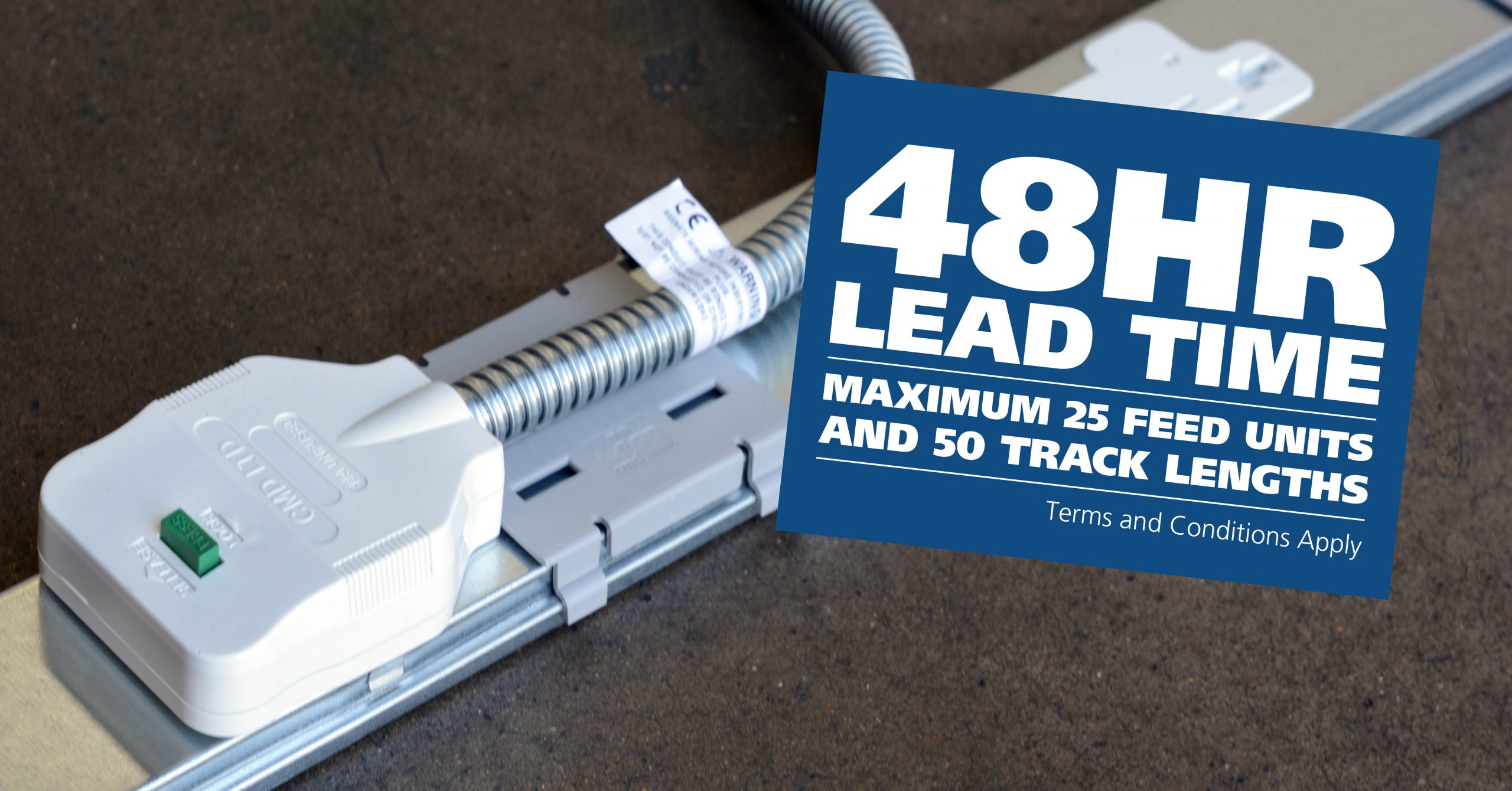
CMD Ltd, the specialist in power distribution systems, workstation power and monitor arms, has launched a rapid ordering service for its Betatrak® underfloor powertrack distribution systems and accessories, with a commitment to delivering within 48-hours of an approved purchase order*. The service enables customers to order up to 50 lengths of Standard or Clean Earth (C/E) low noise Betatrak, along with up to 25 feed...

Read more
CMD INVESTS £1/4 MILLION IN NEW MACHINE AS PART OF FACTORY UPGRADE

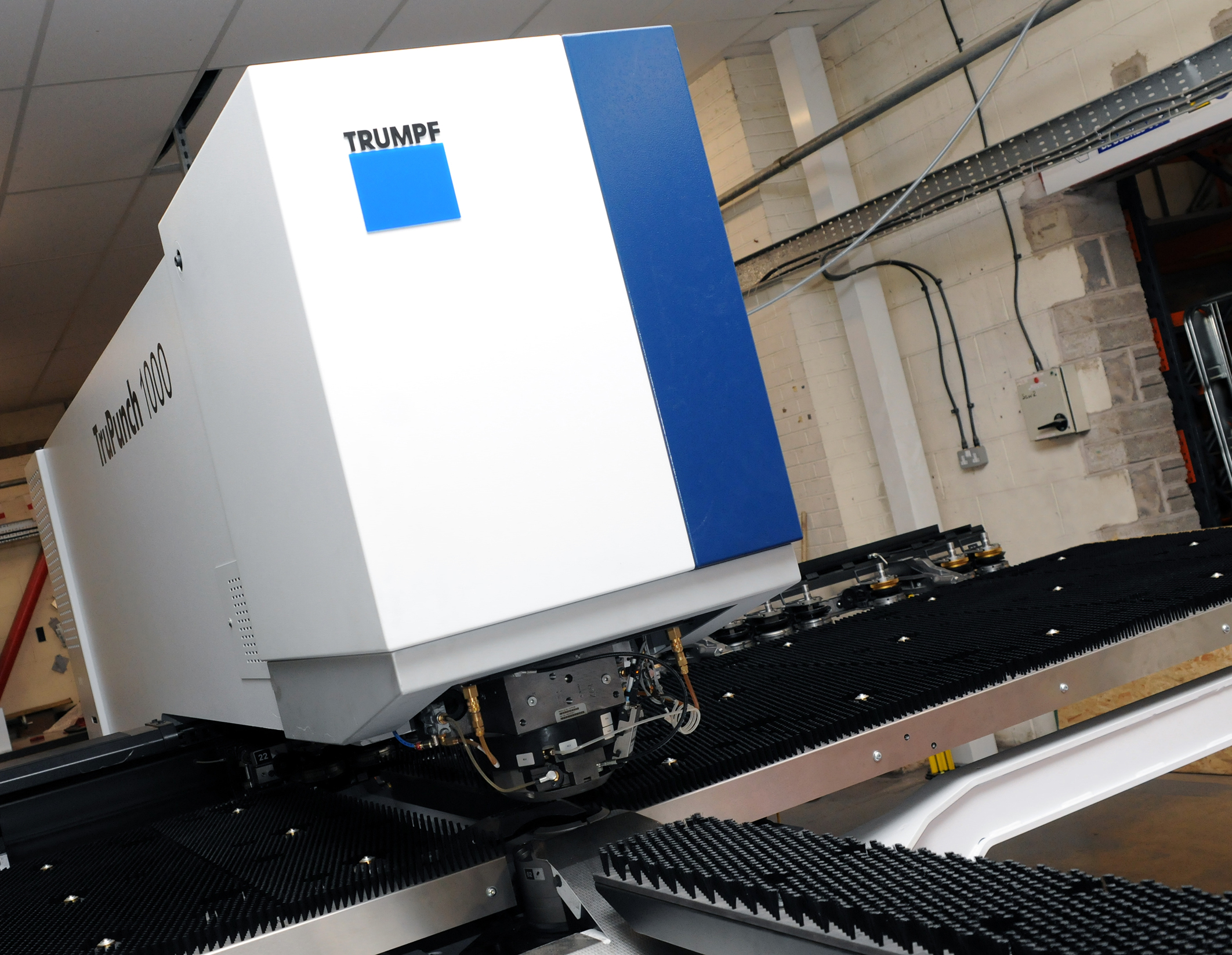
We have invested in a new £1/4m TRUMPF CNC metal punch as part of an asset renewal strategy for our UK manufacturing capability. The new machine will be used in the production of a wide variety of our power distribution systems and workstation power products at our Rotherham factory. Suitable for handling sheet metal between 0.9mm and 3.0mm thick, the new machine will replace one...

Read more
CMD CATALOGUE PROVIDES TECHNICAL POWER DISTRIBUTION GUIDE

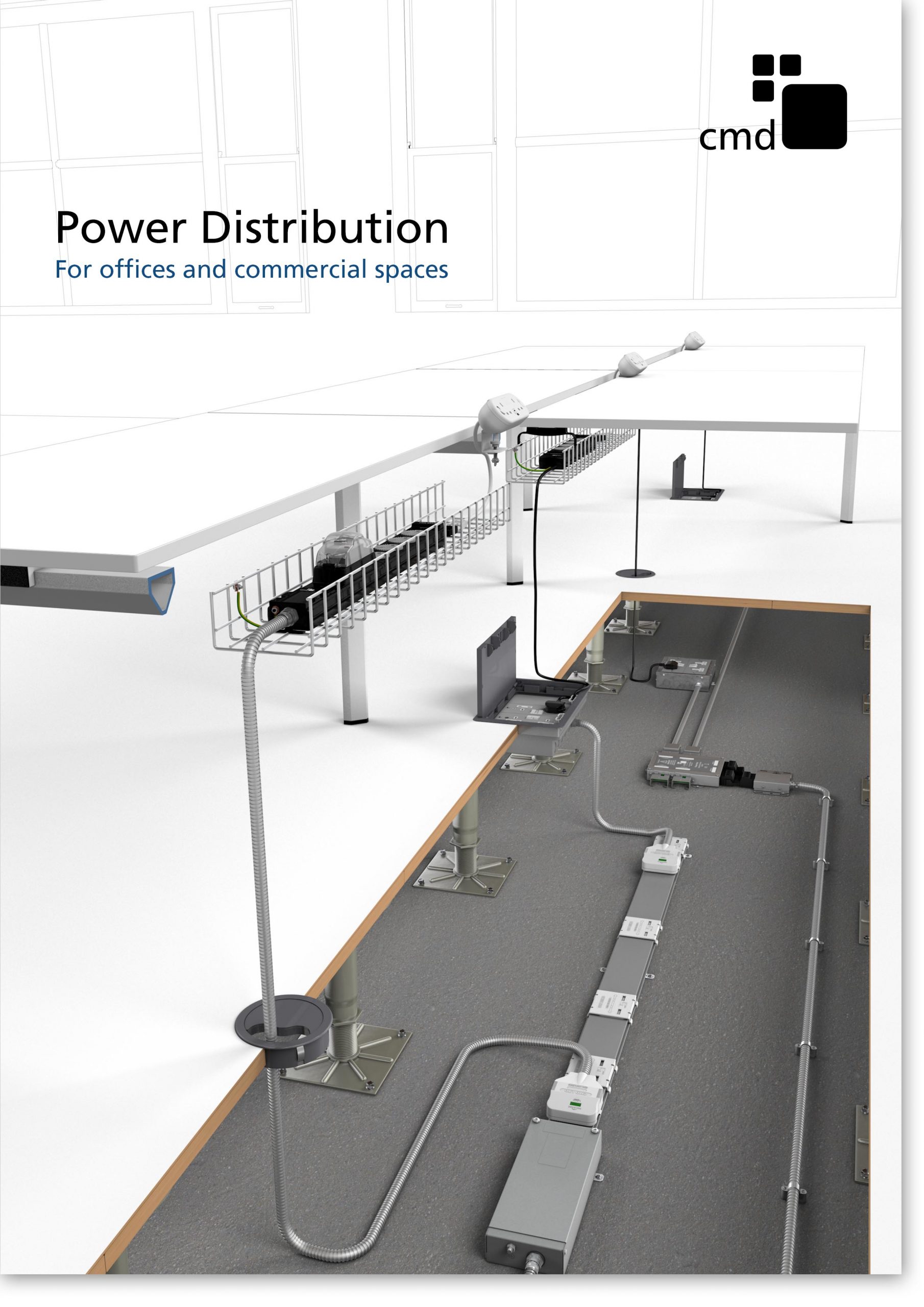
CMD Ltd has released a new catalogue, providing an easy to follow technical guide to our power distribution systems and plug and play desk modules. Detailing CMD’s full range of UK-manufactured power distribution systems and plug and play desk modules, the catalogue will be a helpful source of information to M&E engineers and contractors alike to understand how our power distribution systems connect together and...

Read more
Power Distribution Catalogue
CMD Ltd PLAYS ESSENTIAL ROLE IN ELECTRICAL FIT OUT AT LONDON’S PRESTIGIOUS OFFICE DEVELOPMENT

CMD Ltd, specialist in workplace connectivity and ergonomic solutions, has provided a flexible and high-quality power distribution network for The Ray, a prestigious office development in London’s Farringdon. Well-known for being the former site of The Guardian newspaper, The Ray now stands as an 83,000ft² office development characterised by a modernised warehouse aesthetic, with level two now occupied by a global social media company. The...

Read more

The Ray
CMD plugs in to european opportunity with Schuko Capsule unit launch

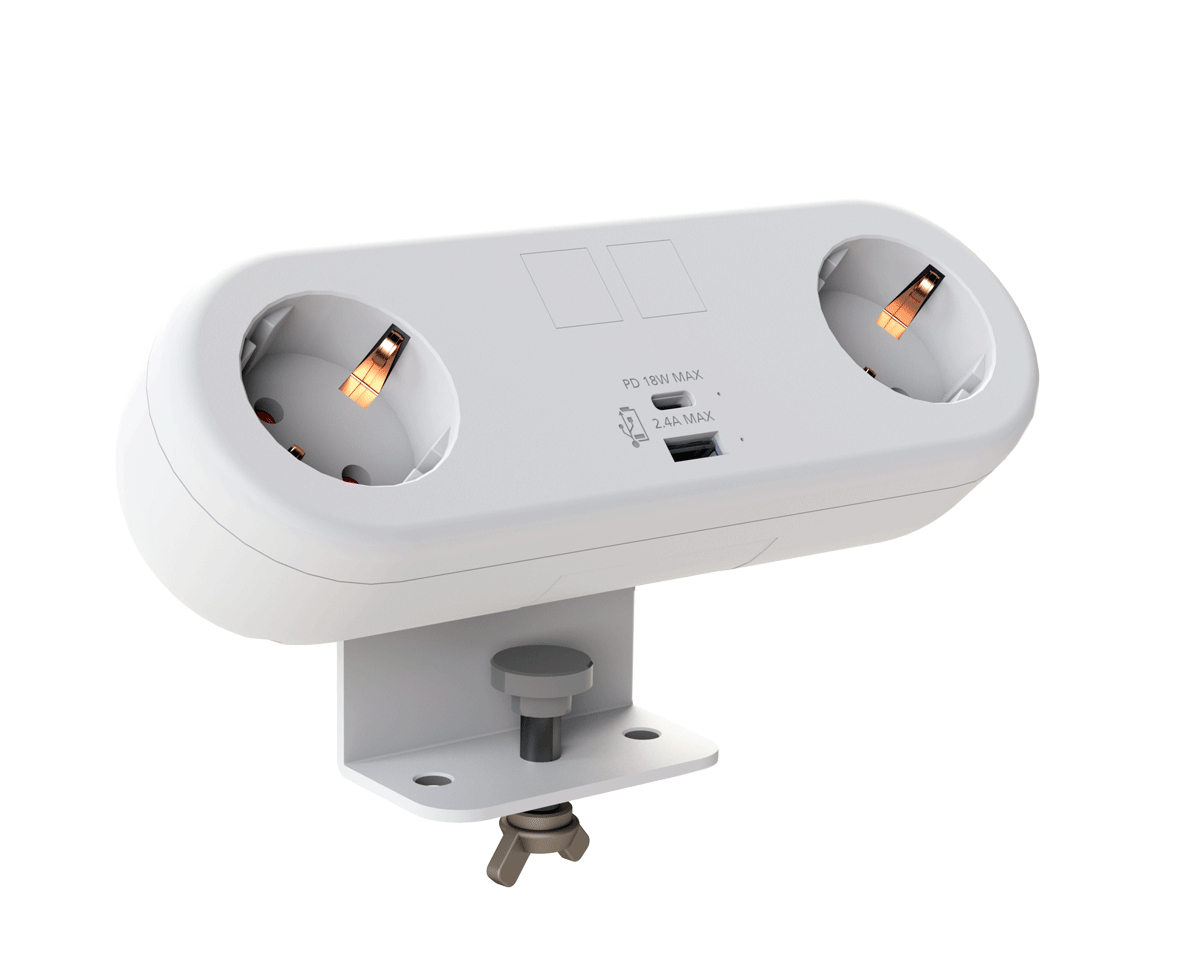
CMD Ltd, the specialist in power and connectivity solutions for commercial environments, has launched a Schuko version of its popular fixed format Capsule workstation power module for export to mainland Europe and beyond. A popular on desk power module comprising two sockets and dual USB (type A and C) chargers, CMD’s Capsule unit is already widely specified in the UK as an off-the-shelf workstation power...

Read more
CMD White Schuko Capsule Desk Power Module
CMD LTD EXTENDS MONITOR ARM RANGE WITH THE LAUNCH OF REACH PLUS

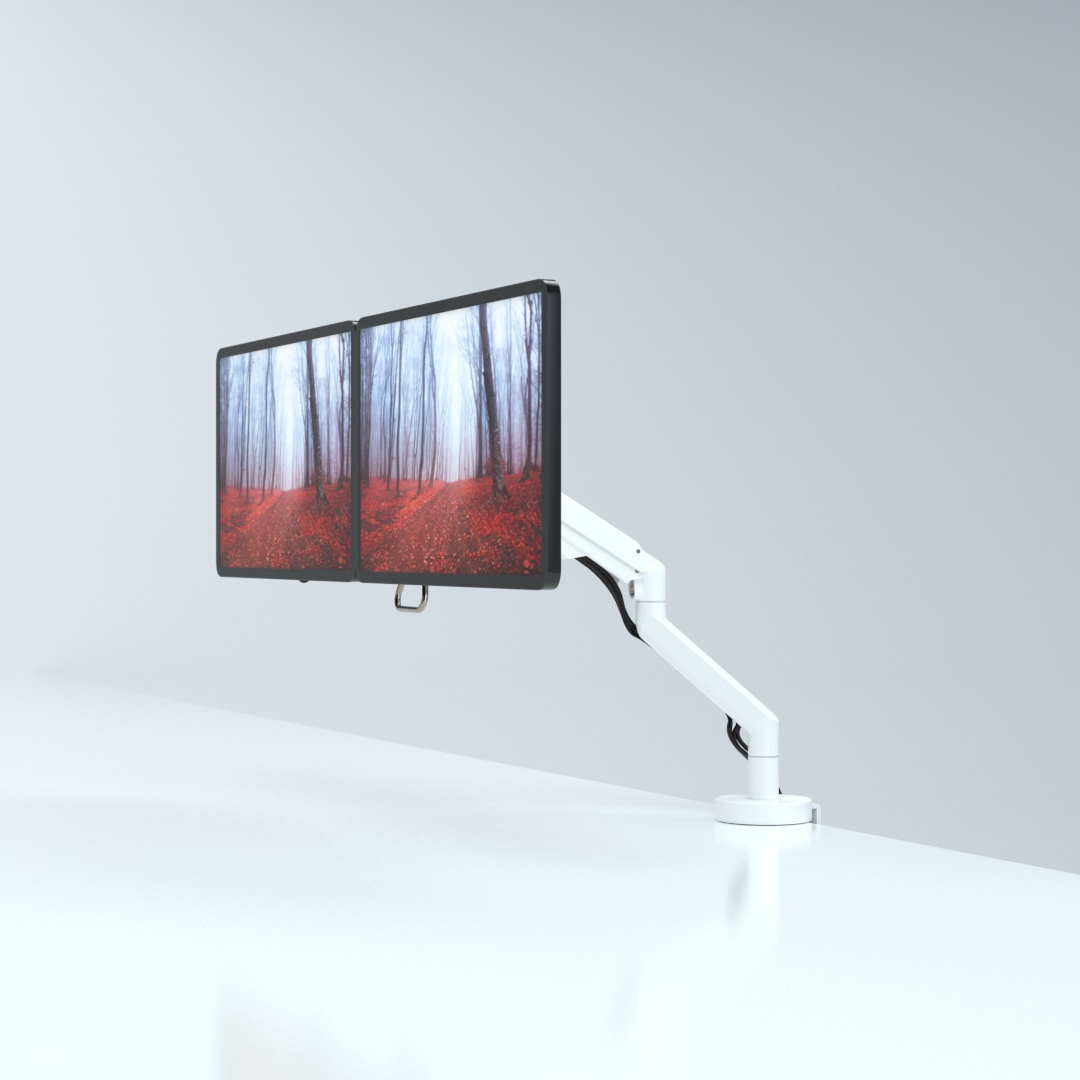
CMD Ltd, the specialist in ergonomic and connectivity solutions for commercial interiors, has completed its Reach monitor arm range with the launch of the Reach Plus. Available in single or dual screen options, the Reach Plus has been designed to provide an ideal solution for both single and dual screen workstation configurations, or can be used with next generation of large format curved screens. Suitable...

Read more
CMD Ltd DEMONSTRATES THE ART OF POWER DISTRIBUTION AT THE UNIVERSITY OF WARWICK

CMD Ltd, the specialist in workplace connectivity and ergonomic solutions, has provided Betatrak busbar power distribution and a range of electrical accessories for two major capital investment projects at the University of Warwick. Designed by Fielden Clegg Bradley Studios, the £33 million Faculty of Arts building is a showpiece development comprising four interconnected structures set around a central atrium, which will enable inter-disciplinary collaboration across...

Read more

University of Warwick
CMD BRINGS HARMONY TO COVENTRY UNIVERSITY RESEARCH FACILITIES

CMD Ltd, the specialist in power distribution solutions and workstation power and ergonomics, has provided under desk and on desk power modules for the refurbishment of three Coventry University research buildings. Located on Coventry University Technology Park, a business park designed to encourage collaboration between the university and knowledge-based businesses, the three buildings are being repurposed as office accommodation for university research teams. The refurbishment...

Read more

Coventry University

How to Choose the Right Sealing Compound?

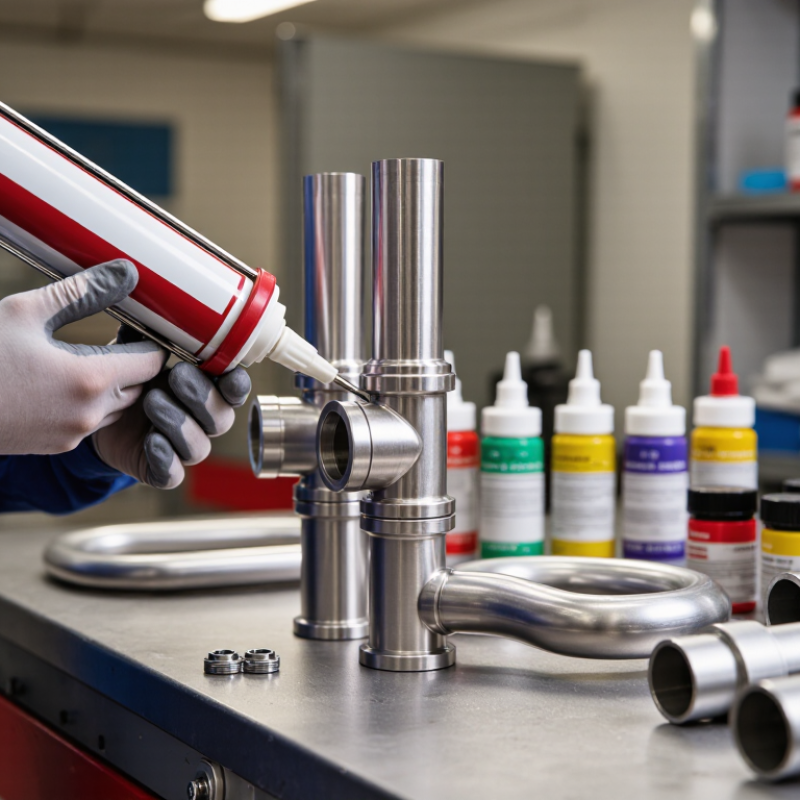
Choosing the right Sealing Compound is rarely a simple product comparison. The correct material depends on temperature, pressure, movement, surface type, and chemical exposure. A sealant that performs well on a bathroom joint may fail quickly inside a heated machine. Small differences matter.

In practical maintenance work, many sealing problems begin with incomplete information. A buyer may focus on color or price, while ignoring curing time and compatibility. Check the technical data sheet carefully. Confirm the application temperature, service range, adhesion properties, and resistance to oils or moisture. The surface must also be clean, dry, and properly prepared. This sounds basic. It is often overlooked.

Professional selection requires evidence, not confident guesses. Consult manufacturer guidance and involve qualified engineers when the joint affects safety or equipment performance. Consider the installation environment, expected service life, and available repair conditions. A fast-curing product may save time, yet it can create problems when positioning requires adjustment. A flexible compound may handle vibration better, but it may not tolerate certain chemicals. There is no universal answer.

Even experienced technicians can choose poorly when specifications are unclear. That deserves honest review. Record the product used, surface condition, curing time, and operating results. These details create useful experience for future decisions. Before purchase, compare verified performance data with the real demands of the joint. The best Sealing Compound is not always the strongest or most expensive option. It is the one that remains reliable in the actual environment.

How to Choose the Right Sealing Compound?

Assess Joint Movement, Width, Depth, Temperature, and Chemical Exposure

How to Choose the Right Sealing Compound?

A reliable choice starts with the joint, not the cartridge. Measure expected movement, joint width, and depth. Record the smallest and largest opening across one annual cycle. ISO 11600 identifies movement classes of 7.5%, 12.5%, 20%, and 25%. Select a class above the calculated movement, not equal to it. Small errors become leaks.

Width and depth must work together. Many façade specifications use a two-to-one width-to-depth proportion for elastic sealants. Confirm the compound’s technical data sheet, because geometry depends on the substrate and movement. Install a compatible backer material. It controls depth and prevents three-sided adhesion. A 20-millimeter joint should not be filled 20 millimeters deep. That restricts flexibility.

Temperature changes can be severe. Concrete expands about 10 microstrains per °C, according to ACI 224R guidance. Calculate movement across the actual panel length. Then check application and service temperatures. Chemical exposure needs equal attention. ASTM C1248 evaluates staining, while ASTM C719 measures adhesion after repeated movement. For kitchens, laboratories, or wastewater areas, request immersion or spot-testing data. Do not rely on “chemical resistant” alone.

The awkward truth: field conditions are rarely clean. Dust, moisture, and rushed preparation can defeat a technically excellent compound. A small site trial is often wiser than confident guessing.

Match Silicone, Polyurethane, Acrylic, or Polysulfide to the Substrate

How to Choose the Right Sealing Compound?

Match the compound to the substrate, movement, and exposure. Silicone usually suits glass, glazed tile, and anodized metal because it tolerates ultraviolet light and temperature swings. Polyurethane bonds well to concrete, masonry, and many metals, especially where abrasion or joint movement is expected. Acrylic works best on dry, low-movement interior joints. It is easier to paint, but less resistant to standing water. Polysulfide remains valuable in fuel-resistant or submerged applications, although its odor and longer curing time can complicate installation.

The U.S. Department of Energy estimates that buildings use about 40% of national energy, so small envelope failures deserve attention. A poorly matched sealant can create gaps around a window frame, allowing drafts and moisture into the wall. ASTM C920 evaluates elastomeric sealants by movement capability, including ±25% classifications. That figure is useful, but it does not replace a job-site test. I still test adhesion on an actual substrate. Dust changes everything.

Read the technical data sheet, then check surface preparation, primer needs, curing conditions, and compatibility with coatings. For concrete, measure moisture before applying polyurethane or polysulfide. For glass and metal, clean without leaving oily residue.

Acrylic may look neat after tooling, yet it can crack beside a vibrating frame. Silicone may survive that movement, but paint will not always adhere to it. The honest choice is sometimes slower and less convenient. That is usually safer.

Select ASTM C920 Movement Classes, Including ±25% and ±50% Capability

How to Choose the Right Sealing Compound?

A sealing compound should match the joint’s expected movement, not just its color or surface finish. ASTM C920 movement classes provide a practical reference for this decision. Class 25 materials can accommodate movement of approximately ±25% of the original joint width. Class 50 materials can handle approximately ±50%, when properly designed and installed.

For example, a 20 mm joint rated for ±25% may move about 5 mm in either direction. A ±50% compound may accommodate about 10 mm. These figures assume suitable adhesion, correct joint geometry, and stable installation conditions. They do not excuse poor preparation. The backer rod, bond-breaker arrangement, joint depth, and substrate condition still matter greatly.

Field experience often reveals the weak point. Dust, moisture, or an overly deep seal can cause failure before the compound reaches its rated movement. I have also seen specifications choose Class 50 without confirming whether the joint actually needs that flexibility. More movement capability is not automatically better. It may affect tooling, adhesion, cure behavior, and cost. Check the ASTM C920 classification, manufacturer test data, service temperature, chemical exposure, and substrate compatibility. Then compare those details with real joint movement, including daily heat cycles and building vibration. A small site trial is wise, although it can feel unnecessary when the schedule is tight.

How to Choose the Right Sealing Compound?

Select ASTM C920 movement classes, including ±25% and ±50% capability requirements

ASTM C920 movement classes are expressed as total joint movement: 12.5%, 25%, and 50%. A Class 50 sealant is commonly interpreted as accommodating approximately ±25% extension and compression around the joint’s nominal position. A ±50% requirement represents a higher design target and should not be treated as the ASTM C920 Class 50 designation; verify the manufacturer’s tested movement capability and project specifications before selection.

Verify Service Temperature, Cure Rate, Shore Hardness, and Adhesion Data

How to Choose the Right Sealing Compound?

A sealing compound should match the real service temperature, not just the number on a product sheet. Check continuous and peak temperatures, then consider heating cycles. A seal exposed to 120°C for ten minutes may behave differently from one held there for months. Cold exposure matters too. Many failures begin during startup, not normal operation.

Cure rate also deserves careful testing. A fast-curing material can reduce assembly time, but it may skin over before filling narrow gaps. Measure tack-free time, full cure time, and cure depth under your actual humidity and joint size. Shore hardness helps predict flexibility and resistance to compression. A harder seal is not always better. It may resist movement but crack when two surfaces expand differently. Ask for hardness values after complete curing, not only after a short laboratory test.

Adhesion data should identify the exact substrates and preparation method. Clean metal, painted metal, glass, and plastic can produce very different results. Check whether testing used primer, abrasion, or solvent cleaning. Then test a small assembly under temperature cycling and movement. This is where laboratory confidence meets workshop reality. I once treated a published adhesion value as universal; it was not. The test surface was smoother and cleaner than our production parts. Leave room for that mistake. Repeat testing with aged, contaminated, and slightly uneven surfaces before approving the compound.

Confirm ISO 11600 Classification, Compatibility, Testing, and Installation Limits

Choosing the right sealing compound starts with its ISO 11600 classification, not its color or price. The code identifies intended use, movement capability, and modulus. For example, F 25 LM targets facade joints with 25-class movement and low modulus. G classifications address glazing applications. The “25” is a laboratory movement rating, not an automatic design allowance. ASTM C920 adds useful U.S. performance data. Its Class 50 designation requires ±50% movement capability under specified testing. However, real joints face dust, sunlight, water, and uneven adhesion.

Compatibility testing must include every contact surface. Test the sealant against concrete, metal, glass, coatings, insulation, and the backer material. A small site mock-up can reveal staining, poor adhesion, or uncured sections before installation. ASTM C1087 provides a recognized method for testing sealant compatibility with insulating glass components. Application limits matter too. Check substrate temperature, moisture, joint width, cure depth, primer requirements, and service temperature. A product may pass laboratory tests yet fail on a cold, damp wall. That uncomfortable possibility deserves attention.

Tips: Request the latest technical data sheet and test report. Confirm ISO 11600 classification, not just “weatherproof” language. Perform a peel-adhesion check after curing. Keep records, including batch number, temperature, humidity, and surface preparation. Installation mistakes are often blamed on the compound. Sometimes, fairly, they should be. Sometimes, the joint design was wrong from the beginning. Never exceed the manufacturer’s stated joint dimensions or curing limits.