How to Choose the Right Porcelain Bushing?
A porcelain bushing may look like a simple ceramic column, but it carries a demanding job: conducting current through a grounded barrier while resisting electrical stress, heat, vibration, and weather. The right choice depends on the actual service conditions, not appearance alone. A few millimeters of damaged glaze, a mismatched mounting interface, or an overlooked creepage requirement can matter.
The International Energy Agency’s 2023 report, Electricity Grids and Secure Energy Transitions, says annual grid investment must rise above $600 billion by 2030 to meet projected needs. That expansion makes sound component selection more important. For technical checks, IEC 60137 covers insulated bushings for alternating voltages above 1,000 volts; IEEE C57.19.00 addresses general requirements for power-apparatus bushings. These standards help frame the decision, but they do not replace application-specific review.
A useful engineering principle is simple: “Select for the system’s real electrical, mechanical, and environmental stresses.” This is presented as a practical guide, not a verified quotation from a named expert. No source material was provided to confirm an individual expert’s exact words, so attributing one would risk misleading readers. That limitation matters. The sections ahead will compare voltage class, insulation design, creepage distance, current rating, pollution exposure, and installation details—then connect those specifications to the conditions a bushing will actually face. A careful choice starts with evidence. And honest limits.
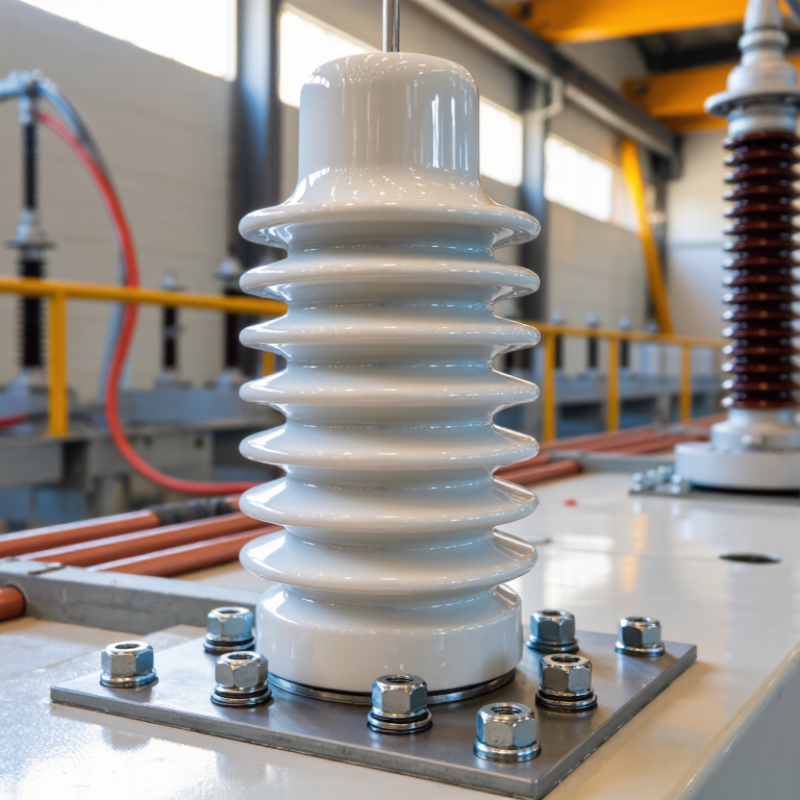
Identify the Application and Electrical Requirements
A porcelain bushing must match the job it will perform, not just the equipment name. Identify whether it will pass a conductor through a transformer tank, switchgear panel, or wall. Note the installation location, mounting orientation, conductor size, and available clearance. A crowded enclosure may limit bushing length, while outdoor exposure can increase the need for adequate creepage distance. Small details matter.
Then confirm the electrical requirements from equipment drawings and the system specification. Check rated voltage, continuous current, power-frequency withstand, and impulse withstand levels. Consider altitude and expected pollution, since both can affect insulation performance. For a coastal or dusty site, surface contamination deserves particular attention. A neat nameplate match is not enough. It is easy to focus on voltage and overlook current or clearances; that shortcut can create a poor fit.
Compare terminal dimensions, mounting pattern, and any required test data with the existing assembly. Check temperature limits and mechanical loads as well. If a rating or drawing is unclear, pause and ask a qualified electrical engineer or the equipment manufacturer to verify it. That may feel slow. Still, assumptions made from a photograph or a similar-looking part are not a reliable selection method.
Assess Voltage, Current, and Insulation Ratings
A porcelain bushing must match the equipment’s maximum operating voltage, not just its nominal system voltage. Check the rated voltage and insulation withstand levels, including lightning-impulse and power-frequency tests. IEC 60137:2017 sets requirements for bushings used above 1,000 volts. Confirm the selected unit’s test values against the equipment specification. A close match matters.
Current rating deserves equal attention. Compare the bushing’s continuous-current rating with the transformer’s maximum expected load, then consider ambient temperature and cooling conditions. CIGRE’s 2015 Transformer Reliability Survey examined 964 reported transformer failures from 21 countries and identified bushings as a notable failure category, representing about 17% of recorded failure locations. This is not a prediction for every installation, but it supports careful rating checks. Also review creepage distance for the site’s pollution and moisture exposure. Salt deposits or industrial dust can create a conductive film across porcelain surfaces. I would not select by voltage alone; overlooked site conditions can make an otherwise suitable rating inadequate. Check the manufacturer’s test documentation and confirm that its assumptions match the actual installation.
How to Choose the Right Porcelain Bushing? - Assess Voltage, Current, and Insulation Ratings
| System Voltage Class | Typical Basic Impulse Level (BIL) | Example Continuous Current Rating | Insulation and Application Checks | Selection Guidance |
| 15 kV | 95 kV | 600 A | Confirm power-frequency withstand, creepage distance, and terminal arrangement for the installation. | Suitable as a starting point for many medium-voltage applications; verify the equipment’s maximum system voltage. |
| 25 kV | 150 kV | 600 A | Check the specified insulation coordination and required clearances for the enclosure and connected conductors. | Choose a bushing rated for the system voltage, not merely its nominal operating voltage. |
| 35 kV | 200 kV | 1,200 A | Assess pollution level, altitude, wet-service conditions, and the required creepage distance. | Allow for load growth and check that the conductor and connection hardware support the selected current rating. |
| 69 kV | 350 kV | 1,200 A | Review the complete insulation test requirements, mounting geometry, and phase-to-ground clearances. | Confirm that the BIL and other insulation levels match the protection and coordination study. |
| 115 kV | 550 kV | 2,000 A | Verify insulation coordination, site altitude correction, seismic requirements, and outdoor creepage needs. | Check the bushing’s applicable standard and ensure its thermal and mechanical ratings suit the equipment. |
Note: BIL values shown are representative ratings commonly associated with these voltage classes; current ratings are example selections, not universal requirements. Actual ratings and test values vary by bushing design, standard, installation, and service conditions. Confirm all nameplate and project requirements with the equipment documentation and applicable standards.
Evaluate Environmental and Installation Conditions
A porcelain bushing must suit the conditions around it, not just its rated voltage. Outdoor units may face rain, salt spray, dust, or industrial residue. These deposits can create conductive paths across the porcelain surface. Check the pollution level and required creepage distance, which is the shortest path along the insulating surface. High altitude also matters because thinner air can reduce external insulation performance. A clean-looking site can still be harsh.
Temperature swings deserve attention. Sunlight can heat exposed surfaces, while cold weather may cause rapid cooling and moisture may collect around seals. Confirm the bushing’s operating range and compatibility with the equipment’s thermal conditions. Indoors, consider condensation, chemical vapors, and limited airflow. Small details count. Vibration or nearby machinery can stress connections and mounting points, even when the porcelain itself appears undamaged.
Installation conditions should match the bushing’s drawings and specified clearances. Measure the mounting opening, conductor position, and available space before ordering; field adjustments can compromise fit or insulation. Keep the surface clean during installation, and avoid impact or uneven clamping. Use the specified hardware and tightening values rather than guessing. That sounds obvious, but rushed work can leave hidden stress. Review grounding, support, and inspection access with the site team, then verify the setup against the equipment requirements.
Check Dimensions, Mounting, and Mechanical Loads
How to Choose the Right Porcelain Bushing?
Check Dimensions, Mounting, and Mechanical Loads
A porcelain bushing must fit the equipment opening and the conductor it carries. Check the overall length, mounting-hole spacing, flange diameter, and clearance around nearby parts. Compare measurements with the equipment drawing, not just an old component; previous installations may include spacers or altered hardware. Small errors matter.
Mounting details affect how forces reach the porcelain. Confirm whether the bushing is supported vertically, horizontally, or at an angle, and check the required gasket and fastener arrangement. Tighten hardware evenly to the specified torque. Excessive or uneven pressure can create stress around the flange, sometimes before a crack is visible. It is easy to rush this step.
Review mechanical loads as well as fit. Consider conductor weight, cable pull, wind exposure, vibration, and forces during routine handling. A tall bushing with a long unsupported conductor may experience more bending than a compact installation. Compare expected loads with the manufacturer’s ratings, and allow for the actual mounting position. If site conditions are uncertain, pause and verify them with a qualified engineer. That extra check can prevent a part that fits on paper from failing in service. The trade-off is not always obvious.
How to Choose the Right Porcelain Bushing?
Check dimensions, mounting, and mechanical loads before selecting a bushing.
The chart shows illustrative project envelopes, not standard sizes or product ratings. Compare the required overall length and mounting bolt circle with the equipment, then verify allowable axial, cantilever, and combined loads against the selected bushing’s manufacturer datasheet.
Compare Standards, Quality, and Manufacturer Specifications
How to Choose the Right Porcelain Bushing?
Compare standards, quality, and manufacturer specifications before selecting a porcelain bushing. Start with the equipment’s rated voltage, operating environment, and connection dimensions. Check required creepage distance, insulation level, and mechanical load against the applicable standard and its current edition. A label alone is not enough. Confirm that the test report covers the exact model and rating you plan to use.
Tips: Compare drawings, not just catalog descriptions. Verify flange dimensions, terminal size, porcelain finish, and installation clearances. Ask for routine test results and material details. Small mismatches matter.
Review the manufacturer’s specifications for temperature limits, permitted loads, and service conditions. In coastal or dusty locations, contamination and moisture can change performance; confirm suitability with the supplier’s technical team. Look for consistent glaze, sound packing, and clear inspection records. If documents use different test conditions, ask for clarification rather than assuming the figures are comparable.
I have seen selection decisions focus heavily on voltage while overlooking fit. That is easy to miss, and worth checking twice.









