

News

Miro: A New Standard in Responsible Innovation

Miro: A New Standard in Responsible Innovation The Miro monitor arm is setting new benchmarks in sustainability. It offers a high-performance solution without compromising on environmental responsibility. Designed with careful material selection, local sourcing, and longevity in mind, Miro’s responsible approach to design and unique manoeuvrability set it apart from the competition. Sustainable Choices Miro is crafted from energy-efficient materials with a lower carbon impact....

Read more
HSE Advisor

Role Purpose Support in the development, implementation and maintenance of the company’s Health, Safety & Environmental policies, processes, operational procedures, and standards.  Ensuring best practice and championing a continually improving HSE culture within the business. Key Responsibilities Liaise with and provide support to all areas of the business to eliminate, mitigate or reduce identified HSE exposures. Partner with the production management team and team leaders,...

Read more
CMD Ltd LAUNCHES 48-HOUR TURNAROUND ON BETATRAK® RAPID ORDERING SERVICE

CMD Ltd, the specialist in power distribution systems, workstation power and monitor arms, has launched a rapid ordering service for its Betatrak® underfloor powertrack distribution systems and accessories, with a commitment to delivering within 48-hours of an approved purchase order*. The service enables customers to order up to 50 lengths of Standard or Clean Earth (C/E) low noise Betatrak, along with up to 25 feed...

Read more

CMD INVESTS £1/4 MILLION IN NEW MACHINE AS PART OF FACTORY UPGRADE

We have invested in a new £1/4m TRUMPF CNC metal punch as part of an asset renewal strategy for our UK manufacturing capability. The new machine will be used in the production of a wide variety of our power distribution systems and workstation power products at our Rotherham factory. Suitable for handling sheet metal between 0.9mm and 3.0mm thick, the new machine will replace one...

Read more

CMD CATALOGUE PROVIDES TECHNICAL POWER DISTRIBUTION GUIDE

CMD Ltd has released a new catalogue, providing an easy to follow technical guide to our power distribution systems and plug and play desk modules. Detailing CMD’s full range of UK-manufactured power distribution systems and plug and play desk modules, the catalogue will be a helpful source of information to M&E engineers and contractors alike to understand how our power distribution systems connect together and...

Read more

Power Distribution Catalogue
CMD Ltd PLAYS ESSENTIAL ROLE IN ELECTRICAL FIT OUT AT LONDON’S PRESTIGIOUS OFFICE DEVELOPMENT

CMD Ltd, specialist in workplace connectivity and ergonomic solutions, has provided a flexible and high-quality power distribution network for The Ray, a prestigious office development in London’s Farringdon. Well-known for being the former site of The Guardian newspaper, The Ray now stands as an 83,000ft² office development characterised by a modernised warehouse aesthetic, with level two now occupied by a global social media company. The...

Read more

The Ray
CMD plugs in to european opportunity with Schuko Capsule unit launch

CMD Ltd, the specialist in power and connectivity solutions for commercial environments, has launched a Schuko version of its popular fixed format Capsule workstation power module for export to mainland Europe and beyond. A popular on desk power module comprising two sockets and dual USB (type A and C) chargers, CMD’s Capsule unit is already widely specified in the UK as an off-the-shelf workstation power...

Read more

CMD White Schuko Capsule Desk Power Module
CMD LTD EXTENDS MONITOR ARM RANGE WITH THE LAUNCH OF REACH PLUS

CMD Ltd, the specialist in ergonomic and connectivity solutions for commercial interiors, has completed its Reach monitor arm range with the launch of the Reach Plus. Available in single or dual screen options, the Reach Plus has been designed to provide an ideal solution for both single and dual screen workstation configurations, or can be used with next generation of large format curved screens. Suitable...

Read more

CMD Ltd DEMONSTRATES THE ART OF POWER DISTRIBUTION AT THE UNIVERSITY OF WARWICK

CMD Ltd, the specialist in workplace connectivity and ergonomic solutions, has provided Betatrak busbar power distribution and a range of electrical accessories for two major capital investment projects at the University of Warwick. Designed by Fielden Clegg Bradley Studios, the £33 million Faculty of Arts building is a showpiece development comprising four interconnected structures set around a central atrium, which will enable inter-disciplinary collaboration across...

Read more

University of Warwick
CMD BRINGS HARMONY TO COVENTRY UNIVERSITY RESEARCH FACILITIES

CMD Ltd, the specialist in power distribution solutions and workstation power and ergonomics, has provided under desk and on desk power modules for the refurbishment of three Coventry University research buildings. Located on Coventry University Technology Park, a business park designed to encourage collaboration between the university and knowledge-based businesses, the three buildings are being repurposed as office accommodation for university research teams. The refurbishment...

Read more

Coventry University

How to Choose the Best Steel Security Door in 2026?

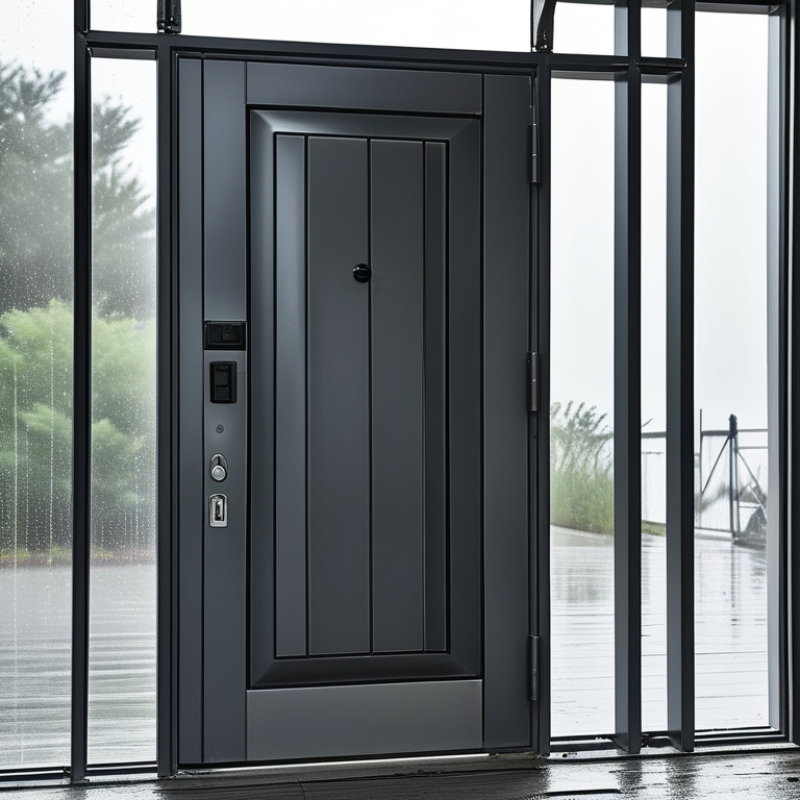
Choosing the right Steel Security Door in 2026 requires more than comparing prices and surface finishes. A dependable door should protect your home, support daily comfort, and remain practical for years. The strongest choice balances steel quality, frame construction, locking performance, insulation, and installation accuracy.

Think about the entrance itself. Is it exposed to heavy rain, coastal air, strong sunlight, or frequent family use? A thick steel panel may look impressive, but weak hinges or an unsuitable frame can reduce real protection. Check the door’s core, welds, hinge design, threshold, and weather seals. Small details matter.

Security should never mean unnecessary inconvenience. A door that closes smoothly is easier to use every morning. A clear viewing panel, controlled access system, and reliable emergency operation can improve confidence. However, technology is not automatically better. Electronic locks need power, maintenance, and sensible backup planning.

This guide examines the features that deserve careful attention in 2026. It considers performance, appearance, maintenance, installation, and long-term value. Product claims should be checked against test evidence and professional recommendations. Marketing language can sound convincing.

A practical test helps. Open and close the sample door several times. Listen for rattling. Inspect the corners. Feel the seal compress against the frame. These observations reveal more than photographs.

No door is perfect. Your building, budget, climate, and habits will shape the final decision. The goal is not to buy the heaviest model. It is to choose a balanced entrance that performs reliably in real life.

How to Choose the Best Steel Security Door in 2026?

Define Security Needs Using EN 1627 RC2–RC6 Resistance Classes

How to Choose the Best Steel Security Door in 2026?

Choosing a steel security door should begin with the threat, not the advertised steel thickness. EN 1627 classifies complete door sets from RC2 to RC6. Each class reflects resistance against defined attack methods, tools, and test time. RC2 suits homes facing opportunistic attempts. RC3 offers stronger protection against crowbars and screwdrivers. RC4 addresses determined attackers using heavier hand tools. RC5 and RC6 involve increasingly powerful tools and demanding test conditions.

The rating belongs to the complete assembly. That includes the leaf, frame, hinges, locks, glazing, and fixings. A strong panel cannot compensate for a weak frame. Installation quality matters just as much. Check the test report, certificate scope, approved hardware, and wall connection details. Ask whether the tested configuration matches your planned door, not merely a similar model. Small differences can matter.

Consider location, valuables, occupancy, emergency access, and daily use. An RC6 door may be excessive for a private apartment and difficult to operate regularly. An RC2 door may be unsuitable for an isolated warehouse. I have seen specifications focus too heavily on thickness and ignore installation. That approach needs reconsideration. Security is also practical: inspect hinges, verify lock operation, and maintain moving parts. No resistance class guarantees absolute protection. It describes tested performance under controlled conditions, not every real-world situation.

Verify Steel Gauge, Core Design, and ASTM F3038 Forced-Entry Ratings

How to Choose the Best Steel Security Door in 2026?

When comparing steel security doors, verify the actual steel thickness, not only the advertised gauge. Lower gauge numbers usually indicate thicker steel, but conventions can vary. Ask for the thickness in millimeters. A door skin around 1.5 mm feels very different from a lighter panel. Check the frame too. A strong leaf can still fail when the frame bends or the anchors pull loose.

Core design deserves close inspection. Some cores use steel stiffeners, while others rely on honeycomb structures or composite materials. Ask where reinforcement sits around the lock, hinges, and vision panel. These areas receive concentrated force. I have seen attractive doors with weak hinge zones. Appearance can mislead. Also inspect the hinge pins, strike plate, and fastener type. Small parts matter.

ASTM F3038 documentation should identify the tested door assembly, forced-entry test level, laboratory, and hardware configuration. Do not accept a generic statement that a product “meets ASTM” without a report. The tested frame, lockset, glazing, and installation method should match your proposed door. Otherwise, the rating may not represent your installation. This is an easy detail to overlook. It is also where my own early comparisons were too simplistic. A certified leaf alone does not guarantee a certified opening. Review the report carefully, then confirm that trained installers can reproduce the tested anchoring details.

How to Choose the Best Steel Security Door in 2026? - Verify Steel Gauge, Core Design, and ASTM F3038 Forced-Entry Ratings

Selection Dimension Practical Target Data to Verify Before Purchase Why It Matters Warning Signs
Steel face-sheet gauge Confirm whether the stated gauge applies to each steel face sheet, the total door skin, or only a reinforcing component. Request the actual nominal thickness in millimetres or inches. Lower gauge numbers generally indicate thicker steel. A thicker face sheet can improve resistance to denting, cutting, and localized deformation when properly supported by the core and frame. A “heavy-duty” description without a stated face-sheet thickness; unusually thin skins hidden behind decorative cladding.
Steel gauge reference Common U.S. manufacturers’ standard-gauge nominal values are: 14 gauge = 0.0747 in / 1.90 mm; 16 gauge = 0.0598 in / 1.52 mm; 18 gauge = 0.0478 in / 1.21 mm; 20 gauge = 0.0359 in / 0.91 mm. Gauge tables can vary by material and regional standard. Comparing the stated millimetre thickness is more reliable than comparing gauge numbers alone. Mixing galvanized-sheet gauge, stainless-steel gauge, and unrelated wire-gauge values without identifying the standard used.
Door core design Ask for a cross-section showing the core, internal stiffeners, lock reinforcement, hinge reinforcement, and edge construction. Confirm whether the core is continuous or interrupted by voids. Forced entry commonly exploits flexing, edge separation, lock-area failure, or hinge-side weakness. Face-sheet thickness alone does not describe the complete door assembly. Hollow-core construction presented as equivalent to a reinforced security door; no cross-section or reinforcement schedule.
Frame and anchorage Verify frame material and thickness, corner joints, strike reinforcement, anchor quantity and spacing, required wall construction, and installation instructions. A strong door leaf can still be defeated if the frame twists, the strike pulls out, or the anchors are installed only into weak finish materials. Test information covering only the door leaf; vague “fits any opening” claims; no anchorage details.
Lock and strike protection Confirm the lock type, number of locking points, bolt throw, bolt material, strike-box construction, and reinforcement around the lock and strike. The lock area is a concentrated attack point. Reinforcement helps transfer attack loads into the door and frame instead of allowing local steel deformation. Counting decorative locking points without identifying their engagement depth or structural reinforcement.
Hinges and hinge-side security Check hinge quantity, load rating, fastener type, hinge reinforcement, and whether the assembly includes fixed anti-lift pins or equivalent protection on exposed hinge sides. Hinge protection is important when hinges are exposed or when the door can be attacked from the hinge side. The complete assembly must carry and retain the door leaf under attack. Hinge claims based only on appearance; ordinary removable pins on an outward-opening door without additional protection.
ASTM F3038 forced-entry evidence Request the complete ASTM F3038 test report or an independently traceable summary identifying the door, frame, lock, hinges, hardware, wall condition, tools, test duration or sequence, observed breach condition, and any limitations. ASTM F3038 is a forced-entry test method for security doors and door assemblies. Results apply to the tested configuration, not automatically to every size, hardware set, or installation. “ASTM rated” with no report, no tested assembly details, no test date, or a result transferred from a different door or hardware configuration.
Interpreting forced-entry ratings Confirm whether a claimed level or rating is issued by a recognized testing laboratory, what pass/fail criteria were used, and whether the rating belongs to the complete installed assembly. A test method and a marketing label are not interchangeable. The test specimen, tools, attack time, installation, and breach definition determine what the result actually demonstrates. A numerical “rating” without the governing standard, test scope, pass/fail definition, or laboratory documentation.
Fire and smoke performance If the opening requires fire protection, verify a separate fire-door listing, label, temperature exposure rating, compatible hardware, closer requirements, and installation limits. Do not infer fire performance from ASTM F3038 results. Forced-entry resistance and fire resistance address different hazards and are demonstrated by different tests and listings. Claims that a security-door forced-entry test automatically proves fire-door compliance.
Opening direction and fit Confirm nominal opening size, clear width, swing direction, reveal, threshold height, weather exposure, and whether the tested configuration used the same orientation and frame installation. Gaps, improper reveals, weak substrates, and an unsuitable swing direction can reduce real-world security even when the door leaf is strong. Field trimming, unapproved hardware substitutions, or installation into masonry, drywall, or timber without approved anchorage details.
Buyer’s rule: Choose the complete tested door-and-frame assembly, not the thickest door skin alone. Require written documentation for steel thickness, core construction, frame anchorage, hardware reinforcement, and the exact ASTM F3038 forced-entry configuration.

Compare Fire Performance Under NFPA 80 and UL 10C Standards

How to Choose the Best Steel Security Door in 2026?

Compare Fire Performance Under NFPA 80 and UL 10C Standards

A steel security door should be judged by its complete fire-door assembly, not its metal thickness alone. UL 10C evaluates door assemblies under positive-pressure fire exposure. Test durations commonly include 20, 45, 60, and 90 minutes, depending on the listed assembly. The frame, hinges, closer, vision panel, and latching hardware must match the tested configuration.

Small details matter.

NFPA 80 focuses on installation, inspection, and maintenance. Its requirements help preserve the tested performance after the door reaches a building site. A 90-minute door can perform poorly if installers add unapproved holes, misalign the frame, or remove self-closing hardware. That is not theoretical. The National Fire Protection Association’s Fire Loss in the United States During 2023 report recorded approximately 1.39 million fires and 3,670 civilian fire deaths. Fire protection deserves more than a specification sheet.

Ask for the listing, fire rating, test standard, and hardware schedule. Check whether the rating applies to the full assembly, not only the leaf. The International Building Code also links opening-protection ratings to wall ratings and occupancy conditions, so local review remains necessary. I would avoid choosing by price alone. A cheaper door may create expensive maintenance problems. Even experienced buyers sometimes overlook smoke gasketing, threshold details, or inspection records. These gaps deserve honest review before installation.

Assess Hardware, Hinges, Locks, and UL 437 Burglary Certification

Choosing a steel security door in 2026 requires more than measuring the slab thickness. The FBI’s 2023 Crime Data Explorer recorded an estimated 847,522 burglary offenses in the United States. That figure makes the hardware specification worth careful attention. Select a lock with a documented ANSI/BHMA grade, protected cylinders, and hardened components. Check whether the strike box uses long screws anchored into structural framing. Thin decorative plates can look reassuring but offer little resistance.

Hinges deserve equal scrutiny. Use heavy-duty hinges with security studs or non-removable pins when the hinges sit outside the protected side. The frame should be welded or mechanically reinforced at hinge and strike locations.

UL 437 evaluates key locks and cylinders against defined forced-entry techniques; it does not certify an entire door assembly. Confirm the exact lock and cylinder model appears in the certification record. Do not accept a vague “UL tested” claim.

Review the test scope, mounting conditions, and certificate date. UL Solutions’ published UL 437 requirements support this verification approach. The 2024 International Building Code also emphasizes properly anchored door assemblies, although security performance still depends on installation quality.

Small details matter. A perfect lock on a weak frame is still a weak door. I would also inspect the installer’s previous work, because rushed alignment can leave a latch barely engaged. That mistake is easy to overlook.

Check Installation Quality, Weather Seals, Warranty, and Total Cost

A steel security door should resist forced entry without becoming an energy liability. Installation quality matters more than impressive thickness. The frame must sit square, with even gaps around the slab. Fasteners should reach structural framing, not only thin trim. NFPA 80 requires doors and frames to operate properly and maintain protective clearances. Although it covers fire doors, its inspection principles remain useful.

Weather seals deserve a close inspection. Look for continuous compression gaskets, a properly fitted threshold, and a sweep that touches the floor without dragging. The U.S. Department of Energy reports that air sealing can reduce heating and cooling costs by up to 15% in some homes. The EIA’s 2020 Residential Energy Consumption Survey also found that space heating and cooling represented about half of household energy use. A poorly sealed security door can quietly weaken those savings. Small gaps matter.

Read the warranty before paying. Check coverage for rust, hardware, finish failure, seals, labor, and transport. Some warranties exclude coastal exposure or installation mistakes. That is easy to miss. Compare total cost, including removal, masonry repairs, delivery, threshold adjustment, and future seal replacement. A lower purchase price may hide expensive preparation work. Ask for written test results, installer credentials, and a measured quote. Industry testing commonly evaluates air leakage, water penetration, and structural performance, but real performance still depends on installation. I would photograph the frame before covering it. It feels excessive, yet disputes often begin with missing evidence.