

News

Miro: A New Standard in Responsible Innovation

Miro: A New Standard in Responsible Innovation The Miro monitor arm is setting new benchmarks in sustainability. It offers a high-performance solution without compromising on environmental responsibility. Designed with careful material selection, local sourcing, and longevity in mind, Miro’s responsible approach to design and unique manoeuvrability set it apart from the competition. Sustainable Choices Miro is crafted from energy-efficient materials with a lower carbon impact....

Read more
HSE Advisor

Role Purpose Support in the development, implementation and maintenance of the company’s Health, Safety & Environmental policies, processes, operational procedures, and standards.  Ensuring best practice and championing a continually improving HSE culture within the business. Key Responsibilities Liaise with and provide support to all areas of the business to eliminate, mitigate or reduce identified HSE exposures. Partner with the production management team and team leaders,...

Read more
CMD Ltd LAUNCHES 48-HOUR TURNAROUND ON BETATRAK® RAPID ORDERING SERVICE

CMD Ltd, the specialist in power distribution systems, workstation power and monitor arms, has launched a rapid ordering service for its Betatrak® underfloor powertrack distribution systems and accessories, with a commitment to delivering within 48-hours of an approved purchase order*. The service enables customers to order up to 50 lengths of Standard or Clean Earth (C/E) low noise Betatrak, along with up to 25 feed...

Read more

CMD INVESTS £1/4 MILLION IN NEW MACHINE AS PART OF FACTORY UPGRADE

We have invested in a new £1/4m TRUMPF CNC metal punch as part of an asset renewal strategy for our UK manufacturing capability. The new machine will be used in the production of a wide variety of our power distribution systems and workstation power products at our Rotherham factory. Suitable for handling sheet metal between 0.9mm and 3.0mm thick, the new machine will replace one...

Read more

CMD CATALOGUE PROVIDES TECHNICAL POWER DISTRIBUTION GUIDE

CMD Ltd has released a new catalogue, providing an easy to follow technical guide to our power distribution systems and plug and play desk modules. Detailing CMD’s full range of UK-manufactured power distribution systems and plug and play desk modules, the catalogue will be a helpful source of information to M&E engineers and contractors alike to understand how our power distribution systems connect together and...

Read more

Power Distribution Catalogue
CMD Ltd PLAYS ESSENTIAL ROLE IN ELECTRICAL FIT OUT AT LONDON’S PRESTIGIOUS OFFICE DEVELOPMENT

CMD Ltd, specialist in workplace connectivity and ergonomic solutions, has provided a flexible and high-quality power distribution network for The Ray, a prestigious office development in London’s Farringdon. Well-known for being the former site of The Guardian newspaper, The Ray now stands as an 83,000ft² office development characterised by a modernised warehouse aesthetic, with level two now occupied by a global social media company. The...

Read more

The Ray
CMD plugs in to european opportunity with Schuko Capsule unit launch

CMD Ltd, the specialist in power and connectivity solutions for commercial environments, has launched a Schuko version of its popular fixed format Capsule workstation power module for export to mainland Europe and beyond. A popular on desk power module comprising two sockets and dual USB (type A and C) chargers, CMD’s Capsule unit is already widely specified in the UK as an off-the-shelf workstation power...

Read more

CMD White Schuko Capsule Desk Power Module
CMD LTD EXTENDS MONITOR ARM RANGE WITH THE LAUNCH OF REACH PLUS

CMD Ltd, the specialist in ergonomic and connectivity solutions for commercial interiors, has completed its Reach monitor arm range with the launch of the Reach Plus. Available in single or dual screen options, the Reach Plus has been designed to provide an ideal solution for both single and dual screen workstation configurations, or can be used with next generation of large format curved screens. Suitable...

Read more

CMD Ltd DEMONSTRATES THE ART OF POWER DISTRIBUTION AT THE UNIVERSITY OF WARWICK

CMD Ltd, the specialist in workplace connectivity and ergonomic solutions, has provided Betatrak busbar power distribution and a range of electrical accessories for two major capital investment projects at the University of Warwick. Designed by Fielden Clegg Bradley Studios, the £33 million Faculty of Arts building is a showpiece development comprising four interconnected structures set around a central atrium, which will enable inter-disciplinary collaboration across...

Read more

University of Warwick
CMD BRINGS HARMONY TO COVENTRY UNIVERSITY RESEARCH FACILITIES

CMD Ltd, the specialist in power distribution solutions and workstation power and ergonomics, has provided under desk and on desk power modules for the refurbishment of three Coventry University research buildings. Located on Coventry University Technology Park, a business park designed to encourage collaboration between the university and knowledge-based businesses, the three buildings are being repurposed as office accommodation for university research teams. The refurbishment...

Read more

Coventry University

How to Choose the Best Shrink Film Wrapping Machine?

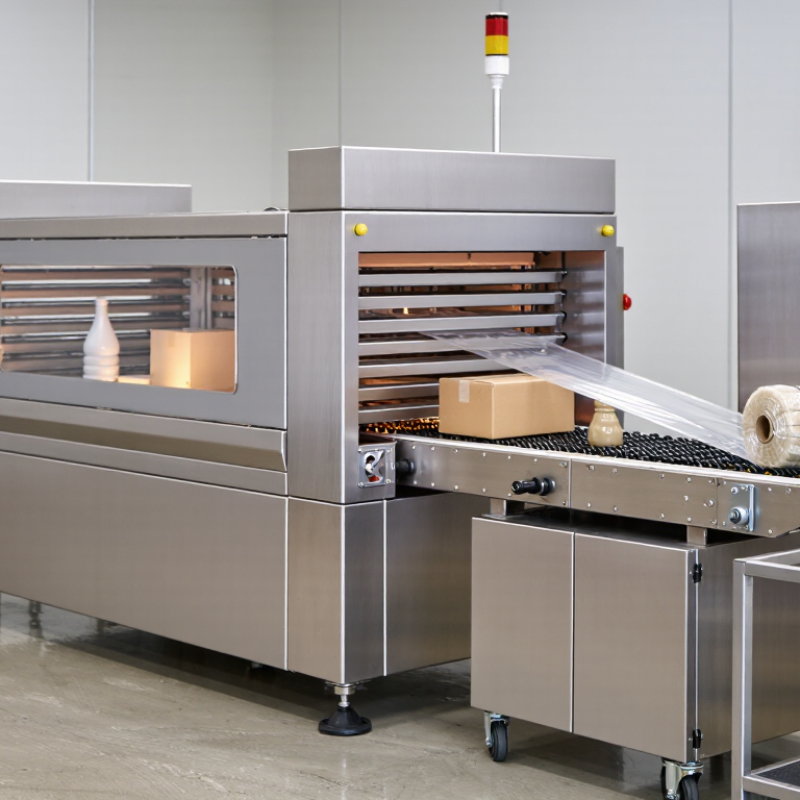
Choosing the right Shrink Film Wrapping Machine is not simply a matter of comparing prices or advertised speed. It requires a practical review of product size, film type, sealing quality, production volume, and available floor space. A machine that performs well for small cartons may struggle with irregular bottles, heavy bundles, or products requiring tight presentation. Measure real products, including their widest points. Small details matter.

Packaging educator Walter Soroka wrote, “Packaging is the science, art, and technology of enclosing and protecting products for distribution, storage, sale, and use.” His words explain why machine selection should consider both protection and presentation. A reliable Shrink Film Wrapping Machine must create consistent seals, controlled heat, and stable film tension. It should also support quick temperature adjustments when materials or product dimensions change.

Look closely at the sealing bar, conveyor design, tunnel airflow, and control system. Ask how operators will clean the machine after a long shift. Check whether replacement parts and technical support are available in your region. A machine may look impressive during a short demonstration, yet perform differently after hours of continuous operation. That is where judgment becomes important.

Perfect equipment does not exist. Every choice involves compromise. Faster machines may require more power, training, or maintenance. Compact models may save space but limit package size. Request sample tests using your actual products and preferred film. Record sealing strength, shrink appearance, cycle time, and film waste. These observations provide stronger evidence than brochures alone. The best decision is the machine that fits your daily process, not merely the one with the highest specification.

How to Choose the Best Shrink Film Wrapping Machine?

Understanding Shrink Film Wrapping Machines and Their Main Types

How to Choose the Best Shrink Film Wrapping Machine?

Understanding Shrink Film Wrapping Machines and Their Main Types

Shrink film wrapping machines create a tight plastic package around products using heat. In practice, the right machine depends on product size, film type, speed, and sealing quality. Smithers reported continued growth in global flexible packaging demand, driven by lightweight material use and automation. This trend makes equipment selection more technical than it first appears.

L-bar sealers suit small or changing production runs. Operators place products manually, then the machine seals three film sides.

Automatic side-seal machines work better for continuous lines and higher output.

Sleeve wrappers handle grouped products, such as bottles or cartons, with a film sleeve and shrinking tunnel.

Chamber machines can protect irregular products, but their cycle time may be slower.

Not every fast machine saves money. Energy use, film waste, maintenance access, and operator training also affect total cost. The Packaging Machinery Manufacturers Institute notes that integration and labor efficiency remain major purchasing concerns.

Tips: Test real products before buying. Measure seal strength, film consumption, tunnel temperature, and package appearance. Ask for trial data, not only brochure speed. A 30-package test may reveal unstable seals or wrinkled corners. Leave room for mistakes. Product dimensions can change, and a machine chosen too tightly may become a costly limitation. Also check whether the control panel records faults clearly. This small detail matters during a busy shift.

Assessing Product Size, Shape, Material, and Packaging Requirements

How to Choose the Best Shrink Film Wrapping Machine?

Product size should guide the machine’s working range. Measure the longest, widest, and tallest package, including trays, handles, and loose parts. Leave enough clearance for film movement and sealing. A machine that barely fits may create uneven seals and frequent stoppages. Measure twice.

Shape matters just as much. Square cartons usually travel smoothly through sealing and shrinking zones. Irregular products may need adjustable guides, wider film rolls, or controlled conveyor spacing. Products with sharp corners can puncture thin film, especially during transport. Rounded edges are easier to wrap, but they may need careful film tension.

Material selection affects the entire process. Polyolefin film often suits retail packs, while polyethylene film supports heavier bundles. Film thickness should match product weight, surface texture, and handling conditions.

Test several film samples before approving equipment. In practical trials, I check seal strength, shrink consistency, wrinkles, and package appearance after cooling. A clean sample can mislead you. Production speed, humidity, and operator habits may change the result.

I once underestimated carton dust, which weakened seals and caused unnecessary rework.

Packaging requirements complete the decision. Define target output, pack orientation, barcode visibility, storage temperature, and available floor space.

The machine should allow quick temperature adjustments and straightforward maintenance. Record trial settings for film temperature, conveyor speed, and sealing time.

Perfect settings rarely appear immediately. Leave room for adjustment.

Comparing Machine Features, Speed, Automation, and Sealing Methods

How to Choose the Best Shrink Film Wrapping Machine?

The right shrink film wrapping machine should match your products, film type, and daily output. In practical production, speed matters, but stability matters more. A machine rated for high speed may slow down with heavy cartons or irregular shapes. Check actual output during a trial, not only the catalog figure. Measure wrapped units per minute, film waste, and rejected packages.

Automation affects labor, consistency, and changeover time. Automatic film feeding, product detection, and temperature control can reduce interruptions. Touchscreen settings are useful, although complicated controls may confuse new operators. Look for accessible sensors and clear fault messages. A faster line can still waste film. No machine wins every job.

Sealing methods also deserve close attention. L-seal systems suit many standard products and support continuous operation. Side-sealing systems can handle longer packages and improve presentation. Impulse sealing often works well with sensitive films because it limits heat exposure. Constant-heat sealing may suit thicker films, but it can require closer temperature control. The best choice depends on film thickness, product edges, and required seal strength.

Tips:

  • Test your actual products with the intended film.
  • Inspect seal corners after cooling, not immediately.
  • Record cycle speed and film usage.
  • Ask operators to perform a changeover; their feedback may reveal problems specifications miss.
  • I would also leave room for adjustment. Real packaging lines rarely behave perfectly.

Evaluating Film Compatibility, Energy Use, Maintenance, and Safety

How to Choose the Best Shrink Film Wrapping Machine?

Film compatibility should be tested before comparing machine prices. Polyolefin, polyethylene, and PVC films require different sealing temperatures and shrink conditions. Ask suppliers for trial runs using your actual products. Measure seal strength, wrinkles, haze, and package stability. A film that looks efficient may tear around sharp corners. ASTM F88 testing can help verify seal strength, although laboratory results may not match a busy production line.

Energy use deserves closer attention than motor wattage alone. Check heater zoning, insulation, standby controls, and compressed-air demand. The U.S. Department of Energy reports that compressed-air leaks can waste 20–30% of compressor output. That loss can quietly increase operating costs. Request kilowatt-hours per hundred packages under normal load. PMMI’s 2024 State of the Industry research also highlights energy efficiency as a continuing packaging priority. The number still needs independent verification.

Maintenance access can decide whether a machine performs well after installation. Choose guarded heaters, accessible film paths, clear fault codes, and readily available wear parts. Record seal-bar temperature drift each shift. Small changes often reveal failing sensors. Safety must include interlocked guards, emergency stops, and lockout procedures aligned with OSHA 1910.212 and 1910.147. A perfect specification sheet cannot replace operator training. I would not ignore noise, heat, or awkward cleaning positions. These details are easy to overlook, and expensive to correct.

How to Choose the Best Shrink Film Wrapping Machine?

Typical tunnel temperature ranges help evaluate film compatibility and energy requirements. Lower operating temperatures generally reduce heat demand, while machine selection should also consider sealing performance, maintenance access, ventilation, guarding, and operator safety.

Practical guidance: PVC commonly operates at lower temperatures, while POF, PE, and PP films typically require higher tunnel settings. Actual settings depend on film thickness, package geometry, line speed, tunnel airflow, and the film supplier's technical specification.

Selecting the Right Machine Based on Budget, Space, and Future Needs

How to Choose the Best Shrink Film Wrapping Machine?

Budget, space, and future needs should guide the purchase. A low-cost machine may fit today’s orders, but it can become restrictive during seasonal growth. PMMI’s 2024 State of the Industry report identifies labor availability and automation as major packaging investment pressures. This supports choosing a machine that reduces repeated manual work, not merely the cheapest model.

Measure the entire workspace. Include film storage, product staging, operator movement, and maintenance access. A compact sealing tunnel may save floor space, but limited conveyor length can reduce output. Smithers’ 2024 packaging market analysis highlights continued demand for efficient, resource-conscious packaging systems. Check film waste, electrical use, heating control, and changeover time. These details affect operating cost more than the purchase price. I have seen teams underestimate maintenance clearance. That mistake is expensive.

Tips: List current products, package dimensions, hourly targets, and expected growth. Request a live test using your actual film and products. Compare total ownership cost over five years, including training, spare parts, energy, and downtime. Leave roughly 20% capacity for future demand, but treat that figure as a planning guide, not a rule. A machine that is too large can waste energy and valuable space. A machine that is too small may force an early replacement. Recheck your assumptions.