How to Choose the Best Manual Coffee Grinder in 2026
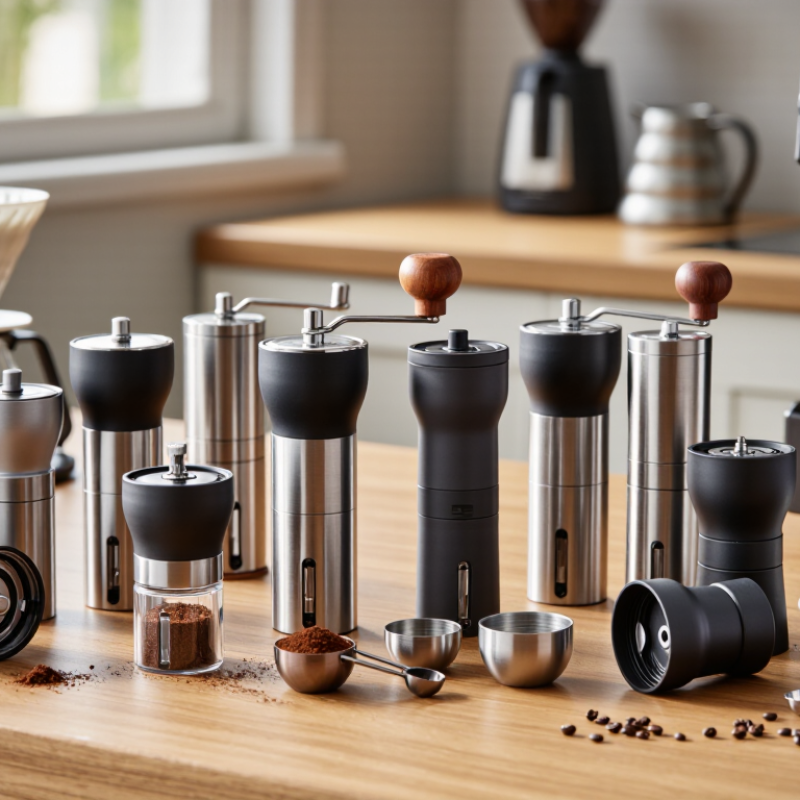
Choosing the best manual coffee grinder in 2026 is less about finding one perfect model and more about matching a grinder to your daily brewing routine. A Hand Manual Coffee Grinder can offer fresh grounds without electricity, but its feel and performance vary widely. Burr design, adjustment range, capacity, and handle comfort all affect the experience. Small details matter.
For espresso, look for fine, consistent adjustments and a stable grip. For pour-over or French press, a broad, repeatable grind range may matter more. Check how clearly the settings change, how easily grounds leave the catch cup, and whether the handle turns smoothly under load. A crank that feels fine for one cup may become tiring when grinding for several people. Taste tells you.
This guide compares practical features, not just specifications. It explains how burr materials, build quality, portability, and price can shape your choice. It also considers cleaning and replacement parts, which are easy to overlook before a grinder arrives. Still, no checklist can predict how every grinder will feel in your kitchen. Your hand strength, preferred brew method, and patience with manual grinding all count. The aim is a clear, evidence-minded way to weigh those trade-offs and choose a grinder you are likely to use consistently. A small compromise may be sensible; paying for features you rarely need may not be.
Set Your Brewing Goal Using the SCA’s 55 g/L Coffee-to-Water Guideline
How to Choose the Best Manual Coffee Grinder in 2026
Set Your Brewing Goal Using the SCA’s 55 g/L Coffee-to-Water Guideline
Choose a grinder around the coffee you actually brew. The Specialty Coffee Association’s Golden Cup Standard uses 55 grams of coffee per liter of water as a reference ratio. That means 16.5 grams for a 300-gram pour, or 27.5 grams for 500 grams. Weigh both coffee and water; a scoop can vary more than expected. A scale makes the target repeatable.
The SCA Brewing Control Chart adds useful context: it identifies 1.15–1.35% total dissolved solids and 18–22% extraction yield as target ranges for brewed coffee. These figures describe a starting point, not a universal taste rule. If your cup tastes thin or harsh, adjust grind size in small steps before changing several variables at once. Keep notes. They help.
When comparing manual grinders, look for clear adjustment steps, steady burr alignment, and a handle that feels comfortable through a full dose. Grind a fixed amount twice and compare the results; obvious differences suggest inconsistent dosing or adjustment. Finer settings can improve extraction, but they may also make hand grinding slower. A little friction is normal. I would not treat the SCA ratio as a promise of a perfect cup: roast, water, and personal taste still matter, and I sometimes find my own notes too vague to explain a disappointing brew.
How to Choose the Best Manual Coffee Grinder in 2026 — Set Your Brewing Goal Using the SCA’s 55 g/L Coffee-to-Water Guideline | Brewing Goal | Typical Grind Range | Grinder Features to Prioritize | Coffee Dose at 55 g/L | Practical Selection Tip |
| Espresso | Fine; the exact setting depends on the coffee, basket, and machine. | Fine adjustment steps, consistent particle size, and a stable adjustment mechanism. | For 250 mL of water: 13.75 g | Choose precise adjustment over maximum capacity. Espresso often needs small grind changes to tune flow and taste. |
| Pour-over | Medium-fine to medium; adjust to the brewer and drawdown. | Repeatable settings, comfortable handling, and easy adjustment across a useful range. | For 300 mL of water: 16.5 g | If a brew drains too quickly or slowly, adjust grind size in small steps and taste the result. |
| Automatic drip | Medium; adjust for the filter, brewer, and brew time. | Consistent everyday grinding, straightforward operation, and a capacity suited to your usual batch. | For 500 mL of water: 27.5 g | For regular multi-cup batches, check whether the grinder can hold enough beans for one session. |
| Immersion brewing | Medium to coarse; steep time and recipe influence the choice. | A broad adjustment range and easy, repeatable changes between settings. | For 750 mL of water: 41.25 g | Prioritize versatility if you switch between immersion and filter methods. |
| French press | Coarse is commonly used; adjust to taste and steep time. | Reliable coarse settings, sturdy construction, and enough capacity for your batch. | For 1,000 mL of water: 55 g | Grind size is only one variable; steep time and pouring technique also affect the cup. |
Ratio note: The SCA’s 55 g/L guideline is a starting point for the coffee-to-water ratio, not a rule for every recipe. The dose examples are calculated by multiplying water volume in liters by 55 g; adjust the ratio to your taste and brewing method.
Match Burr Design and Grind Range to Your Brewing Method
Amanual grinder should suit the coffee you actually brew, not every method you might try someday. Burr shape influences particle consistency and flavor, but geometry alone cannot guarantee a better cup. For pour-over, look for burrs that produce a controlled medium-to-fine grind with few visible fines. That can help water flow evenly through the bed. For French press, a grinder needs a dependable coarse setting; too many tiny particles can leave grit in the mug. Small differences matter.
Espresso demands a much finer range and precise adjustment. Choose a grinder with small, repeatable steps, so you can make subtle changes when a shot runs too quickly or tastes sharp. A broad adjustment range is useful, but check that the settings remain stable during grinding. Some grinders cover espresso and coarse brewing, yet switching between them can be fiddly. That matters. If you mainly brew one way, prioritize control in that range over a long list of settings.
Burrs also need regular cleaning, and even a well-made grinder can produce uneven results when its burrs are misaligned or worn. I would not judge a grinder from one cup alone. Try a few settings with the same beans, and note how the brew time and taste change.
Assess Grind Consistency Against the SCA’s 18–22% Extraction-Yield Range
The Specialty Coffee Association’s Brewing Control Chart identifies 18–22% extraction yield as a commonly used target for brewed coffee. It is a useful benchmark, not a promise of sweetness. A grinder that produces both powdery fines and coarse fragments can extract unevenly: the fines may taste harsh while larger particles remain under-extracted. Taste still matters.
To compare manual grinders, keep the beans, dose, water, and brew method constant. Grind several doses at the same setting, then note visible particle variation and measure brewed-coffee strength with a calibrated refractometer. Pair that reading with the SCA chart to estimate extraction yield; one cup alone can mislead.
Cameron and colleagues’ 2020 study in Matter, “Systematically Improving Espresso,” shows how grind size and water flow interact to shape extraction. Its espresso findings do not certify any hand grinder, but they reinforce the value of repeatable particle size.
A practical test is a little imperfect: home measurements vary, and a number cannot describe aroma or balance. Look for consistent results across repeated brews, not one lucky reading.
Compare Adjustment Precision, Capacity, Build Materials, and Portability
A manual grinder’s adjustment system determines how easily you can repeat a recipe. For espresso, look for small, clearly marked steps; coarse settings can make fine tuning frustrating. For pour-over, a broader range may matter more than tiny clicks. Tiny clicks matter. If markings are vague, note your setting before cleaning or switching beans.
Capacity affects both workflow and size. A 20–30 gram chamber suits many single cups, while larger batches may require repeated grinding. Bigger is not always better. A wide body can feel awkward in a small hand. Steel burrs are durable, while aluminum housings keep weight down; plastic parts can reduce cost but may feel less reassuring under daily use. Inspect the lid, crank joint, and grounds cup, since these small parts often shape the everyday experience.
For travel, check the grinder’s packed length and whether its handle detaches or folds securely. A compact model is easier to tuck beside a kettle, but a short crank can take more effort. Grip matters. If possible, turn the handle before buying. Specs rarely reveal whether the body slips when your hands are damp, and even a carefully chosen grinder may feel tiring after several cups.
Check Long-Term Value Through Durability, Warranty, and Replacement-Part Access
A manual grinder’s long-term value starts with its moving parts, not its finish. Turn the handle slowly and feel for uneven resistance or a loose connection. Check whether the central shaft wobbles when the handle is removed. Small details matter. A stable shaft and securely fitted burrs help maintain consistent grinding, though a quick shop-floor test cannot predict years of use.
Read the warranty before comparing prices. Look for its duration, what it covers, and whether normal wear is excluded. A long warranty sounds reassuring, but unclear terms can make a claim difficult. That is not enough. Check whether the maker publishes instructions for cleaning, adjustment, and common repairs. Save the receipt and warranty details somewhere easy to find.
Replacement-part access can separate a repairable grinder from one that becomes disposable after a small failure. Check whether burrs, bearings, handles, and adjustment components can be ordered individually. Ask about availability and shipping, not just whether parts exist. Keep the receipt. A low purchase price may lose its appeal if a worn burr set cannot be replaced. I would weigh repair access heavily, though it is easy to overlook when a grinder feels smooth and new.









