

News

Miro: A New Standard in Responsible Innovation

Miro: A New Standard in Responsible Innovation The Miro monitor arm is setting new benchmarks in sustainability. It offers a high-performance solution without compromising on environmental responsibility. Designed with careful material selection, local sourcing, and longevity in mind, Miro’s responsible approach to design and unique manoeuvrability set it apart from the competition. Sustainable Choices Miro is crafted from energy-efficient materials with a lower carbon impact....

Read more
HSE Advisor

Role Purpose Support in the development, implementation and maintenance of the company’s Health, Safety & Environmental policies, processes, operational procedures, and standards.  Ensuring best practice and championing a continually improving HSE culture within the business. Key Responsibilities Liaise with and provide support to all areas of the business to eliminate, mitigate or reduce identified HSE exposures. Partner with the production management team and team leaders,...

Read more
CMD Ltd LAUNCHES 48-HOUR TURNAROUND ON BETATRAK® RAPID ORDERING SERVICE

CMD Ltd, the specialist in power distribution systems, workstation power and monitor arms, has launched a rapid ordering service for its Betatrak® underfloor powertrack distribution systems and accessories, with a commitment to delivering within 48-hours of an approved purchase order*. The service enables customers to order up to 50 lengths of Standard or Clean Earth (C/E) low noise Betatrak, along with up to 25 feed...

Read more

CMD INVESTS £1/4 MILLION IN NEW MACHINE AS PART OF FACTORY UPGRADE

We have invested in a new £1/4m TRUMPF CNC metal punch as part of an asset renewal strategy for our UK manufacturing capability. The new machine will be used in the production of a wide variety of our power distribution systems and workstation power products at our Rotherham factory. Suitable for handling sheet metal between 0.9mm and 3.0mm thick, the new machine will replace one...

Read more

CMD CATALOGUE PROVIDES TECHNICAL POWER DISTRIBUTION GUIDE

CMD Ltd has released a new catalogue, providing an easy to follow technical guide to our power distribution systems and plug and play desk modules. Detailing CMD’s full range of UK-manufactured power distribution systems and plug and play desk modules, the catalogue will be a helpful source of information to M&E engineers and contractors alike to understand how our power distribution systems connect together and...

Read more

Power Distribution Catalogue
CMD Ltd PLAYS ESSENTIAL ROLE IN ELECTRICAL FIT OUT AT LONDON’S PRESTIGIOUS OFFICE DEVELOPMENT

CMD Ltd, specialist in workplace connectivity and ergonomic solutions, has provided a flexible and high-quality power distribution network for The Ray, a prestigious office development in London’s Farringdon. Well-known for being the former site of The Guardian newspaper, The Ray now stands as an 83,000ft² office development characterised by a modernised warehouse aesthetic, with level two now occupied by a global social media company. The...

Read more

The Ray
CMD plugs in to european opportunity with Schuko Capsule unit launch

CMD Ltd, the specialist in power and connectivity solutions for commercial environments, has launched a Schuko version of its popular fixed format Capsule workstation power module for export to mainland Europe and beyond. A popular on desk power module comprising two sockets and dual USB (type A and C) chargers, CMD’s Capsule unit is already widely specified in the UK as an off-the-shelf workstation power...

Read more

CMD White Schuko Capsule Desk Power Module
CMD LTD EXTENDS MONITOR ARM RANGE WITH THE LAUNCH OF REACH PLUS

CMD Ltd, the specialist in ergonomic and connectivity solutions for commercial interiors, has completed its Reach monitor arm range with the launch of the Reach Plus. Available in single or dual screen options, the Reach Plus has been designed to provide an ideal solution for both single and dual screen workstation configurations, or can be used with next generation of large format curved screens. Suitable...

Read more

CMD Ltd DEMONSTRATES THE ART OF POWER DISTRIBUTION AT THE UNIVERSITY OF WARWICK

CMD Ltd, the specialist in workplace connectivity and ergonomic solutions, has provided Betatrak busbar power distribution and a range of electrical accessories for two major capital investment projects at the University of Warwick. Designed by Fielden Clegg Bradley Studios, the £33 million Faculty of Arts building is a showpiece development comprising four interconnected structures set around a central atrium, which will enable inter-disciplinary collaboration across...

Read more

University of Warwick
CMD BRINGS HARMONY TO COVENTRY UNIVERSITY RESEARCH FACILITIES

CMD Ltd, the specialist in power distribution solutions and workstation power and ergonomics, has provided under desk and on desk power modules for the refurbishment of three Coventry University research buildings. Located on Coventry University Technology Park, a business park designed to encourage collaboration between the university and knowledge-based businesses, the three buildings are being repurposed as office accommodation for university research teams. The refurbishment...

Read more

Coventry University

How to Choose the Best Lightning Alert Device?

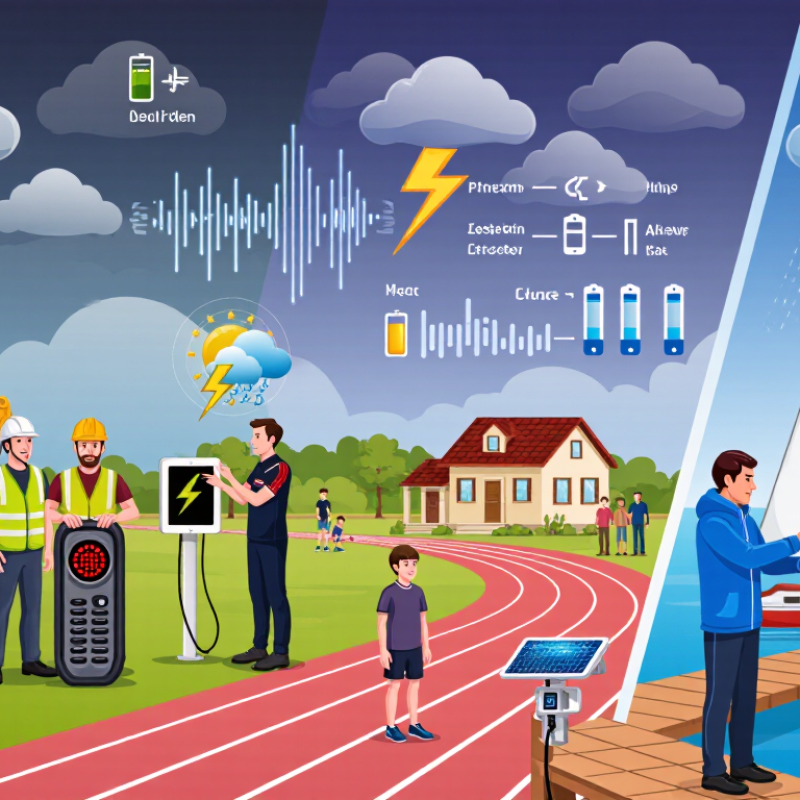
Choosing the right Lightning Alert Device is a safety decision, not merely a technology purchase. A reliable unit should detect nearby electrical activity, deliver a clear warning, and remain useful when weather becomes chaotic. Outdoor workers, sports managers, marina operators, and homeowners may all need different protection levels.

John Jensenius, a lightning safety specialist associated with the National Weather Service, states, “If you can hear thunder, lightning is close enough to pose an immediate threat.” His warning gives this topic practical weight. A device should support safe decisions, not encourage people to watch storms from a dangerous location. Detection range, alert speed, audible volume, visual signals, mobile notifications, battery backup, and weather resistance deserve careful comparison.

No Lightning Alert Device is perfect. That is easy to forget. Some models may trigger false alerts, lose connectivity, or perform differently around tall buildings and dense trees. A device with impressive specifications may still be frustrating on a noisy construction site. Buyers should examine independent testing, warranty terms, installation guidance, and user feedback from similar environments. A practical trial can reveal more than a polished product page.

This guide explains how to compare devices with experience, evidence, and realistic expectations. It also considers maintenance, signal reliability, and emergency procedures. Technology can improve awareness. It cannot replace responsible shelter decisions. The best choice is the one people understand, hear, test, and trust before the storm arrives.

How to Choose the Best Lightning Alert Device?

Understanding How Lightning Alert Devices Work

A lightning alert device detects electrical changes linked to developing storms. Many units use an electric-field sensor to measure charge in the air. When the field strengthens rapidly, the device may sound an alarm. This can happen before visible lightning appears.

Some devices also receive radio signals from lightning strikes. These signals travel far and can reveal nearby activity, even behind hills or buildings. More advanced systems combine local field measurements with strike-location data. This combination can reduce false alarms, but it cannot predict every strike.

Placement affects performance. Install the sensor in an open area, away from tall metal objects and heavy electrical equipment. A blocked sensor may miss important changes. Check the detection range, alert delay, battery life, and outdoor durability before choosing a unit. The device should be easy to hear near machinery or strong wind.

No device is perfect. A warning may arrive late, especially when storms develop quickly. Rain, dust, wiring, or nearby transmitters can also affect readings. I would treat the alarm as one safety signal, not a final decision. Weather forecasts and trained judgment still matter. Test the unit regularly. Small details matter.

Identifying the Key Features for Reliable Lightning Detection

How to Choose the Best Lightning Alert Device?

Reliable lightning detection begins with sensor performance, not flashy displays. Look for devices that detect nearby electrical activity and measure changing storm intensity. A useful alert should provide enough lead time before lightning reaches your area. Detection range matters, but stated distance alone can mislead. Local terrain, buildings, and storm direction may reduce performance. In outdoor testing, compare alerts with official weather data and visible storm movement.

Accuracy is equally important. Frequent false alarms can make people ignore future warnings. Choose a device with adjustable sensitivity, clear alert tones, and visible status indicators. Some models provide distance estimates, while others show activity levels over time. Both features help users judge whether a storm is approaching or weakening. Keep the controls simple. Stress reduces careful reading.

Power reliability deserves close attention. A device with a weak battery is not dependable during a power interruption. Consider long battery life, backup power, water resistance, and readable indicators in bright sunlight. Data logging can also reveal missed alerts or unusual patterns after an event.

No detector is flawless. I would still verify serious warnings through official meteorological services. That extra step feels cautious, perhaps even inconvenient, but it can prevent dangerous assumptions. A practical device should support decisions, not replace them.

Test it regularly near a window or sheltered outdoor area, and record how quickly it responds. Performance may change with age.

Comparing Device Types, Detection Ranges, and Alert Methods

How to Choose the Best Lightning Alert Device?

Device type should match the place and decision time. A local electric-field detector senses storm charge near your site. It can warn before nearby strikes, but buildings, trees, and terrain may affect readings. Network-based systems use multiple sensors and often show storm movement on a phone. Weather radios provide official warnings, yet they may not identify a strike only a few miles away. NOAA’s National Weather Service states that lightning can strike more than 10 miles from a storm. Range matters more than a bright screen.

Alert methods also shape real-world safety. Audible alarms work well at a quiet pool or sports field. Vibration helps workers wearing hearing protection. Flashing lights suit noisy factories, but bright sunlight can reduce visibility. App alerts offer maps and records, although mobile coverage and notification delays remain weaknesses. The World Meteorological Organization recognizes lightning detection as an important tool for early warning, not a replacement for shelter decisions. No device is perfect. I would not trust one threshold blindly.

Tips: Choose a device that lists detection range, update delay, and false-alarm performance. Test its sound outdoors. Keep a backup alert method nearby. Replace batteries before storm season. NOAA reports roughly 20 lightning deaths yearly in the United States during recent years, so a warning should trigger action, not debate. A practical rule is simple: when thunder is audible, move indoors.

Evaluating Accuracy, Coverage, Installation, and Maintenance

Choosing the best lightning alert device requires more than comparing advertised detection ranges. Accuracy should be supported by independent testing, clear technical specifications, and a record of reliable performance. A useful device should identify nearby lightning quickly while limiting false alarms from harmless electrical noise. No system is flawless. Weather conditions, terrain, and signal interference can affect results.

Coverage depends on your location and risk level. A small building may need one carefully positioned unit, while a sports field or industrial site may require several devices. During practical site checks, I have found that walls, metal structures, and tall trees can reduce detection performance. Installation should provide an unobstructed position, stable power, and visibility for warning indicators. Follow the manufacturer’s instructions, but inspect the actual site too. Instructions cannot predict every obstacle.

Tips: Test the alert at scheduled intervals. Keep a maintenance log. Check batteries, cables, alarms, and software updates before storm season. Dust can cover sensors. Small faults matter. Review the coverage map after installation, especially when buildings or equipment change. A device may appear accurate during calm weather but perform differently during a crowded, noisy storm. Ask qualified safety professionals to verify placement and emergency procedures. Do not rely on a single warning source when people are outdoors.

Choosing the Right Lightning Alert Device for Your Needs

How to Choose the Best Lightning Alert Device?

Choosing the right lightning alert device starts with your actual environment. A beach, golf course, farm, and construction site need different coverage. NOAA’s National Severe Storms Laboratory estimates that lightning strikes Earth about eight million times daily. Distance matters. The U.S. National Weather Service warns that lightning can strike more than 10 miles from a storm.

Choose a device with a clearly stated detection range, fast alerts, and multiple warning methods. Loud sirens help on open fields. Bright strobes work near machinery. Vibration alerts are useful when hearing protection is required. Check the battery life, weather resistance, mounting options, and operating temperature. A small device may suit a patio, but it could fail across a large sports field. Do not trust vague claims.

No sensor is perfect.

False alarms can interrupt work, while delayed alerts can create dangerous hesitation. Ask how the device identifies lightning, not only whether it detects storms. Some systems monitor nearby electrical activity; others depend on network data. NOAA guidance also recommends waiting at least 30 minutes after the last thunder before resuming outdoor activity. A device should support that decision, not replace it.

Picture a supervisor hearing an alert beside a running generator. The warning must be noticeable immediately. Test it monthly, inspect damaged cables, and record missed alerts. I would rather choose a less elegant device with clear specifications than a cheaper model that sounds impressive. That judgment may change after real-world testing.