

News

Miro: A New Standard in Responsible Innovation

Miro: A New Standard in Responsible Innovation The Miro monitor arm is setting new benchmarks in sustainability. It offers a high-performance solution without compromising on environmental responsibility. Designed with careful material selection, local sourcing, and longevity in mind, Miro’s responsible approach to design and unique manoeuvrability set it apart from the competition. Sustainable Choices Miro is crafted from energy-efficient materials with a lower carbon impact....

Read more
HSE Advisor

Role Purpose Support in the development, implementation and maintenance of the company’s Health, Safety & Environmental policies, processes, operational procedures, and standards.  Ensuring best practice and championing a continually improving HSE culture within the business. Key Responsibilities Liaise with and provide support to all areas of the business to eliminate, mitigate or reduce identified HSE exposures. Partner with the production management team and team leaders,...

Read more
CMD Ltd LAUNCHES 48-HOUR TURNAROUND ON BETATRAK® RAPID ORDERING SERVICE

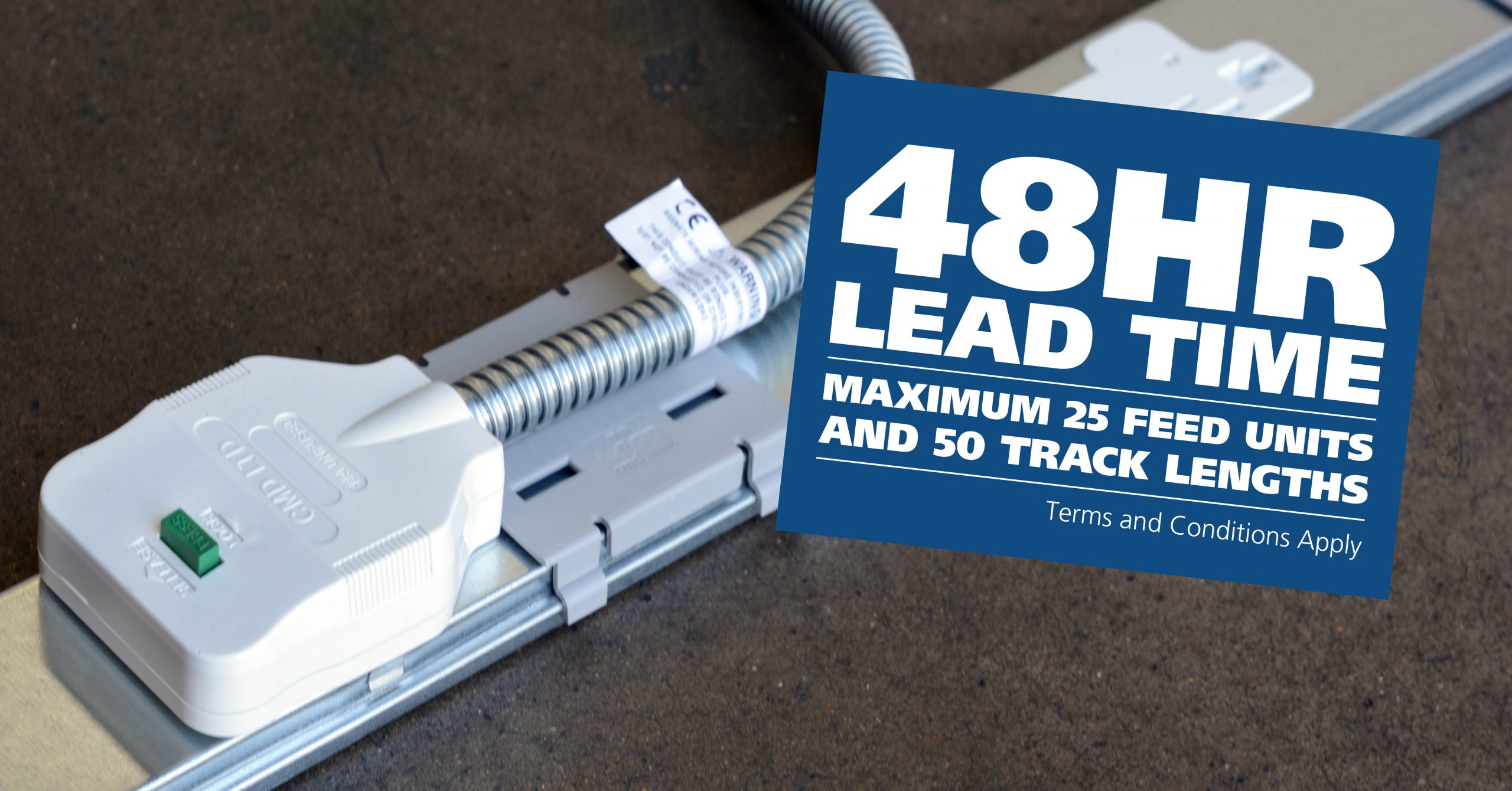
CMD Ltd, the specialist in power distribution systems, workstation power and monitor arms, has launched a rapid ordering service for its Betatrak® underfloor powertrack distribution systems and accessories, with a commitment to delivering within 48-hours of an approved purchase order*. The service enables customers to order up to 50 lengths of Standard or Clean Earth (C/E) low noise Betatrak, along with up to 25 feed...

Read more
CMD INVESTS £1/4 MILLION IN NEW MACHINE AS PART OF FACTORY UPGRADE

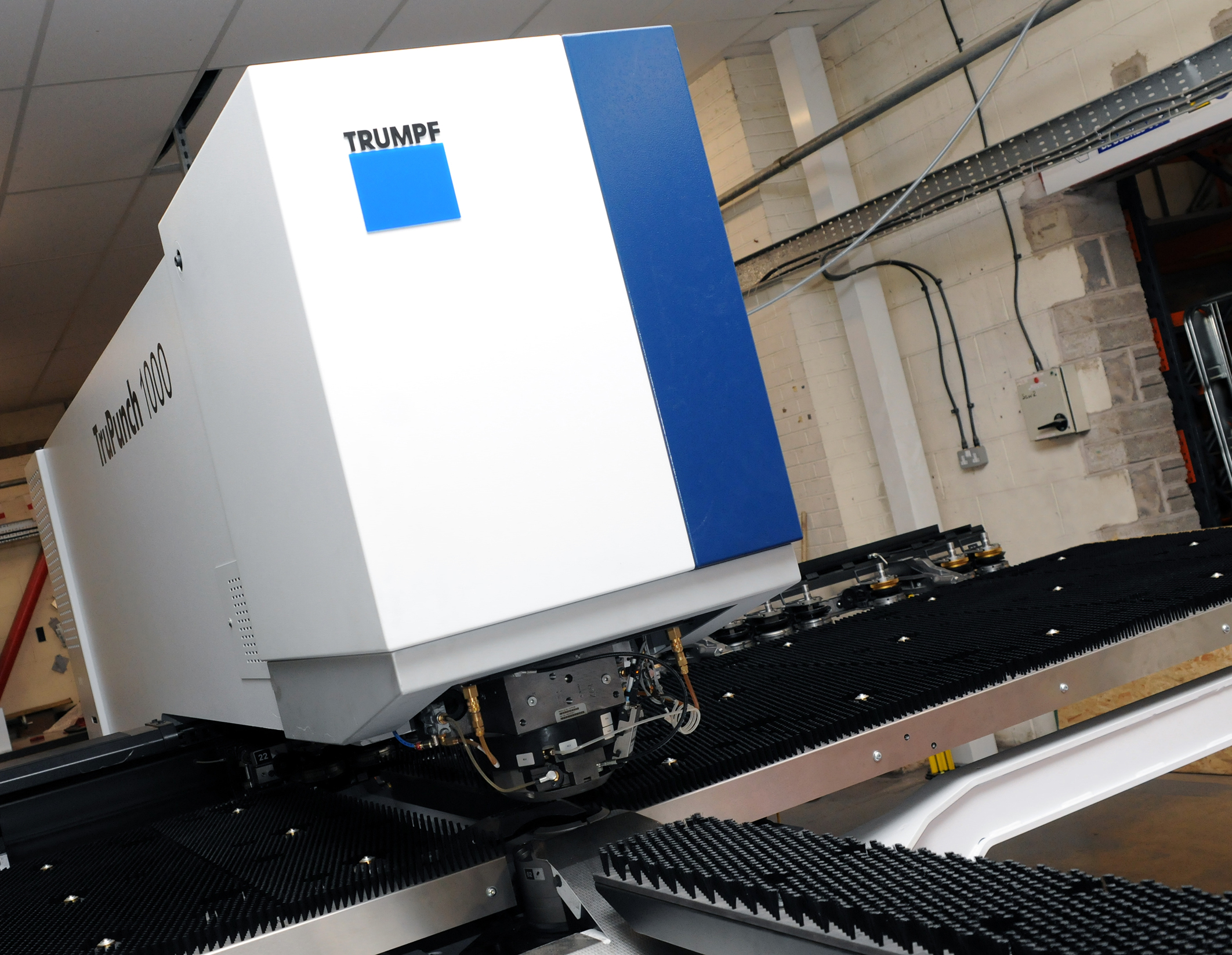
We have invested in a new £1/4m TRUMPF CNC metal punch as part of an asset renewal strategy for our UK manufacturing capability. The new machine will be used in the production of a wide variety of our power distribution systems and workstation power products at our Rotherham factory. Suitable for handling sheet metal between 0.9mm and 3.0mm thick, the new machine will replace one...

Read more
CMD CATALOGUE PROVIDES TECHNICAL POWER DISTRIBUTION GUIDE

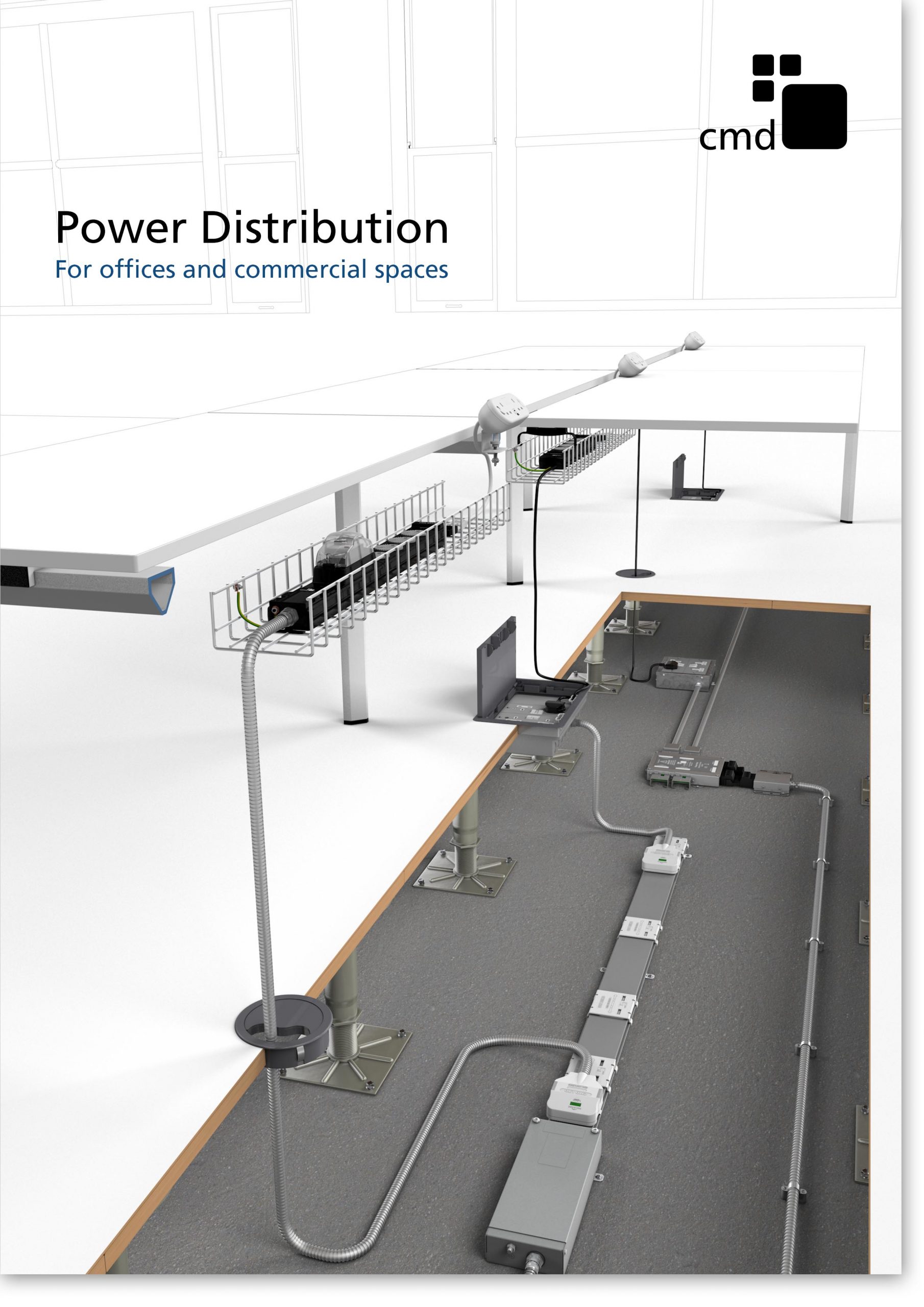
CMD Ltd has released a new catalogue, providing an easy to follow technical guide to our power distribution systems and plug and play desk modules. Detailing CMD’s full range of UK-manufactured power distribution systems and plug and play desk modules, the catalogue will be a helpful source of information to M&E engineers and contractors alike to understand how our power distribution systems connect together and...

Read more
Power Distribution Catalogue
CMD Ltd PLAYS ESSENTIAL ROLE IN ELECTRICAL FIT OUT AT LONDON’S PRESTIGIOUS OFFICE DEVELOPMENT

CMD Ltd, specialist in workplace connectivity and ergonomic solutions, has provided a flexible and high-quality power distribution network for The Ray, a prestigious office development in London’s Farringdon. Well-known for being the former site of The Guardian newspaper, The Ray now stands as an 83,000ft² office development characterised by a modernised warehouse aesthetic, with level two now occupied by a global social media company. The...

Read more

The Ray
CMD plugs in to european opportunity with Schuko Capsule unit launch

CMD Ltd, the specialist in power and connectivity solutions for commercial environments, has launched a Schuko version of its popular fixed format Capsule workstation power module for export to mainland Europe and beyond. A popular on desk power module comprising two sockets and dual USB (type A and C) chargers, CMD’s Capsule unit is already widely specified in the UK as an off-the-shelf workstation power...

Read more

CMD White Schuko Capsule Desk Power Module
CMD LTD EXTENDS MONITOR ARM RANGE WITH THE LAUNCH OF REACH PLUS

CMD Ltd, the specialist in ergonomic and connectivity solutions for commercial interiors, has completed its Reach monitor arm range with the launch of the Reach Plus. Available in single or dual screen options, the Reach Plus has been designed to provide an ideal solution for both single and dual screen workstation configurations, or can be used with next generation of large format curved screens. Suitable...

Read more

CMD Ltd DEMONSTRATES THE ART OF POWER DISTRIBUTION AT THE UNIVERSITY OF WARWICK

CMD Ltd, the specialist in workplace connectivity and ergonomic solutions, has provided Betatrak busbar power distribution and a range of electrical accessories for two major capital investment projects at the University of Warwick. Designed by Fielden Clegg Bradley Studios, the £33 million Faculty of Arts building is a showpiece development comprising four interconnected structures set around a central atrium, which will enable inter-disciplinary collaboration across...

Read more

University of Warwick
CMD BRINGS HARMONY TO COVENTRY UNIVERSITY RESEARCH FACILITIES

CMD Ltd, the specialist in power distribution solutions and workstation power and ergonomics, has provided under desk and on desk power modules for the refurbishment of three Coventry University research buildings. Located on Coventry University Technology Park, a business park designed to encourage collaboration between the university and knowledge-based businesses, the three buildings are being repurposed as office accommodation for university research teams. The refurbishment...

Read more

Coventry University

How to Choose Portable Car Charging in 2026?

Choosing Portable Car Charging in 2026 requires more than comparing charging speed and price. The market is expanding quickly. The International Energy Agency’s Global EV Outlook 2025 reported more than 17 million electric cars sold worldwide in 2024. Electric vehicles represented over 20% of new car sales. More drivers now need charging options beyond fixed home stations.

A portable charger can support apartment residents, renters, road-trippers, and households with limited electrical capacity. However, “portable” does not always mean simple. A compact unit may need a suitable outlet, weather protection, correct amperage, and enough cable length for a real driveway. The U.S. Department of Energy’s Alternative Fuels Data Center emphasizes connector compatibility, electrical capacity, and safe installation when evaluating charging equipment. Those details matter beside a wet sidewalk or a dark roadside stop.

Speed is only one measure. Reliability matters more. A 32-amp Level 2 charger may be useful at home, while a 16-amp model can be more practical for older circuits. A heavy cable may feel reassuring, yet become frustrating after repeated handling. No single charger wins every driveway.

That assumption can fail.

This guide examines charging output, connector standards, circuit requirements, portability, safety certifications, cable design, and emergency usefulness. It also considers evidence from manufacturers, energy agencies, and independent testing. Product claims are not always equally transparent. Some specifications omit temperature limits or continuous-load requirements. Buyers should pause, check their vehicle manual, and confirm the outlet’s capability before plugging in. Portable Car Charging should make electric driving more flexible, not create avoidable electrical risks.

How to Choose Portable Car Charging in 2026?

What Portable Car Charging Means and Why It Matters in 2026

How to Choose Portable Car Charging in 2026?

What Portable Car Charging Means and Why It Matters in 2026

Portable car charging usually means a movable electric vehicle supply device. It connects the vehicle to a suitable household socket or external power source. It does not create electricity. It controls delivery, monitors faults, and helps charge away from fixed stations. The IEA’s Global EV Outlook 2024 reported more than 4 million public charging points worldwide in 2023. Yet access remains uneven, especially during road trips or rural travel. Portable charging adds flexibility, not unlimited range.

Choosing one requires practical judgment. Check the connector, maximum current, cable length, weather protection, and temperature monitoring. The U.S. Department of Energy notes that Level 1 charging may add only 2–5 miles per hour. Level 2 can provide roughly 10–30 miles per hour, depending on the vehicle and circuit. Faster is not always better. An old socket may overheat under continuous load. That detail is easy to miss.

Tips: Match the charger to the vehicle manual and the circuit rating. Choose adjustable current settings and clear fault indicators. Test it before a long journey. Keep the cable dry, uncoiled, and away from traffic. A portable unit should support your routine, not replace careful planning. I would also question every advertised speed, because real conditions often reduce it.

Which Vehicle Types and Charging Standards Are Compatible

How to Choose Portable Car Charging in 2026?

Portable charging begins with your vehicle type. Battery electric vehicles usually accept AC charging through an onboard charger. Plug-in hybrids often accept slower AC charging, but their smaller batteries need less energy. Conventional hybrids normally cannot charge from an external cable. Check the vehicle’s charging port before buying anything.

Charging standards vary by region. Type 1 is common in some markets, while Type 2 is widely used elsewhere. Some newer vehicles use combined DC connectors for rapid charging. A portable AC unit cannot replace a DC fast charger. It must match the car’s inlet, voltage, current limit, and communication system. Adapters can help, but only when the vehicle and charger officially support them.

Safety depends on the power source, not only the connector. A household outlet may provide limited power, while a dedicated socket can support higher current. Inspect the cable for heat, cuts, or loose connections. Keep the control box dry and avoid extension cables unless the manufacturer permits them. It is easy to assume that a matching plug guarantees compatibility. It does not. I would verify the vehicle manual, charging capacity, and local electrical requirements before every purchase. Even experienced drivers sometimes overlook single-phase and three-phase differences.

How to Compare Battery Capacity, Charging Speed, and Power Output

How to Choose Portable Car Charging in 2026?

How to Compare Battery Capacity, Charging Speed, and Power Output

Battery capacity tells you how much energy a portable charger stores. Look for usable capacity, not only the advertised watt-hours. A 1,000Wh unit may deliver less after conversion losses. Temperature, battery age, and standby functions also reduce real-world range.

During a weekend test, I once expected enough energy for two emergency top-ups. Cold weather proved that estimate too optimistic.

Charging speed needs careful comparison. Check the charger’s input rate and your vehicle’s maximum acceptance rate. A fast portable unit cannot force a car to charge faster than its built-in system allows. For example, a 3.6kW output may suit one vehicle but waste potential with another. Cable length matters too. A short cable can leave the unit sitting near mud or traffic.

Power output is different from battery capacity. Output describes how quickly the unit supplies electricity, usually in watts or kilowatts. Confirm continuous output, not just the brief peak figure. Motors and cooling systems can create short surges. A unit with weak continuous output may shut down unexpectedly. I prefer models with clear safety ratings, overload protection, temperature monitoring, and verified charging compatibility. Still, specifications can be confusing. Real tests remain more trustworthy than impressive numbers.

What Safety Features and Certifications Should You Check

Portable charging looks simple, but the safety details deserve more attention. The International Energy Agency’s Global EV Outlook 2024 recorded over 14 million electric car sales in 2023. Electric vehicles represented about 18% of global new-car sales. More drivers now depend on compact charging equipment.

Check the standard printed on the unit. IEC 61851 covers conductive charging systems, while IEC 62752 addresses in-cable protection devices. In North America, look for certification from an accredited testing laboratory, such as an NRTL. A “CE” mark alone indicates conformity, not necessarily independent product testing. The label should match the exact model number.

Ground-fault protection is essential. Choose equipment with residual-current monitoring and automatic shutoff. Over-temperature protection matters near hot driveways or coiled cables. An IP rating helps, but IP protection is not waterproofing forever. Inspect seals and connectors after rain. The cable should feel substantial, not brittle or unusually warm. Adjustable current settings can reduce stress on older household circuits. Never rely on a household extension cord unless the manufacturer explicitly permits it.

A practical check takes two minutes. Confirm voltage, amperage, plug type, certification number, and warranty contact. I would also test the safety reset before regular use. A perfect label cannot fix damaged insulation. That part is easy to forget.

How to Choose Portability, Durability, Price, and Emergency Value

How to Choose Portable Car Charging in 2026?

Portability starts with weight, cable length, and storage design. A charger under 8 kilograms is easier to lift beside a dark roadside. A five-meter cable can reach awkward parking positions. Look for a carry handle, protected connectors, and a case that resists dust and rain. I once chose a lighter unit with a stiff cable. It saved space but became frustrating in cold weather. That mistake still matters.

Durability should include thermal protection, overcurrent control, and clear fault indicators. Check whether the enclosure has a tested water and dust resistance rating. Confirm compliance with recognized electrical safety standards in your region. Avoid trusting vague claims such as “all-weather” without test details. Inspect the plug, cable joints, and display before every trip. Small damage can become expensive. Maybe this is excessive, but roadside repairs are worse.

Price should reflect charging speed, construction, warranty length, and repair support. The cheapest option may cost more after one damaged connector. Emergency value depends on battery capacity and your usual driving distance. A compact charger may provide enough energy to reach a nearby station, not fully recharge a car. Keep it with a suitable outlet adapter, gloves, and a flashlight. Test the setup at home. Emergency confidence should come from practice, not packaging.

How to Choose Portable Car Charging in 2026?

Portability, durability, price value, and emergency charging value

Ratings use a 1–10 benchmark based on typical portable EV charging configurations: 120 V units around 1.4 kW, 240 V units around 7.7 kW, and higher-current 240 V units up to approximately 9.6 kW. Portability considers size and weight, durability considers weather protection and cable construction, price value considers typical purchase cost versus output, and emergency value considers how quickly useful driving range can be restored.