

News

Miro: A New Standard in Responsible Innovation

Miro: A New Standard in Responsible Innovation The Miro monitor arm is setting new benchmarks in sustainability. It offers a high-performance solution without compromising on environmental responsibility. Designed with careful material selection, local sourcing, and longevity in mind, Miro’s responsible approach to design and unique manoeuvrability set it apart from the competition. Sustainable Choices Miro is crafted from energy-efficient materials with a lower carbon impact....

Read more
HSE Advisor

Role Purpose Support in the development, implementation and maintenance of the company’s Health, Safety & Environmental policies, processes, operational procedures, and standards.  Ensuring best practice and championing a continually improving HSE culture within the business. Key Responsibilities Liaise with and provide support to all areas of the business to eliminate, mitigate or reduce identified HSE exposures. Partner with the production management team and team leaders,...

Read more
CMD Ltd LAUNCHES 48-HOUR TURNAROUND ON BETATRAK® RAPID ORDERING SERVICE

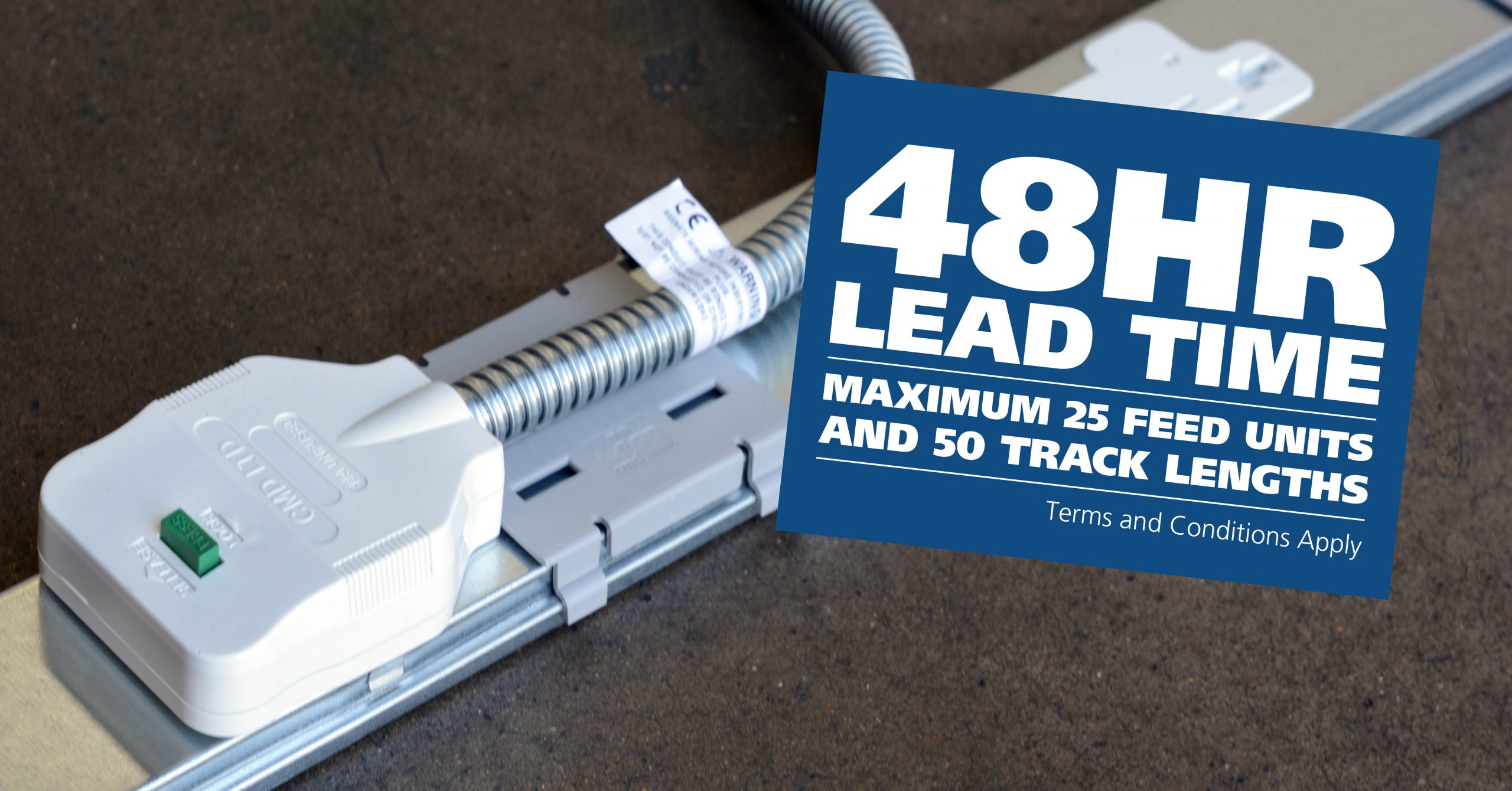
CMD Ltd, the specialist in power distribution systems, workstation power and monitor arms, has launched a rapid ordering service for its Betatrak® underfloor powertrack distribution systems and accessories, with a commitment to delivering within 48-hours of an approved purchase order*. The service enables customers to order up to 50 lengths of Standard or Clean Earth (C/E) low noise Betatrak, along with up to 25 feed...

Read more
CMD INVESTS £1/4 MILLION IN NEW MACHINE AS PART OF FACTORY UPGRADE

We have invested in a new £1/4m TRUMPF CNC metal punch as part of an asset renewal strategy for our UK manufacturing capability. The new machine will be used in the production of a wide variety of our power distribution systems and workstation power products at our Rotherham factory. Suitable for handling sheet metal between 0.9mm and 3.0mm thick, the new machine will replace one...

Read more

CMD CATALOGUE PROVIDES TECHNICAL POWER DISTRIBUTION GUIDE

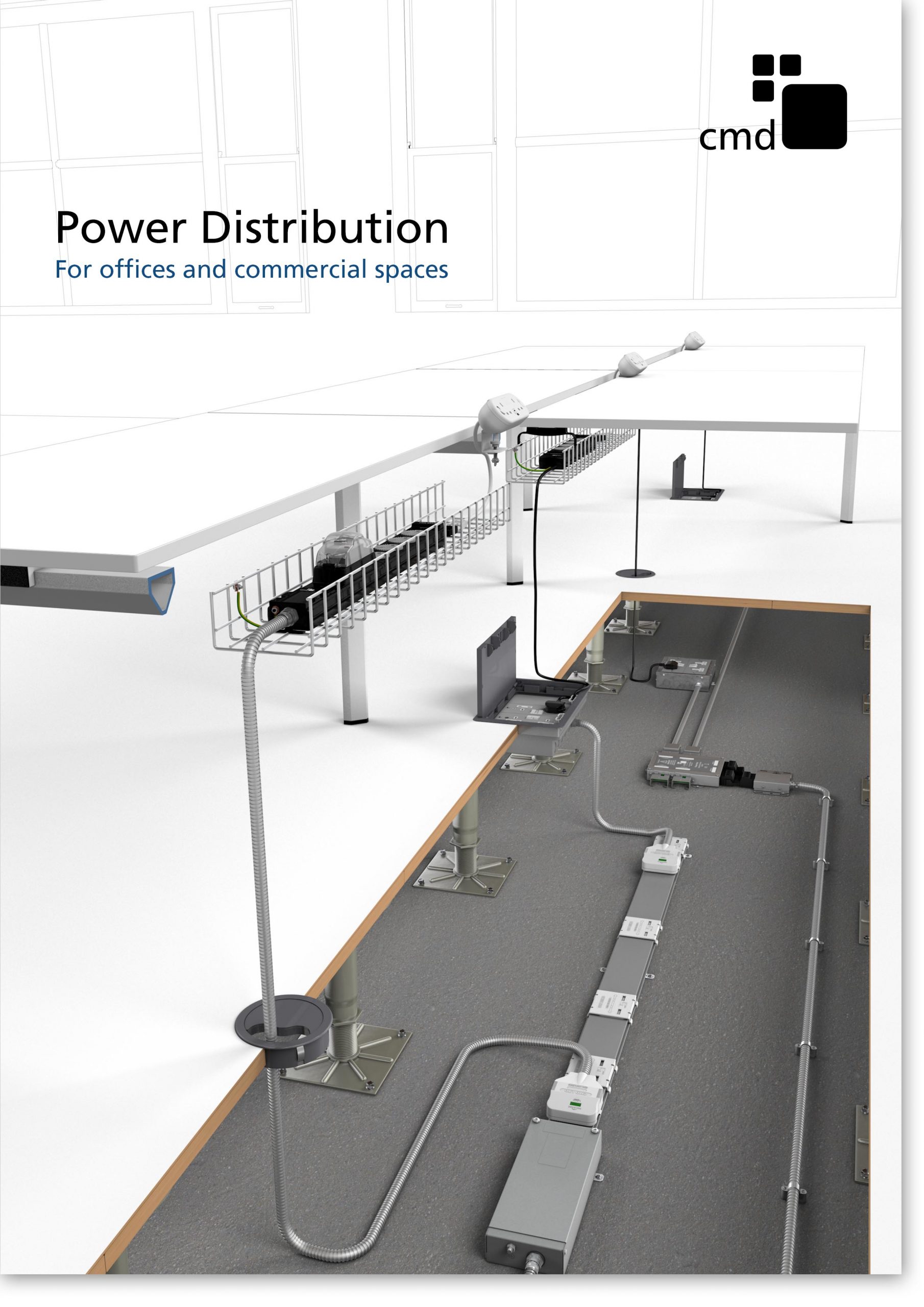
CMD Ltd has released a new catalogue, providing an easy to follow technical guide to our power distribution systems and plug and play desk modules. Detailing CMD’s full range of UK-manufactured power distribution systems and plug and play desk modules, the catalogue will be a helpful source of information to M&E engineers and contractors alike to understand how our power distribution systems connect together and...

Read more
Power Distribution Catalogue
CMD Ltd PLAYS ESSENTIAL ROLE IN ELECTRICAL FIT OUT AT LONDON’S PRESTIGIOUS OFFICE DEVELOPMENT

CMD Ltd, specialist in workplace connectivity and ergonomic solutions, has provided a flexible and high-quality power distribution network for The Ray, a prestigious office development in London’s Farringdon. Well-known for being the former site of The Guardian newspaper, The Ray now stands as an 83,000ft² office development characterised by a modernised warehouse aesthetic, with level two now occupied by a global social media company. The...

Read more

The Ray
CMD plugs in to european opportunity with Schuko Capsule unit launch

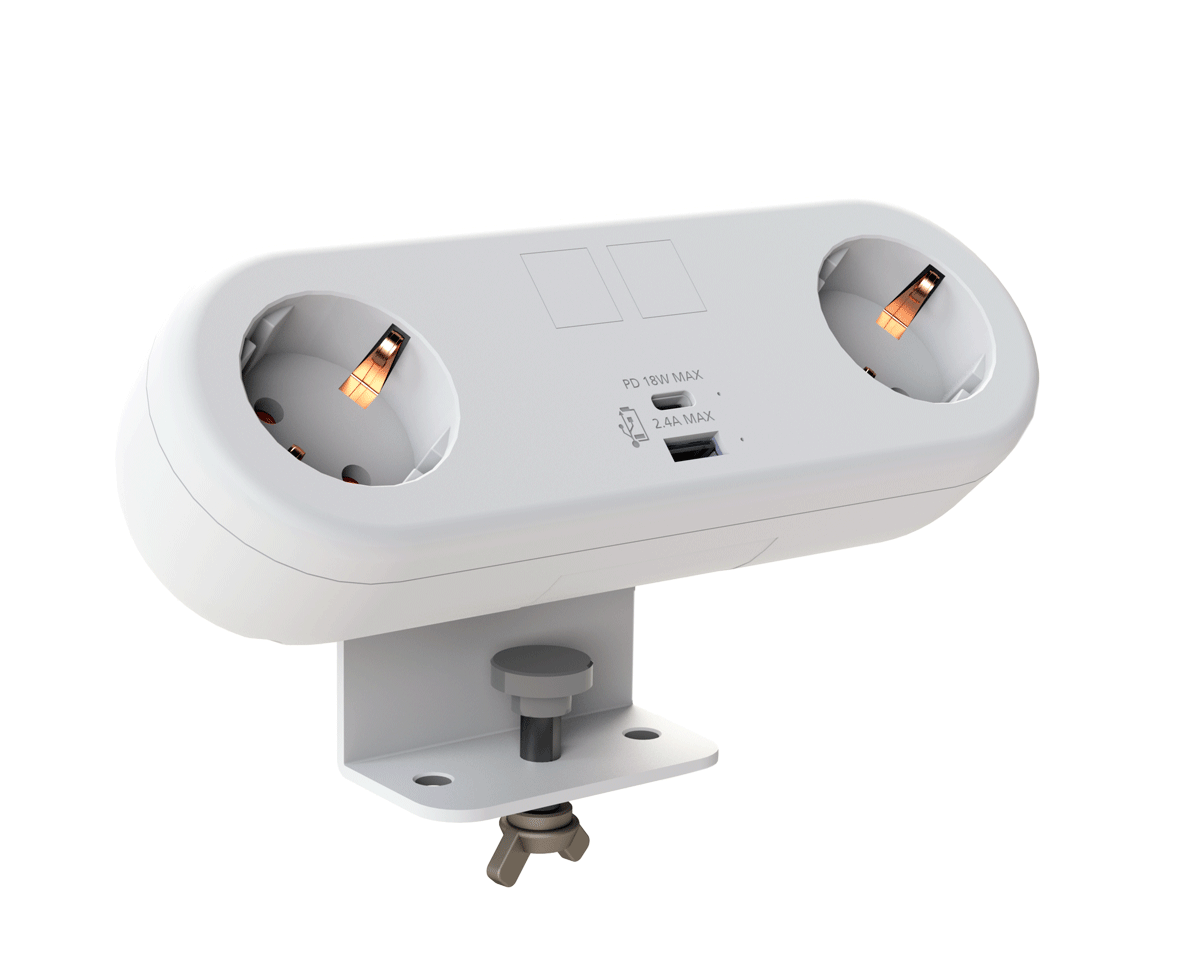
CMD Ltd, the specialist in power and connectivity solutions for commercial environments, has launched a Schuko version of its popular fixed format Capsule workstation power module for export to mainland Europe and beyond. A popular on desk power module comprising two sockets and dual USB (type A and C) chargers, CMD’s Capsule unit is already widely specified in the UK as an off-the-shelf workstation power...

Read more
CMD White Schuko Capsule Desk Power Module
CMD LTD EXTENDS MONITOR ARM RANGE WITH THE LAUNCH OF REACH PLUS

CMD Ltd, the specialist in ergonomic and connectivity solutions for commercial interiors, has completed its Reach monitor arm range with the launch of the Reach Plus. Available in single or dual screen options, the Reach Plus has been designed to provide an ideal solution for both single and dual screen workstation configurations, or can be used with next generation of large format curved screens. Suitable...

Read more

CMD Ltd DEMONSTRATES THE ART OF POWER DISTRIBUTION AT THE UNIVERSITY OF WARWICK

CMD Ltd, the specialist in workplace connectivity and ergonomic solutions, has provided Betatrak busbar power distribution and a range of electrical accessories for two major capital investment projects at the University of Warwick. Designed by Fielden Clegg Bradley Studios, the £33 million Faculty of Arts building is a showpiece development comprising four interconnected structures set around a central atrium, which will enable inter-disciplinary collaboration across...

Read more

University of Warwick
CMD BRINGS HARMONY TO COVENTRY UNIVERSITY RESEARCH FACILITIES

CMD Ltd, the specialist in power distribution solutions and workstation power and ergonomics, has provided under desk and on desk power modules for the refurbishment of three Coventry University research buildings. Located on Coventry University Technology Park, a business park designed to encourage collaboration between the university and knowledge-based businesses, the three buildings are being repurposed as office accommodation for university research teams. The refurbishment...

Read more

Coventry University

How to Choose Cast Iron Valves for Global Projects?

Choosing Cast Iron Valves for global projects requires more than comparing prices and flange dimensions. Engineers must examine pressure ratings, temperature limits, media compatibility, installation conditions, and maintenance access. A valve that performs well in a clean-water plant may fail quickly in abrasive slurry service. Small details matter.

Valve engineer John O’Brien says, “The right valve is selected by service conditions, not by appearance.” This principle guides the selection process throughout this article. Cast iron remains valuable because it offers strength, dimensional stability, cost efficiency, and reliable performance in many water, HVAC, fire-protection, and industrial systems. However, it is not suitable for every application. Corrosive chemicals, severe impact, freezing exposure, or sudden pressure surges may demand alternative materials.

Global procurement adds another layer of difficulty. Standards, face-to-face dimensions, coatings, testing records, and documentation can differ between regions. An apparently compatible valve may create installation delays or unexpected leakage. That mistake is easy to underestimate. Project teams should verify design codes, connection types, certification requirements, and local service support before placing orders.

This guide explores how to evaluate Cast Iron Valves for international projects. It considers technical performance, supplier reliability, lifecycle cost, and field experience. It also questions a common assumption: the lowest purchase price is rarely the lowest project cost. Sometimes, even experienced teams overlook transport damage, spare-parts availability, or unclear inspection records. Careful selection reduces those risks and supports safer, more dependable systems.

How to Choose Cast Iron Valves for Global Projects?

Define Project Requirements and Operating Conditions

How to Choose Cast Iron Valves for Global Projects?

Define Project Requirements and Operating Conditions

A cast iron valve should begin with the process, not the catalog. Record the fluid, pressure, temperature, flow direction, pipe size, and operating frequency. Drinking water, seawater, wastewater, and mildly corrosive chemicals create different material demands. They do not behave alike.

The U.S. Environmental Protection Agency’s 7th Drinking Water Infrastructure Needs Survey estimates $625 billion in U.S. investment needs over 20 years. This scale shows why early specification errors can become expensive. For global projects, confirm the design pressure and test pressure in the applicable standard. Check flange drilling, face-to-face dimensions, pressure class, and coating requirements before procurement. A valve that fits the pipe may still fail the project specification.

Operating conditions need physical detail. Note minimum and maximum temperatures, suspended solids, vacuum risk, water hammer, and installation altitude. A valve beside a pump may experience rapid pressure changes, even during routine shutdowns. Measure actuator torque under the worst expected condition. Include corrosion allowances and lining compatibility for aggressive water.

Use recognized standards, such as ISO, EN, or AWWA requirements, according to the project location. The WHO and UNICEF Joint Monitoring Programme reported that 2.2 billion people lacked safely managed drinking water in 2022. That figure reinforces the need for dependable, maintainable infrastructure.

A neat checklist can still mislead. Field data is often incomplete. Ask operators for failure history, inspection photographs, and actual pressure readings. Then challenge the specification before selecting cast iron.

Select the Right Cast Iron Valve Type

Selecting the right cast iron valve type starts with the service, not the purchase price. A gate valve suits full-open or full-closed isolation, where pressure loss must stay low. A globe valve offers better throttling, but its internal path creates higher resistance. A swing check valve prevents reverse flow in horizontal pipelines. Butterfly valves save space and weight, especially on large water lines.

Cast iron is not one material. Gray iron works for many low-pressure water services, while ductile iron handles higher mechanical stress. Confirm pressure, temperature, fluid chemistry, pipe orientation, and operating frequency before approval. The UN-Water World Water Development Report 2024 states that agriculture uses about 70% of global freshwater withdrawals. That figure makes corrosion control and reliable backflow protection important in irrigation projects. For flanged systems, check face-to-face dimensions against ISO 5752 or EN 558. Verify pressure ratings through the applicable regional standard. A familiar valve can still be wrong.

Tips: Use gate valves for isolation, not routine throttling. Choose globe valves for controlled flow. Use check valves near pumps, but review water hammer risk. Butterfly valves need careful seat and disc compatibility. Confirm coating requirements for treated or aggressive water. Request material certificates and pressure-test records. One practical weakness remains: many project schedules specify “cast iron valve” without defining the exact grade. That wording invites costly substitutions and field changes. A short technical datasheet review can prevent them.

How to Choose Cast Iron Valves for Global Projects?

Select the right cast iron valve type by matching its operating function with the project’s flow-control requirements. The chart uses a relative engineering screening score from 1 to 5, where 5 indicates strong suitability. Always verify pressure, temperature, media compatibility, standards, and certification requirements against the project specification.

Key point: Gate valves are commonly selected for full-flow isolation, globe valves for throttling, butterfly valves for compact isolation and moderate regulation, and check valves for preventing reverse flow.

Check Standards, Materials, and Pressure Ratings

How to Choose Cast Iron Valves for Global Projects?

For global projects, choose standards before comparing valve prices. Start by matching the valve to the project’s required code and connection system. ASME B16.1 commonly defines cast iron flange dimensions in inch-based systems. EN 1092-2 covers many metric flange connections. These systems are not automatically interchangeable. Always verify bolt holes, facing dimensions, and gasket details with the project drawings.

Material selection should follow the fluid, temperature, and installation environment. Gray cast iron, such as ASTM A126 grades, may suit moderate water service. Ductile iron, including EN-GJS grades, offers better strength and impact resistance. Check the body, bonnet, stem, seat, and coating separately. A valve may have a strong body but a poorly matched elastomer. That detail can cause leakage months later. Chlorinated water, seawater, chemicals, and abrasive fluids require different protection.

Pressure ratings need careful interpretation.
PN10, PN16, and Class 125 are not simple conversion equivalents. Confirm the rating at the actual operating temperature, not only at room temperature. Review pressure testing requirements under standards such as ISO 5208 or EN 12266. Field engineers should also check surge pressure, shutoff direction, and maintenance access. A spreadsheet can look complete while hiding one wrong assumption. I would recheck every rating against the contract specification, because this step is easy to underestimate.

Evaluate Suppliers, Certifications, and Global Compliance

Choosing cast iron valves for global projects requires more than comparing prices. Supplier capability, certification, and compliance must fit the installation country, service conditions, and project specifications. Check the valve’s pressure class, temperature range, media compatibility, and corrosion protection. Cast iron may suit water systems, but it can be unsuitable for severe impact or aggressive chemicals.

Request current certificates and test records, not only scanned brochures. Verify material certificates, heat numbers, pressure-test results, coating details, and inspection procedures. Certifications such as ISO 9001 can indicate controlled processes, but they do not prove every valve meets your specification. Confirm applicable standards, local approval requirements, marking rules, and documentation language before purchase. A qualified supplier should explain these differences clearly. During inspections, traceability from casting to shipment matters. Small gaps can create costly delays at customs or site acceptance.

Tips: Audit the supplier remotely or in person. Ask for recent project references in similar climates. Review sample documents before signing. Confirm spare parts and warranty response times. Do not accept “globally compliant” without evidence. I once overlooked a packaging detail, and moisture reached an unprotected flange face. The valves passed factory testing, but site preparation became harder. That mistake reinforced one point: reliable compliance includes transport, storage, installation, and after-sales support.

Plan Testing, Shipping, Installation, and Maintenance

How to Choose Cast Iron Valves for Global Projects?

A global valve plan starts with service conditions, not catalogue size. Record pressure, temperature, fluid chemistry, flow direction, and installation altitude. For water projects, ductile iron may suit pressure networks better than ordinary cast iron. Confirm the material against the project specification and applicable standards.

Testing must be traceable. Require shell and seat tests under ISO 5208 or EN 12266-1, with calibrated gauges and signed records. Check coating thickness, flange dimensions, and operating torque before release.

The NACE IMPACT study estimated global corrosion costs at 3.4% of GDP, or about US$2.5 trillion annually. That figure makes weak inspection expensive.

Still, test certificates alone are not enough. I would request photographs, serial traceability, and independent witness testing for critical valves.

Shipping needs protection from salt air, impact, and moisture. Use flange covers, sealed packing, lifting points, and desiccant inside suitable crates. At arrival, inspect rust, distortion, missing fasteners, and damaged coatings. During installation, keep the pipe aligned and prevent the valve from carrying pipe loads. Flush debris before operation. Small stones can damage seats quickly.

Maintenance intervals should reflect cycling, water quality, and failure risk, not habit. The WHO and UNICEF Joint Monitoring Programme reported that 2.2 billion people lacked safely managed drinking water in 2022. In such systems, accessible spare parts and clear inspection records matter. My practical weakness is assuming identical maintenance across countries; climate, skills, and supply delays can change the plan.