

News

Miro: A New Standard in Responsible Innovation

Miro: A New Standard in Responsible Innovation The Miro monitor arm is setting new benchmarks in sustainability. It offers a high-performance solution without compromising on environmental responsibility. Designed with careful material selection, local sourcing, and longevity in mind, Miro’s responsible approach to design and unique manoeuvrability set it apart from the competition. Sustainable Choices Miro is crafted from energy-efficient materials with a lower carbon impact....

Read more
HSE Advisor

Role Purpose Support in the development, implementation and maintenance of the company’s Health, Safety & Environmental policies, processes, operational procedures, and standards.  Ensuring best practice and championing a continually improving HSE culture within the business. Key Responsibilities Liaise with and provide support to all areas of the business to eliminate, mitigate or reduce identified HSE exposures. Partner with the production management team and team leaders,...

Read more
CMD Ltd LAUNCHES 48-HOUR TURNAROUND ON BETATRAK® RAPID ORDERING SERVICE

CMD Ltd, the specialist in power distribution systems, workstation power and monitor arms, has launched a rapid ordering service for its Betatrak® underfloor powertrack distribution systems and accessories, with a commitment to delivering within 48-hours of an approved purchase order*. The service enables customers to order up to 50 lengths of Standard or Clean Earth (C/E) low noise Betatrak, along with up to 25 feed...

Read more

CMD INVESTS £1/4 MILLION IN NEW MACHINE AS PART OF FACTORY UPGRADE

We have invested in a new £1/4m TRUMPF CNC metal punch as part of an asset renewal strategy for our UK manufacturing capability. The new machine will be used in the production of a wide variety of our power distribution systems and workstation power products at our Rotherham factory. Suitable for handling sheet metal between 0.9mm and 3.0mm thick, the new machine will replace one...

Read more

CMD CATALOGUE PROVIDES TECHNICAL POWER DISTRIBUTION GUIDE

CMD Ltd has released a new catalogue, providing an easy to follow technical guide to our power distribution systems and plug and play desk modules. Detailing CMD’s full range of UK-manufactured power distribution systems and plug and play desk modules, the catalogue will be a helpful source of information to M&E engineers and contractors alike to understand how our power distribution systems connect together and...

Read more

Power Distribution Catalogue
CMD Ltd PLAYS ESSENTIAL ROLE IN ELECTRICAL FIT OUT AT LONDON’S PRESTIGIOUS OFFICE DEVELOPMENT

CMD Ltd, specialist in workplace connectivity and ergonomic solutions, has provided a flexible and high-quality power distribution network for The Ray, a prestigious office development in London’s Farringdon. Well-known for being the former site of The Guardian newspaper, The Ray now stands as an 83,000ft² office development characterised by a modernised warehouse aesthetic, with level two now occupied by a global social media company. The...

Read more

The Ray
CMD plugs in to european opportunity with Schuko Capsule unit launch

CMD Ltd, the specialist in power and connectivity solutions for commercial environments, has launched a Schuko version of its popular fixed format Capsule workstation power module for export to mainland Europe and beyond. A popular on desk power module comprising two sockets and dual USB (type A and C) chargers, CMD’s Capsule unit is already widely specified in the UK as an off-the-shelf workstation power...

Read more

CMD White Schuko Capsule Desk Power Module
CMD LTD EXTENDS MONITOR ARM RANGE WITH THE LAUNCH OF REACH PLUS

CMD Ltd, the specialist in ergonomic and connectivity solutions for commercial interiors, has completed its Reach monitor arm range with the launch of the Reach Plus. Available in single or dual screen options, the Reach Plus has been designed to provide an ideal solution for both single and dual screen workstation configurations, or can be used with next generation of large format curved screens. Suitable...

Read more

CMD Ltd DEMONSTRATES THE ART OF POWER DISTRIBUTION AT THE UNIVERSITY OF WARWICK

CMD Ltd, the specialist in workplace connectivity and ergonomic solutions, has provided Betatrak busbar power distribution and a range of electrical accessories for two major capital investment projects at the University of Warwick. Designed by Fielden Clegg Bradley Studios, the £33 million Faculty of Arts building is a showpiece development comprising four interconnected structures set around a central atrium, which will enable inter-disciplinary collaboration across...

Read more

University of Warwick
CMD BRINGS HARMONY TO COVENTRY UNIVERSITY RESEARCH FACILITIES

CMD Ltd, the specialist in power distribution solutions and workstation power and ergonomics, has provided under desk and on desk power modules for the refurbishment of three Coventry University research buildings. Located on Coventry University Technology Park, a business park designed to encourage collaboration between the university and knowledge-based businesses, the three buildings are being repurposed as office accommodation for university research teams. The refurbishment...

Read more

Coventry University

How to Choose a Residential Passenger Lift for Your Home

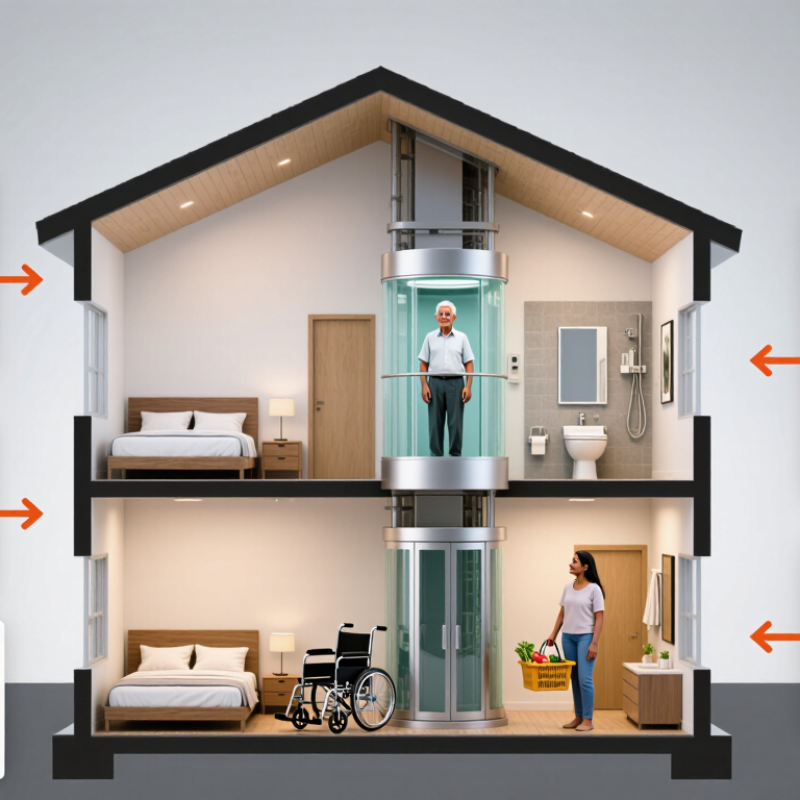
A Residential Passenger Lift can make a familiar home easier to use as needs change. It may connect a ground-floor bedroom with an upstairs bathroom, or help carry groceries between levels. The need is growing. The World Health Organization’s 2024 ageing fact sheet projects that one in six people worldwide will be aged 60 or older by 2030. AARP’s 2021 Home and Community Preferences Survey found that 77% of adults aged 50 and older want to remain in their homes as they age. These reports describe a clear preference, not a guarantee that every home can be adapted easily.

Choosing a lift takes more than comparing cabin styles. Measure the available space, including the landing area and access route. Check how many floors it must serve, who will use it, and whether a wheelchair or mobility aid needs to fit inside. Think about door positions, backup power, emergency communication, maintenance access, noise, and operating costs. A compact unit may suit a narrow hallway, but it can feel restrictive in daily use. Space is finite. So is the budget.

The best option depends on the building and the people living in it. Ask a qualified lift professional to assess the site and explain installation requirements, safety features, service arrangements, and likely modifications. Request written specifications and compare them carefully. A lift is not magic. Even a well-chosen model can disappoint if the doorway is awkward or the controls are hard to reach. The ideal choice is rarely obvious; thoughtful planning helps reveal which trade-offs are acceptable for your home.

How to Choose a Residential Passenger Lift for Your Home

Assess Household Needs and Available Space

Before choosing a residential passenger lift, note who will use it and how their needs may change. A parent carrying laundry has different priorities from someone using a wheelchair. Measure the widest mobility aid, including handles, and allow room to turn at each landing. Ask whether the lift must carry a caregiver, groceries, or a folded stroller too. Small details matter.

Then check the available space on every floor. Record ceiling heights, doorway widths, stair positions, and nearby walls. A tape measure helps, but it cannot confirm whether a floor can support the equipment or whether services run beneath it. A qualified lift professional should assess the structure and explain the required shaft, pit, overhead clearance, and power supply. These needs vary by lift design. Keep a clear route to the proposed entrance; a lift that fits on paper may still block a cupboard door or narrow a hallway. That is easy to overlook. Think about noise near bedrooms, too, and where the doors will open. If space is tight, compare layouts before settling on a smaller cabin. It may work today, but feel restrictive later. I would recheck every measurement before ordering; one missed skirting board can change the usable opening.

Compare Lift Types, Capacity, and Design Options

Residential lifts differ in how they move and what a home can accommodate. Hydraulic models often provide a smooth ride, but may need space for additional equipment. Traction lifts use a counterweight and can suit homes where energy use and a compact layout matter. Screw-driven systems have different installation needs and may be considered when space is limited. There is no universal best type. Noise, travel distance, floor openings, and local building conditions all affect the choice.

Capacity is more than a number on a specification sheet. Consider who will ride together, whether a wheelchair or walking aid must fit, and whether groceries need room too. Measure the proposed cabin and doorway, not just the available shaft space. A lift that technically carries two people may still feel cramped with a mobility device. Ask a qualified installer to confirm load, clearances, and structural requirements before planning the opening.

Design choices shape daily use. Sliding or hinged doors, control height, lighting, handrails, and floor finishes can improve comfort and access. Match the cabin to nearby flooring and trim, but check that finishes are durable and easy to clean. A glossy sample can look different in a dim hallway. Small details matter. It is also easy to focus on appearance and overlook maintenance access, which deserves equal attention.

Check Safety Features and Accessibility Requirements

When comparing a residential passenger lift, treat safety and accessibility as daily needs, not optional extras. The CDC’s Older Adult Falls Data reports that more than one in four adults aged 65 and older falls each year. This figure does not determine lift size, but it highlights the value of stable transfers and clear entryways. Small details matter.

Ask a qualified installer which local rules and edition of ASME A17.1/CSA B44 apply. Check door interlocks, emergency lowering, backup power, alarm communication, obstruction sensors, and handrails. Request a documented inspection and maintenance schedule. Test the emergency procedure yourself. A feature you cannot operate under stress may offer limited reassurance.

Measure the largest mobility aid, not just the person: wheelchair footprint, walker clearance, door opening, and landing approach. Put controls within comfortable seated reach, with clear labels and audible or tactile feedback where needed. The CDC’s STEADI fall-prevention resources recommend considering individual risks and surroundings. An occupational therapist or accessibility specialist can help assess both. A wider cab may take valuable floor space, and the largest model is not automatically best. Check turning space and threshold height on site.

Estimate Installation Costs and Home Modifications

A residential passenger lift’s price depends on more than the lift itself. Ask for an itemized estimate covering equipment, delivery, installation, electrical work, and finishing. Then check what the quote excludes. Repairs to flooring or walls may appear later as separate costs.

Look closely at the proposed location. A lift beside a staircase may need a new opening through the floor, while another design could require a compact shaft, a pit, or extra headroom. A structural professional can assess joists, foundations, and load paths before work begins. Measure doorways and check whether cables, pipes, or heating ducts need moving. Small changes add up.

Costs vary widely with the home and lift configuration, so compare written, site-specific estimates rather than relying on a generic online figure. Ask whether building approval, inspections, and making good are included. Get the schedule too: several days of construction can affect access to nearby rooms. A 10–15% contingency may help with unexpected work, but it is only a planning cushion. Even careful estimates miss things; an awkward beam or a finished floor that sits higher than expected can change the plan.

Review Building Rules, Maintenance, and Supplier Support

Before choosing a residential passenger lift, check local building rules with the relevant permit office and a qualified building professional. Requirements can affect shaft dimensions, headroom, pit depth, electrical supply, fire separation, and access routes. Existing homes may need a structural review, especially where a lift opening crosses floor joists. Ask early. Keep written notes on approvals and site limits; assumptions made during a showroom visit can prove costly.

Maintenance deserves equal attention. Ask what inspections and servicing the lift needs, how often they are recommended, and which tasks require trained technicians. Request a clear schedule, likely replacement-part intervals, and the process for a lift that stops between floors. Small details matter. A service plan should explain response hours, call-out charges, and whether commonly needed parts are stocked nearby. Check who arranges routine visits after installation.

Supplier support is easier to judge before signing. Ask who coordinates the survey, installation, commissioning, and later repairs; confirm whether one team remains accountable. Request technical drawings, operating instructions, warranty exclusions, and contact details for urgent assistance in writing. If answers are vague or timelines feel optimistic, compare them with the project schedule. A dependable supplier should explain constraints plainly, including noise, delivery access, and work needed to restore walls or flooring. Those conversations can feel tedious, but they often reveal what the quote leaves out.