

News

Miro: A New Standard in Responsible Innovation

Miro: A New Standard in Responsible Innovation The Miro monitor arm is setting new benchmarks in sustainability. It offers a high-performance solution without compromising on environmental responsibility. Designed with careful material selection, local sourcing, and longevity in mind, Miro’s responsible approach to design and unique manoeuvrability set it apart from the competition. Sustainable Choices Miro is crafted from energy-efficient materials with a lower carbon impact....

Read more
HSE Advisor

Role Purpose Support in the development, implementation and maintenance of the company’s Health, Safety & Environmental policies, processes, operational procedures, and standards.  Ensuring best practice and championing a continually improving HSE culture within the business. Key Responsibilities Liaise with and provide support to all areas of the business to eliminate, mitigate or reduce identified HSE exposures. Partner with the production management team and team leaders,...

Read more
CMD Ltd LAUNCHES 48-HOUR TURNAROUND ON BETATRAK® RAPID ORDERING SERVICE

CMD Ltd, the specialist in power distribution systems, workstation power and monitor arms, has launched a rapid ordering service for its Betatrak® underfloor powertrack distribution systems and accessories, with a commitment to delivering within 48-hours of an approved purchase order*. The service enables customers to order up to 50 lengths of Standard or Clean Earth (C/E) low noise Betatrak, along with up to 25 feed...

Read more

CMD INVESTS £1/4 MILLION IN NEW MACHINE AS PART OF FACTORY UPGRADE

We have invested in a new £1/4m TRUMPF CNC metal punch as part of an asset renewal strategy for our UK manufacturing capability. The new machine will be used in the production of a wide variety of our power distribution systems and workstation power products at our Rotherham factory. Suitable for handling sheet metal between 0.9mm and 3.0mm thick, the new machine will replace one...

Read more

CMD CATALOGUE PROVIDES TECHNICAL POWER DISTRIBUTION GUIDE

CMD Ltd has released a new catalogue, providing an easy to follow technical guide to our power distribution systems and plug and play desk modules. Detailing CMD’s full range of UK-manufactured power distribution systems and plug and play desk modules, the catalogue will be a helpful source of information to M&E engineers and contractors alike to understand how our power distribution systems connect together and...

Read more

Power Distribution Catalogue
CMD Ltd PLAYS ESSENTIAL ROLE IN ELECTRICAL FIT OUT AT LONDON’S PRESTIGIOUS OFFICE DEVELOPMENT

CMD Ltd, specialist in workplace connectivity and ergonomic solutions, has provided a flexible and high-quality power distribution network for The Ray, a prestigious office development in London’s Farringdon. Well-known for being the former site of The Guardian newspaper, The Ray now stands as an 83,000ft² office development characterised by a modernised warehouse aesthetic, with level two now occupied by a global social media company. The...

Read more

The Ray
CMD plugs in to european opportunity with Schuko Capsule unit launch

CMD Ltd, the specialist in power and connectivity solutions for commercial environments, has launched a Schuko version of its popular fixed format Capsule workstation power module for export to mainland Europe and beyond. A popular on desk power module comprising two sockets and dual USB (type A and C) chargers, CMD’s Capsule unit is already widely specified in the UK as an off-the-shelf workstation power...

Read more

CMD White Schuko Capsule Desk Power Module
CMD LTD EXTENDS MONITOR ARM RANGE WITH THE LAUNCH OF REACH PLUS

CMD Ltd, the specialist in ergonomic and connectivity solutions for commercial interiors, has completed its Reach monitor arm range with the launch of the Reach Plus. Available in single or dual screen options, the Reach Plus has been designed to provide an ideal solution for both single and dual screen workstation configurations, or can be used with next generation of large format curved screens. Suitable...

Read more

CMD Ltd DEMONSTRATES THE ART OF POWER DISTRIBUTION AT THE UNIVERSITY OF WARWICK

CMD Ltd, the specialist in workplace connectivity and ergonomic solutions, has provided Betatrak busbar power distribution and a range of electrical accessories for two major capital investment projects at the University of Warwick. Designed by Fielden Clegg Bradley Studios, the £33 million Faculty of Arts building is a showpiece development comprising four interconnected structures set around a central atrium, which will enable inter-disciplinary collaboration across...

Read more

University of Warwick
CMD BRINGS HARMONY TO COVENTRY UNIVERSITY RESEARCH FACILITIES

CMD Ltd, the specialist in power distribution solutions and workstation power and ergonomics, has provided under desk and on desk power modules for the refurbishment of three Coventry University research buildings. Located on Coventry University Technology Park, a business park designed to encourage collaboration between the university and knowledge-based businesses, the three buildings are being repurposed as office accommodation for university research teams. The refurbishment...

Read more

Coventry University

How to Choose a Permanent Magnet Air Compressor in 2026?

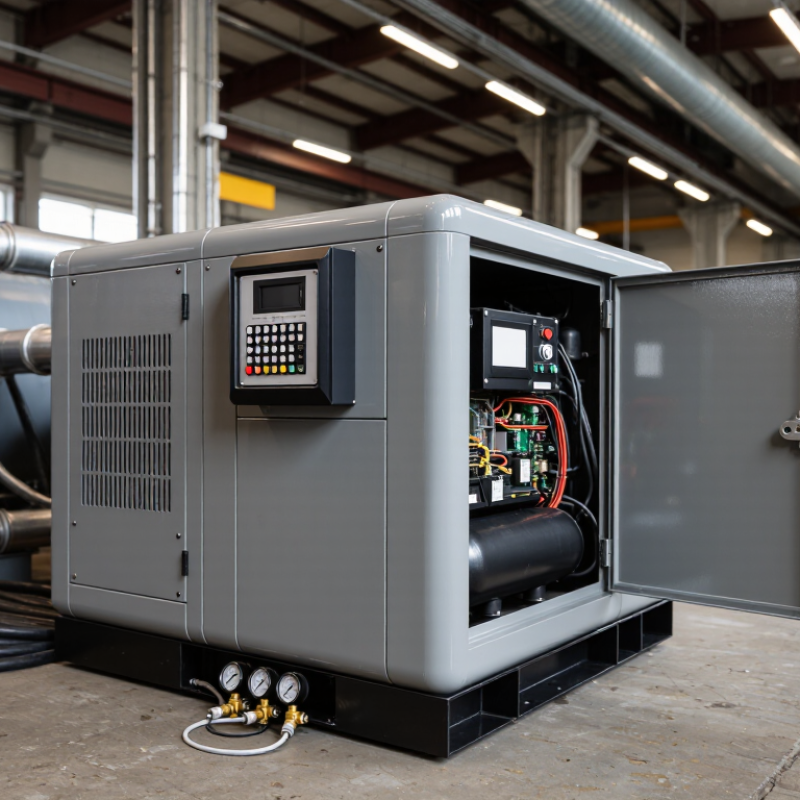
Choosing a Permanent Magnet Air Compressor in 2026 requires more than comparing motor efficiency percentages. A reliable decision starts with the air system itself. Measure average demand, peak demand, operating pressure, and daily running hours. A compressor sized only for peak demand may waste energy during quieter production periods. An undersized model may run continuously and struggle to maintain stable pressure.

Permanent magnet technology can reduce transmission losses and improve efficiency during variable-speed operation. However, results depend on the inverter, cooling design, control software, and installation conditions. Review performance data tested under recognized standards, such as ISO 1217, when available. Check the specific power rating, pressure range, noise level, motor protection, and service intervals. A clean factory floor is not guaranteed. Dust, heat, humidity, and poor ventilation can quickly affect performance.

Look beyond the nameplate. Ask for measured data at your operating pressure, not only promotional figures. Check whether local technicians can service the drive and controller. Inspect monitoring functions, alarm records, leak detection compatibility, and remote support options. During evaluation, listen for abnormal startup noise and watch pressure fluctuations across a normal production shift. Small details matter.

A spreadsheet helps, but it cannot predict every installation problem. Energy savings may be overstated when demand patterns are misunderstood. That is an uncomfortable possibility. This guide examines practical selection factors for 2026, including lifecycle cost, reliability, controls, maintenance, and supplier credibility. The goal is not to choose the most advanced machine. It is to choose a compressor that performs consistently in the real workplace.

How to Choose a Permanent Magnet Air Compressor in 2026?

What Is a Permanent Magnet Air Compressor?

How to Choose a Permanent Magnet Air Compressor in 2026?

What Is a Permanent Magnet Air Compressor?

A permanent magnet air compressor uses a motor with magnets embedded in its rotor. Unlike an induction motor, the rotor needs no electrical current to create its magnetic field. This design reduces rotor losses and supports efficient speed control through an inverter. The compressor can slow down when air demand falls, instead of running at full speed continuously.

The U.S. Department of Energy reports that compressed air may represent about 10% of industrial electricity use. Its compressed air assessments also identify potential energy savings of 20% to 50% in poorly managed systems. These figures explain the interest in permanent magnet technology, especially in factories with changing production loads. The International Energy Agency has also reported that electric motor systems consume roughly half of global electricity. Small motor improvements can matter at plant scale.

Look beyond the efficiency label. Check measured power consumption at your actual pressure, flow, and duty cycle. A unit rated at 75 kW may behave differently at 40% load. Ask for test conditions, sound levels, cooling requirements, and inverter protection details. The caveat is important: permanent magnets do not solve leaks, oversized piping, or poor controls. I would not trust a brochure number without logged plant data. In practice, a pressure sensor, an ultrasonic leak survey, and one week of energy monitoring often reveal more than a polished specification sheet.

How Permanent Magnet Air Compressors Work

How to Choose a Permanent Magnet Air Compressor in 2026?

A permanent magnet air compressor uses a motor with embedded magnets to create rotation. The motor receives controlled electrical pulses from an inverter. This inverter adjusts speed according to the factory’s air demand. When production needs less air, the motor slows instead of running fully loaded. That reduces wasted energy during unloading periods.

A screw element compresses air through two rotating screw rotors. Oil-injected models also use oil for sealing, cooling, and lubrication. The oil then passes through separation and filtration stages. In field inspections, I have seen efficiency claims change when leaks, dirty filters, or high discharge pressure were present. The technology is advanced, but it is not automatically the best choice. A poorly sized compressor can still consume unnecessary power.

Tips: Compare measured input power at several pressure levels. Check whether the inverter and motor have suitable cooling in your plant. Review service access around filters, separators, and oil lines. Ask for performance data under your real duty cycle, not only laboratory conditions. A smaller unit may work well, but frequent peak demand can cause unstable pressure. I would also measure leaks before final selection. That step is often overlooked.

Which Technical Specifications Matter Most?

How to Choose a Permanent Magnet Air Compressor in 2026?

The most important specification is actual free air delivery, not motor size. Check FAD at your required pressure, such as 7 or 8 bar. A larger kW rating does not always provide more usable air. Ask for test conditions and measurement standards. Small differences become expensive during long production shifts.

Specific power shows efficiency more clearly. Compare the compressor’s kW per cubic metre per minute at the same pressure. A permanent magnet motor can reduce losses, especially during variable demand. However, savings depend on the inverter, cooling system, and operating profile. Review the speed range and minimum stable output. Poor control at low demand may cause cycling and wasted energy. It happens more often than sales sheets suggest.

Check the motor’s insulation class, protection rating, ambient temperature limit, and cooling method. A dusty workshop needs reliable filtration and easy access to service parts. Confirm noise levels, voltage tolerance, restart behaviour, and controller alarms. If air quality matters, examine the dryer’s pressure dew point and filtration arrangement. I also measure inlet temperature and pressure drop on site, because brochures cannot describe every installation. Leave capacity for leakage and future demand, but avoid oversized equipment. Oversizing can keep the machine below its efficient range. That trade-off deserves a real load profile, not a guess.

How to Compare Energy Efficiency and Operating Costs

Permanent Magnet Air Compressor in 2026: Comparing Energy Efficiency and Operating Costs

Choosing a permanent magnet air compressor in 2026 requires more than reading the motor efficiency label. Measure your real demand first. A workshop using 6 bar air for eight hours needs a different solution from a plant running near 10 bar continuously. Check leakage, pressure drops, duty cycle, and unloading time. These details often change the payback calculation.

Compare specific power, expressed as kilowatts per cubic metre per minute, at your normal pressure. A lower number usually means less electricity for the same air output. Ask for test data under conditions close to yours, not only the best laboratory figure.

Record running hours and local electricity rates. Then estimate annual energy cost by multiplying power consumption, operating hours, and the tariff. Include filters, separator service, cooling parts, and planned maintenance. Energy is only part of ownership.

Permanent magnet systems can reduce losses during variable demand because speed control follows air consumption. However, savings are not automatic. Oversizing may cause inefficient low-load operation, while poor ventilation can increase thermal stress.

I have seen estimates fail because weekend use was ignored. That mistake is easy to repeat.

Leave room for uncertainty. Compare at least three load scenarios, and request measured noise, temperature, and service data. A higher purchase price may be reasonable when verified energy savings cover the difference within an acceptable period.

How to Select the Right Compressor for Your Application

Choosing a permanent magnet air compressor in 2026 starts with the application, not the motor label. Measure peak flow, average demand, working pressure, and daily operating hours. The U.S. Department of Energy reports that compressed air can consume about 10% of industrial electricity. Small sizing errors can therefore become expensive.

Check the load profile carefully. A factory using air intermittently may need a variable-speed compressor, while a constant production line may favor stable base-load equipment. Permanent magnet motors can reduce losses, especially during partial-load operation, but actual savings depend on controls, cooling, and maintenance. The European Commission’s energy-efficiency guidance emphasizes system-level performance rather than component ratings alone. That distinction matters.

Air quality is equally important. Food processing, electronics, and painting applications may require specific filtration, drying, and pressure dew-point performance. ISO 8573-1 provides a framework for compressed-air purity classes. Review the standard before selecting treatment equipment. Receiver capacity also deserves attention. It can reduce rapid cycling and stabilize pressure near long pipe runs.

Do not size the compressor only for the largest machine. That mistake is common. Audit leaks first; the DOE notes that poorly maintained systems may lose a significant share of generated air through leakage. I would choose a slightly conservative flow margin, but not an oversized unit. Oversizing increases idle running and weakens efficiency. A practical decision should compare measured demand, lifecycle energy, service access, ambient temperature, and noise limits—not brochure efficiency alone.