

News

Miro: A New Standard in Responsible Innovation

Miro: A New Standard in Responsible Innovation The Miro monitor arm is setting new benchmarks in sustainability. It offers a high-performance solution without compromising on environmental responsibility. Designed with careful material selection, local sourcing, and longevity in mind, Miro’s responsible approach to design and unique manoeuvrability set it apart from the competition. Sustainable Choices Miro is crafted from energy-efficient materials with a lower carbon impact....

Read more
HSE Advisor

Role Purpose Support in the development, implementation and maintenance of the company’s Health, Safety & Environmental policies, processes, operational procedures, and standards.  Ensuring best practice and championing a continually improving HSE culture within the business. Key Responsibilities Liaise with and provide support to all areas of the business to eliminate, mitigate or reduce identified HSE exposures. Partner with the production management team and team leaders,...

Read more
CMD Ltd LAUNCHES 48-HOUR TURNAROUND ON BETATRAK® RAPID ORDERING SERVICE

CMD Ltd, the specialist in power distribution systems, workstation power and monitor arms, has launched a rapid ordering service for its Betatrak® underfloor powertrack distribution systems and accessories, with a commitment to delivering within 48-hours of an approved purchase order*. The service enables customers to order up to 50 lengths of Standard or Clean Earth (C/E) low noise Betatrak, along with up to 25 feed...

Read more

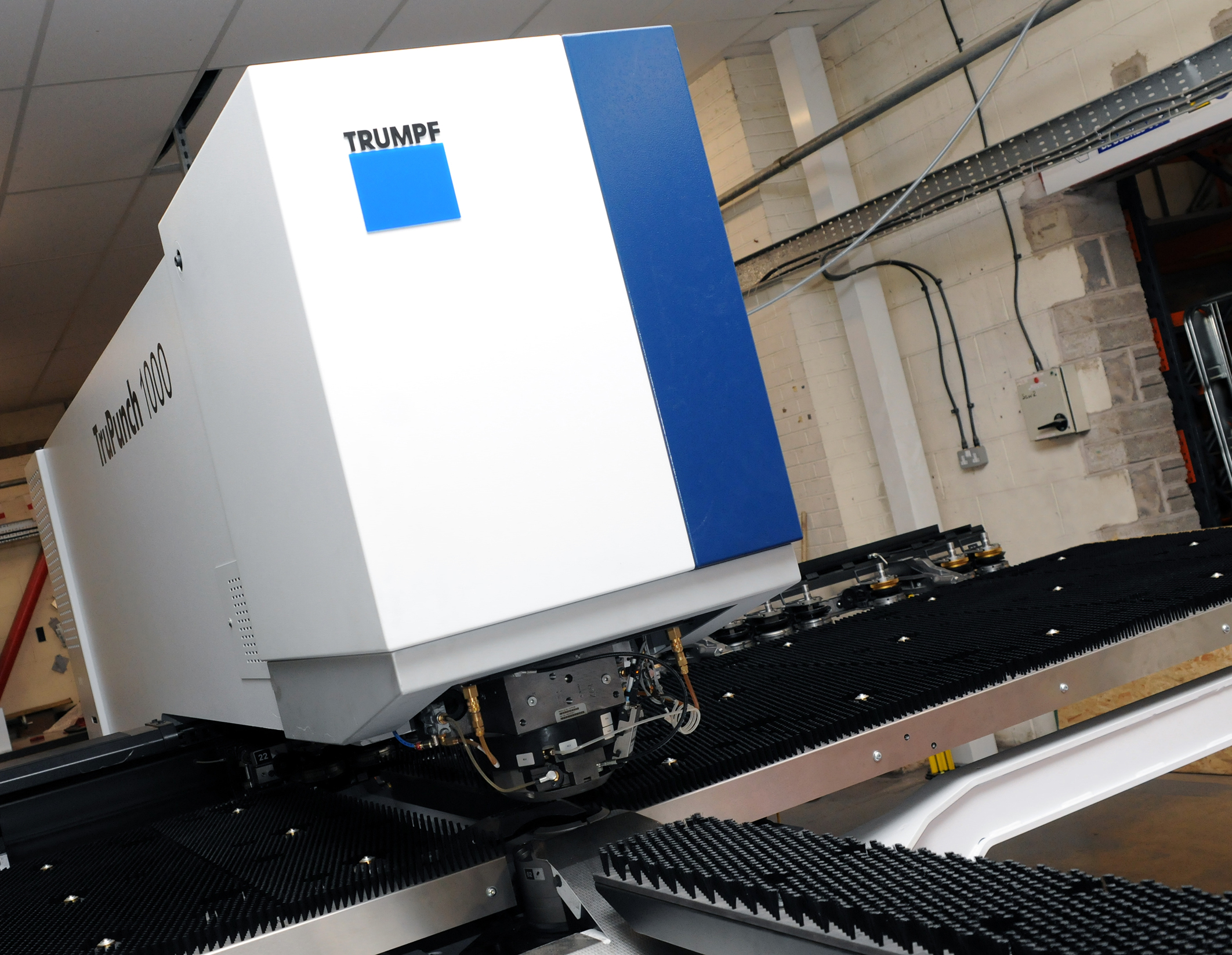
CMD INVESTS £1/4 MILLION IN NEW MACHINE AS PART OF FACTORY UPGRADE

We have invested in a new £1/4m TRUMPF CNC metal punch as part of an asset renewal strategy for our UK manufacturing capability. The new machine will be used in the production of a wide variety of our power distribution systems and workstation power products at our Rotherham factory. Suitable for handling sheet metal between 0.9mm and 3.0mm thick, the new machine will replace one...

Read more
CMD CATALOGUE PROVIDES TECHNICAL POWER DISTRIBUTION GUIDE

CMD Ltd has released a new catalogue, providing an easy to follow technical guide to our power distribution systems and plug and play desk modules. Detailing CMD’s full range of UK-manufactured power distribution systems and plug and play desk modules, the catalogue will be a helpful source of information to M&E engineers and contractors alike to understand how our power distribution systems connect together and...

Read more
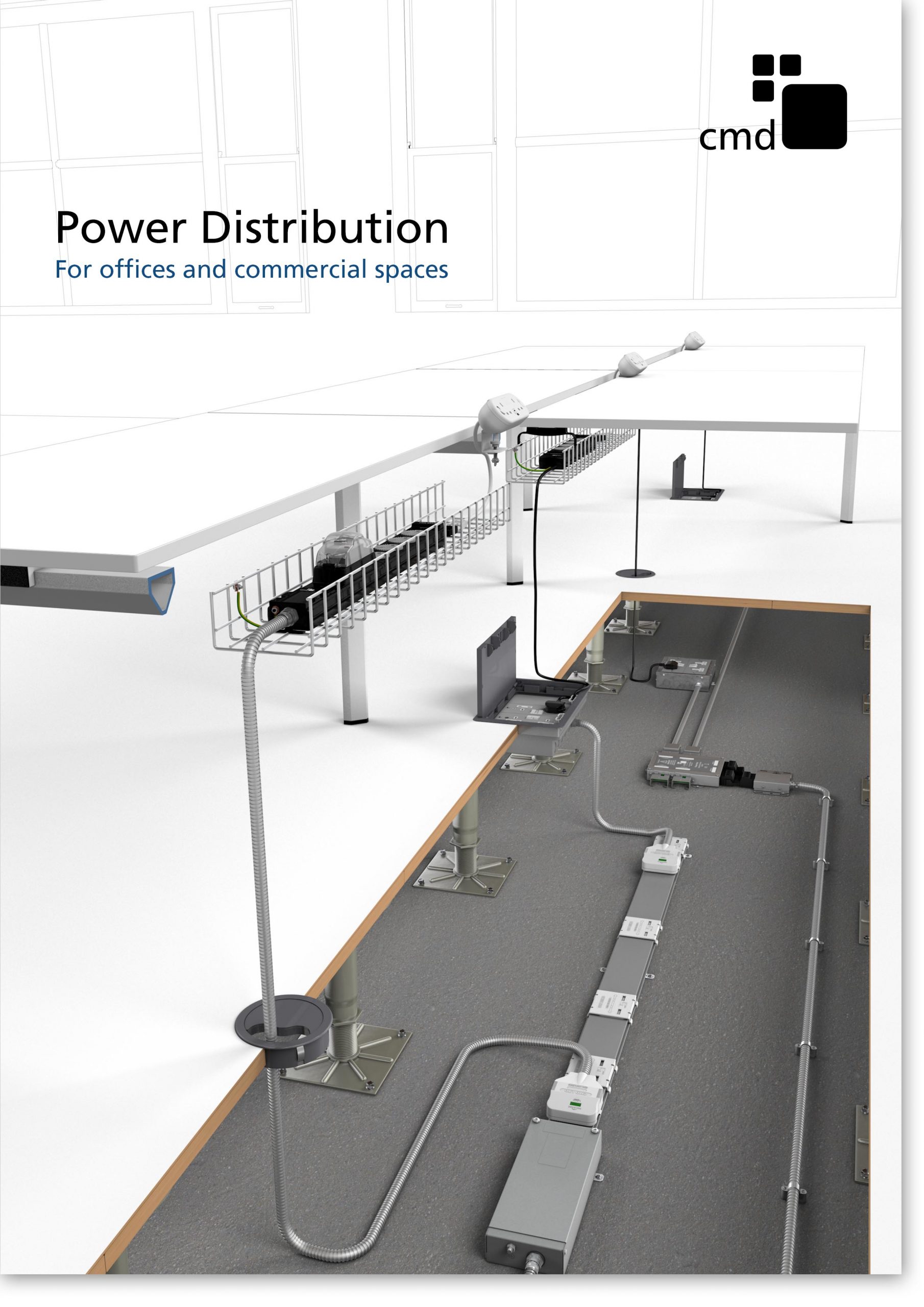
Power Distribution Catalogue
CMD Ltd PLAYS ESSENTIAL ROLE IN ELECTRICAL FIT OUT AT LONDON’S PRESTIGIOUS OFFICE DEVELOPMENT

CMD Ltd, specialist in workplace connectivity and ergonomic solutions, has provided a flexible and high-quality power distribution network for The Ray, a prestigious office development in London’s Farringdon. Well-known for being the former site of The Guardian newspaper, The Ray now stands as an 83,000ft² office development characterised by a modernised warehouse aesthetic, with level two now occupied by a global social media company. The...

Read more

The Ray
CMD plugs in to european opportunity with Schuko Capsule unit launch

CMD Ltd, the specialist in power and connectivity solutions for commercial environments, has launched a Schuko version of its popular fixed format Capsule workstation power module for export to mainland Europe and beyond. A popular on desk power module comprising two sockets and dual USB (type A and C) chargers, CMD’s Capsule unit is already widely specified in the UK as an off-the-shelf workstation power...

Read more
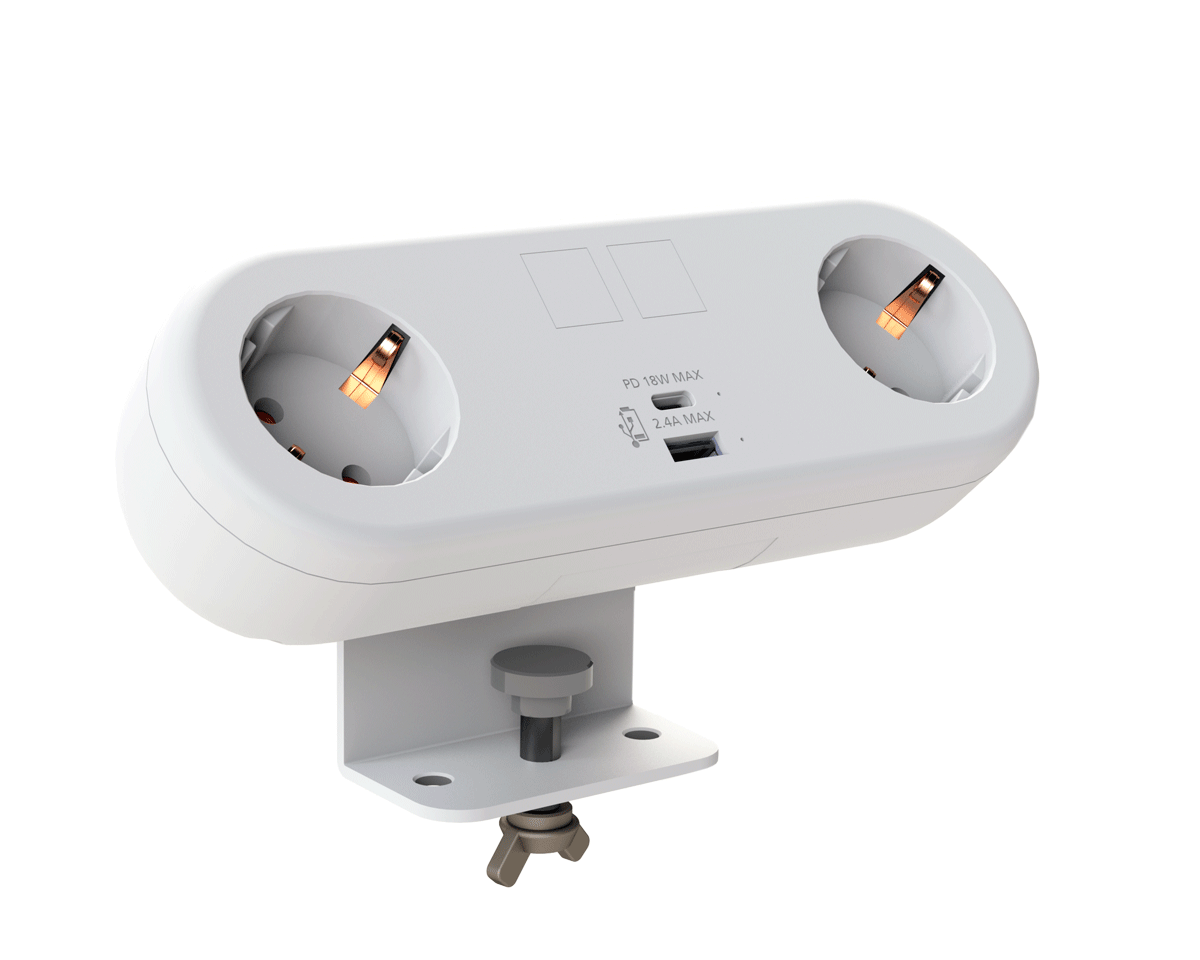
CMD White Schuko Capsule Desk Power Module
CMD LTD EXTENDS MONITOR ARM RANGE WITH THE LAUNCH OF REACH PLUS

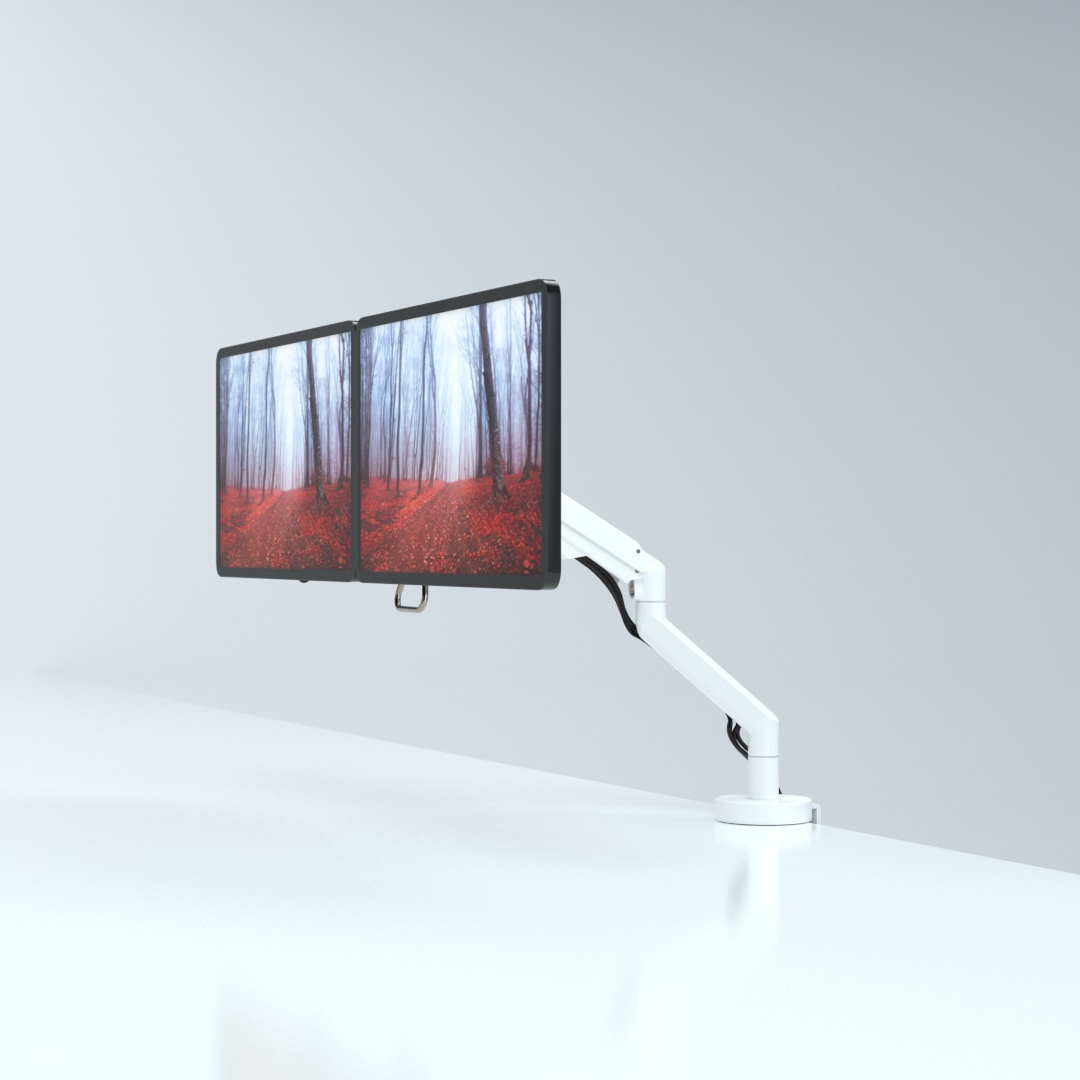
CMD Ltd, the specialist in ergonomic and connectivity solutions for commercial interiors, has completed its Reach monitor arm range with the launch of the Reach Plus. Available in single or dual screen options, the Reach Plus has been designed to provide an ideal solution for both single and dual screen workstation configurations, or can be used with next generation of large format curved screens. Suitable...

Read more
CMD Ltd DEMONSTRATES THE ART OF POWER DISTRIBUTION AT THE UNIVERSITY OF WARWICK

CMD Ltd, the specialist in workplace connectivity and ergonomic solutions, has provided Betatrak busbar power distribution and a range of electrical accessories for two major capital investment projects at the University of Warwick. Designed by Fielden Clegg Bradley Studios, the £33 million Faculty of Arts building is a showpiece development comprising four interconnected structures set around a central atrium, which will enable inter-disciplinary collaboration across...

Read more

University of Warwick
CMD BRINGS HARMONY TO COVENTRY UNIVERSITY RESEARCH FACILITIES

CMD Ltd, the specialist in power distribution solutions and workstation power and ergonomics, has provided under desk and on desk power modules for the refurbishment of three Coventry University research buildings. Located on Coventry University Technology Park, a business park designed to encourage collaboration between the university and knowledge-based businesses, the three buildings are being repurposed as office accommodation for university research teams. The refurbishment...

Read more
Coventry University

Why Choose Sand Molding Process for Your Manufacturing Needs?

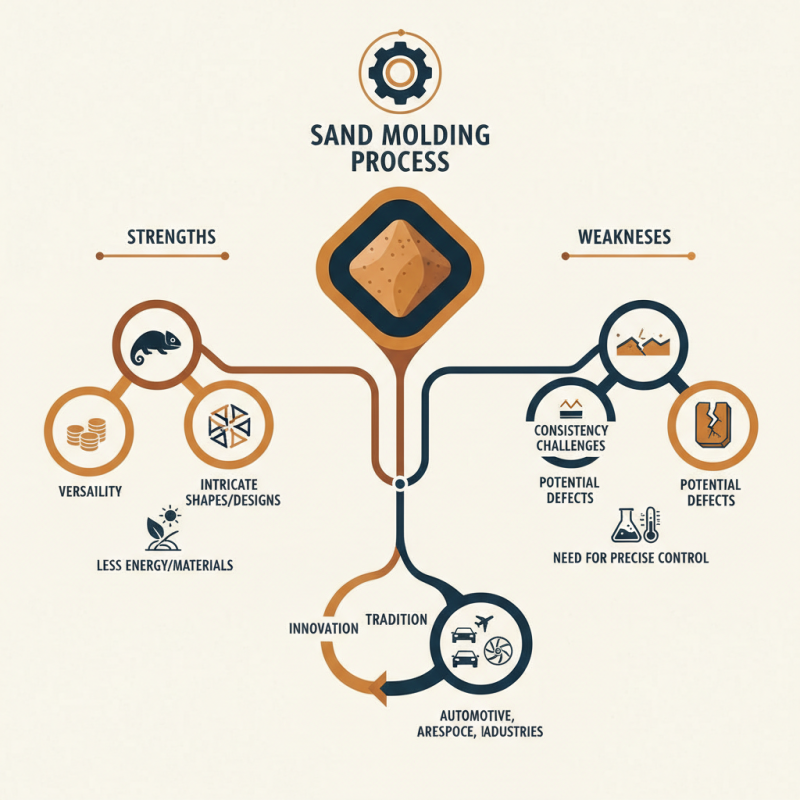
The sand molding process stands out in the world of manufacturing. As noted by industry expert Dr. Emily Hart, "Sand molding offers unmatched versatility and cost-effectiveness." This process, leveraging the natural properties of sand, enables the production of intricate shapes and designs.

Manufacturers appreciate the simplicity of the sand molding process. It requires fewer materials and less energy compared to other methods. Yet, this process is not without flaws. Achieving consistency can be a challenge, occasionally leading to defects. The need for precise control over the mixture is critical.

Despite these potential drawbacks, the sand molding process remains a preferred choice. It adapts well to various industries, from automotive to aerospace. Understanding both its strengths and weaknesses is essential. The balance between innovation and tradition in sand molding continues to drive the industry forward.

Why Choose Sand Molding Process for Your Manufacturing Needs?

Advantages of Sand Molding Process in Manufacturing

The sand molding process is a popular choice in manufacturing, primarily due to its versatility. It's suitable for metals, alloys, and various shapes. The ability to create complex designs is a huge advantage. Manufacturers can produce intricate patterns that would be difficult with other methods.

Another significant benefit is the cost-effectiveness. Sand is abundant and inexpensive, making it accessible for many companies. This process often requires less equipment compared to other methods, lowering initial investment. However, the sand molding process can be messy. Fine sand particles may spread throughout the workshop, demanding regular cleanup.

The speed of production is also noteworthy. Molding time can be short, leading to quicker turnaround times. This is especially crucial in meeting customer demands. However, the process isn't without its challenges. Complications can arise from inconsistent sand mixtures or moisture levels, potentially affecting quality. Adjusting these variables requires careful monitoring. Despite these imperfections, the process remains a strong candidate for various manufacturing needs.

Comparison of Sand Molding with Other Molding Techniques

Sand molding offers a unique approach compared to other molding techniques. When looking at durability, sand molds withstand high temperatures. This makes them ideal for certain metal casting applications. Other methods, like plastic injection, might not endure such extremes. However, sand molding can produce rougher surfaces. This may require additional finishing work.

Cost is another consideration. Sand molding is often more economical for small runs. It requires less upfront investment than metal molds. However, the production time can be slower. This is a crucial factor for time-sensitive projects.

Finally, the versatility of sand molding is noteworthy. It can accommodate various designs and shapes. But not all designs translate well into sand molds. Some intricate details may get lost. Evaluating your specific needs is vital to choosing the right method.

Applications and Industries Utilizing Sand Molding

Sand molding is widely used in several industries for effective manufacturing. This process is especially popular in the automotive sector. Many engine components and transmission parts are produced using sand molds. This method allows for intricate designs and high-quality finishes.

The construction industry also relies on sand molding for creating concrete forms. These molds can be customized easily. This flexibility is appealing to builders aiming for unique designs. However, achieving the desired precision requires attention. Errors in molding can lead to significant waste and cost overruns.

Tips: Always ensure the sand mixture is consistent. Any variation can affect the mold's integrity. Regularly check for wear and tear on molds. It can save time and resources in the long run. Also, consider conducting tests on sample molds before full production. This can help identify potential issues early on.

Why Choose Sand Molding Process for Your Manufacturing Needs? - Applications and Industries Utilizing Sand Molding

Industry Application Benefits of Sand Molding
Automotive Engine Blocks, Cylinder Heads High durability, Cost-effective for complex shapes
Aerospace Aircraft Components Lightweight, Excellent surface finish
Heavy Machinery Construction Equipment Parts Customizable, High production rates
Marine Boat Engines, Propellers Corrosion-resistant, Versatile
Energy Turbine Components High strength, Efficient cooling
Electronics Heat Sinks, Connectors Precision, Enhanced thermal performance

Key Considerations for Implementing Sand Molding

When considering the sand molding process, several key factors come into play. First, the production speed is notable. Reports indicate that sand molding can produce parts up to 30% faster than other casting methods. This speed can significantly reduce lead times in manufacturing. Quick turnaround is vital in today's fast-paced market.

Another consideration is the flexibility in design. Sand molding accommodates a variety of shapes and sizes. This versatility allows for complex geometries, which can be challenging for other processes. Over 70% of manufacturers recognize this adaptability as essential for meeting diverse client demands.

However, sand molding is not without challenges. Controlling the quality of the sand mixture is critical. Variations can lead to defects in the final product. Companies must implement rigorous quality checks to minimize these issues. Additionally, while the initial costs may be lower, the long-term investment in equipment and training should be evaluated carefully. A balance is necessary to optimize production without sacrificing quality.

Future Trends and Innovations in Sand Molding Technology

The sand molding process is evolving rapidly. New technologies are reshaping how manufacturers approach this traditional method. Innovations in materials and techniques are making sand molding more precise and efficient.

One future trend is the use of advanced 3D printing in sand casting. This technique can create more complex designs with less waste. It minimizes the time between design and production. However, not all aspects are seamless; some manufacturers struggle with adapting to these changes. Training and investment are essential.

Tips for manufacturers: consider experimenting with 3D printing for prototype runs. Explore hybrid methods that combine traditional molding with innovation. This can streamline production and enhance flexibility. Embracing change isn't easy. It may require a shift in mindset and processes. But the potential for improved efficiency is worth the effort.

Additionally, sustainable practices are gaining traction. Recyclable materials are being integrated into sand molding. This not only helps the environment but can also reduce costs. Reflect on your current practices and explore greener alternatives. Change can be daunting but also rewarding.

Sand Molding Process: Popularity and Innovations

The chart illustrates the growth percentage of the sand molding process from 2018 to 2023, highlighting the increasing adoption and innovation within the industry. This upward trend reflects the advantages and future potential of sand molding technology in manufacturing.