

News

Miro: A New Standard in Responsible Innovation

Miro: A New Standard in Responsible Innovation The Miro monitor arm is setting new benchmarks in sustainability. It offers a high-performance solution without compromising on environmental responsibility. Designed with careful material selection, local sourcing, and longevity in mind, Miro’s responsible approach to design and unique manoeuvrability set it apart from the competition. Sustainable Choices Miro is crafted from energy-efficient materials with a lower carbon impact....

Read more
HSE Advisor

Role Purpose Support in the development, implementation and maintenance of the company’s Health, Safety & Environmental policies, processes, operational procedures, and standards.  Ensuring best practice and championing a continually improving HSE culture within the business. Key Responsibilities Liaise with and provide support to all areas of the business to eliminate, mitigate or reduce identified HSE exposures. Partner with the production management team and team leaders,...

Read more
CMD Ltd LAUNCHES 48-HOUR TURNAROUND ON BETATRAK® RAPID ORDERING SERVICE

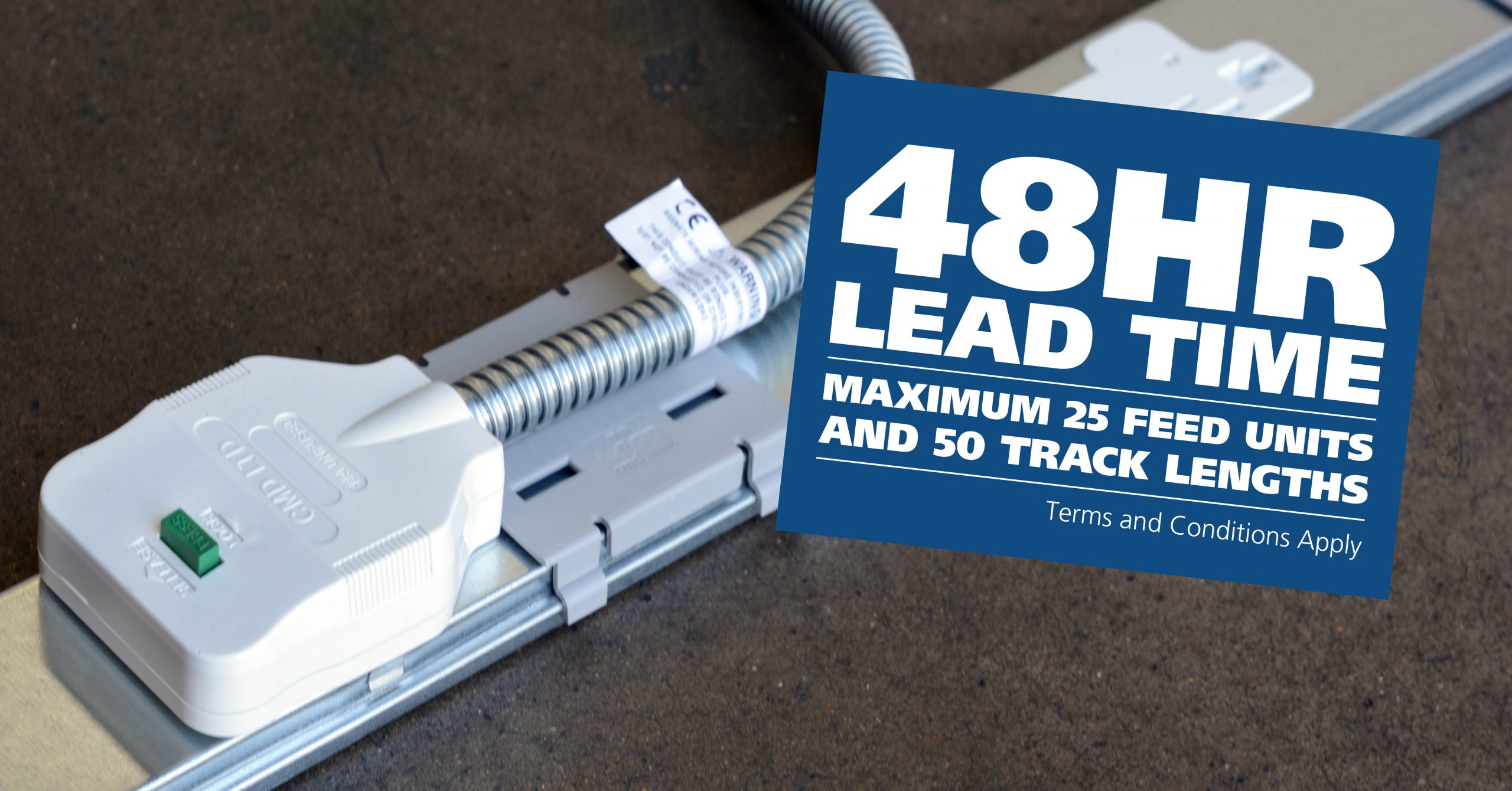
CMD Ltd, the specialist in power distribution systems, workstation power and monitor arms, has launched a rapid ordering service for its Betatrak® underfloor powertrack distribution systems and accessories, with a commitment to delivering within 48-hours of an approved purchase order*. The service enables customers to order up to 50 lengths of Standard or Clean Earth (C/E) low noise Betatrak, along with up to 25 feed...

Read more
CMD INVESTS £1/4 MILLION IN NEW MACHINE AS PART OF FACTORY UPGRADE

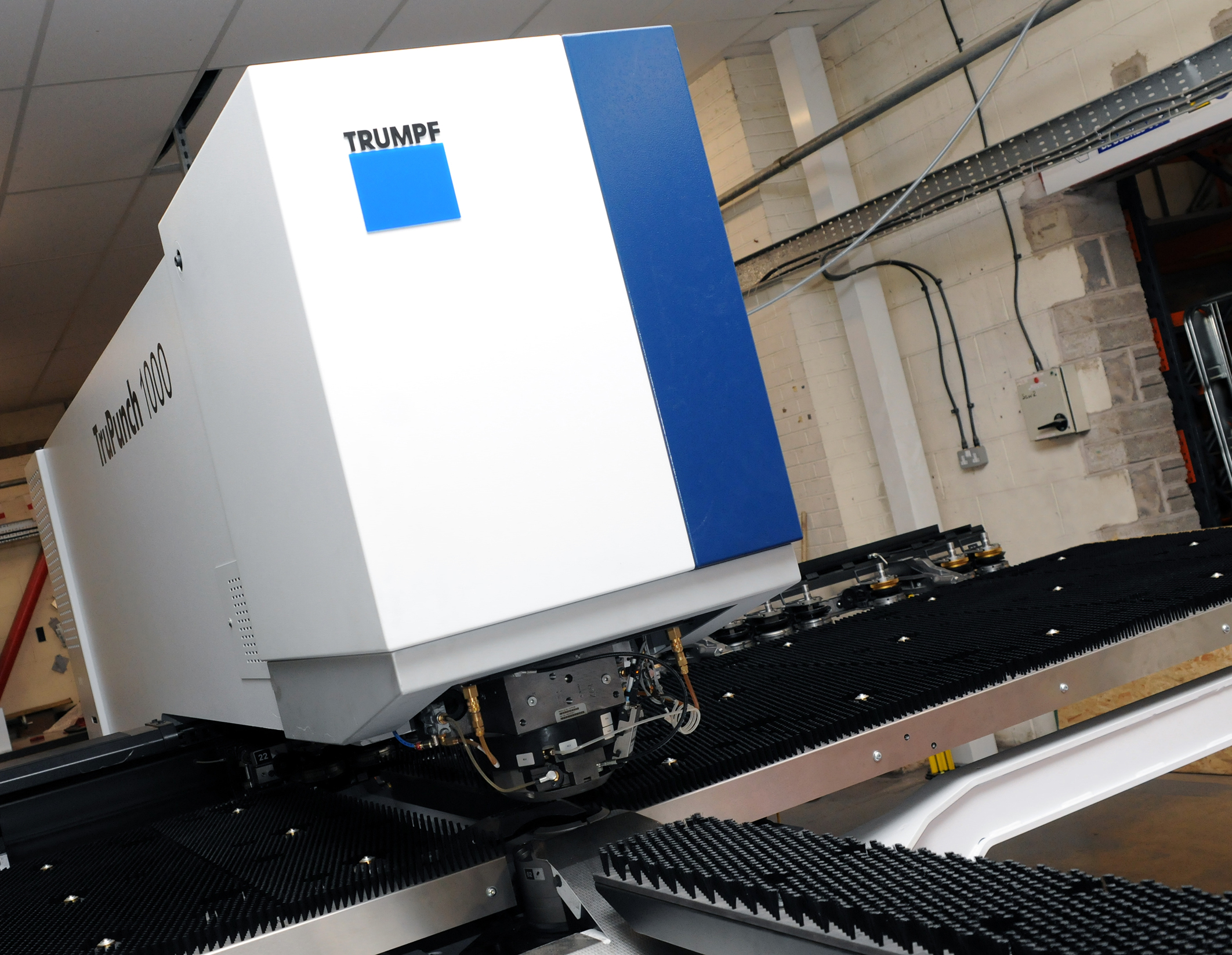
We have invested in a new £1/4m TRUMPF CNC metal punch as part of an asset renewal strategy for our UK manufacturing capability. The new machine will be used in the production of a wide variety of our power distribution systems and workstation power products at our Rotherham factory. Suitable for handling sheet metal between 0.9mm and 3.0mm thick, the new machine will replace one...

Read more
CMD CATALOGUE PROVIDES TECHNICAL POWER DISTRIBUTION GUIDE

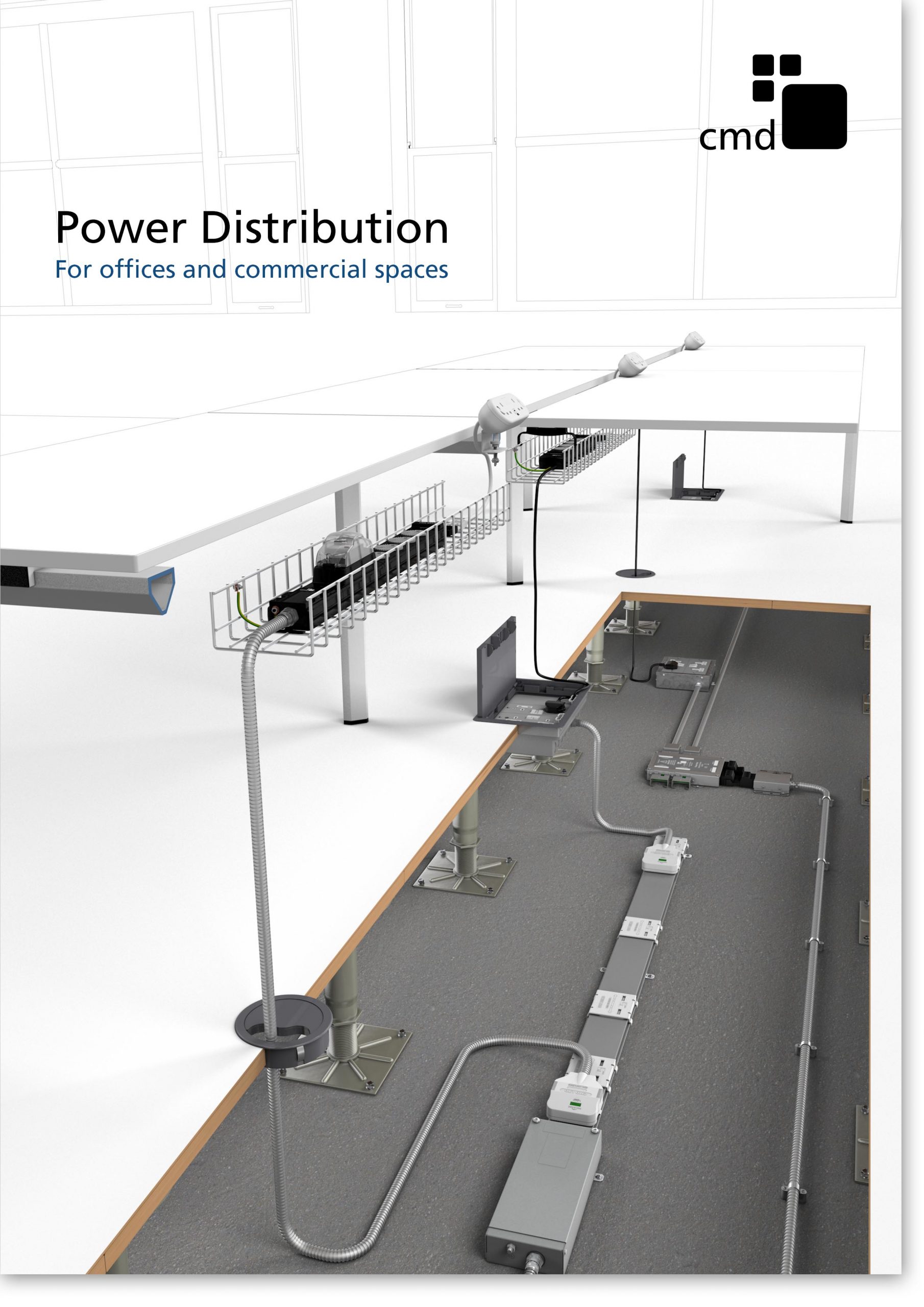
CMD Ltd has released a new catalogue, providing an easy to follow technical guide to our power distribution systems and plug and play desk modules. Detailing CMD’s full range of UK-manufactured power distribution systems and plug and play desk modules, the catalogue will be a helpful source of information to M&E engineers and contractors alike to understand how our power distribution systems connect together and...

Read more
Power Distribution Catalogue
CMD Ltd PLAYS ESSENTIAL ROLE IN ELECTRICAL FIT OUT AT LONDON’S PRESTIGIOUS OFFICE DEVELOPMENT

CMD Ltd, specialist in workplace connectivity and ergonomic solutions, has provided a flexible and high-quality power distribution network for The Ray, a prestigious office development in London’s Farringdon. Well-known for being the former site of The Guardian newspaper, The Ray now stands as an 83,000ft² office development characterised by a modernised warehouse aesthetic, with level two now occupied by a global social media company. The...

Read more

The Ray
CMD plugs in to european opportunity with Schuko Capsule unit launch

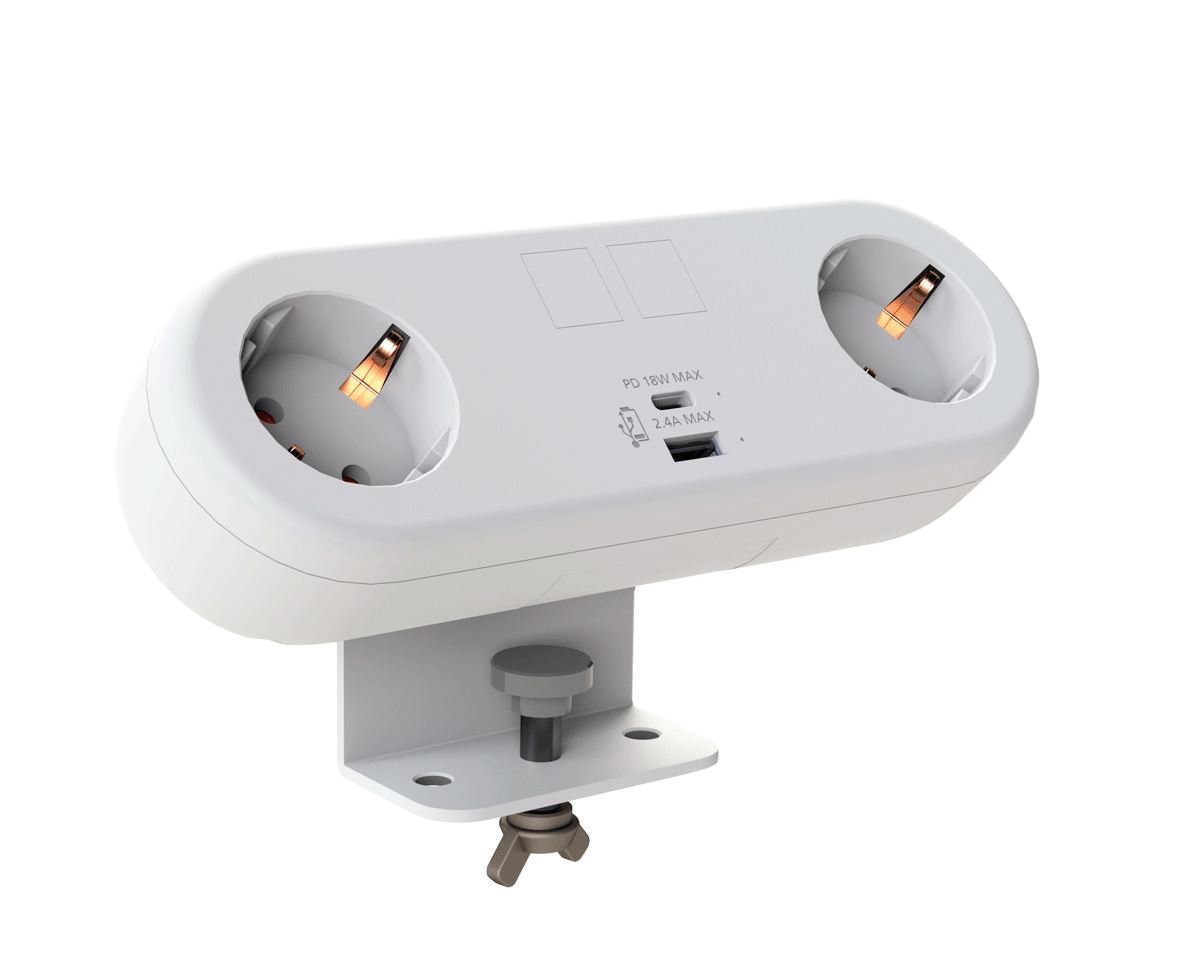
CMD Ltd, the specialist in power and connectivity solutions for commercial environments, has launched a Schuko version of its popular fixed format Capsule workstation power module for export to mainland Europe and beyond. A popular on desk power module comprising two sockets and dual USB (type A and C) chargers, CMD’s Capsule unit is already widely specified in the UK as an off-the-shelf workstation power...

Read more
CMD White Schuko Capsule Desk Power Module
CMD LTD EXTENDS MONITOR ARM RANGE WITH THE LAUNCH OF REACH PLUS

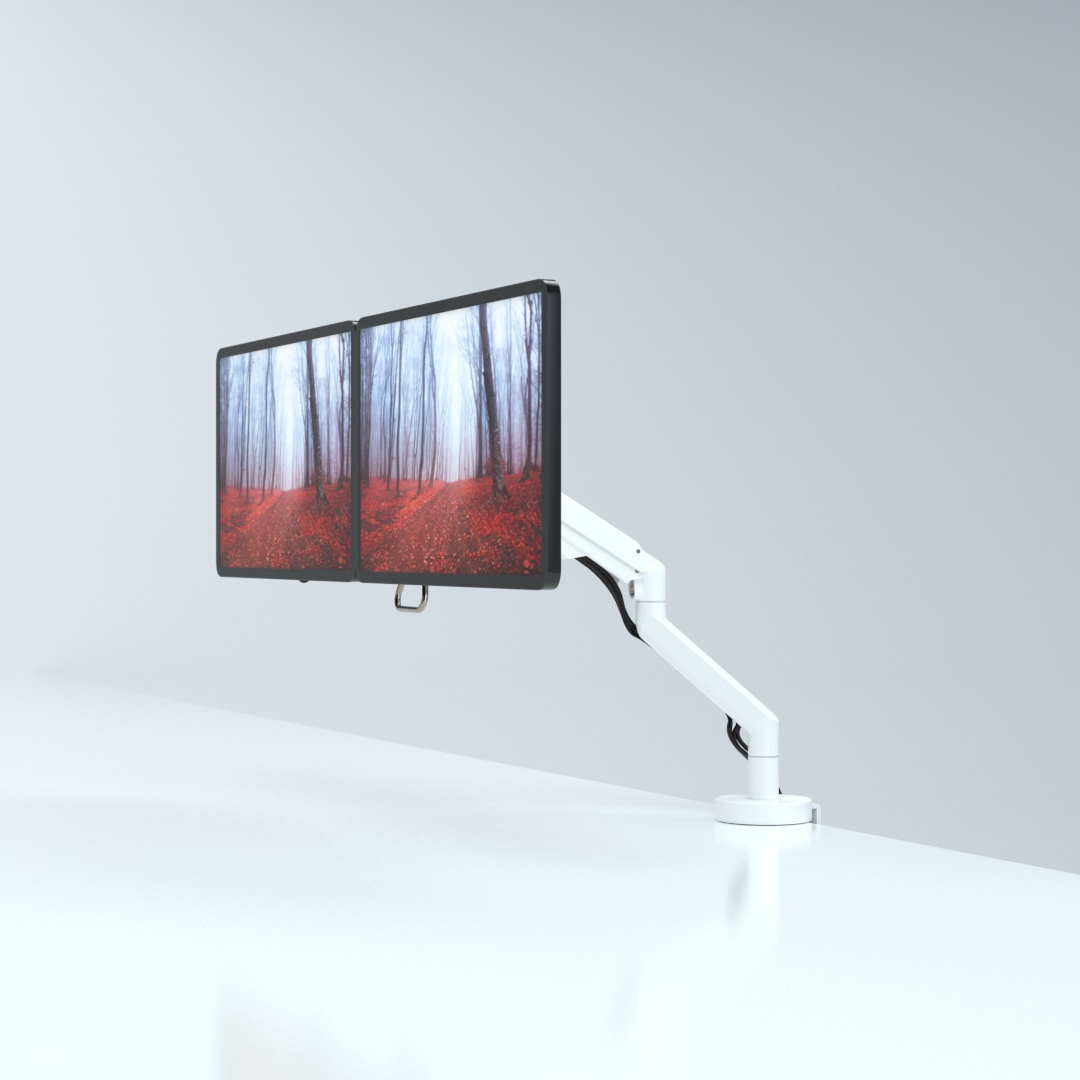
CMD Ltd, the specialist in ergonomic and connectivity solutions for commercial interiors, has completed its Reach monitor arm range with the launch of the Reach Plus. Available in single or dual screen options, the Reach Plus has been designed to provide an ideal solution for both single and dual screen workstation configurations, or can be used with next generation of large format curved screens. Suitable...

Read more
CMD Ltd DEMONSTRATES THE ART OF POWER DISTRIBUTION AT THE UNIVERSITY OF WARWICK

CMD Ltd, the specialist in workplace connectivity and ergonomic solutions, has provided Betatrak busbar power distribution and a range of electrical accessories for two major capital investment projects at the University of Warwick. Designed by Fielden Clegg Bradley Studios, the £33 million Faculty of Arts building is a showpiece development comprising four interconnected structures set around a central atrium, which will enable inter-disciplinary collaboration across...

Read more

University of Warwick
CMD BRINGS HARMONY TO COVENTRY UNIVERSITY RESEARCH FACILITIES

CMD Ltd, the specialist in power distribution solutions and workstation power and ergonomics, has provided under desk and on desk power modules for the refurbishment of three Coventry University research buildings. Located on Coventry University Technology Park, a business park designed to encourage collaboration between the university and knowledge-based businesses, the three buildings are being repurposed as office accommodation for university research teams. The refurbishment...

Read more

Coventry University

How to Choose a Reliable Blow Maker Machine?

Choosing a reliable Blow Maker begins with the product, not the machine’s advertising claims. A container for shampoo needs different control from a thick automotive duct. Wall thickness, resin type, mold size, output targets, and permitted tolerances should guide every decision. High speed looks impressive. It can also create unstable parison control, uneven walls, and expensive scrap.

Dominick V. Rosato, a respected plastics author and processing specialist, offered a practical principle: “The best machine is matched to the product, not simply the highest-output machine.” That idea remains useful when comparing modern equipment. Check the extrusion system, clamp strength, mold-changing method, cooling design, and control platform. Ask for measured cycle data from a similar application. Sales brochures rarely show the difficult details. They may not show rejected bottles, maintenance delays, or energy consumption during long production runs.

A dependable Blow Maker should also have accessible service support. Spare screws, heaters, sensors, and seals must be available within a reasonable time. Speak with existing users, not only the supplier. Their workshop experience may reveal vibration, software limitations, or cleaning problems. Still, one reference cannot prove everything. Factory conditions differ.

I would inspect a running machine personally. Listen for abnormal noise. Watch the parison. Examine finished parts under consistent lighting. Small defects matter. My own judgment may be incomplete, especially when new automation is involved. Therefore, request a documented trial, clear acceptance criteria, training, warranty coverage, and lifecycle cost estimates. Reliability is not a single feature. It is consistent performance, practical support, and honest evidence over time.

How to Choose a Reliable Blow Maker Machine?

Define Blow Molding Types: PET ISBM, HDPE, and 1–10 L Bottle Ranges

How to Choose a Reliable Blow Maker Machine?

Choosing a reliable blow maker machine starts with identifying the molding process, not comparing machine prices. PET ISBM equipment suits clear, lightweight bottles with precise neck finishes and strong stretch orientation. It usually forms a preform before stretching and blowing it inside a mold. This process demands stable heating, accurate stretch-rod movement, and consistent cooling. Small temperature changes can create cloudy areas or uneven walls.

HDPE bottles commonly use extrusion blow molding. This method works well for opaque containers, wider openings, handles, and practical shapes. Ask how accurately the machine controls parison thickness. Poor control may cause heavy bottoms, thin shoulders, or unstable containers. I have found that sample testing reveals more than a polished specification sheet. Request bottles made with your actual resin, mold, and target weight.

For 1–10 L bottles, capacity changes the selection significantly. A 1 L container may need fast cycling and tight weight control. A 10 L bottle requires stronger clamping, larger extrusion capacity, and reliable handle formation when needed. Check mold dimensions, maximum bottle height, neck range, air pressure, cooling performance, and hourly output. Confirm whether the machine can maintain quality across the full size range. It is easy to trust a stated output figure. Real production conditions can differ. Review test records, maintenance access, spare-part availability, operator training, and service response times. A machine that runs quickly but requires frequent adjustment is not truly reliable.

Compare Output Capacity: 1,000–10,000 Bottles per Hour by Cavity Count

How to Choose a Reliable Blow Maker Machine?

Output capacity is closely linked to cavity count. A single-cavity machine may produce about 1,000–1,500 bottles per hour. Two cavities can reach 2,000–3,000 bottles. Four cavities often deliver 4,000–6,000 bottles, while eight cavities may approach 8,000–10,000 bottles per hour. These figures assume stable material feeding, consistent heating, and short cycle times. Actual output can be lower.

Cavity count is not the only measurement. Bottle size, wall thickness, mold design, and cooling efficiency also affect production speed. A larger bottle needs more heating and cooling time. An eight-cavity machine may look attractive, but it demands stronger air supply and more precise mold balancing. Small temperature differences can create uneven walls or visible defects. That hurts real productivity.

Check production records carefully. Ask for a live test using your bottle design and material. Measure good bottles, rejected bottles, cycle time, and unplanned stops. Inspect the heating zones and compressed-air system. A reliable machine should offer stable pressure, accessible controls, and simple mold changes. I have seen capacity estimates look impressive on paper, yet downtime reduced actual output by nearly twenty percent. That gap deserves attention. Some buyers also choose too many cavities too early, then struggle with maintenance and operator training.

Evaluate Air Systems: 25–40 Bar Pressure and Compressed-Air Efficiency

Choosing a reliable blow maker machine starts with its air system, not its advertised cycle speed. For PET stretch-blow applications, 25–40 bar pressure is common, but pressure alone proves little. The machine must hold stable pressure during rapid preform stretching and bottle forming. A sharp pressure drop can create thin walls, uneven bases, or rejected necks.

Check the high-pressure compressor, air receiver, valves, and piping as one system. The U.S. Department of Energy reports that compressed-air leaks can waste 20–30% of compressor output in poorly maintained facilities. That loss becomes expensive at 30 or 40 bar. Ask for measured flow, recovery time, and power consumption under production load. Do not rely only on factory test conditions. Real production is less tidy.

Air quality also matters. Moisture and oil can damage valves and affect bottle appearance. The Compressed Air and Gas Institute recommends checking pressure, flow, filtration, and dew point together when evaluating compressed-air performance. I would inspect gauges at the machine inlet, not just the compressor outlet. My earlier checklist focused too much on maximum pressure. That was incomplete. A dependable machine should deliver stable air with reasonable energy use, quiet operation, and accessible maintenance points. Shorter piping can help. So can automatic leak detection. Ask for test records, calibration dates, and actual kWh data per production cycle before making a purchase.

How to Choose a Reliable Blow Maker Machine?

Evaluate the air system by comparing operating pressure with the theoretical compression-work demand. A 25–40 bar range is common for PET blow molding preform applications, while higher pressure generally increases compressed-air energy requirements.

The blue bars show gauge pressure. The orange line shows the relative theoretical compression-work index, calculated from the logarithmic relationship between absolute pressure and atmospheric pressure and normalized to 100 at 25 bar. Actual energy consumption also depends on compressor efficiency, leakage, cooling, air treatment, and machine-specific air demand.

Check Quality Standards: ISO 9001, CE, and ±0.1 mm Process Tolerance

How to Choose a Reliable Blow Maker Machine?

A reliable blow maker machine should meet ISO 9001 quality management requirements, but paperwork is only the starting point. Ask the supplier for current certificates, audit details, and documented inspection procedures. ISO 9001 shows controlled processes, not guaranteed machine performance. During a factory visit, inspect assembly areas, measurement tools, and production records. Small details matter.

CE marking indicates conformity with applicable European safety and technical requirements. It should include a Declaration of Conformity and supporting technical documentation. Do not treat CE as a complete quality certificate. Check whether the machine’s electrical cabinet, guarding, emergency stops, and manuals match the declared specifications. A certificate alone can still hide weak workmanship.

Tips: Request a sample test using your actual mold and material. Confirm whether the stated ±0.1 mm process tolerance applies to thickness, dimensions, or positioning. Ask for measurement results, calibration records, and repeatability data. Inspect several samples, not just one perfect piece. Tolerance claims need context. Temperature, material flow, mold wear, and operator adjustments can change results. I would also include acceptance criteria in the contract. That step is easy to forget, and expensive to correct later.

Assess Total Cost: Energy Use, Maintenance, Mold Life, and 5–10-Year ROI

A reliable blow molding machine should be judged by its full ownership cost, not its purchase price. The IEA reported that industry consumed about 37% of global final energy in 2022. Energy efficiency deserves careful attention.

Use EUROMAP 46.1 to compare machine energy measurements consistently. Record kWh per kilogram, heating time, cooling demand, and rejected bottles. The U.S. Department of Energy reports that compressed-air leaks can waste 20–30% of compressor output. A small leak can become an expensive daily habit. Ask for measured data under your actual production conditions, not only laboratory figures.

Maintenance costs need equal weight. Check service intervals, spare-part prices, technician response time, and software support. Mold life depends on resin, clamping accuracy, cooling channels, and cleaning discipline. Request documented mold-cycle records, then calculate replacement cost across five and ten years. Include lost production during repairs. That number is often forgotten.

Build a discounted cash-flow model with electricity, labor, maintenance, molds, downtime, and resale value. Test electricity prices at low, expected, and high levels. The model will be imperfect. That is acceptable. A sensitivity test shows whether the investment survives an uncomfortable assumption, such as 15% higher energy use. A machine with a higher purchase price may deliver stronger five-to-ten-year ROI, but only when its performance is verified on your line.