

News

Miro: A New Standard in Responsible Innovation

Miro: A New Standard in Responsible Innovation The Miro monitor arm is setting new benchmarks in sustainability. It offers a high-performance solution without compromising on environmental responsibility. Designed with careful material selection, local sourcing, and longevity in mind, Miro’s responsible approach to design and unique manoeuvrability set it apart from the competition. Sustainable Choices Miro is crafted from energy-efficient materials with a lower carbon impact....

Read more
HSE Advisor

Role Purpose Support in the development, implementation and maintenance of the company’s Health, Safety & Environmental policies, processes, operational procedures, and standards.  Ensuring best practice and championing a continually improving HSE culture within the business. Key Responsibilities Liaise with and provide support to all areas of the business to eliminate, mitigate or reduce identified HSE exposures. Partner with the production management team and team leaders,...

Read more
CMD Ltd LAUNCHES 48-HOUR TURNAROUND ON BETATRAK® RAPID ORDERING SERVICE

CMD Ltd, the specialist in power distribution systems, workstation power and monitor arms, has launched a rapid ordering service for its Betatrak® underfloor powertrack distribution systems and accessories, with a commitment to delivering within 48-hours of an approved purchase order*. The service enables customers to order up to 50 lengths of Standard or Clean Earth (C/E) low noise Betatrak, along with up to 25 feed...

Read more

CMD INVESTS £1/4 MILLION IN NEW MACHINE AS PART OF FACTORY UPGRADE

We have invested in a new £1/4m TRUMPF CNC metal punch as part of an asset renewal strategy for our UK manufacturing capability. The new machine will be used in the production of a wide variety of our power distribution systems and workstation power products at our Rotherham factory. Suitable for handling sheet metal between 0.9mm and 3.0mm thick, the new machine will replace one...

Read more

CMD CATALOGUE PROVIDES TECHNICAL POWER DISTRIBUTION GUIDE

CMD Ltd has released a new catalogue, providing an easy to follow technical guide to our power distribution systems and plug and play desk modules. Detailing CMD’s full range of UK-manufactured power distribution systems and plug and play desk modules, the catalogue will be a helpful source of information to M&E engineers and contractors alike to understand how our power distribution systems connect together and...

Read more

Power Distribution Catalogue
CMD Ltd PLAYS ESSENTIAL ROLE IN ELECTRICAL FIT OUT AT LONDON’S PRESTIGIOUS OFFICE DEVELOPMENT

CMD Ltd, specialist in workplace connectivity and ergonomic solutions, has provided a flexible and high-quality power distribution network for The Ray, a prestigious office development in London’s Farringdon. Well-known for being the former site of The Guardian newspaper, The Ray now stands as an 83,000ft² office development characterised by a modernised warehouse aesthetic, with level two now occupied by a global social media company. The...

Read more

The Ray
CMD plugs in to european opportunity with Schuko Capsule unit launch

CMD Ltd, the specialist in power and connectivity solutions for commercial environments, has launched a Schuko version of its popular fixed format Capsule workstation power module for export to mainland Europe and beyond. A popular on desk power module comprising two sockets and dual USB (type A and C) chargers, CMD’s Capsule unit is already widely specified in the UK as an off-the-shelf workstation power...

Read more

CMD White Schuko Capsule Desk Power Module
CMD LTD EXTENDS MONITOR ARM RANGE WITH THE LAUNCH OF REACH PLUS

CMD Ltd, the specialist in ergonomic and connectivity solutions for commercial interiors, has completed its Reach monitor arm range with the launch of the Reach Plus. Available in single or dual screen options, the Reach Plus has been designed to provide an ideal solution for both single and dual screen workstation configurations, or can be used with next generation of large format curved screens. Suitable...

Read more

CMD Ltd DEMONSTRATES THE ART OF POWER DISTRIBUTION AT THE UNIVERSITY OF WARWICK

CMD Ltd, the specialist in workplace connectivity and ergonomic solutions, has provided Betatrak busbar power distribution and a range of electrical accessories for two major capital investment projects at the University of Warwick. Designed by Fielden Clegg Bradley Studios, the £33 million Faculty of Arts building is a showpiece development comprising four interconnected structures set around a central atrium, which will enable inter-disciplinary collaboration across...

Read more

University of Warwick
CMD BRINGS HARMONY TO COVENTRY UNIVERSITY RESEARCH FACILITIES

CMD Ltd, the specialist in power distribution solutions and workstation power and ergonomics, has provided under desk and on desk power modules for the refurbishment of three Coventry University research buildings. Located on Coventry University Technology Park, a business park designed to encourage collaboration between the university and knowledge-based businesses, the three buildings are being repurposed as office accommodation for university research teams. The refurbishment...

Read more

Coventry University

China Best Heat Resisting Waterproof Rubber Tape Supplier

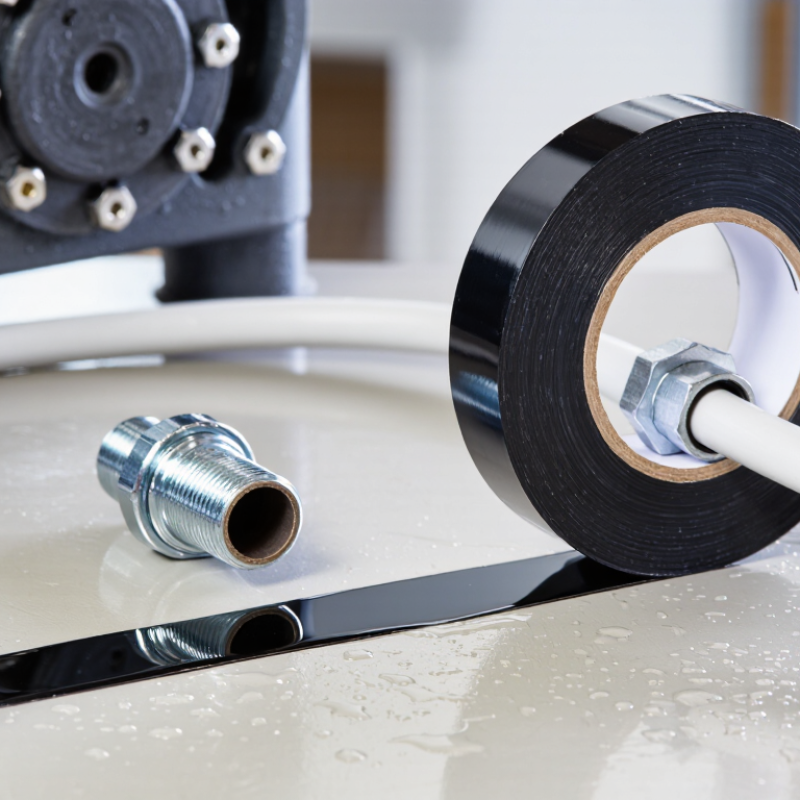
Choosing a reliable China Best Heat Resisting Waterproof Rubber Tape Supplier requires more than comparing prices. Product consistency, material knowledge, and practical testing matter. Heat Resisting Waterproof Rubber Tape is often used around cable joints, pipes, roofing details, and industrial equipment. These areas face moisture, vibration, sunlight, and changing temperatures.

An experienced supplier should explain the tape’s rubber composition, thickness, elongation, temperature range, and sealing performance. Clear technical data helps buyers match the product with real working conditions. A professional factory may also provide sample rolls, batch records, inspection reports, and application guidance. These details show responsibility, not just marketing confidence. Small details matter.

During evaluation, buyers can test the tape on clean metal, plastic, or rubber surfaces. Stretching it evenly around a pipe can reveal its flexibility and self-fusing behavior. Exposure testing may show whether the seal remains stable after heat and moisture cycles. However, laboratory results cannot represent every installation. Surface contamination, poor overlap, and incorrect tension may reduce performance.

A dependable supplier should admit these limits. No rubber tape repairs every leak. Some projects may require primer, mechanical protection, or a different sealing system. This is where honest communication becomes valuable. Suppliers should discuss customization, packaging, lead times, and after-sales support with clear evidence. Careful selection protects equipment and reduces repeated maintenance. The right partner offers more than a roll of tape; it provides practical engineering support for safer, longer-lasting sealing applications. Yet every project deserves a final field check. That step is easy to overlook.

China Best Heat Resisting Waterproof Rubber Tape Supplier

What Is Heat-Resisting Waterproof Rubber Tape?

China Best Heat Resisting Waterproof Rubber Tape Supplier

What Is Heat-Resisting Waterproof Rubber Tape?

Heat-resisting waterproof rubber tape is a flexible sealing material for joints, cables, pipes, and exposed connections. It usually combines a rubber-based adhesive with a water-resistant backing. Some types stretch and bond to themselves, creating a tight, molded seal around uneven surfaces. Others use a thicker adhesive layer for stronger contact with metal, plastic, or rubber. Its heat resistance depends on the formulation, thickness, and exposure time. Always check the technical datasheet. A tape that survives brief heat may fail under continuous heating.

Tips: Clean away oil, dust, and moisture before application. Stretch self-fusing tape evenly, but avoid excessive tension. Overlap each turn by about half its width. Press the edges firmly. Test a small area first. This simple step is often skipped, and it can prevent costly rework.

In practical installation, the tape works best on smooth, stable surfaces. It can help block rainwater, condensation, vibration, and minor air leakage. However, it is not a substitute for mechanical repair or pressure-rated components. Sharp edges may cut the tape, while movement can weaken the seal. I have found that installation quality often matters more than tape thickness. Even a high-grade product may perform poorly when the surface is poorly prepared. Temperature cycling also deserves attention, because repeated expansion and contraction can gradually create small gaps.

What Is Heat-Resisting Waterproof Rubber Tape?

Heat-resisting waterproof rubber tape is an elastomer-based sealing and insulation material designed to maintain adhesion, flexibility, and moisture protection under elevated temperatures. The chart compares typical maximum continuous service temperatures for common rubber materials used in waterproof tape applications.

Key Properties and Performance Standards

China Best Heat Resisting Waterproof Rubber Tape Supplier

Key Properties and Performance Standards

Heat resisting waterproof rubber tape should perform under pressure, moisture, and temperature changes. A reliable product needs stable adhesion, strong elasticity, and resistance to aging. In practical installation checks, the tape should wrap smoothly around cables, pipe joints, or uneven metal surfaces. It must seal gaps without cracking or sliding. Temperature ratings require careful attention. Some tapes handle short-term heat well but weaken during continuous exposure. That difference matters.

Waterproof performance should be verified through immersion, humidity, and pressure testing. Electrical applications may also require dielectric strength and insulation resistance data. Ask suppliers for recent test reports, batch numbers, and storage guidance. Recognized methods from ASTM, IEC, or ISO can improve comparison, but test conditions must match the intended use. A laboratory result is not a field guarantee. That point is easy to forget. Visual inspection remains important.

Tips: Clean and dry the surface before application. Stretch the tape evenly, usually with overlapping layers. Avoid touching the adhesive surface. Check the seal after temperature cycling or heavy rain. Store rolls away from sunlight and excessive heat. No tape is perfect. A supplier should explain limitations, not only list impressive numbers. When specifications seem vague, request clarification before purchasing. That small step can prevent costly rework.

China Best Heat Resisting Waterproof Rubber Tape Supplier - Key Properties and Performance Standards

Property / Performance Dimension Typical Requirement or Target Value Recommended Test Method or Reference Standard Why It Matters for Heat-Resisting Waterproof Rubber Tape
Base Material Self-fusing silicone rubber, EPDM rubber, butyl rubber, or another qualified elastomeric compound Material specification; FTIR or compound identification where required Determines temperature resistance, flexibility, weathering performance, chemical compatibility, and sealing behavior.
Continuous Operating Temperature Common product target: approximately -40°C to +90°C for general rubber tapes; high-temperature silicone grades may reach approximately +180°C to +200°C Product-specific thermal aging and electrical insulation testing; IEC 60454-2 may be used for electrical pressure-sensitive tapes Shows whether the tape can maintain sealing, insulation, and mechanical integrity during continuous service.
Short-Term Temperature Resistance Typically higher than the continuous rating; the exact value must be declared by the manufacturer and verified by testing Short-term heat exposure followed by visual, adhesion, tensile, and insulation checks Important for temporary exposure to engine compartments, hot pipes, cable joints, and electrical equipment.
Tensile Strength Typical rubber-tape range: approximately 2 to 10 MPa, depending on elastomer, reinforcement, and thickness ISO 37 or ASTM D412 Indicates the tape's ability to withstand stretching, wrapping tension, vibration, and handling loads.
Elongation at Break Typical target: approximately 200% to 700%, depending on formulation and tape structure ISO 37 or ASTM D412 High elongation helps the tape conform to irregular surfaces and maintain a tight seal around joints and cables.
Dielectric Strength Typical electrical-insulation target: approximately 10 to 30 kV/mm, subject to material, thickness, and test configuration ASTM D149 or IEC 60243-1 Measures resistance to electrical breakdown when the tape is used for cable splicing or insulation protection.
Volume Resistivity For insulating grades, commonly at or above 1 × 10¹² Ω·cm ASTM D257 or IEC 62631-3-1 High resistivity reduces leakage current and supports reliable electrical insulation performance.
Water Resistance No visible leakage, delamination, or loss of sealing after immersion or water-spray exposure defined by the application Application-specific immersion, water-spray, or pressure-leak testing Confirms protection against rain, condensation, splash water, and moisture ingress.
Water Absorption Low water uptake; the acceptance limit should be defined according to the elastomer and intended application ASTM D570 or an agreed rubber-compound water-absorption procedure Low absorption helps preserve insulation, dimensional stability, and sealing performance in humid environments.
Adhesion or Self-Fusing Behavior For self-fusing tape: uniform bonding between overlapping layers without gaps, channels, or edge lifting Manufacturer's overlap-seal test; ASTM D1000 or IEC 60454-2 may apply to pressure-sensitive adhesive constructions Ensures the wrapped tape forms a continuous waterproof and electrically protective layer.
Weathering and UV Resistance No cracking, chalking, severe hardening, or loss of sealing after the specified accelerated-weathering exposure ASTM G154 or ISO 4892-3 for accelerated UV exposure Necessary for outdoor cables, solar installations, telecommunications, vehicles, and exposed pipework.
Ozone Resistance No visible cracking under the specified ozone concentration, strain, temperature, and exposure time ISO 1431-1 or ASTM D1149 Helps prevent surface cracking when the tape is exposed to ozone, sunlight, and outdoor electrical environments.
Flame Retardancy Only required when specified by the end-use application; rating must be declared for the complete tape construction UL 94 for applicable plastic or polymer components; IEC 60695-11-10 where relevant Supports safer use near electrical equipment, control panels, transport systems, and industrial machinery.
Thickness Tolerance Common nominal thickness range: approximately 0.5 to 2.0 mm; tolerance should be stated on the product specification Micrometer measurement at defined locations and conditioning conditions Controls insulation level, overlap volume, conformability, and the amount of material required for a finished wrap.
Hardness Typical elastomeric range: approximately Shore A 40 to Shore A 80 ISO 48-4 or ASTM D2240 Balances flexibility and surface conformity against resistance to compression, indentation, and mechanical damage.
Compression Set Lower compression set is preferred; the allowable value depends on temperature, duration, and sealing design ISO 815-1 or ASTM D395 Indicates the ability to recover after compression and maintain a reliable seal over time.
Chemical Resistance Resistance should be verified against the actual exposure, such as water, salt spray, oils, fuels, acids, alkalis, or cleaning agents Immersion testing based on ISO 1817 or ASTM D471 Prevents swelling, softening, embrittlement, and loss of adhesion in industrial or automotive environments.
Storage and Shelf Life Store in a cool, dry location away from direct sunlight, ozone sources, and excessive heat; shelf life must be declared for the specific construction Packaging specification and accelerated aging evaluation where applicable Proper storage helps preserve tack, flexibility, self-fusing capability, and waterproof performance before installation.

Note: The values shown are general industry-oriented reference ranges rather than brand-specific guarantees. Final acceptance limits should be agreed according to the tape construction, application environment, thickness, and applicable customer or regulatory requirements.

How China Manufacturers Produce and Test the Tape

China Best Heat Resisting Waterproof Rubber Tape Supplier

Reliable manufacturers control the tape from raw material selection to final packing. Technicians inspect rubber polymers, fillers, and additives before mixing. Each formula targets heat resistance, flexibility, waterproofing, or electrical insulation. Mixing takes place under controlled temperature and time. Poor dispersion can create weak spots.

The compound is calendered into a uniform sheet. Adhesive layers may be coated, laminated, or cured, depending on the tape design. Operators check thickness across the roll, not only at its center. Slitting machines then produce accurate widths with clean edges. Small details matter.

Testing is practical and recorded. Samples undergo tensile, elongation, peel, tack, and water immersion tests. Heat-aging chambers expose them to controlled temperatures for set periods. Inspectors compare thickness, surface condition, and sealing performance afterward. Some products also receive weathering or electrical tests when their application requires them.

Results are linked to batch numbers and production records. This supports traceability and honest quality decisions. Not every batch behaves perfectly. A slight wrinkle or uneven edge may reveal a process problem. Experienced teams should investigate it, rather than hide it. Test data can guide adjustments to pressure, curing time, or adhesive coating. Independent inspection may add confidence for demanding projects. Suppliers should provide clear reports, sample approval, and storage guidance before shipment.

Major Industrial Applications and Selection Criteria

China Best Heat Resisting Waterproof Rubber Tape Supplier

Heat resisting waterproof rubber tape serves demanding industrial environments. Typical uses include cable splicing, pipe insulation, motor repair, and outdoor electrical protection. It also supports marine equipment and photovoltaic installations. MarketsandMarkets reported that the global industrial tapes market could reach about USD 82.4 billion by 2028, growing from USD 61.6 billion in 2023. This growth reflects wider use in manufacturing, energy, transport, and construction.

Selection requires more than a high temperature number. Check the tape’s continuous temperature rating, short-term exposure limit, elongation, dielectric strength, and water resistance. Silicone rubber may tolerate higher temperatures than many EPDM products, but it can cost more and bond differently. EPDM often performs well against moisture and weathering, while some rubber compounds resist oils better. Confirm compatibility with cable jackets, painted metal, insulation, and solvents. A tape can pass laboratory testing and still fail on a dusty, wet surface. That is an overlooked field problem.

Tips: Clean and dry the surface first. Stretch self-fusing tape evenly, usually to its specified elongation. Overlap every layer without trapping air. Review ASTM or IEC test results, batch traceability, and technical data sheets. Ask for samples under real heat, pressure, and moisture conditions. No single tape fits every application. A supplier’s technical support and quality records matter as much as the quoted price.

How to Choose the Best Chinese Supplier

Choosing a China heat resisting waterproof rubber tape supplier requires more than comparing the lowest quotation. Start by checking the tape’s real application temperature, adhesive type, backing material, and waterproof performance. A reliable supplier should provide test data for heat aging, peel adhesion, tensile strength, and water immersion. Ask for samples from different production lots, not only one carefully prepared roll.

Factory experience matters. Request clear photos of coating lines, curing equipment, storage areas, and finished-goods inspection. During a video audit, observe whether workers measure thickness and roll length consistently. The supplier should explain production tolerances, packaging methods, and batch traceability without vague promises. Ask how they handle complaints. A written corrective-action process shows more professionalism than friendly sales language.

Test the samples under conditions close to your project. Apply the tape to metal, plastic, or rubber surfaces, then expose it to heat and moisture. Check edge lifting, residue, cracking, and unwinding tension after several days. Small details matter. I have seen acceptable samples fail when the core was crushed during shipping. That mistake is easy to overlook. A dependable supplier will discuss weaknesses openly, although no supplier is perfect. Confirm lead time, minimum order quantity, inspection documents, and communication speed before signing an agreement. Your best choice is the supplier that proves stable performance, not the one that makes the biggest promise.