

News

Miro: A New Standard in Responsible Innovation

Miro: A New Standard in Responsible Innovation The Miro monitor arm is setting new benchmarks in sustainability. It offers a high-performance solution without compromising on environmental responsibility. Designed with careful material selection, local sourcing, and longevity in mind, Miro’s responsible approach to design and unique manoeuvrability set it apart from the competition. Sustainable Choices Miro is crafted from energy-efficient materials with a lower carbon impact....

Read more
HSE Advisor

Role Purpose Support in the development, implementation and maintenance of the company’s Health, Safety & Environmental policies, processes, operational procedures, and standards.  Ensuring best practice and championing a continually improving HSE culture within the business. Key Responsibilities Liaise with and provide support to all areas of the business to eliminate, mitigate or reduce identified HSE exposures. Partner with the production management team and team leaders,...

Read more
CMD Ltd LAUNCHES 48-HOUR TURNAROUND ON BETATRAK® RAPID ORDERING SERVICE

CMD Ltd, the specialist in power distribution systems, workstation power and monitor arms, has launched a rapid ordering service for its Betatrak® underfloor powertrack distribution systems and accessories, with a commitment to delivering within 48-hours of an approved purchase order*. The service enables customers to order up to 50 lengths of Standard or Clean Earth (C/E) low noise Betatrak, along with up to 25 feed...

Read more

CMD INVESTS £1/4 MILLION IN NEW MACHINE AS PART OF FACTORY UPGRADE

We have invested in a new £1/4m TRUMPF CNC metal punch as part of an asset renewal strategy for our UK manufacturing capability. The new machine will be used in the production of a wide variety of our power distribution systems and workstation power products at our Rotherham factory. Suitable for handling sheet metal between 0.9mm and 3.0mm thick, the new machine will replace one...

Read more

CMD CATALOGUE PROVIDES TECHNICAL POWER DISTRIBUTION GUIDE

CMD Ltd has released a new catalogue, providing an easy to follow technical guide to our power distribution systems and plug and play desk modules. Detailing CMD’s full range of UK-manufactured power distribution systems and plug and play desk modules, the catalogue will be a helpful source of information to M&E engineers and contractors alike to understand how our power distribution systems connect together and...

Read more

Power Distribution Catalogue
CMD Ltd PLAYS ESSENTIAL ROLE IN ELECTRICAL FIT OUT AT LONDON’S PRESTIGIOUS OFFICE DEVELOPMENT

CMD Ltd, specialist in workplace connectivity and ergonomic solutions, has provided a flexible and high-quality power distribution network for The Ray, a prestigious office development in London’s Farringdon. Well-known for being the former site of The Guardian newspaper, The Ray now stands as an 83,000ft² office development characterised by a modernised warehouse aesthetic, with level two now occupied by a global social media company. The...

Read more

The Ray
CMD plugs in to european opportunity with Schuko Capsule unit launch

CMD Ltd, the specialist in power and connectivity solutions for commercial environments, has launched a Schuko version of its popular fixed format Capsule workstation power module for export to mainland Europe and beyond. A popular on desk power module comprising two sockets and dual USB (type A and C) chargers, CMD’s Capsule unit is already widely specified in the UK as an off-the-shelf workstation power...

Read more

CMD White Schuko Capsule Desk Power Module
CMD LTD EXTENDS MONITOR ARM RANGE WITH THE LAUNCH OF REACH PLUS

CMD Ltd, the specialist in ergonomic and connectivity solutions for commercial interiors, has completed its Reach monitor arm range with the launch of the Reach Plus. Available in single or dual screen options, the Reach Plus has been designed to provide an ideal solution for both single and dual screen workstation configurations, or can be used with next generation of large format curved screens. Suitable...

Read more

CMD Ltd DEMONSTRATES THE ART OF POWER DISTRIBUTION AT THE UNIVERSITY OF WARWICK

CMD Ltd, the specialist in workplace connectivity and ergonomic solutions, has provided Betatrak busbar power distribution and a range of electrical accessories for two major capital investment projects at the University of Warwick. Designed by Fielden Clegg Bradley Studios, the £33 million Faculty of Arts building is a showpiece development comprising four interconnected structures set around a central atrium, which will enable inter-disciplinary collaboration across...

Read more

University of Warwick
CMD BRINGS HARMONY TO COVENTRY UNIVERSITY RESEARCH FACILITIES

CMD Ltd, the specialist in power distribution solutions and workstation power and ergonomics, has provided under desk and on desk power modules for the refurbishment of three Coventry University research buildings. Located on Coventry University Technology Park, a business park designed to encourage collaboration between the university and knowledge-based businesses, the three buildings are being repurposed as office accommodation for university research teams. The refurbishment...

Read more

Coventry University

What Are Carbon Fiber Sheets Used For?

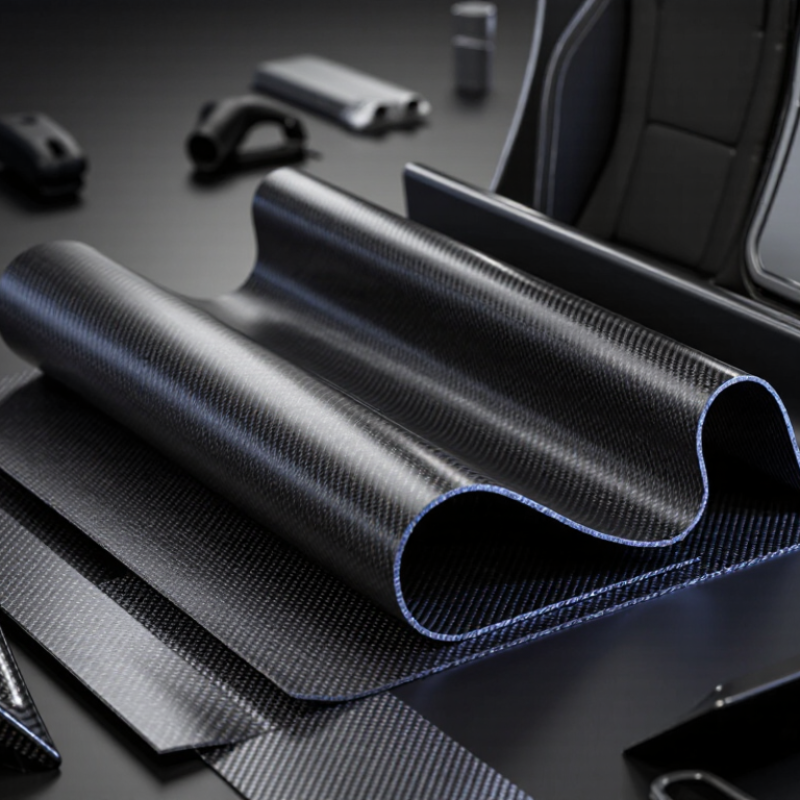
carbon fiber sheets turn a lightweight, high-strength material into practical panels for parts that must resist bending without carrying excess weight. You will find them in aircraft interiors, vehicle components, sporting goods, robotics, and equipment enclosures. A flat sheet can look simple. Its performance is not. Fiber direction, resin type, thickness, and surface finish all affect how it behaves under load.

The market is growing, but the numbers need context. Grand View Research’s Carbon Fiber Market Size, Share & Trends Analysis Report estimated the global market at USD 5.48 billion in 2023 and projected an 11% compound annual growth rate from 2024 to 2030. That estimate covers carbon fiber broadly, not sheets alone. Composite-design specialist Dr. Stephen W. Tsai’s work underscores a key principle: orient the fibers to match the loads the part must carry. A sheet cut in the wrong direction may disappoint. That matters. In a bicycle component, for example, careful layup can help balance stiffness and weight; in a machine guard, impact resistance may matter more. Carbon fiber sheets are not automatically the best choice. They can cost more than metal or fiberglass, and damaged laminates may be difficult to inspect or repair. I would compare the sheet’s datasheet, intended load, and manufacturing method before choosing one. Real-world results depend on the whole composite—not just the carbon fibers.

What Are Carbon Fiber Sheets Used For?

How Carbon Fiber Sheets Are Made and Structured

Carbon fiber sheets begin as bundles of fine filaments, usually made by heating precursor fibers in controlled stages. The process removes non-carbon elements, leaving strong, lightweight fibers. Manufacturers then align them in one direction or weave them into a fabric. The chosen layout matters: unidirectional sheets carry loads efficiently along the fibers, while woven sheets handle forces from more directions.

To make a laminate, makers stack fiber layers and bind them with resin, often epoxy. Heat and pressure cure the resin into a rigid panel. NASA’s Composite Materials Handbook-17 explains that ply direction and stacking sequence strongly affect laminate performance. A 0°/90° layup, for example, places fibers across two main directions; angled plies can improve resistance to twisting. The U.S. Department of Energy reports that advanced composites can reduce component weight by up to 60% compared with steel, though actual savings depend on design. Sheets are used in aircraft interiors, vehicle panels, sporting goods, and equipment housings.

Tips: Check the layup, resin type, and thickness before choosing a sheet. A glossy surface can look flawless while hiding uneven fiber alignment. Ask for a datasheet, and treat its figures as design guidance—not a guarantee.

What Are Carbon Fiber Sheets Used For? How They Are Made and Structured

This illustrative symmetric, quasi-isotropic laminate uses 0°, +45°, 90°, and −45° fiber orientations. Aligning fibers in different directions helps a sheet handle loads from multiple directions. Carbon fiber sheets are used in applications such as aircraft structures, vehicle components, sporting goods, and equipment panels. Actual layups vary with the part’s design and loads.

Properties That Shape Their Practical Uses

Carbon fiber sheets are valued for high stiffness at low weight, but their performance depends on how fibers are arranged. A unidirectional sheet resists loads mainly along its fibers; woven layers handle forces from more directions. In a bicycle component, designers can place fibers along expected loads, reducing material without adding much mass. The trade-off is real. A thin sheet may flex or crack if loaded from an unexpected angle.

Resin binds the fibers and affects heat tolerance, surface finish, and moisture resistance. This makes carbon fiber useful for lightweight equipment panels, drone frames, vehicle trim, and boat parts, where lower weight can improve handling or efficiency. It is not automatically the best choice. A sharp impact can cause hidden damage beneath a smooth surface, so inspection matters after a collision. Sheets also conduct electricity, which can be useful in some designs but risky near exposed wiring. Cutting and bonding need clean edges and compatible materials; a rushed repair may look neat while remaining weak. That detail is easy to miss. The right sheet depends on load direction, thickness, resin system, and operating environment. A flat panel and a load-bearing part may look similar, yet need very different layups.

Carbon Fiber Sheets in Transportation and Aerospace

In transportation, carbon fiber sheets can reduce structural mass while retaining useful stiffness. They are used in vehicle panels, interior structures, bicycle components, and selected rail or marine parts. Lower mass may improve efficiency, but the result depends on design and operating conditions. A sheet is not automatically a strong part. Fiber direction matters.

Aerospace engineers use carbon fiber laminates in aircraft fairings, control surfaces, cabin components, and other qualified structures. Layers are placed at selected angles to manage bending, twisting, and other loads. Resin binds the fibers, while thickness and layup affect stiffness and damage behavior. Every gram counts. Yet aircraft components also require careful inspection and traceability. Damage may be hard to see, so technicians use appropriate inspection methods rather than relying on appearance alone.

Compared with metal, carbon fiber can resist corrosion, but it may cost more to manufacture and repair. It also conducts electricity, so aircraft designers consider lightning protection and electrical isolation. Transportation parts face road grit, vibration, moisture, and repeated loading. A practical design balances weight savings against inspection access, repairability, and service life. That balance can be less elegant than the drawings suggest.

Uses in Construction, Sports, and Consumer Products

In construction, carbon fiber sheets can strengthen concrete beams, columns, and bridge decks without adding the bulk of steel plates. Engineers bond the sheets to prepared surfaces, where they help resist tension and limit cracking. Federal Highway Administration guidance treats fiber-reinforced polymer systems as a practical strengthening option, but sound surface preparation and careful installation matter. A poor bond can undermine the repair.

Sports equipment uses sheets in bicycle frames, racket faces, and paddle components. Their stiffness helps parts resist bending, while careful layup can keep them light. Grand View Research estimated the global carbon-fiber market at $5.48 billion in 2023; that figure covers many applications, not sheets alone. The distinction matters.

Consumer products include camera supports, luggage panels, and some electronics housings. In vehicle design, the U.S. Department of Energy reports that a 10% reduction in vehicle mass may improve fuel economy by 6–8%. That is a useful benchmark, not a promise for every carbon-fiber part. Sheets can be costly, difficult to repair, and less forgiving of impact than their sleek appearance suggests. The trade-off is real. A lighter part is not automatically a better one.

Choosing a Sheet for Specific Performance Requirements

Choosing a carbon fiber sheet starts with the job it must do, not its appearance. A lightweight panel may suit a cover, while a loaded bracket needs enough stiffness to resist bending. That matters. Sheet thickness, fiber orientation, weave, and resin all affect performance. Fibers aligned in one direction can be strong along that axis, but less capable across it.

For a part carrying loads from several directions, consider a balanced laminate with fibers at multiple angles. For a flat panel under bending, thickness and support spacing matter too. A thicker sheet can add stiffness, but also weight and cost. Impact resistance is another trade-off: a very rigid laminate may crack rather than flex after a sharp blow. Small details count. Cut edges can expose fibers and may need careful finishing to limit damage.

Compare technical data for tensile strength, flexural properties, thickness tolerance, and service temperature. Do not rely on a single strength figure; test methods and layup can differ. If the part will face vibration, moisture, heat, or repeated loading, check that the sheet is suitable for those conditions. A sample cut and tested in the intended setup can reveal problems that a data sheet misses. Even then, results may vary between suppliers and batches. Verify the actual sheet before committing to a critical design.