

News

Miro: A New Standard in Responsible Innovation

Miro: A New Standard in Responsible Innovation The Miro monitor arm is setting new benchmarks in sustainability. It offers a high-performance solution without compromising on environmental responsibility. Designed with careful material selection, local sourcing, and longevity in mind, Miro’s responsible approach to design and unique manoeuvrability set it apart from the competition. Sustainable Choices Miro is crafted from energy-efficient materials with a lower carbon impact....

Read more
HSE Advisor

Role Purpose Support in the development, implementation and maintenance of the company’s Health, Safety & Environmental policies, processes, operational procedures, and standards.  Ensuring best practice and championing a continually improving HSE culture within the business. Key Responsibilities Liaise with and provide support to all areas of the business to eliminate, mitigate or reduce identified HSE exposures. Partner with the production management team and team leaders,...

Read more
CMD Ltd LAUNCHES 48-HOUR TURNAROUND ON BETATRAK® RAPID ORDERING SERVICE

CMD Ltd, the specialist in power distribution systems, workstation power and monitor arms, has launched a rapid ordering service for its Betatrak® underfloor powertrack distribution systems and accessories, with a commitment to delivering within 48-hours of an approved purchase order*. The service enables customers to order up to 50 lengths of Standard or Clean Earth (C/E) low noise Betatrak, along with up to 25 feed...

Read more

CMD INVESTS £1/4 MILLION IN NEW MACHINE AS PART OF FACTORY UPGRADE

We have invested in a new £1/4m TRUMPF CNC metal punch as part of an asset renewal strategy for our UK manufacturing capability. The new machine will be used in the production of a wide variety of our power distribution systems and workstation power products at our Rotherham factory. Suitable for handling sheet metal between 0.9mm and 3.0mm thick, the new machine will replace one...

Read more

CMD CATALOGUE PROVIDES TECHNICAL POWER DISTRIBUTION GUIDE

CMD Ltd has released a new catalogue, providing an easy to follow technical guide to our power distribution systems and plug and play desk modules. Detailing CMD’s full range of UK-manufactured power distribution systems and plug and play desk modules, the catalogue will be a helpful source of information to M&E engineers and contractors alike to understand how our power distribution systems connect together and...

Read more
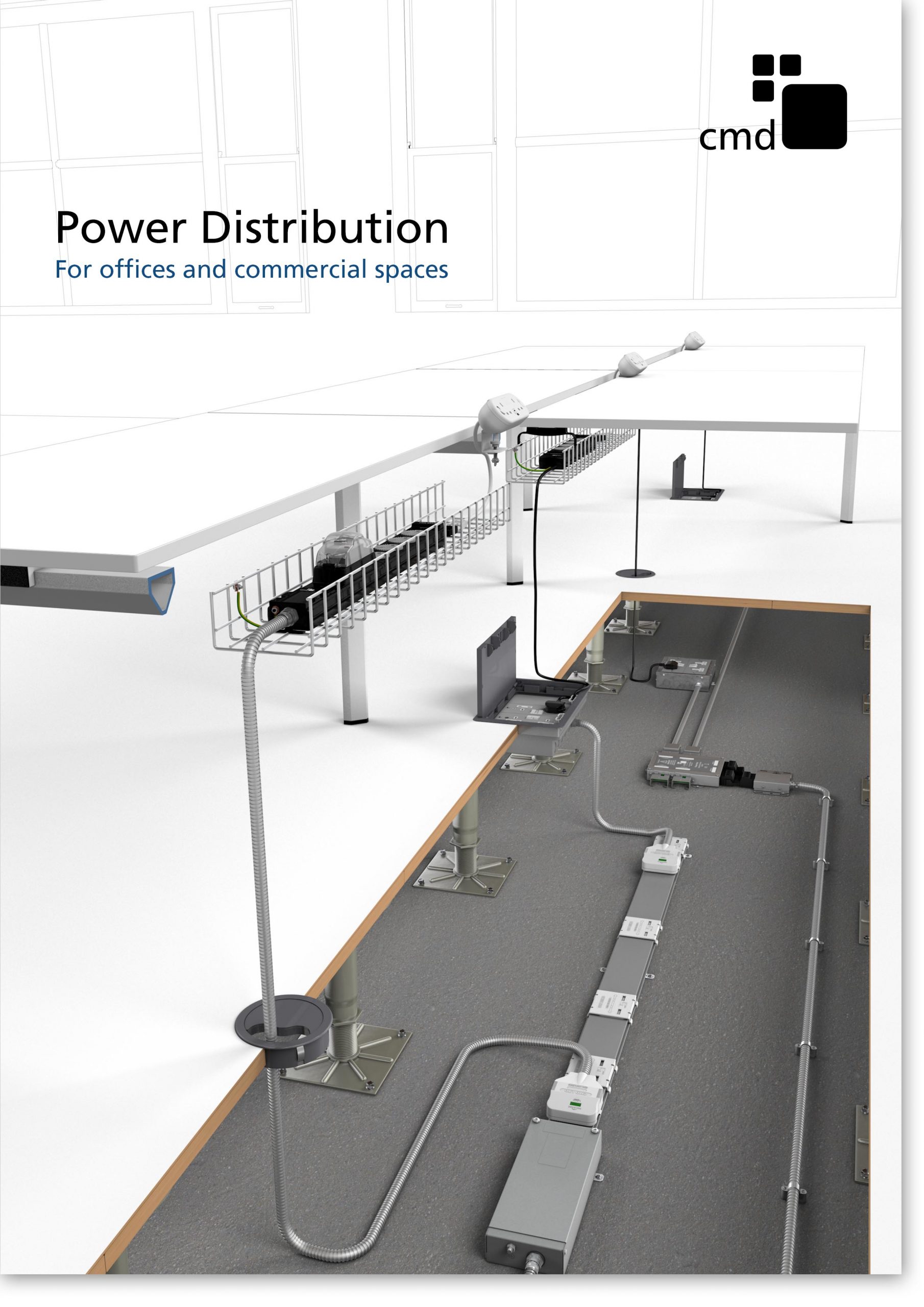
Power Distribution Catalogue
CMD Ltd PLAYS ESSENTIAL ROLE IN ELECTRICAL FIT OUT AT LONDON’S PRESTIGIOUS OFFICE DEVELOPMENT

CMD Ltd, specialist in workplace connectivity and ergonomic solutions, has provided a flexible and high-quality power distribution network for The Ray, a prestigious office development in London’s Farringdon. Well-known for being the former site of The Guardian newspaper, The Ray now stands as an 83,000ft² office development characterised by a modernised warehouse aesthetic, with level two now occupied by a global social media company. The...

Read more

The Ray
CMD plugs in to european opportunity with Schuko Capsule unit launch

CMD Ltd, the specialist in power and connectivity solutions for commercial environments, has launched a Schuko version of its popular fixed format Capsule workstation power module for export to mainland Europe and beyond. A popular on desk power module comprising two sockets and dual USB (type A and C) chargers, CMD’s Capsule unit is already widely specified in the UK as an off-the-shelf workstation power...

Read more
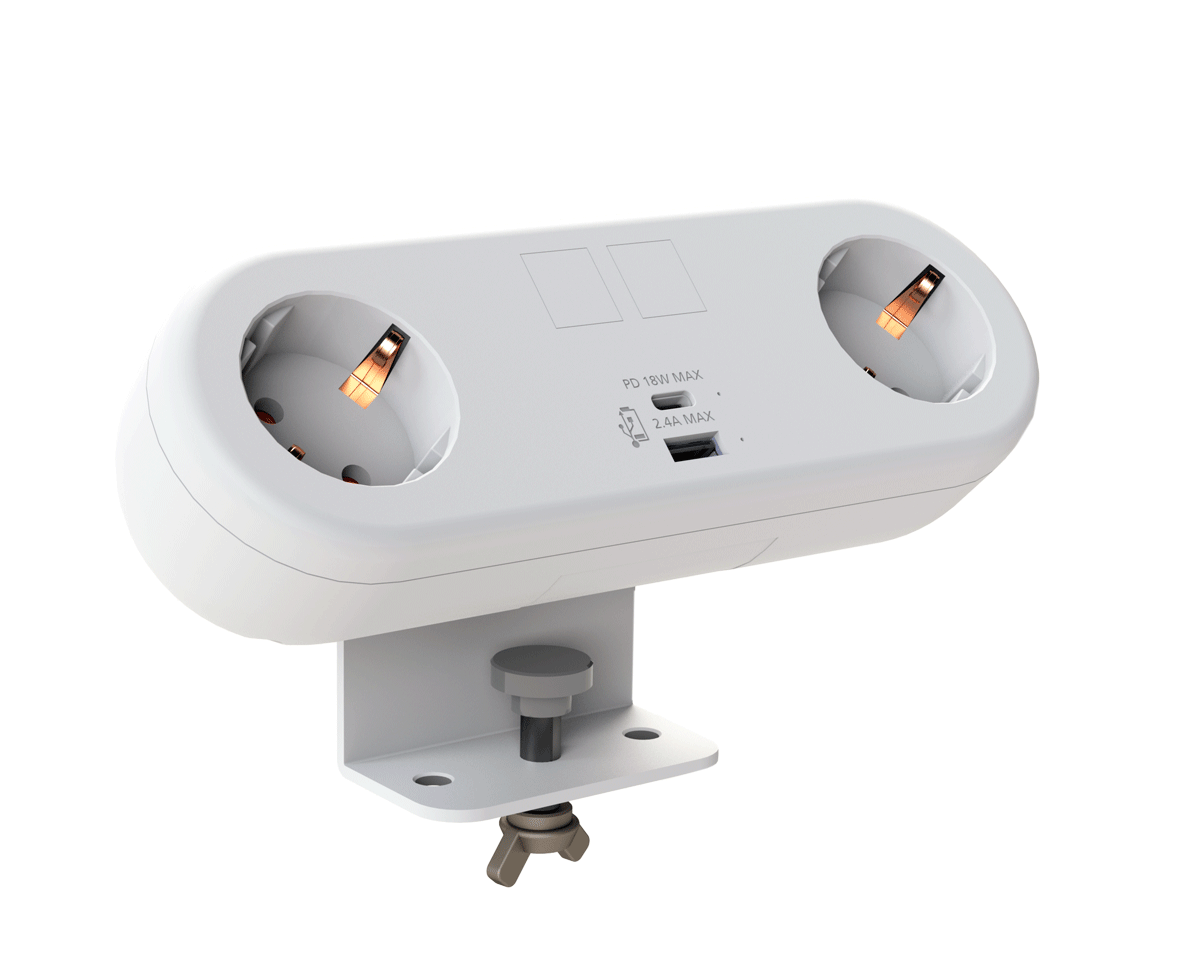
CMD White Schuko Capsule Desk Power Module
CMD LTD EXTENDS MONITOR ARM RANGE WITH THE LAUNCH OF REACH PLUS

CMD Ltd, the specialist in ergonomic and connectivity solutions for commercial interiors, has completed its Reach monitor arm range with the launch of the Reach Plus. Available in single or dual screen options, the Reach Plus has been designed to provide an ideal solution for both single and dual screen workstation configurations, or can be used with next generation of large format curved screens. Suitable...

Read more

CMD Ltd DEMONSTRATES THE ART OF POWER DISTRIBUTION AT THE UNIVERSITY OF WARWICK

CMD Ltd, the specialist in workplace connectivity and ergonomic solutions, has provided Betatrak busbar power distribution and a range of electrical accessories for two major capital investment projects at the University of Warwick. Designed by Fielden Clegg Bradley Studios, the £33 million Faculty of Arts building is a showpiece development comprising four interconnected structures set around a central atrium, which will enable inter-disciplinary collaboration across...

Read more

University of Warwick
CMD BRINGS HARMONY TO COVENTRY UNIVERSITY RESEARCH FACILITIES

CMD Ltd, the specialist in power distribution solutions and workstation power and ergonomics, has provided under desk and on desk power modules for the refurbishment of three Coventry University research buildings. Located on Coventry University Technology Park, a business park designed to encourage collaboration between the university and knowledge-based businesses, the three buildings are being repurposed as office accommodation for university research teams. The refurbishment...

Read more


Coventry University

What is Capacity Bank and How Can It Benefit Global Buyers?

In today's global economy, the concept of a Capacity Bank is gaining traction. But what exactly does it entail? A Capacity Bank can be defined as an innovative framework. It allows buyers to optimize their purchasing power and manage resources efficiently. This model enhances flexibility, making it beneficial for global buyers.

The Capacity Bank offers tangible advantages. It enables businesses to access a pool of resources as needed. This approach can reduce costs and improve supply chain efficiency. However, the concept is not without its challenges. Buyers must understand the intricacies involved. They should assess their own needs carefully before committing to a Capacity Bank strategy.

As global trade continues to evolve, the importance of efficient resource management cannot be overstated. Companies must adapt to market changes quickly. Building a relationship with a Capacity Bank can provide the necessary tools to thrive. This strategic partnership could lead to sustainable growth in a competitive landscape. However, buyers should remain vigilant and consider potential pitfalls. Embracing the Capacity Bank concept may require a shift in mindset and operations.

What is Capacity Bank and How Can It Benefit Global Buyers?

What Is Capacity Bank and Its Purpose in Global Trade?

In global trade, a Capacity Bank serves a crucial role. It acts as a reserve of logistical capabilities. By managing available shipping and warehousing resources, it empowers businesses to enhance their supply chain flexibility. World Bank reports indicate that inefficiencies in logistics can cost up to 15% of a company's sales. Hence, leveraging a Capacity Bank could significantly offset these losses.

Capacity Banks allow buyers to tap into excess logistics capacities when needed. This is especially beneficial during peak seasons or unexpected surges in demand. The Global Logistics Report highlights that companies using Capacity Banks can reduce lead times by up to 30%. However, not all businesses recognize this potential advantage. Many still rely on traditional methods, which may not adapt well to market fluctuations.

Furthermore, the implementation of a Capacity Bank requires meticulous planning. Companies must evaluate their logistics needs carefully. A miscalculation can lead to underutilization or higher costs. The challenge lies in balancing the available resources with the actual market demand. Too many firms overlook this aspect, resulting in missed opportunities for operational efficiency.

Understanding the Mechanism of Capacity Bank in Supply Chains

Capacity Bank is an innovative concept in supply chains. It acts as a reserve system that allows companies to tap into additional production capabilities when needed. This mechanism ensures that global buyers can manage demand fluctuations effectively. When demand surges unexpectedly, having access to a Capacity Bank can be invaluable. It helps avoid stockouts and missed sales opportunities.

The operation of a Capacity Bank involves a network of suppliers. These suppliers agree to provide extra capacity on short notice. This arrangement cultivates relationships built on trust. However, relying on external capacity can also pose risks. If suppliers face their own challenges, it can impact availability. Buyers need to assess these risks carefully.

Communication is key in this mechanism. Buyers must engage frequently with suppliers. This not only fosters transparency but also helps anticipate potential issues. Understanding supplier capabilities is essential for maximizing the benefits of a Capacity Bank. Without clear communication, misunderstandings can arise, leading to disruptions. Thus, while Capacity Banks offer great advantages, they require diligent management and oversight.

Impact of Capacity Bank on Supply Chain Efficiency

Benefits of Using Capacity Bank for Global Buyers

Capacity Bank serves as a significant asset for global buyers. Its primary function is to help businesses manage capacity and optimize supply chains. By enabling companies to maintain a reserve of available capacity, it mitigates risks associated with demand fluctuations. According to an industry report by Gartner, effective capacity management can improve supply chain resilience by up to 30%. This agility allows buyers to respond swiftly to market changes.

Implementing Capacity Bank strategies can decrease operational costs. When demand surges, having immediate access to additional capacity prevents delays. A study from McKinsey found that businesses with effective capacity management saw a 15% reduction in costs over three years. However, not all buyers leverage these advantages. Some face challenges in forecasting demand, leading to either surplus capacity or shortages. Reflecting on these issues is crucial for long-term success.

Another critical benefit of a Capacity Bank is enhancing negotiation power. Buyers can approach suppliers with the assurance that they can fulfill orders even during peak times. Research from Deloitte indicates that companies with robust capacity plans often secure more favorable pricing terms. Despite the advantages, companies must carefully analyze their capacity needs. Blindly expanding capacity without proper assessment can lead to wasted resources and inefficiencies.

Key Features and Services Offered by Capacity Banks

Capacity banks offer unique advantages for global buyers. Their primary role is to provide a reserve of services designed to optimize trading activities. These banks enable companies to scale their operations more effectively. Buyers gain access to tailored solutions that fit their specific needs.

Key features include flexible financing options. Buyers can secure credit lines to manage cash flow. This flexibility is crucial during turbulent market conditions. Capacity banks also provide risk management services. They help buyers navigate uncertainties in supply chains and markets. Custom analytics tools offer insights, enhancing decision-making.

Another essential service is global reach. Capacity banks often facilitate international transactions. They streamline complex processes, allowing buyers to enter new markets. However, buyers must reflect on choosing the right partner. Not all banks provide the same level of service. It is vital to assess their expertise in various sectors.

Challenges and Considerations for Buyers Utilizing Capacity Banks

Capacity banks present unique opportunities for global buyers, but they also come with several challenges and considerations. Understanding these factors is crucial for making informed decisions. One of the primary challenges is assessing the reliability of the capacity bank. Buyers should scrutinize the bank’s track record, governance structure, and contract terms.

Another important consideration is the potential for fluctuating costs. Prices can vary based on demand and resource availability. Buyers need to constantly evaluate market conditions and be prepared for adjustments in their purchasing strategies. This requires both flexibility and foresight.

Tips: When engaging with a capacity bank, always ask for detailed reports. Understanding their resource allocation can help manage expectations. Additionally, consider pilot projects to gauge the efficacy of the relationship. It’s also wise to maintain open communication with the bank. This fosters transparency and helps in navigating any potential issues that arise.

What is Capacity Bank and How Can It Benefit Global Buyers? - Challenges and Considerations for Buyers Utilizing Capacity Banks

Dimension Description Benefits Challenges
Capacity Allocation Process of determining and assigning available capacity in the market. Ensures a fair distribution of resources to buyers. Potential for misallocation leading to inefficiencies.
Cost Management Strategies to optimize expenses connected to capacity usage. Reduces operational costs for buyers in the long term. Initial setup costs may be high.
Market Access Improving global buyer access to various markets through capacity banks. Increases competitiveness and opportunities for buyers. Regulatory challenges in different regions.
Supply Chain Resilience Building robust supply chains that can adapt to demand changes. Enhances reliability and reduces risks of supply disruptions. Complexity in managing diverse suppliers.
Technological Integration Use of technology to manage capacity and optimize supply. Improves efficiency and data accuracy in operations. Requires training and adaptation of workforce.