

News

Miro: A New Standard in Responsible Innovation

Miro: A New Standard in Responsible Innovation The Miro monitor arm is setting new benchmarks in sustainability. It offers a high-performance solution without compromising on environmental responsibility. Designed with careful material selection, local sourcing, and longevity in mind, Miro’s responsible approach to design and unique manoeuvrability set it apart from the competition. Sustainable Choices Miro is crafted from energy-efficient materials with a lower carbon impact....

Read more
HSE Advisor

Role Purpose Support in the development, implementation and maintenance of the company’s Health, Safety & Environmental policies, processes, operational procedures, and standards.  Ensuring best practice and championing a continually improving HSE culture within the business. Key Responsibilities Liaise with and provide support to all areas of the business to eliminate, mitigate or reduce identified HSE exposures. Partner with the production management team and team leaders,...

Read more
CMD Ltd LAUNCHES 48-HOUR TURNAROUND ON BETATRAK® RAPID ORDERING SERVICE

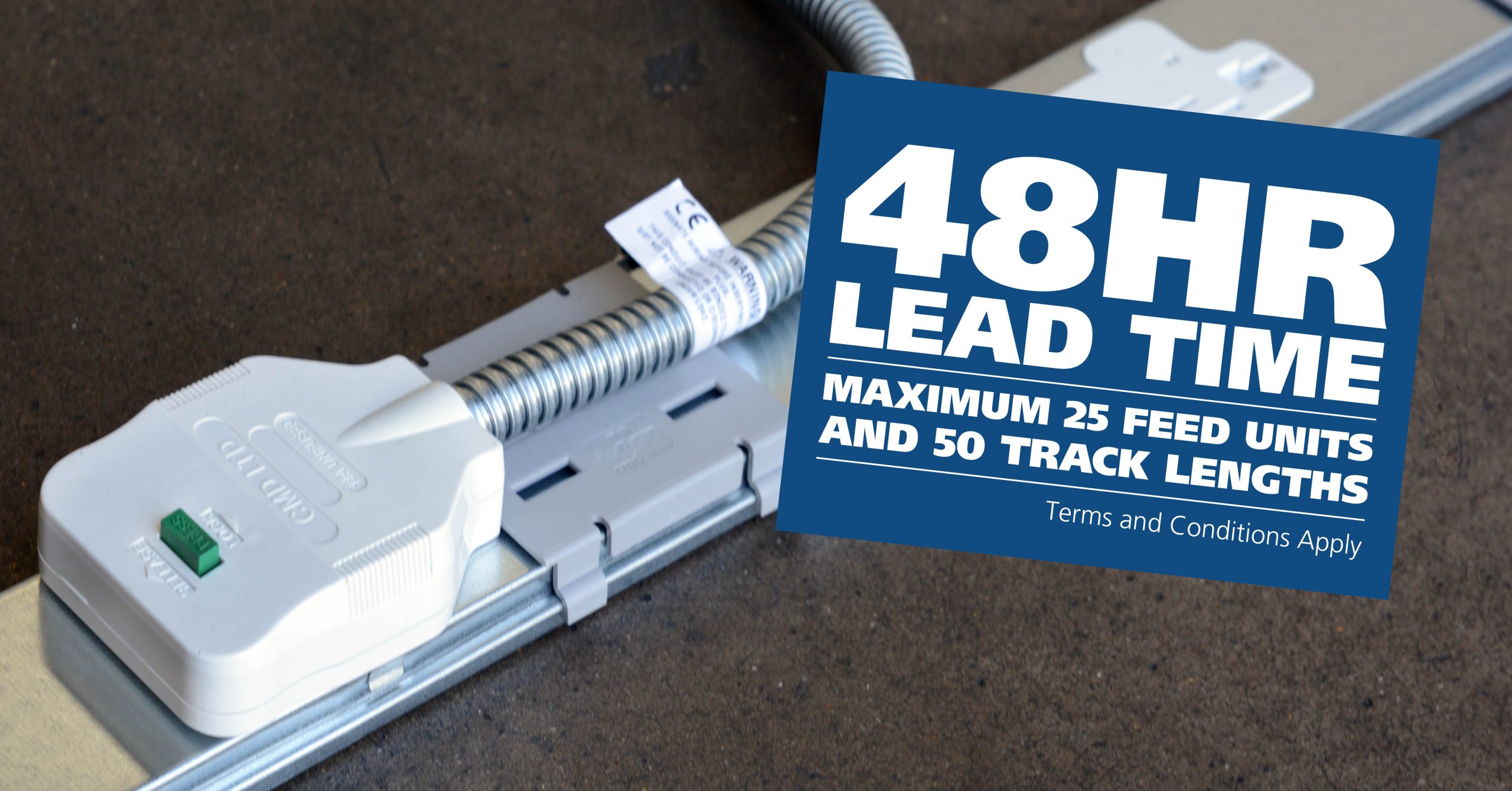
CMD Ltd, the specialist in power distribution systems, workstation power and monitor arms, has launched a rapid ordering service for its Betatrak® underfloor powertrack distribution systems and accessories, with a commitment to delivering within 48-hours of an approved purchase order*. The service enables customers to order up to 50 lengths of Standard or Clean Earth (C/E) low noise Betatrak, along with up to 25 feed...

Read more
CMD INVESTS £1/4 MILLION IN NEW MACHINE AS PART OF FACTORY UPGRADE

We have invested in a new £1/4m TRUMPF CNC metal punch as part of an asset renewal strategy for our UK manufacturing capability. The new machine will be used in the production of a wide variety of our power distribution systems and workstation power products at our Rotherham factory. Suitable for handling sheet metal between 0.9mm and 3.0mm thick, the new machine will replace one...

Read more

CMD CATALOGUE PROVIDES TECHNICAL POWER DISTRIBUTION GUIDE

CMD Ltd has released a new catalogue, providing an easy to follow technical guide to our power distribution systems and plug and play desk modules. Detailing CMD’s full range of UK-manufactured power distribution systems and plug and play desk modules, the catalogue will be a helpful source of information to M&E engineers and contractors alike to understand how our power distribution systems connect together and...

Read more

Power Distribution Catalogue
CMD Ltd PLAYS ESSENTIAL ROLE IN ELECTRICAL FIT OUT AT LONDON’S PRESTIGIOUS OFFICE DEVELOPMENT

CMD Ltd, specialist in workplace connectivity and ergonomic solutions, has provided a flexible and high-quality power distribution network for The Ray, a prestigious office development in London’s Farringdon. Well-known for being the former site of The Guardian newspaper, The Ray now stands as an 83,000ft² office development characterised by a modernised warehouse aesthetic, with level two now occupied by a global social media company. The...

Read more

The Ray
CMD plugs in to european opportunity with Schuko Capsule unit launch

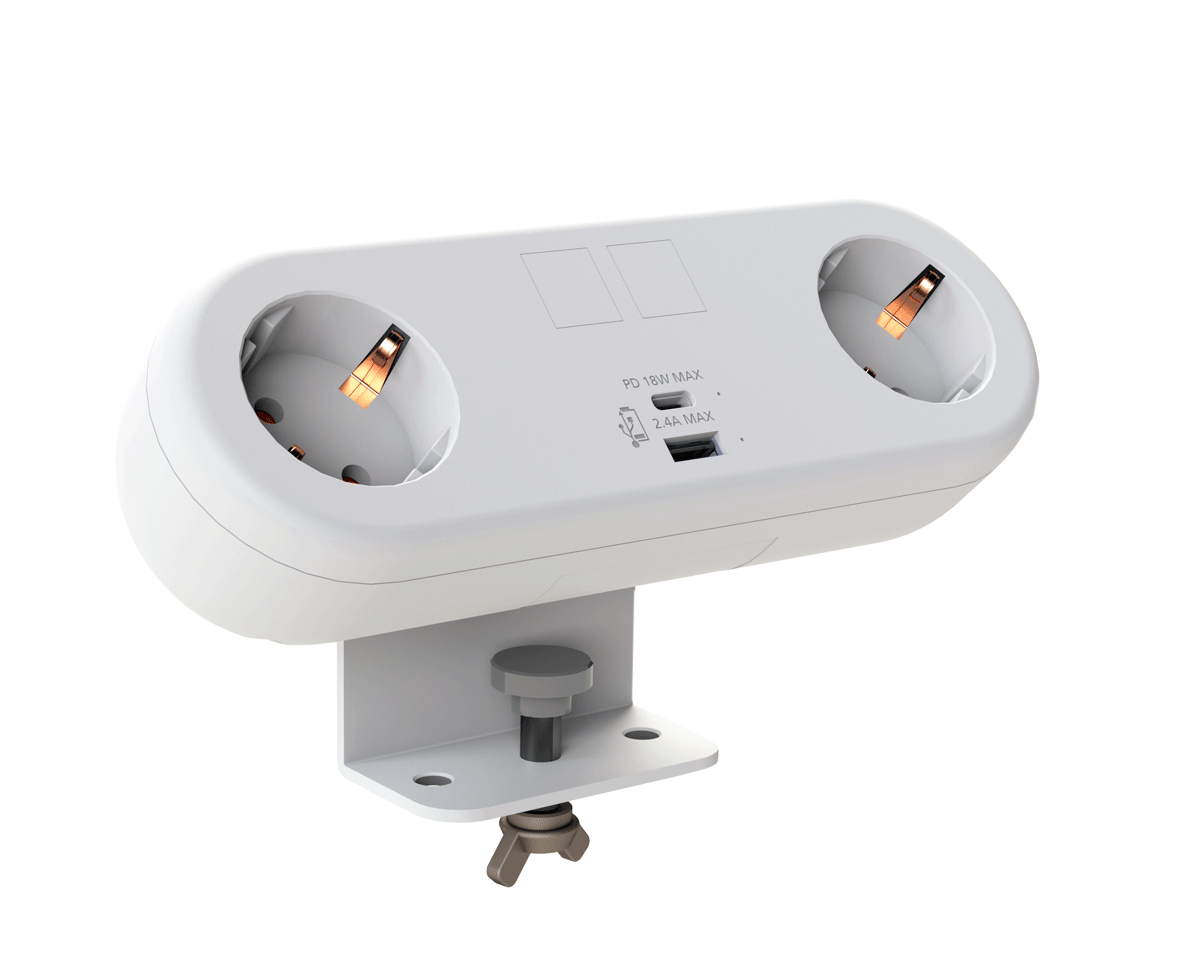
CMD Ltd, the specialist in power and connectivity solutions for commercial environments, has launched a Schuko version of its popular fixed format Capsule workstation power module for export to mainland Europe and beyond. A popular on desk power module comprising two sockets and dual USB (type A and C) chargers, CMD’s Capsule unit is already widely specified in the UK as an off-the-shelf workstation power...

Read more
CMD White Schuko Capsule Desk Power Module
CMD LTD EXTENDS MONITOR ARM RANGE WITH THE LAUNCH OF REACH PLUS

CMD Ltd, the specialist in ergonomic and connectivity solutions for commercial interiors, has completed its Reach monitor arm range with the launch of the Reach Plus. Available in single or dual screen options, the Reach Plus has been designed to provide an ideal solution for both single and dual screen workstation configurations, or can be used with next generation of large format curved screens. Suitable...

Read more

CMD Ltd DEMONSTRATES THE ART OF POWER DISTRIBUTION AT THE UNIVERSITY OF WARWICK

CMD Ltd, the specialist in workplace connectivity and ergonomic solutions, has provided Betatrak busbar power distribution and a range of electrical accessories for two major capital investment projects at the University of Warwick. Designed by Fielden Clegg Bradley Studios, the £33 million Faculty of Arts building is a showpiece development comprising four interconnected structures set around a central atrium, which will enable inter-disciplinary collaboration across...

Read more

University of Warwick
CMD BRINGS HARMONY TO COVENTRY UNIVERSITY RESEARCH FACILITIES

CMD Ltd, the specialist in power distribution solutions and workstation power and ergonomics, has provided under desk and on desk power modules for the refurbishment of three Coventry University research buildings. Located on Coventry University Technology Park, a business park designed to encourage collaboration between the university and knowledge-based businesses, the three buildings are being repurposed as office accommodation for university research teams. The refurbishment...

Read more

Coventry University

Top 10 Boat Ratchet Straps for Secure Transport

Moving a boat safely begins before the trailer leaves the driveway. Boat Ratchet Straps help hold the hull steady, but the right choice depends on the boat’s weight, trailer design, attachment points, and journey conditions. A strap that looks sturdy may still be poorly suited to a sharp edge or a narrow tie-down point. Small details matter.

As [verified marine transport expert’s name] notes, “A secure tie-down starts with the right anchor point, not the tightest pull.” Please verify this expert attribution and quotation before publication; no source material was provided to confirm a real person’s statement. That caution belongs here. A confident-sounding quote should never replace a checkable source.

This Top 10 guide compares Boat Ratchet Straps by practical features, including working load limits, webbing width, buckle design, hook style, and resistance to wear. It also considers how straps sit against a hull, where abrasion can begin, and whether tension is easy to inspect during a stop. Look for clear product specifications. Check the manufacturer’s instructions, too. A strap can loosen, shift, or rub when fitted carelessly, and even a good product cannot fix poor placement. The rankings aim to make comparison easier, not promise a perfect setup for every boat. Your trailer and load still deserve a careful, hands-on inspection before each trip.

Top 10 Boat Ratchet Straps for Secure Transport

How Boat Ratchet Straps Secure Watercraft During Transport

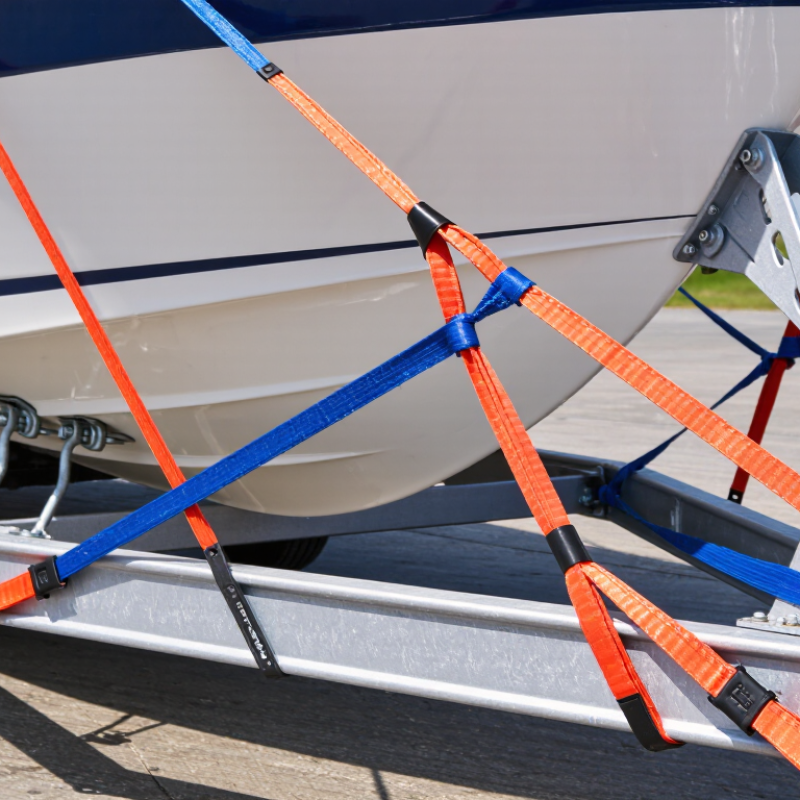
Boat ratchet straps secure watercraft by limiting movement in several directions, not merely pressing the hull onto the trailer. A snug strap across the hull helps resist bounce and side-to-side shift; bow and stern restraints help control fore-and-aft movement. Attach them to the boat’s designated tie-down points and solid trailer anchors. Keep webbing flat, away from sharp edges, and clear of delicate fittings. No twist. A glossy hull can hide a loose strap, so check tension again after a short, safe stop.

For a useful load-capacity reference, the U.S. Federal Motor Carrier Safety Administration’s cargo-securement rule sets the combined working load limit of tiedowns at no less than 50 percent of the cargo’s weight for covered commercial motor vehicles. That figure is not a universal recreational-trailer rule, but it shows why strap ratings matter. Follow the boat and trailer makers’ instructions, and never assume a strap’s breaking strength equals its working load limit. Inspect stitching, hooks, and ratchets for fraying, corrosion, or bent parts before travel. I may be cautious here: tighter is not always safer. Excessive pressure can damage a hull or fittings, while a strap routed at the wrong angle may still let the boat shift. Check the load after the first few miles.

Key Features and Ratings to Compare Before Choosing

When comparing boat ratchet straps, read the working load limit (WLL), not only the breaking strength.

FMCSA’s cargo-securement rule, 49 CFR 393.106(d), sets the combined WLL of tie-downs at no less than half the secured cargo’s weight in applicable commercial transport. Treat that as a regulatory baseline, not a complete boat-loading plan.

A strap marked with a high break strength may still have a much lower WLL. Compare strap width, length, stitching, hooks, and ratchet feel. Wider webbing can spread pressure, but it must fit the boat’s contact points without bunching.

Check that hooks seat fully on trailer anchors and that metal parts show no rust or distortion. Small details matter. A strap that binds or slips during a test pull deserves a closer look. UV exposure, salt spray, and sharp hull edges can weaken webbing; edge protectors help, but do not repair damaged straps.

Inspect stitching for pulled threads and webbing for cuts, glazing, or stiffness. I would not choose by rating alone: anchor placement and hull shape change how loads behave, and that judgment is easy to get wrong. FMCSA’s figures describe cargo securement, not a guarantee against boat movement on every road.

Ten Boat Ratchet Straps for Different Transport Needs

Boat transport needs vary with hull shape, trailer design, and trip length. A compact aluminum boat may need shorter straps that avoid loose tails near the wheels. A wider fiberglass hull may call for longer straps and soft sleeves where webbing touches the finish. Check the strap’s working load limit on its label, then compare it with the trailer and boat maker’s guidance. Do not judge capacity by webbing width alone. The ratchet should close smoothly, and the hooks should sit securely on suitable trailer points. Not every anchor point is suitable.

Tighten each strap until the boat feels stable, not until the hull flexes or the suspension compresses heavily.

It sounds obvious. It isn’t always.

Cross-check that straps cannot rub against sharp edges, propellers, or painted surfaces. For a short local drive, a quick check after the first few miles can reveal settling or loosened webbing. Longer journeys and rough roads deserve more frequent checks.

Wet straps may tighten or shift as they dry, so inspect them again at the end of the trip. Keep spare straps dry and away from fuel, grit, and direct sunlight. A slightly awkward strap angle may look secure, but it can pull sideways under braking; adjust it before departure.

How to Attach and Tighten Straps for a Stable Load

A secure boat load starts at the trailer’s rated tie-down points, not convenient rails or fittings. Attach straps to the bow and stern eyes, following the boat and trailer manufacturers’ instructions. Keep each strap clear of propellers, wiring, and sharp edges. If an edge cannot be avoided, use suitable edge protection. Keep it snug.

Turn the ratchet handle smoothly until the strap is firm, then close and lock the handle. Do not keep cranking just to remove every trace of movement; excessive force can stress the hull or fittings. FMCSA cargo-securement rules specify an aggregate working load limit of at least half the cargo weight for covered commercial loads (49 CFR 393.106). That benchmark is useful context, not a substitute for your trailer maker’s requirements.

Check that the boat sits squarely on its supports and that the winch strap is not the only restraint. Add dedicated bow and stern tie-downs where specified. After a short drive, stop somewhere safe and check strap tension, hooks, and anchor points. Straps can settle as the hull and trailer move. I still find this easy to overlook: a tight ratchet handle does not prove the load is stable. Recheck after bumps, rain, or a change in strap position.

Top 10 Boat Ratchet Straps for Secure Transport

Example working load limit (WLL) ratings for comparing tie-down capacity—not a product ranking. Always use the WLL printed on the strap label.

Choose straps based on their labeled WLL and the load’s securement requirements. Attach them to suitable tie-down points, tighten evenly, and avoid excessive pressure on the boat hull. Recheck tension after starting the journey.

Inspection, Care, and Safe Replacement of Ratchet Straps

Before loading, inspect each strap in good light. Run the webbing slowly through your fingers and check for cuts, fraying, melted fibers, stiff patches, chemical stains, and damaged stitching. Look closely at the ratchet teeth, handle, hooks, and attachment points for cracks, bending, or heavy corrosion. Salt and grit hide wear. Rinse hardware with fresh water, then let the strap dry fully away from direct heat. Keep webbing clean and dry; never cover damage with tape or sew a repair yourself. A barely readable capacity label is a reason to retire the strap, not guess its rating.

The Web Sling and Tie Down Association’s WSTDA-T-1 standard uses a 3:1 design factor for web tie-down assemblies: breaking strength is not the same as working load limit. Check the label and use the marked working load limit when planning securement. Replace a strap after a severe shock load, visible structural damage, or any doubt about its history. Boat transport adds spray, sharp trailer edges, and repeated vibration; protect contact points with suitable edge guards, and recheck tension after the first short drive. Don’t overtighten. I still find that easy to misjudge: a strap can feel reassuringly firm while pressing a hull against a hard edge. Retired straps should be clearly marked and kept out of service.