

News

Miro: A New Standard in Responsible Innovation

Miro: A New Standard in Responsible Innovation The Miro monitor arm is setting new benchmarks in sustainability. It offers a high-performance solution without compromising on environmental responsibility. Designed with careful material selection, local sourcing, and longevity in mind, Miro’s responsible approach to design and unique manoeuvrability set it apart from the competition. Sustainable Choices Miro is crafted from energy-efficient materials with a lower carbon impact....

Read more
HSE Advisor

Role Purpose Support in the development, implementation and maintenance of the company’s Health, Safety & Environmental policies, processes, operational procedures, and standards.  Ensuring best practice and championing a continually improving HSE culture within the business. Key Responsibilities Liaise with and provide support to all areas of the business to eliminate, mitigate or reduce identified HSE exposures. Partner with the production management team and team leaders,...

Read more
CMD Ltd LAUNCHES 48-HOUR TURNAROUND ON BETATRAK® RAPID ORDERING SERVICE

CMD Ltd, the specialist in power distribution systems, workstation power and monitor arms, has launched a rapid ordering service for its Betatrak® underfloor powertrack distribution systems and accessories, with a commitment to delivering within 48-hours of an approved purchase order*. The service enables customers to order up to 50 lengths of Standard or Clean Earth (C/E) low noise Betatrak, along with up to 25 feed...

Read more

CMD INVESTS £1/4 MILLION IN NEW MACHINE AS PART OF FACTORY UPGRADE

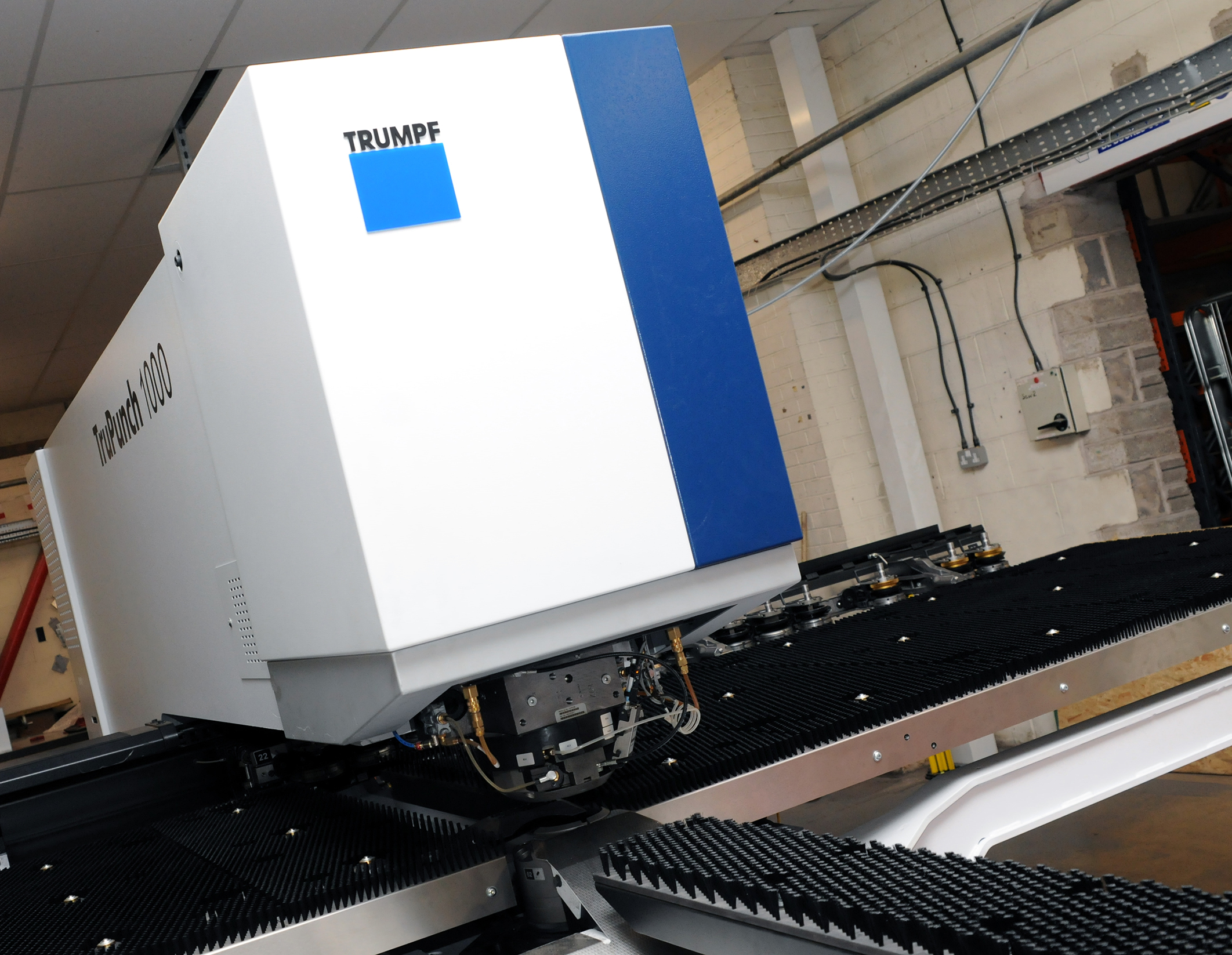
We have invested in a new £1/4m TRUMPF CNC metal punch as part of an asset renewal strategy for our UK manufacturing capability. The new machine will be used in the production of a wide variety of our power distribution systems and workstation power products at our Rotherham factory. Suitable for handling sheet metal between 0.9mm and 3.0mm thick, the new machine will replace one...

Read more
CMD CATALOGUE PROVIDES TECHNICAL POWER DISTRIBUTION GUIDE

CMD Ltd has released a new catalogue, providing an easy to follow technical guide to our power distribution systems and plug and play desk modules. Detailing CMD’s full range of UK-manufactured power distribution systems and plug and play desk modules, the catalogue will be a helpful source of information to M&E engineers and contractors alike to understand how our power distribution systems connect together and...

Read more

Power Distribution Catalogue
CMD Ltd PLAYS ESSENTIAL ROLE IN ELECTRICAL FIT OUT AT LONDON’S PRESTIGIOUS OFFICE DEVELOPMENT

CMD Ltd, specialist in workplace connectivity and ergonomic solutions, has provided a flexible and high-quality power distribution network for The Ray, a prestigious office development in London’s Farringdon. Well-known for being the former site of The Guardian newspaper, The Ray now stands as an 83,000ft² office development characterised by a modernised warehouse aesthetic, with level two now occupied by a global social media company. The...

Read more

The Ray
CMD plugs in to european opportunity with Schuko Capsule unit launch

CMD Ltd, the specialist in power and connectivity solutions for commercial environments, has launched a Schuko version of its popular fixed format Capsule workstation power module for export to mainland Europe and beyond. A popular on desk power module comprising two sockets and dual USB (type A and C) chargers, CMD’s Capsule unit is already widely specified in the UK as an off-the-shelf workstation power...

Read more

CMD White Schuko Capsule Desk Power Module
CMD LTD EXTENDS MONITOR ARM RANGE WITH THE LAUNCH OF REACH PLUS

CMD Ltd, the specialist in ergonomic and connectivity solutions for commercial interiors, has completed its Reach monitor arm range with the launch of the Reach Plus. Available in single or dual screen options, the Reach Plus has been designed to provide an ideal solution for both single and dual screen workstation configurations, or can be used with next generation of large format curved screens. Suitable...

Read more

CMD Ltd DEMONSTRATES THE ART OF POWER DISTRIBUTION AT THE UNIVERSITY OF WARWICK

CMD Ltd, the specialist in workplace connectivity and ergonomic solutions, has provided Betatrak busbar power distribution and a range of electrical accessories for two major capital investment projects at the University of Warwick. Designed by Fielden Clegg Bradley Studios, the £33 million Faculty of Arts building is a showpiece development comprising four interconnected structures set around a central atrium, which will enable inter-disciplinary collaboration across...

Read more

University of Warwick
CMD BRINGS HARMONY TO COVENTRY UNIVERSITY RESEARCH FACILITIES

CMD Ltd, the specialist in power distribution solutions and workstation power and ergonomics, has provided under desk and on desk power modules for the refurbishment of three Coventry University research buildings. Located on Coventry University Technology Park, a business park designed to encourage collaboration between the university and knowledge-based businesses, the three buildings are being repurposed as office accommodation for university research teams. The refurbishment...

Read more


Coventry University

7 Best Gas Density Indicators for Global Buyers?

Global gas procurement is becoming more measurement-driven. The International Energy Agency’s Gas Market Report 2024 describes continuing regional differences in supply, demand, storage, and LNG flows. The Energy Institute Statistical Review of World Energy 2024 also shows why gas quality cannot be judged by volume alone. Temperature, pressure, methane content, and heavier hydrocarbons can change a shipment’s density and commercial value.

This guide examines seven practical Gas Density Indicators used by global buyers. They include relative density, actual density, standard density, molecular weight, compressibility factor, density deviation, and heating-value relationships. Each indicator answers a different purchasing question. A buyer checking pipeline gas may focus on standard density and compressibility. An LNG importer may need tighter control over composition, custody transfer, and vapor behavior.

The technical foundation matters. ISO 6976:2016 provides recognized methods for calculating gas density, relative density, and calorific properties from composition. AGA Report No. 8 supports compressibility calculations for natural gas measurement. NIST reference data can also help verify component properties under defined conditions.

Numbers need context.

A density value without pressure and temperature is incomplete. A laboratory result may not represent the gas delivered at a metering station. In practice, procurement teams should compare the instrument’s stated accuracy, calibration method, operating range, and compliance documentation. They should also request recent certificates, raw composition data, and uncertainty estimates from suppliers.

No indicator is perfect. Some comparisons become misleading when buyers treat one figure as universal. This overview offers a practical framework, but local standards, contract terms, and measurement conditions still require professional review.

7 Best Gas Density Indicators for Global Buyers?

What Gas Density Indicators Measure in International Purchasing

7 Best Gas Density Indicators for Global Buyers?

What Gas Density Indicators Measure in International Purchasing

Gas density indicators show how much mass occupies a specific gas volume. This value changes with pressure, temperature, and composition. For international purchasing, buyers should examine density, relative density, molecular weight, pressure, temperature, compressibility, and moisture levels. These seven indicators reveal whether a gas specification is suitable for storage, transport, metering, or process use.

Density is commonly expressed in kilograms per cubic metre, while relative density compares gas with a reference gas. Molecular weight helps predict handling behavior, but it does not replace direct density measurement. Compressibility becomes important under high pressure, where ideal-gas calculations may become unreliable. Moisture readings can also expose quality risks, especially when condensation could affect valves, pipelines, or instruments. Real purchasing experience shows that small specification differences can create large measurement errors.

How to Set Clear Criteria for Comparing Density Indicators

7 Best Gas Density Indicators for Global Buyers?

How to Set Clear Criteria for Comparing Density Indicators

Global buyers should compare gas density indicators against the same operating conditions. Record pressure, temperature, gas composition, flow rate, and installation position. Without this information, accuracy claims can become misleading. A device tested at 20°C may behave differently near a cold pipeline wall.

Create a comparison sheet with seven practical criteria: measurement range, accuracy, repeatability, response time, pressure tolerance, calibration method, and maintenance needs. Check whether the indicator compensates for temperature and pressure changes. Confirm the stated uncertainty with independent test records. Traceable calibration matters. So does sensor stability after months of operation.

Look closely at installation details. A compact indicator may fit a narrow skid, but require cleaner gas or frequent adjustment. A slower instrument may work well for storage monitoring, while a fast response suits process control. Ask for data from gases similar to yours, not only dry laboratory samples. Review electrical ratings, communication options, enclosure protection, and service availability in the destination market.

Cost can distort judgment. A low purchase price may hide calibration labor, replacement sensors, or difficult shutdown procedures. A spreadsheet helps, but it cannot replace site evidence. Some specifications remain unclear. Ask technical questions in writing and preserve the answers. Before approval, request a short trial under realistic pressure and temperature cycles. That step may expose errors no brochure reveals.

Seven Practical Gas Density Indicators for Global Buyers

Seven Practical Gas Density Indicators for Global Buyers

Gas density affects custody transfer, storage volume, metering accuracy, and equipment sizing. Buyers should review seven indicators: reference density, relative density, molecular weight, pressure, temperature, compressibility factor, and gas composition. ISO 6976:2016 provides calculation methods for density, relative density, calorific value, and the Wobbe Index. These values support consistent comparisons across international suppliers.

Reference density shows mass per cubic metre at stated conditions. Relative density compares gas with dry air. NIST data lists methane at about 16.04 g/mol, while air is approximately 28.97 g/mol. Pure methane therefore has a relative density near 0.55. Commercial pipeline gas can differ because ethane, propane, nitrogen, and carbon dioxide change the mixture. A certificate showing only “density” is incomplete without pressure and temperature.

Pressure and temperature must be recorded beside every density result. Gas expands noticeably when temperature rises. The compressibility factor, or Z-factor, corrects ideal-gas assumptions at higher pressures. Composition testing reveals why two gases with similar energy values may occupy different volumes. The Wobbe Index helps buyers assess interchangeability during combustion. The U.S. Energy Information Administration describes natural gas as mainly methane, but actual pipeline composition varies by supply basin and processing route. That variation deserves attention. In practice, request laboratory results, sampling dates, reference conditions, uncertainty ranges, and calibration records. Some specifications still look precise while hiding weak sampling. That is a risk worth challenging.

7 Best Gas Density Indicators for Global Buyers? - Seven Practical Gas Density Indicators for Global Buyers

No. Gas Density Indicator Unit or Basis Practical Data or Screening Benchmark Why It Matters to Global Buyers Recommended Verification
1 Absolute Gas Density kg/m³ Pipeline-quality natural gas commonly falls at approximately 0.65–0.90 kg/m³ when measured at 15°C and 101.325 kPa. The actual value depends on composition and reference conditions. Provides the direct mass-per-volume value needed for storage calculations, flow conversion, transportation planning, and mass-balance checks. Require the reported temperature, absolute pressure, gas composition, compressibility factor, and measurement uncertainty together with the density value.
2 Relative Density Dimensionless; air = 1.000 Natural gas commonly has a relative density of approximately 0.55–0.75 against dry air under the same reference conditions. Allows quick comparison of gas heaviness, supports meter calculations, and helps identify major composition changes between shipments. Confirm the air reference, reference temperature and pressure, moisture basis, and calculation method used by the supplier or laboratory.
3 Molar Mass g/mol or kg/kmol Typical pipeline natural gas is often within approximately 16–22 g/mol. Pure methane has a molar mass of 16.04 g/mol. Molar mass is a key input for calculating density, relative density, mass flow, energy conversion, and gas behavior under pressure. Check the component analysis for methane, ethane, propane, nitrogen, carbon dioxide, and heavier hydrocarbons, preferably on a clearly stated dry or wet basis.
4 Compressibility Factor (Z) Dimensionless For natural gas, Z is commonly below 1.00 at pipeline pressure. A broad screening range of approximately 0.85–1.00 may occur around 15°C and 1–10 MPa, depending on composition. Prevents significant density errors when converting between standard and operating conditions, especially for high-pressure pipeline or LNG-related calculations. Require Z to be calculated at the actual pressure and temperature using an accepted equation of state and a complete gas composition.
5 Reference Temperature and Pressure °C and kPa or bar absolute Common reference bases include 15°C and 101.325 kPa absolute or 0°C and 101.325 kPa absolute. Contract documents may specify another base. The same gas can show different density values when the reference basis changes. A common basis is essential for fair international comparison and invoicing. Put the reference conditions directly beside every density figure and ensure that all parties use absolute, not gauge, pressure.
6 Measurement Uncertainty % of reading or % of value For commercial gas measurement, buyers commonly seek a documented uncertainty target of approximately ±0.5% or better, subject to the contract, flow range, equipment, and calibration method. Indicates whether a density result is reliable enough for custody transfer, customs documentation, energy settlement, and technical acceptance. Request calibration certificates, traceability records, uncertainty budgets, operating-range limits, and the date of the latest verification.
7 Composition-Based Density Calculation Mole fraction, % mol, and calculated kg/m³ Density should be calculated from a representative composition covering methane, ethane, propane, heavier hydrocarbons, nitrogen, carbon dioxide, and other relevant components. Provides an auditable link between laboratory composition, density, calorific value, and transport quantity, particularly when gas sources or cargoes change. Review the sampling point, sampling frequency, chromatograph or laboratory method, component detection limits, analysis basis, and calculation standard stated in the contract.

Note: The numerical ranges are practical screening values for typical natural gas and are not universal product specifications. Final acceptance should be based on the agreed contract basis, gas composition, operating conditions, measurement method, and applicable technical standards.

How to Match Each Indicator With Gas Type and Buying Purpose

Gas density buying decisions improve when each indicator matches the gas type and purchasing purpose. Actual density describes gas mass per volume under operating pressure and temperature. It suits pipeline design, storage sizing, and custody checks. Standard density uses agreed reference conditions, helping buyers compare natural gas volumes across suppliers. Always confirm the reference temperature and pressure. Small differences can change invoices.

Relative density compares gas density with air. It works well for natural gas screening and appliance compatibility. Molecular weight helps estimate composition, especially for hydrogen-rich, carbon dioxide-rich, or mixed gases. The compressibility factor shows how real gas behavior differs from ideal calculations. It becomes important at high pressure. Wobbe index combines heating value with relative density, making it useful for burner and energy-quality decisions. Do not treat it as a direct density reading.

Measurement uncertainty is the seventh indicator, and often the neglected one. A digital densitometer may report excellent resolution but poor results if temperature control is weak. Ask for calibration traceability, test conditions, repeatability, and sampling procedures. For biogas, moisture and carbon dioxide can shift density noticeably. For LPG vapor, pressure and temperature require closer control. Hydrogen blends need composition-specific verification. I prefer three repeated measurements.

One result is not enough. Some field readings still look convincing. That is where experienced review matters. A practical purchase specification should name the indicator, gas composition range, reference conditions, and acceptable uncertainty. Otherwise, buyers may compare numbers that were never truly equivalent.

7 Gas Density Indicators for Global Buyers

Standard gas density comparison at 0°C and 1 atm, supporting gas selection, storage planning, metering, and transport decisions.

Hydrogen: Ultra-low density; suitable for lightweight energy and industrial gas applications.
Helium: Low density; commonly matched with buoyancy, leak detection, and specialized cooling purposes.
Methane: Lower-than-air density; important for pipeline flow, LNG planning, and leak behavior assessment.
Nitrogen: Near-air density; useful for inerting, blanketing, and process gas supply.
Oxygen: Higher density than air; relevant to combustion, medical, and industrial oxygen logistics.
Carbon dioxide: Dense gas; important for beverage carbonation, fire suppression, and ventilation planning.
Propane: Dense liquefied petroleum gas; requires attention to cylinder storage, ventilation, and transport safety.

Reference values are approximate standard densities at 0°C and 1 atm. Actual purchasing specifications should also consider purity, pressure, temperature, compressibility, packaging, and local regulations.

How to Verify Density Data Before Approving an International Order

7 Best Gas Density Indicators for Global Buyers
How to Verify Density Data Before Approving an International Order

Gas density data can look precise while hiding important differences. Before approval, check the reported value, unit, temperature, and pressure together. Density changes when either condition changes. A number without reference conditions is incomplete.

Use these seven indicators: gas composition, temperature, absolute pressure, reference conditions, measurement method, instrument calibration, and test repeatability. Confirm whether the supplier used kilograms per cubic metre, grams per litre, or another unit. Review the composition certificate for impurities and moisture. Ask for the laboratory method and calibration date. Small details matter.

Check the actual test record.

Request a sample report with the instrument identification, test date, and uncertainty range. Compare the result with an independent laboratory test when the order value is high. Keep the sample sealed, labelled, and stored at a controlled temperature before testing. For compressed gas, verify that pressure readings use absolute pressure rather than gauge pressure.

Do not rely on a single attractive figure. A supplier may provide correct data under conditions that differ from your receiving facility. I have seen procurement checks fail because Celsius and Kelvin were confused. That mistake is basic, but possible. Repeat the calculation with the same conditions used in transport and storage. If results still differ, pause approval and request clarification in writing. A clear audit trail protects both sides.