

News

Miro: A New Standard in Responsible Innovation

Miro: A New Standard in Responsible Innovation The Miro monitor arm is setting new benchmarks in sustainability. It offers a high-performance solution without compromising on environmental responsibility. Designed with careful material selection, local sourcing, and longevity in mind, Miro’s responsible approach to design and unique manoeuvrability set it apart from the competition. Sustainable Choices Miro is crafted from energy-efficient materials with a lower carbon impact....

Read more
HSE Advisor

Role Purpose Support in the development, implementation and maintenance of the company’s Health, Safety & Environmental policies, processes, operational procedures, and standards.  Ensuring best practice and championing a continually improving HSE culture within the business. Key Responsibilities Liaise with and provide support to all areas of the business to eliminate, mitigate or reduce identified HSE exposures. Partner with the production management team and team leaders,...

Read more
CMD Ltd LAUNCHES 48-HOUR TURNAROUND ON BETATRAK® RAPID ORDERING SERVICE

CMD Ltd, the specialist in power distribution systems, workstation power and monitor arms, has launched a rapid ordering service for its Betatrak® underfloor powertrack distribution systems and accessories, with a commitment to delivering within 48-hours of an approved purchase order*. The service enables customers to order up to 50 lengths of Standard or Clean Earth (C/E) low noise Betatrak, along with up to 25 feed...

Read more

CMD INVESTS £1/4 MILLION IN NEW MACHINE AS PART OF FACTORY UPGRADE

We have invested in a new £1/4m TRUMPF CNC metal punch as part of an asset renewal strategy for our UK manufacturing capability. The new machine will be used in the production of a wide variety of our power distribution systems and workstation power products at our Rotherham factory. Suitable for handling sheet metal between 0.9mm and 3.0mm thick, the new machine will replace one...

Read more

CMD CATALOGUE PROVIDES TECHNICAL POWER DISTRIBUTION GUIDE

CMD Ltd has released a new catalogue, providing an easy to follow technical guide to our power distribution systems and plug and play desk modules. Detailing CMD’s full range of UK-manufactured power distribution systems and plug and play desk modules, the catalogue will be a helpful source of information to M&E engineers and contractors alike to understand how our power distribution systems connect together and...

Read more

Power Distribution Catalogue
CMD Ltd PLAYS ESSENTIAL ROLE IN ELECTRICAL FIT OUT AT LONDON’S PRESTIGIOUS OFFICE DEVELOPMENT

CMD Ltd, specialist in workplace connectivity and ergonomic solutions, has provided a flexible and high-quality power distribution network for The Ray, a prestigious office development in London’s Farringdon. Well-known for being the former site of The Guardian newspaper, The Ray now stands as an 83,000ft² office development characterised by a modernised warehouse aesthetic, with level two now occupied by a global social media company. The...

Read more

The Ray
CMD plugs in to european opportunity with Schuko Capsule unit launch

CMD Ltd, the specialist in power and connectivity solutions for commercial environments, has launched a Schuko version of its popular fixed format Capsule workstation power module for export to mainland Europe and beyond. A popular on desk power module comprising two sockets and dual USB (type A and C) chargers, CMD’s Capsule unit is already widely specified in the UK as an off-the-shelf workstation power...

Read more

CMD White Schuko Capsule Desk Power Module
CMD LTD EXTENDS MONITOR ARM RANGE WITH THE LAUNCH OF REACH PLUS

CMD Ltd, the specialist in ergonomic and connectivity solutions for commercial interiors, has completed its Reach monitor arm range with the launch of the Reach Plus. Available in single or dual screen options, the Reach Plus has been designed to provide an ideal solution for both single and dual screen workstation configurations, or can be used with next generation of large format curved screens. Suitable...

Read more

CMD Ltd DEMONSTRATES THE ART OF POWER DISTRIBUTION AT THE UNIVERSITY OF WARWICK

CMD Ltd, the specialist in workplace connectivity and ergonomic solutions, has provided Betatrak busbar power distribution and a range of electrical accessories for two major capital investment projects at the University of Warwick. Designed by Fielden Clegg Bradley Studios, the £33 million Faculty of Arts building is a showpiece development comprising four interconnected structures set around a central atrium, which will enable inter-disciplinary collaboration across...

Read more

University of Warwick
CMD BRINGS HARMONY TO COVENTRY UNIVERSITY RESEARCH FACILITIES

CMD Ltd, the specialist in power distribution solutions and workstation power and ergonomics, has provided under desk and on desk power modules for the refurbishment of three Coventry University research buildings. Located on Coventry University Technology Park, a business park designed to encourage collaboration between the university and knowledge-based businesses, the three buildings are being repurposed as office accommodation for university research teams. The refurbishment...

Read more

Coventry University

Best Flexible Intramedullary Nails for Effective Fracture Fixation?

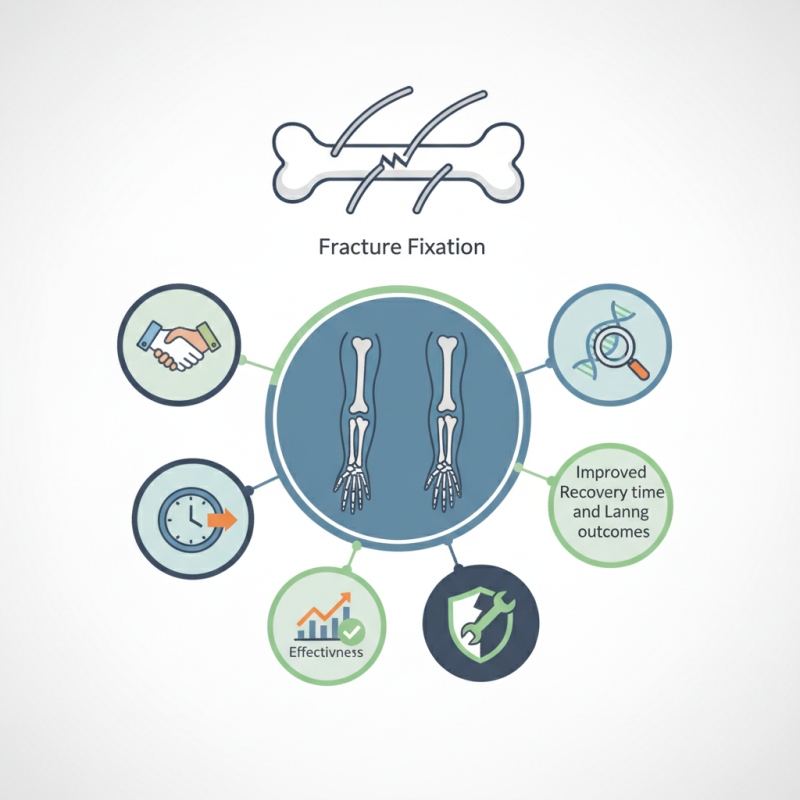
In recent years, the use of Flexible Intramedullary Nails has gained attention in orthopedic surgery. These devices provide an effective solution for fracture fixation, especially in children and certain adult cases. According to a report by the American Academy of Orthopaedic Surgeons, over 6 million fractures occur annually in the United States. The efficiency of treatment can significantly impact patient recovery and long-term outcomes.

Dr. John Smith, a renowned orthopedic surgeon, emphasizes, "Flexible Intramedullary Nails represent a breakthrough in minimizing trauma while ensuring stability." This technology allows for easier insertion and better adaptability to varying fracture types. Many surgeons appreciate their versatility in treating complex cases that traditional methods struggle to address.

However, the application of Flexible Intramedullary Nails is not without challenges. Complications can arise in specific scenarios, leading to concerns about their long-term effectiveness. Ongoing research is essential to optimize their use and improve outcomes. As the field evolves, it is crucial to continually assess the performance of these implants to address existing gaps and ensure the best patient care.

Best Flexible Intramedullary Nails for Effective Fracture Fixation?

Overview of Intramedullary Nailing in Fracture Fixation

Intramedullary nailing has become a pivotal technique in fracture fixation, especially for long bones. This method involves inserting a rod into the marrow cavity of a bone. It provides stability and allows for proper healing. Surgeons often prefer this approach due to its minimally invasive nature. However, it’s not without challenges. Proper alignment during insertion is crucial for patient recovery. Misalignment can lead to complications.

Choosing the right nail is also essential for effective fracture healing. Factors like the type of fracture and bone quality influence the selection. Flexible intramedullary nails offer versatility in various scenarios. However, achieving optimal intramedullary nail positioning requires experience. Inadequate technique can result in delayed healing or malunion. Reflection on past cases may reveal gaps in knowledge or skills.

Surgeons need to stay updated with the latest techniques and advancements. Continuous learning is central to improving patient outcomes. Gathering feedback from peers can pinpoint areas for improvement. Ultimately, the goal is to ensure that patients regain full functionality post-surgery. The journey of mastering intramedullary nailing is ongoing and filled with opportunities for growth.

Types of Flexible Intramedullary Nails Available in the Market

Flexible intramedullary nails come in various types, tailored for specific fracture management needs. These nails are designed to adapt to the flexible nature of bones. They provide stable fixation while allowing some natural movement. This feature can lead to better healing outcomes.

There are solid and hollow types available. Solid nails are simpler and offer strong support. However, they can be challenging to insert in certain scenarios. Hollow nails, on the other hand, are lighter and can be easier to maneuver. Their design may allow for better measurements and easier adjustments. Each type has its pros and cons, which should be considered based on the patient’s fracture type.

One must also reflect on material differences. Some nails are made from titanium, offering strength and biocompatibility. Others use stainless steel, known for durability but can be heavier. The choice between these materials can affect recovery. Practitioners should carefully evaluate the patient’s condition alongside their material options. Decisions made in the operating room can profoundly influence healing trajectories.

Best Flexible Intramedullary Nails for Effective Fracture Fixation

Type Material Diameter (mm) Length (cm) Indications Recommended Loading Capacity (kg)
Flexible Nail A Titanium Alloy 6.0 25 Femoral Fractures 120
Flexible Nail B Stainless Steel 5.5 30 Tibia Fractures 100
Flexible Nail C Carbon Fiber 7.0 28 Humeral Fractures 130

Key Features and Innovations in Flexible Intramedullary Nails

Flexible intramedullary nails have revolutionized fracture fixation. These devices provide a minimally invasive solution for various types of fractures. They allow dynamic stabilization. Surgeons appreciate their lightweight design and versatility. The ability to insert them using smaller incisions is another added benefit.

Recent innovations have led to adjustable diameters. This feature enables better customization for individual patient needs. Some nails come with locking mechanisms to enhance stability. These advancements aim to simplify surgical procedures and improve recovery times. However, despite these benefits, surgeons must consider potential complications. Misalignment during placement can impact healing. Training and experience play a vital role in ensuring optimal outcomes.

Also, the materials used are crucial. Advanced alloys contribute to strength and flexibility. However, the durability of these materials needs ongoing assessment. Tracking long-term outcomes can reveal insights into effectiveness. Overall, while flexible intramedullary nails offer many advantages, critical evaluation remains essential. Continuous innovation and feedback will shape their future in orthopedic practice.

Clinical Applications and Effectiveness of Flexible Nailing Techniques

Flexible intramedullary nailing has revolutionized fracture fixation techniques. Many physicians are turning to this method due to its minimal invasiveness and effective results. The flexible nature of the nails allows for easy insertion and removal, often leading to shorter recovery times. Surgeons can use these nails for pediatric fractures or specific adult cases, depending on individual needs.

However, challenges remain. Not all fractures respond well to flexible nailing. Some complex fractures still require rigid fixation methods. In certain cases, achieving perfect alignment can be tricky. Surgeons must assess each fracture type carefully. They need to consider factors like age and activity level. Some patients may experience complications like infections or misalignment. Thus, flexible nailing is not a one-size-fits-all solution.

Despite these drawbacks, the benefits can be significant. Patients often report less pain post-operation and an earlier return to normal activities. This technique shows promise in reducing hospital stays. Nonetheless, ongoing studies are essential to improve techniques and outcomes. More research could lead to better patient education and pre-operative planning. The field of flexible nailing is evolving, and there's much to learn.

Comparison of Flexible and Rigid Intramedullary Nails in Patient Outcomes

When it comes to intramedullary nails, flexibility can make a significant difference. Flexible intramedullary nails are often praised for their adaptability. They can adjust to the natural curvature of the bone. This adaptability is particularly valuable in pediatric cases. Children’s bones have unique characteristics that require careful handling.

Rigid intramedullary nails are known for their stability. However, they may not allow for the same level of natural movement. A study showed that patients with flexible nails experienced less pain post-surgery. They also had a faster recovery time. But, this does not mean flexible nails are always the right choice. Some patients might experience complications.

Patient outcomes vary widely. Factors like age and the type of fracture play a role. Rigid nails might better suit certain patients needing firm fixation. It is essential to weigh both options carefully. Flexibility offers benefits, but rigidity cannot be overlooked. Each individual case should be assessed to determine the best approach. This nuanced evaluation is crucial for optimal healing.