

News

Miro: A New Standard in Responsible Innovation

Miro: A New Standard in Responsible Innovation The Miro monitor arm is setting new benchmarks in sustainability. It offers a high-performance solution without compromising on environmental responsibility. Designed with careful material selection, local sourcing, and longevity in mind, Miro’s responsible approach to design and unique manoeuvrability set it apart from the competition. Sustainable Choices Miro is crafted from energy-efficient materials with a lower carbon impact....

Read more
HSE Advisor

Role Purpose Support in the development, implementation and maintenance of the company’s Health, Safety & Environmental policies, processes, operational procedures, and standards.  Ensuring best practice and championing a continually improving HSE culture within the business. Key Responsibilities Liaise with and provide support to all areas of the business to eliminate, mitigate or reduce identified HSE exposures. Partner with the production management team and team leaders,...

Read more
CMD Ltd LAUNCHES 48-HOUR TURNAROUND ON BETATRAK® RAPID ORDERING SERVICE

CMD Ltd, the specialist in power distribution systems, workstation power and monitor arms, has launched a rapid ordering service for its Betatrak® underfloor powertrack distribution systems and accessories, with a commitment to delivering within 48-hours of an approved purchase order*. The service enables customers to order up to 50 lengths of Standard or Clean Earth (C/E) low noise Betatrak, along with up to 25 feed...

Read more

CMD INVESTS £1/4 MILLION IN NEW MACHINE AS PART OF FACTORY UPGRADE

We have invested in a new £1/4m TRUMPF CNC metal punch as part of an asset renewal strategy for our UK manufacturing capability. The new machine will be used in the production of a wide variety of our power distribution systems and workstation power products at our Rotherham factory. Suitable for handling sheet metal between 0.9mm and 3.0mm thick, the new machine will replace one...

Read more

CMD CATALOGUE PROVIDES TECHNICAL POWER DISTRIBUTION GUIDE

CMD Ltd has released a new catalogue, providing an easy to follow technical guide to our power distribution systems and plug and play desk modules. Detailing CMD’s full range of UK-manufactured power distribution systems and plug and play desk modules, the catalogue will be a helpful source of information to M&E engineers and contractors alike to understand how our power distribution systems connect together and...

Read more

Power Distribution Catalogue
CMD Ltd PLAYS ESSENTIAL ROLE IN ELECTRICAL FIT OUT AT LONDON’S PRESTIGIOUS OFFICE DEVELOPMENT

CMD Ltd, specialist in workplace connectivity and ergonomic solutions, has provided a flexible and high-quality power distribution network for The Ray, a prestigious office development in London’s Farringdon. Well-known for being the former site of The Guardian newspaper, The Ray now stands as an 83,000ft² office development characterised by a modernised warehouse aesthetic, with level two now occupied by a global social media company. The...

Read more

The Ray
CMD plugs in to european opportunity with Schuko Capsule unit launch

CMD Ltd, the specialist in power and connectivity solutions for commercial environments, has launched a Schuko version of its popular fixed format Capsule workstation power module for export to mainland Europe and beyond. A popular on desk power module comprising two sockets and dual USB (type A and C) chargers, CMD’s Capsule unit is already widely specified in the UK as an off-the-shelf workstation power...

Read more

CMD White Schuko Capsule Desk Power Module
CMD LTD EXTENDS MONITOR ARM RANGE WITH THE LAUNCH OF REACH PLUS

CMD Ltd, the specialist in ergonomic and connectivity solutions for commercial interiors, has completed its Reach monitor arm range with the launch of the Reach Plus. Available in single or dual screen options, the Reach Plus has been designed to provide an ideal solution for both single and dual screen workstation configurations, or can be used with next generation of large format curved screens. Suitable...

Read more

CMD Ltd DEMONSTRATES THE ART OF POWER DISTRIBUTION AT THE UNIVERSITY OF WARWICK

CMD Ltd, the specialist in workplace connectivity and ergonomic solutions, has provided Betatrak busbar power distribution and a range of electrical accessories for two major capital investment projects at the University of Warwick. Designed by Fielden Clegg Bradley Studios, the £33 million Faculty of Arts building is a showpiece development comprising four interconnected structures set around a central atrium, which will enable inter-disciplinary collaboration across...

Read more

University of Warwick
CMD BRINGS HARMONY TO COVENTRY UNIVERSITY RESEARCH FACILITIES

CMD Ltd, the specialist in power distribution solutions and workstation power and ergonomics, has provided under desk and on desk power modules for the refurbishment of three Coventry University research buildings. Located on Coventry University Technology Park, a business park designed to encourage collaboration between the university and knowledge-based businesses, the three buildings are being repurposed as office accommodation for university research teams. The refurbishment...

Read more

Coventry University

10 Best Crimping Butt Connectors for Secure Wiring

A loose splice can hide beneath insulation until vibration, heat, or moisture exposes it. Choosing reliable Crimping Butt Connectors helps create a secure joint, but the connector alone cannot guarantee a good result. Wire gauge, insulation type, crimping-tool compatibility, and installation technique all matter.

“[Insert a verified quotation about crimp quality here],” says [verified expert name], a [specific credentials or industry role]. This quotation should be confirmed with its source before publication; a made-up attribution would weaken trust. In practice, a properly matched connector should fit the conductor snugly, while the correct die compresses the barrel without cutting strands. A quick visual check matters. So does a gentle pull test, performed according to the connector maker’s instructions.

This guide compares ten options for common wiring tasks, including compact automotive repairs and heavier-duty connections. We’ll look at conductor range, insulation, sealing, material, and tool requirements—not just package claims. Some products may suit a damp environment; others are better for dry, protected wiring. Small details count. Check the label, inspect the finished crimp, and follow the manufacturer’s specifications. Even then, installation conditions can vary, and a connector that works well in one setup may not be right for another.

10 Best Crimping Butt Connectors for Secure Wiring

Understanding Crimping Butt Connectors and Their Uses

Understanding Crimping Butt Connectors and Their Uses

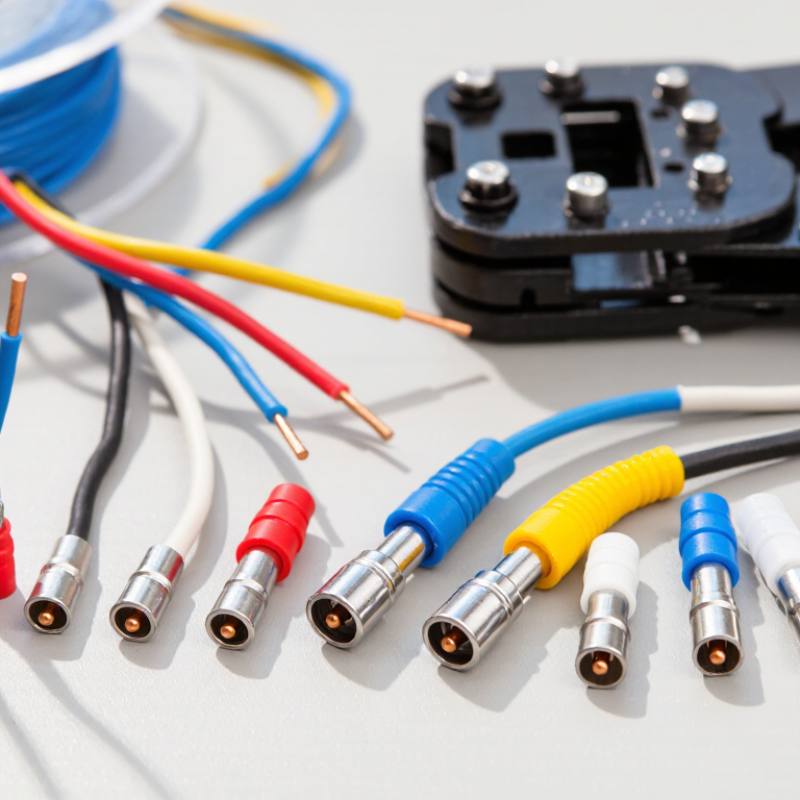
A crimping butt connector joins two wire ends inside a small metal sleeve. Crimped correctly, it creates a firm electrical connection and helps protect exposed strands from pulling apart. These connectors are commonly used in vehicle wiring, appliances, and low-voltage repairs. Match the connector to the wire gauge and application. A connector that is too large may not grip securely; one that is too small can damage the strands.

For a dependable crimp, strip only enough insulation to fit the conductor fully inside the barrel. Use a crimping tool designed for the connector, then tug each wire gently to check that it holds. Insulated connectors can add protection, but they are not automatically waterproof. Choose a sealed type where moisture is expected, and follow the connector’s temperature and wire-size ratings. Small details matter.

Tips: Inspect the crimp for loose strands, cracked insulation, or an uneven barrel. Practice on spare wire if you are unsure; the first attempt may look fine but still feel loose. Disconnect power before working, and replace any connector that fails a pull check.

Key Features for Choosing Secure Butt Connectors

A secure crimped butt connector should match the wire gauge, conductor material, and working environment. Check the marked gauge range before buying; a connector that is too large may not compress the strands firmly. Look for a defined crimp barrel, a corrosion-resistant metal sleeve, and insulation rated for the expected heat and moisture. Color alone is not enough. Follow the specified crimping tool and die, then inspect the joint for loose strands, cracked insulation, or movement under a gentle pull. Small details matter.

The National Fire Protection Association’s report on U.S. home fires involving electrical distribution and lighting equipment found an annual average of 32,620 fires from 2015 to 2019. That figure covers many causes, not butt connectors alone, but it underscores why sound electrical connections deserve careful attention. For added confidence, check whether the connector is evaluated to an applicable wire-connector standard, such as UL 486C, and read the product’s installation limits. In practice, even a well-rated connector can fail when the wrong die is used or the crimp is rushed. I would not treat a visual check as proof of a good crimp; the correct tool, wire preparation, and a firm pull test all matter.

Types and Materials of Crimping Butt Connectors

Crimping butt connectors join two wires inside a metal barrel. Their type determines protection, flexibility, and installation speed. Non-insulated connectors suit enclosed panels where space is limited. Vinyl-insulated versions add a colored sleeve for quick wire-size identification. Nylon insulation feels tougher and handles abrasion better, although it can cost more.

Material selection matters under real working conditions. Bare copper barrels conduct well and crimp easily. Tinned copper resists moisture and oxidation, making it practical near engines, outdoor equipment, and damp enclosures. Brass connectors offer strength, but their electrical performance depends on proper plating and contact pressure. Heat-shrink butt connectors use a copper barrel with polyolefin tubing. Some include adhesive lining that seals around the wire jacket when heated evenly.

I have seen a connector pass a visual check and fail a gentle pull test. That mistake changed how I inspect every crimp. Match the connector to the wire gauge, then place the crimp in the correct tool cavity. A ratcheting crimper usually produces more consistent pressure than ordinary pliers. After crimping, the barrel should hold the conductor without cutting through it. Heat-shrink tubing must close smoothly, not scorch or expose the insulation. I still recheck questionable crimps, especially when the wire contains fine strands or the installation may vibrate.

10 Best Crimping Butt Connectors for Secure Wiring — Types and Materials

Typical color-coded insulated butt connectors cover red: 22–18 AWG, blue: 16–14 AWG, and yellow: 12–10 AWG. Ranges can vary by connector specification; check the product marking and wire-size rating before crimping. AWG numbers decrease as wire thickness increases.

Comparing 10 Butt Connectors for Different Wiring Needs

Comparing 10 butt connectors starts with wire size, environment, and installation method. The options include insulated nylon, vinyl-insulated, heat-shrink, adhesive-lined heat-shrink, uninsulated, step-down, closed-end, marine-grade, high-temperature, and solder-seal connectors. Each suits a different job. A clear sleeve helps identify crimp coverage; adhesive-lined tubing can seal the joint against moisture when properly heated. Yet no connector compensates for a mismatched wire gauge or poorly formed crimp.

The NFPA report Home Electrical Fires estimates that U.S. fire departments responded to about 34,000 home fires involving electrical distribution or lighting equipment each year from 2015 to 2019. That figure covers many causes, not butt connectors alone, but it shows why secure, inspected wiring matters. For exposed vibration, a correctly sized, sealed connector may be preferable; for a dry control panel, a standard insulated type may be sufficient. Always check the connector’s temperature, voltage, and wire-range markings against the application. I still find packaging claims easy to overread.

Tips: Strip only the specified insulation length. Insert each wire fully, then crimp with the matching die. Tug-test the finished joint and inspect for loose strands, cracked insulation, or uneven compression.

How to Crimp, Inspect, and Maintain a Secure Connection

A secure butt splice starts with the right connector size and a clean, square wire cut. Strip each conductor to the length specified for the terminal; exposed copper should not extend beyond the barrel. Insert the wire fully, then use a ratcheting crimper with the correct die. A loose crimp can raise resistance and create a hot spot under load. IEC 60352-2 sets requirements for solderless crimped connections, including mechanical and electrical testing. Its key lesson is practical: appearance alone cannot prove a reliable joint.

After crimping, inspect the barrel for cracks, sharp edges, or uneven compression. Tug each wire firmly by hand; neither conductor should slide. For critical wiring, test sample crimps with a calibrated pull tester and compare results with the connector specification. The UL 486A-486B standard likewise evaluates wire connectors through defined performance tests. A shiny surface is not proof of a good crimp. I have seen neat-looking joints fail when the wrong die was used.

Tips: Match the connector to wire gauge and insulation type. Keep the crimper square to the barrel, and make one complete cycle. In damp or vibrating locations, use a suitably sealed connector and support the cable so the splice carries no strain. Mark inspection dates on service records, and replace any connector showing corrosion, heat discoloration, or looseness. Recheck after the first vibration-heavy run; it is easy to miss a small shift.