10 Best Aircraft Air Starter Units for Global Buyers
Choosing the right Aircraft Air Starter Unit requires more than comparing prices or advertised power. Global buyers must consider aircraft compatibility, starting pressure, airflow volume, duty cycle, mobility, and service support. A unit that performs well on a small business jet may struggle with a wide-body engine. That difference matters.
This guide examines ten leading options for international operations. The evaluation focuses on practical conditions, including cold ramps, remote airports, frequent engine starts, and limited maintenance facilities. It considers diesel-powered and electric systems, towable frames, hose length, control design, noise levels, and emergency usability. Technical documentation and manufacturer support also influence each selection. Reliable records matter.
Real-world handling deserves attention. Operators often notice small details first. A clear pressure gauge helps during a rushed turnaround. Strong wheels reduce effort across uneven concrete. Accessible filters can shorten routine servicing. These features may seem minor, yet they affect safety, uptime, and total ownership cost. Experience suggests that convenience is not merely comfort.
No ranking is universal. Aircraft fleets, climates, budgets, and maintenance standards differ between buyers. Some published specifications may also change between production batches or regional configurations. Therefore, readers should verify current manuals, approved pressure limits, certification details, and local service availability before purchasing. This list is a practical starting point, not a substitute for engineering review. A careful buyer will compare performance evidence with actual operating needs, then question attractive claims that lack measurable support. That extra caution may prevent an expensive mismatch.
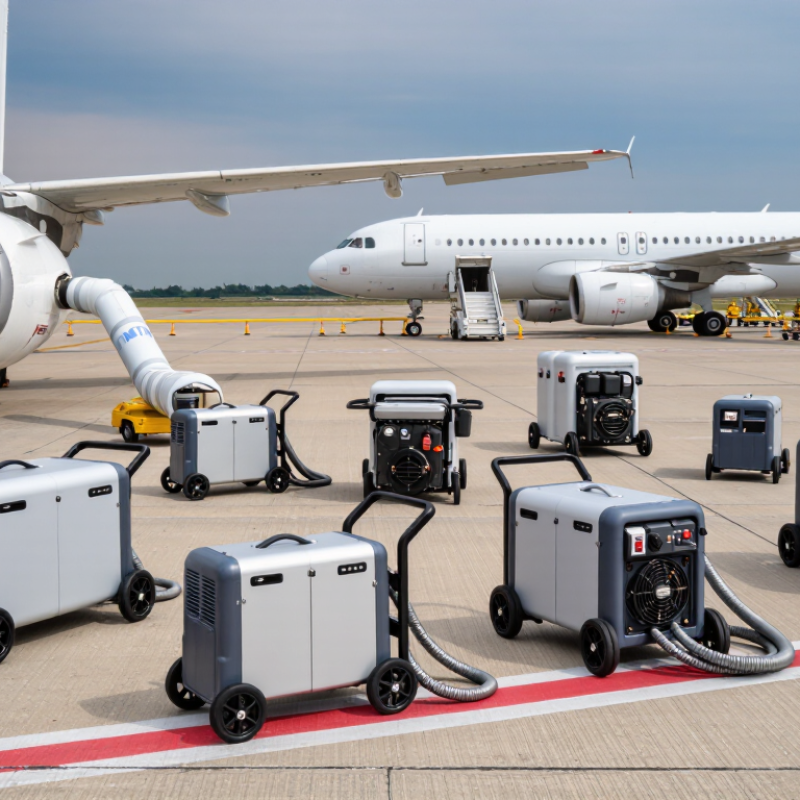
Aircraft Air Starter Units: Purpose, Components, and Operating Principles
Aircraft air starter units convert compressed air into controlled shaft rotation during engine start. They are essential when onboard electrical systems cannot provide enough starting torque. IATA’s 2024 Annual Safety Report recorded 40.6 million commercial flights, showing the scale of equipment reliability required across global operations. A starter failure can delay a flight within minutes.
The main components include an air inlet, control valve, turbine motor, reduction gearbox, overrunning clutch, exhaust outlet, and pressure indicators. Ground carts or aircraft pneumatic systems commonly deliver about 30–45 psi, but approved manuals define the actual limit. Airflow spins the turbine, and the gearbox transfers torque to the engine accessory drive. The starter continues turning until the core reaches light-off speed. Then, the clutch disengages as engine speed rises.
Pressure alone can mislead. A unit may show normal pressure while airflow remains weak because of a restricted hose or worn seal. Practical inspections should check coupling condition, rotor noise, vibration, lubrication, and cutout timing. The 2024–2034 Global Fleet and MRO Market Forecast projects commercial maintenance demand could reach about 124 billion dollars by 2034. That growth favors durable, serviceable starter units, but specifications still require careful comparison. Weight, airflow demand, inlet size, noise, cold-weather performance, and local support can change the best choice. A perfect checklist does not exist. Field conditions expose that gap.
Key Factors for Comparing Air Starter Units in Global Markets
10 Best Aircraft Air Starter Units for Global Buyers
Key Factors for Comparing Air Starter Units in Global Markets
Choosing an air starter unit requires more than comparing purchase prices. Buyers should match starting torque, air pressure, and airflow with the aircraft’s engine requirements. A unit may perform well at sea level but struggle at high-altitude airports. Temperature matters too. Cold mornings can reduce battery output and affect compressor performance.
Review the unit’s duty cycle and recovery time. In busy maintenance areas, repeated starts can expose weak cooling systems. Check hose length, connector types, and access around the aircraft. Small mismatches can delay a launch. Electric, diesel, and turbine-driven units also create different operating costs. Fuel storage, charging access, noise limits, and local service support deserve close attention.
Documentation is a practical test of reliability. Look for clear pressure charts, maintenance intervals, safety instructions, and traceable inspection records. Qualified technicians should be able to obtain replacement filters, couplings, and control parts without long delays. Global buyers should also confirm transport rules, voltage compatibility, language requirements, and local aviation authority expectations. A spreadsheet can mislead. It may ignore training time or a two-week parts delay. Field trials, when possible, reveal vibration, control response, and real hose handling. No comparison is perfect. Even experienced teams sometimes overvalue maximum output and overlook daily usability.
10 Best Aircraft Air Starter Units for Global Buyers
Key Factors for Comparing Air Starter Units in Global Markets
The chart compares representative nominal starter power, operating airflow, and regulated inlet pressure across common aircraft categories. These engineering benchmarks help global buyers evaluate compatibility, starting performance, portability, and required ground-support capacity. Actual requirements must be verified against the aircraft maintenance manual and approved equipment specifications.
Ten Leading Aircraft Air Starter Units and Their Main Applications
10 Best Aircraft Air Starter Units for Global Buyers
Ten Leading Aircraft Air Starter Units and Their Main Applications
Aircraft air starter units deliver compressed air to rotate turbine engines before fuel ignition. Their value appears during cold mornings, tight turnarounds, and remote operations. IATA’s 2024 Annual Review reported a 10.4% increase in global passenger demand. More flights create greater pressure on reliable ground equipment.
Ten leading configurations serve different airport needs.
- Electric cart units suit regional aircraft and indoor maintenance areas.
- Diesel towable units support narrow-body turnarounds.
- Turbine-powered units provide high airflow for wide-body aircraft.
- Trailer-mounted units help remote stands.
- Fixed air-start systems serve repeated operations at dedicated gates.
- Battery-electric units reduce local exhaust emissions.
- Hybrid units balance endurance and noise control.
- High-pressure units assist aircraft requiring stronger starting airflow.
- Low-pressure units support compatible regional fleets.
- GPU-integrated units combine starting air with ground power.
Applications should match engine requirements, climate, and ramp distance. A 400-horsepower diesel unit may offer practical endurance, but battery systems can simplify urban airport compliance. Check pressure stability at the aircraft connection, not only the nameplate rating. Hose length matters too. So does winter viscosity.
ACI World’s 2024 Airport Traffic Forecasts project passenger traffic will reach 18.4 billion by 2043. That outlook favors standardized, serviceable equipment. However, traffic growth alone should not decide procurement. Maintenance access, spare-part availability, operator training, and noise limits deserve equal attention.
The list is not perfect. A quiet unit can still fail during a rushed departure. Trial performance data from the actual ramp remains more valuable than a polished brochure.
Performance, Compatibility, Portability, and Safety Considerations
10 Best Aircraft Air Starter Units for Global Buyers
Choosing among the 10 best aircraft air starter units requires more than comparing pressure ratings. In field inspections, technicians often value consistent starting power over impressive peak figures. A unit should deliver stable airflow during repeated engine starts, even in cold ramp conditions. Check pressure recovery time, hose length, connector design, and control visibility. Compatibility matters just as much. Confirm the aircraft’s starter inlet, required pressure range, airflow demand, and approved coupling type. A fitting that almost fits is not an acceptable solution. It can leak, delay dispatch, or damage equipment.
Portability affects daily performance. Large wheels, balanced handles, and a compact frame help crews move the unit around crowded ramps. Battery-powered models may reduce setup time, while trailer-mounted systems can support heavier workloads. Still, convenience can hide limits. Review battery endurance, charging requirements, noise levels, and service access before purchase. Safety deserves equal attention. Look for pressure relief protection, guarded controls, emergency shutoff access, grounded components, and clear operating instructions. Operators should inspect hoses for cuts and verify gauges before every shift.
Tips: Match the unit to the aircraft fleet, not one familiar aircraft. Record actual start cycles and recovery times during acceptance testing. Keep spare seals and approved couplings available. Train operators on cold-weather procedures. Do not trust appearance alone. I have seen a clean, portable unit perform poorly because its hose restricted airflow. That mistake was avoidable, but real-world checks are still sometimes too brief.









