

News

Miro: A New Standard in Responsible Innovation

Miro: A New Standard in Responsible Innovation The Miro monitor arm is setting new benchmarks in sustainability. It offers a high-performance solution without compromising on environmental responsibility. Designed with careful material selection, local sourcing, and longevity in mind, Miro’s responsible approach to design and unique manoeuvrability set it apart from the competition. Sustainable Choices Miro is crafted from energy-efficient materials with a lower carbon impact....

Read more
HSE Advisor

Role Purpose Support in the development, implementation and maintenance of the company’s Health, Safety & Environmental policies, processes, operational procedures, and standards.  Ensuring best practice and championing a continually improving HSE culture within the business. Key Responsibilities Liaise with and provide support to all areas of the business to eliminate, mitigate or reduce identified HSE exposures. Partner with the production management team and team leaders,...

Read more
CMD Ltd LAUNCHES 48-HOUR TURNAROUND ON BETATRAK® RAPID ORDERING SERVICE

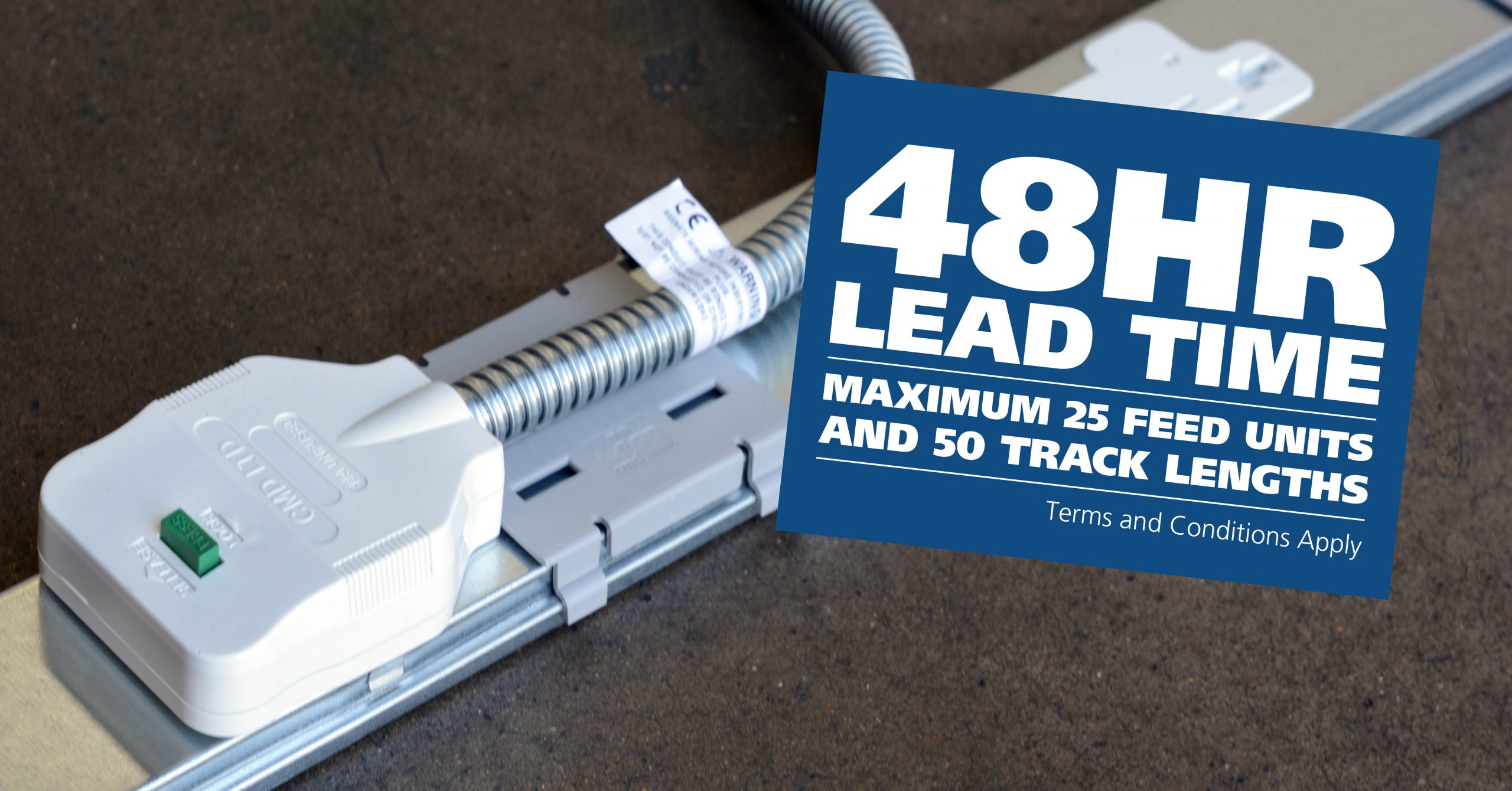
CMD Ltd, the specialist in power distribution systems, workstation power and monitor arms, has launched a rapid ordering service for its Betatrak® underfloor powertrack distribution systems and accessories, with a commitment to delivering within 48-hours of an approved purchase order*. The service enables customers to order up to 50 lengths of Standard or Clean Earth (C/E) low noise Betatrak, along with up to 25 feed...

Read more
CMD INVESTS £1/4 MILLION IN NEW MACHINE AS PART OF FACTORY UPGRADE

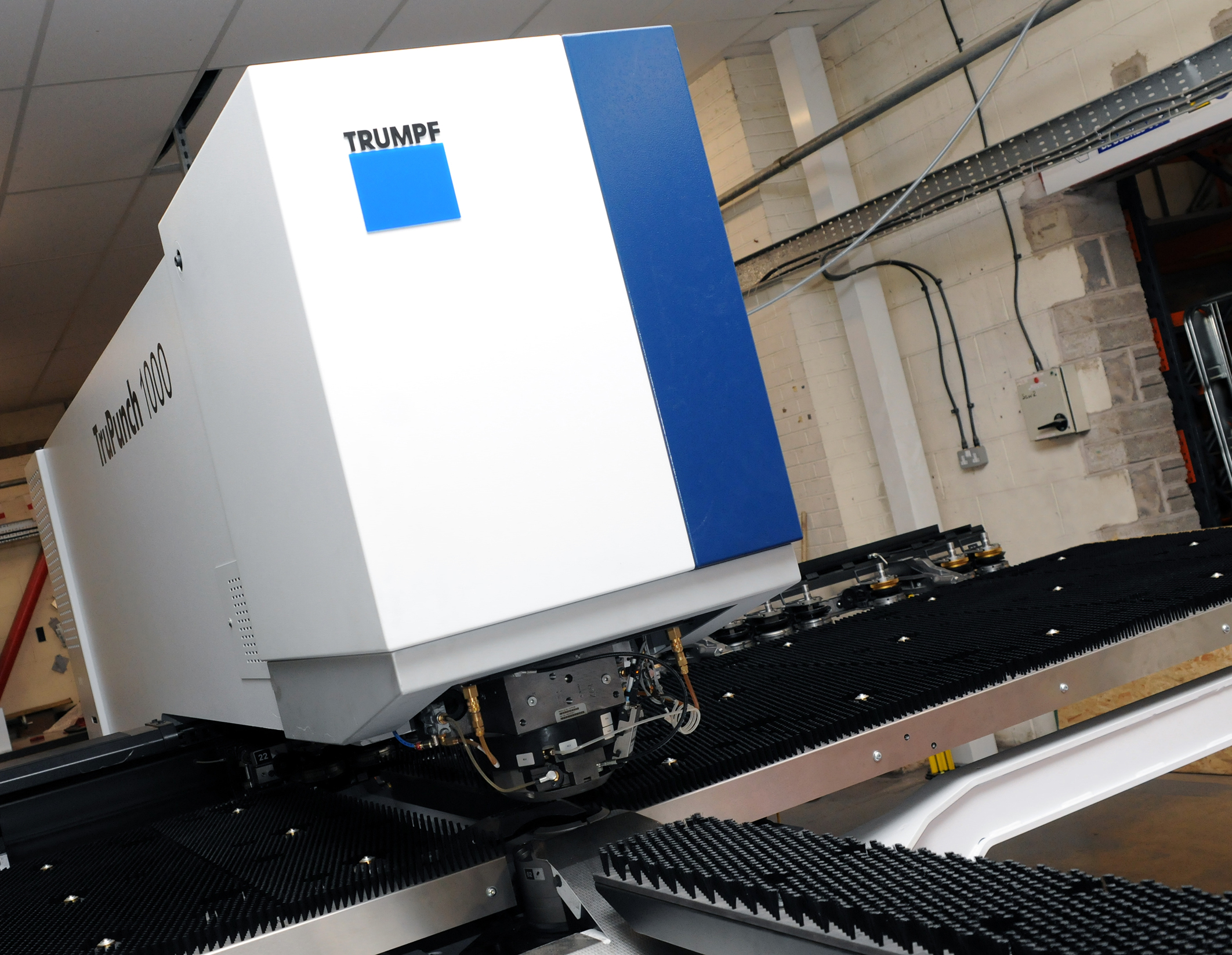
We have invested in a new £1/4m TRUMPF CNC metal punch as part of an asset renewal strategy for our UK manufacturing capability. The new machine will be used in the production of a wide variety of our power distribution systems and workstation power products at our Rotherham factory. Suitable for handling sheet metal between 0.9mm and 3.0mm thick, the new machine will replace one...

Read more
CMD CATALOGUE PROVIDES TECHNICAL POWER DISTRIBUTION GUIDE

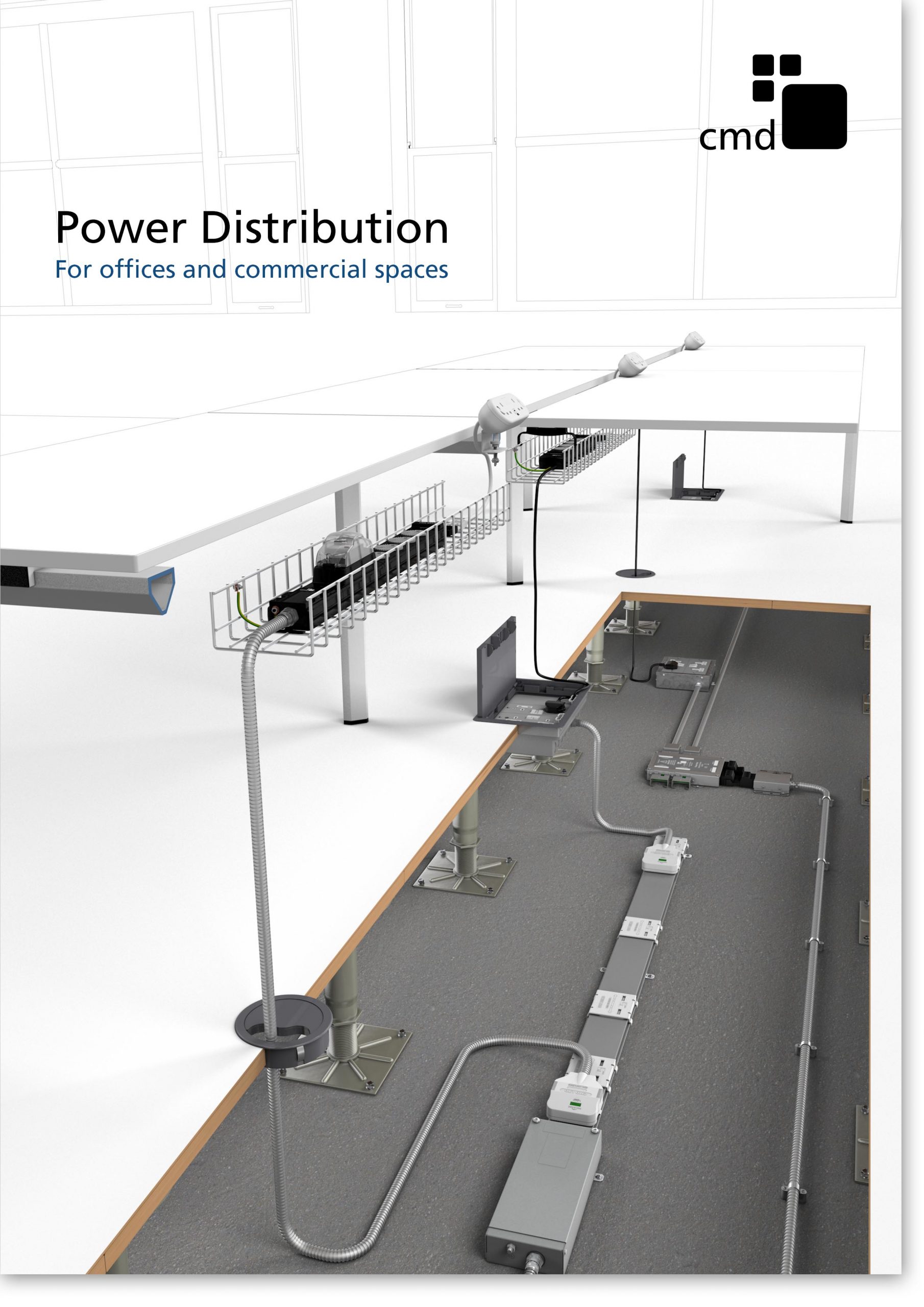
CMD Ltd has released a new catalogue, providing an easy to follow technical guide to our power distribution systems and plug and play desk modules. Detailing CMD’s full range of UK-manufactured power distribution systems and plug and play desk modules, the catalogue will be a helpful source of information to M&E engineers and contractors alike to understand how our power distribution systems connect together and...

Read more
Power Distribution Catalogue
CMD Ltd PLAYS ESSENTIAL ROLE IN ELECTRICAL FIT OUT AT LONDON’S PRESTIGIOUS OFFICE DEVELOPMENT

CMD Ltd, specialist in workplace connectivity and ergonomic solutions, has provided a flexible and high-quality power distribution network for The Ray, a prestigious office development in London’s Farringdon. Well-known for being the former site of The Guardian newspaper, The Ray now stands as an 83,000ft² office development characterised by a modernised warehouse aesthetic, with level two now occupied by a global social media company. The...

Read more

The Ray
CMD plugs in to european opportunity with Schuko Capsule unit launch

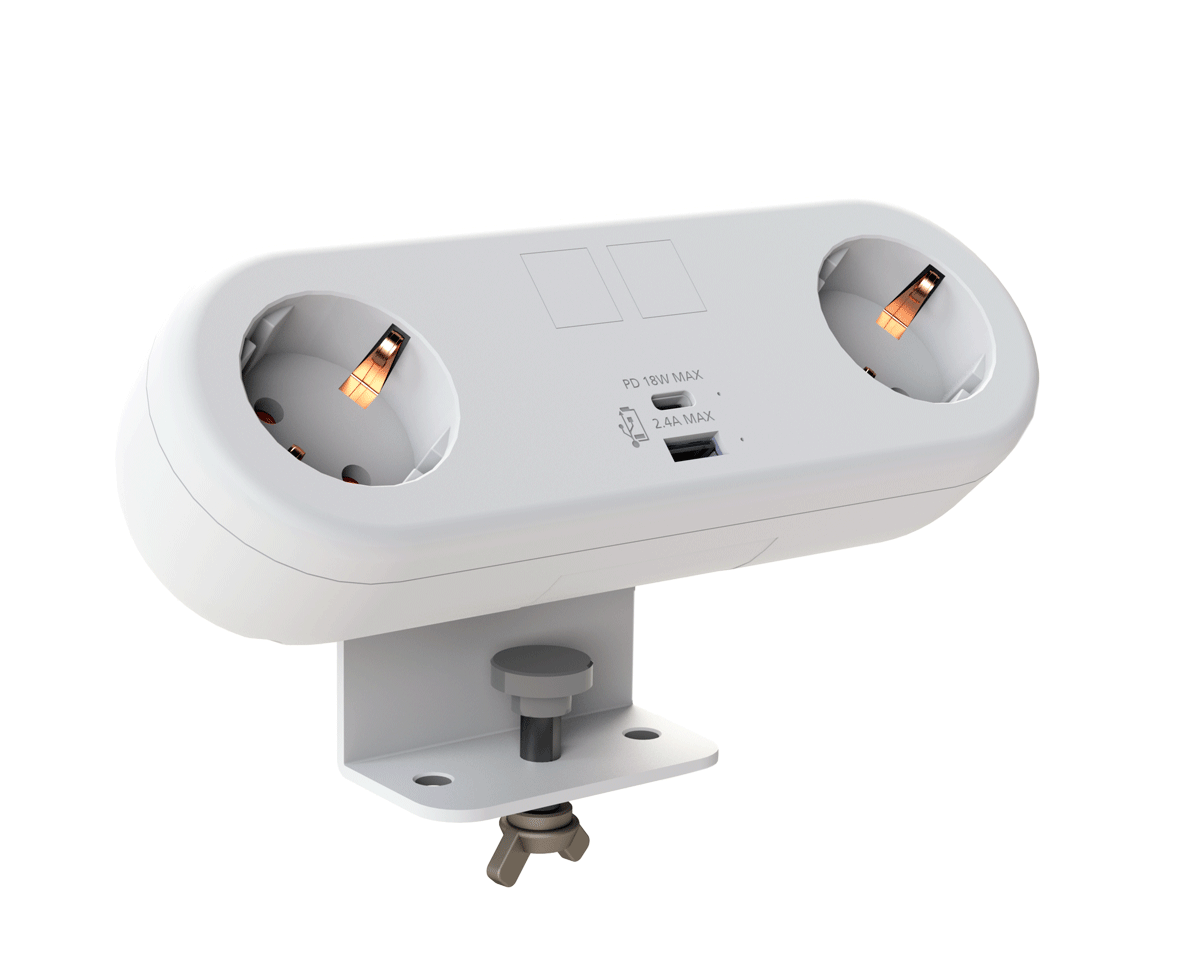
CMD Ltd, the specialist in power and connectivity solutions for commercial environments, has launched a Schuko version of its popular fixed format Capsule workstation power module for export to mainland Europe and beyond. A popular on desk power module comprising two sockets and dual USB (type A and C) chargers, CMD’s Capsule unit is already widely specified in the UK as an off-the-shelf workstation power...

Read more
CMD White Schuko Capsule Desk Power Module
CMD LTD EXTENDS MONITOR ARM RANGE WITH THE LAUNCH OF REACH PLUS

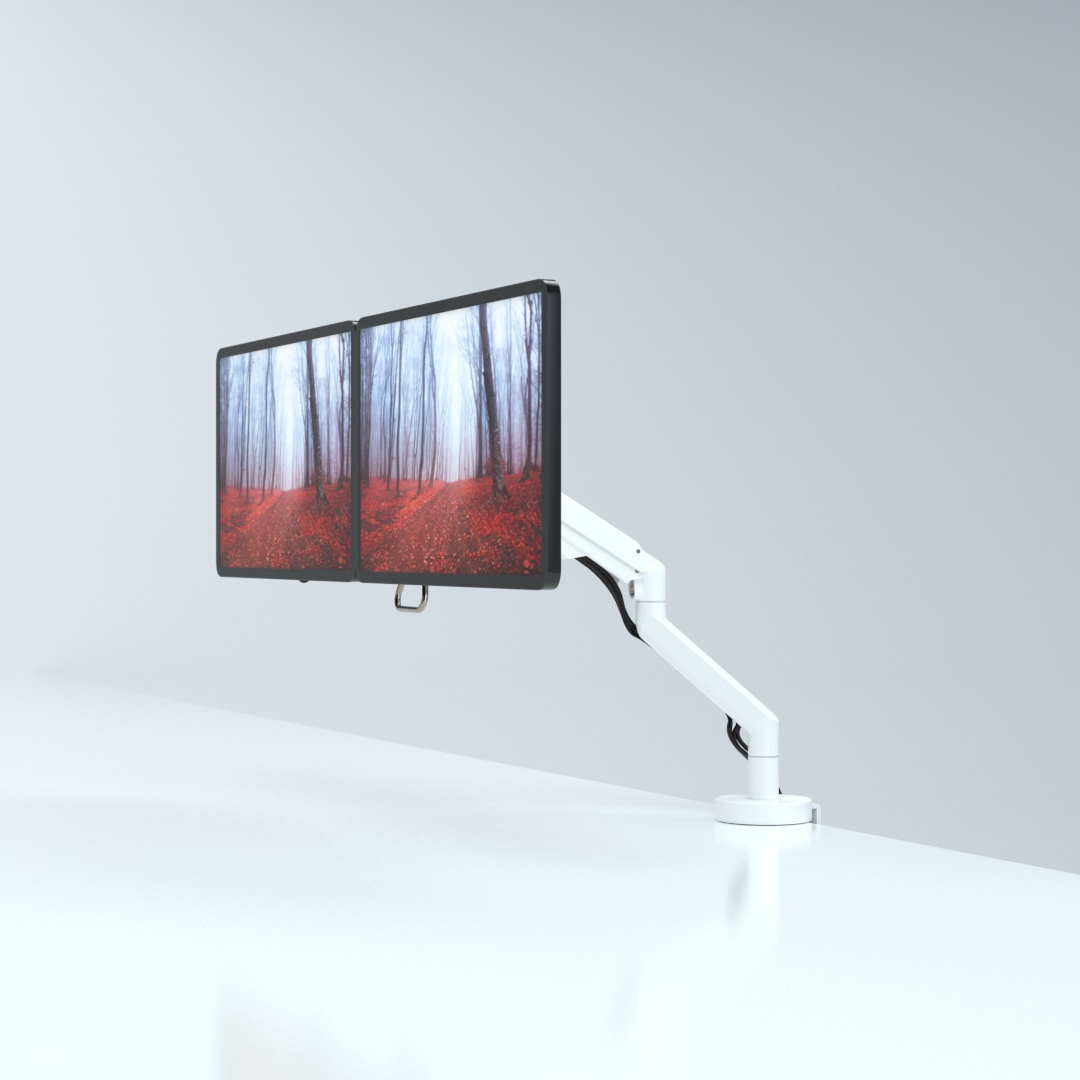
CMD Ltd, the specialist in ergonomic and connectivity solutions for commercial interiors, has completed its Reach monitor arm range with the launch of the Reach Plus. Available in single or dual screen options, the Reach Plus has been designed to provide an ideal solution for both single and dual screen workstation configurations, or can be used with next generation of large format curved screens. Suitable...

Read more
CMD Ltd DEMONSTRATES THE ART OF POWER DISTRIBUTION AT THE UNIVERSITY OF WARWICK

CMD Ltd, the specialist in workplace connectivity and ergonomic solutions, has provided Betatrak busbar power distribution and a range of electrical accessories for two major capital investment projects at the University of Warwick. Designed by Fielden Clegg Bradley Studios, the £33 million Faculty of Arts building is a showpiece development comprising four interconnected structures set around a central atrium, which will enable inter-disciplinary collaboration across...

Read more

University of Warwick
CMD BRINGS HARMONY TO COVENTRY UNIVERSITY RESEARCH FACILITIES

CMD Ltd, the specialist in power distribution solutions and workstation power and ergonomics, has provided under desk and on desk power modules for the refurbishment of three Coventry University research buildings. Located on Coventry University Technology Park, a business park designed to encourage collaboration between the university and knowledge-based businesses, the three buildings are being repurposed as office accommodation for university research teams. The refurbishment...

Read more

Coventry University

Top 10 Benefits of Using Flexible Printed Circuit Boards?

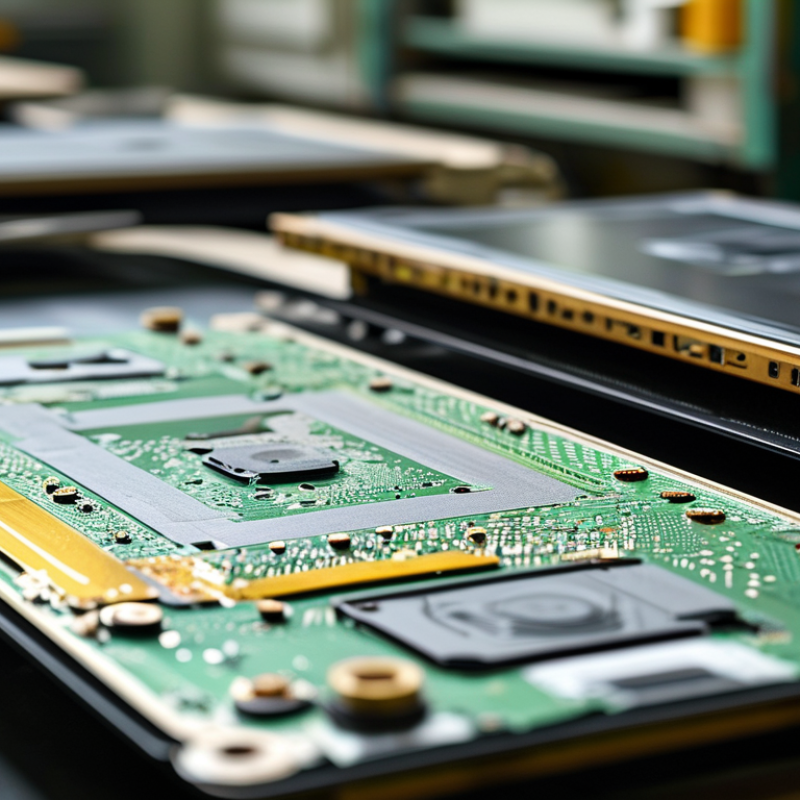
Flexible Printed Circuit Boards (FPCBs) have transformed the electronics industry. Their unique design offers a wide range of advantages. Unlike traditional circuit boards, FPCBs can bend and flex, fitting into tight spaces. This flexibility opens new possibilities for innovative product designs.

FPCBs are lightweight and reduce assembly complexity. Their thin profile allows them to integrate seamlessly into compact devices. Electronics such as smartphones and wearables benefit greatly from this technology. Reliability is another crucial factor. Flexible Printed Circuit Boards are resistant to vibrations and shock, enhancing durability.

However, it's essential to consider manufacturing challenges. Producing FPCBs requires advanced techniques and expertise. Common pitfalls include ensuring proper material selection and maintaining quality standards. The benefits are substantial, but the journey demands careful planning and execution.

Top 10 Benefits of Using Flexible Printed Circuit Boards?

Advantages of Space Efficiency in Flexible Printed Circuit Boards

Flexible printed circuit boards (FPCBs) are revolutionizing the electronics industry, particularly in terms of space efficiency. These circuits can fit into compact designs where traditional PCBs cannot. Space is a precious commodity in modern devices, where miniaturization is key. The capability to bend and twist allows FPCBs to occupy less volume. This leads to lighter and slimmer devices, enhancing portability.

According to a report from the IPC organization, FPCBs can save up to 70% of space compared to conventional boards. Their design flexibility permits complex layouts that would otherwise occupy more room. By utilizing multiple layers in a small area, FPCBs help to streamline the overall design. This not only reduces the size but also simplifies manufacturing processes.

However, there are challenges associated with this technology. The initial manufacturing cost for FPCBs can be higher than that of traditional counterparts. Additionally, they may require more specialized handling and assembly techniques. These factors must be weighed against the benefits of efficiency. Continuous improvement in manufacturing processes may help mitigate these issues in the future.

Top 10 Benefits of Using Flexible Printed Circuit Boards

Benefit Description
Space Efficiency Flexible PCBs can be bent and twisted to fit into compact spaces, allowing for more efficient use of available space.
Weight Reduction They are lighter than traditional PCBs, which is especially beneficial in portable and lightweight devices.
Reliability Due to their design and materials, flexible PCBs have a lower risk of fracture and reliability issues over time.
Design Flexibility They allow for innovative designs that are not possible with rigid boards, accommodating complex layouts.
Cost-Effective Production Production of flexible PCBs can be more cost-effective due to fewer materials required in multi-layer designs.
Improved Signal Integrity Their design can minimize the length of connections, which helps improve signal integrity compared to rigid boards.
Thermal Management Flexible materials can manage heat dissipation better, allowing devices to work more efficiently without overheating.
Durability They are more resistant to shock and vibration, making them ideal for harsh environments.
Eco-Friendly Manufacturing methods for flexible PCBs often use fewer resources and generate less waste, making them a greener option.

Enhanced Durability Compared to Traditional Circuit Boards

Flexible printed circuit boards (FPCBs) offer several advantages, particularly in durability. Unlike traditional rigid circuit boards, FPCBs are designed to bend and flex without damage. This flexibility enables them to withstand the stresses of everyday use, making them ideal for compact electronics. Devices such as smartphones and wearables benefit significantly from this feature.

The materials used in FPCBs contribute to their robustness. They often include polymers and other innovative materials that resist both moisture and temperature extremes. This resilience extends the lifespan of electronic devices, reducing the need for frequent repairs. Some may question whether this technology is as reliable as traditional boards. However, real-world applications have proven their effectiveness in demanding environments.

Despite these benefits, FPCBs can be more complex to manufacture. The delicate layers require precise engineering, which may lead to higher production costs. It’s a trade-off between durability and initial investment. For designers considering FPCBs, weighing these factors is crucial. Adopting advanced technology is exciting, but it requires careful planning and evaluation.

Improved Design Flexibility and Customization Options

Flexible Printed Circuit Boards (FPCBs) offer significant design flexibility. This allows engineers to create compact and lightweight electronic devices. Their ability to bend and twist without losing functionality is crucial in modern electronics. Designers can incorporate complex shapes without worrying about space constraints.

Customization options are vast when using FPCBs. They can be tailored for specific applications, from wearables to automotive. This customization leads to better integration into the final product. However, the design process can be challenging.

Engineers should also account for thermal management and potential signal interference. While FPCBs can be more expensive than traditional rigid boards, the advanced features they support often justify the cost. Still, it is essential to balance creativity with practical implications. Sometimes, the desire for innovation can lead to overlooked details.

Lightweight and Cost-Effective Manufacturing Benefits

Flexible printed circuit boards (FPCBs) are gaining popularity in various electronic applications. One major advantage is their lightweight nature. Traditional circuit boards can be bulky, but FPCBs reduce weight significantly. This feature is critical in industries like aerospace and mobile devices, where weight savings can improve performance.

Cost-effective manufacturing is another vital benefit. FPCBs are often produced using automated processes, which streamline production. This automation leads to lower labor costs and fewer production errors. Additionally, the materials used in FPCBs can be less expensive than those for rigid boards. However, careful consideration must be given to the design and material selection. Compromising on material quality can lead to failures.

**Tips**: Ensure that the design is optimized for both flexibility and durability. A well-thought-out layout can prevent potential issues. Also, always conduct thorough tests on prototypes. Testing helps identify any weaknesses before mass production. Stay informed about new materials and technologies. Innovations in FPCB manufacturing can offer cost savings and performance improvements.

Top 10 Benefits of Using Flexible Printed Circuit Boards

Better Performance in Dynamic and Constrained Environments

In dynamic and constrained environments, flexible printed circuit boards (FPCBs) demonstrate superior performance due to their adaptability. These circuit boards can bend, twist, and conform to various shapes without risking damage. In industries like aerospace and automotive, where space is limited, FPCBs effectively utilize every millimeter. According to a report by IDTechEx, flexible circuit technology is expected to grow by 18% annually over the next five years, reflecting the increasing demand for more versatile and compact electronics.


Another crucial benefit is their reliability under stress. Unlike rigid circuits, FPCBs can absorb shocks and vibrations that are common in high-performance settings. A study published in the Journal of Electronic Materials highlighted that devices utilizing FPCBs experienced a 25% reduction in failure rates compared to traditional circuits. This significant enhancement not only improves product longevity but also ensures consistent operation in challenging conditions.


However, the manufacturing process for FPCBs can be complex and may result in defects that impact performance. Quality control is essential to mitigate such issues. Despite these challenges, the ability of FPCBs to thrive where traditional circuits falter showcases their value. It's crucial for designers to weigh these factors when choosing materials for high-stakes applications.