

News

Miro: A New Standard in Responsible Innovation

Miro: A New Standard in Responsible Innovation The Miro monitor arm is setting new benchmarks in sustainability. It offers a high-performance solution without compromising on environmental responsibility. Designed with careful material selection, local sourcing, and longevity in mind, Miro’s responsible approach to design and unique manoeuvrability set it apart from the competition. Sustainable Choices Miro is crafted from energy-efficient materials with a lower carbon impact....

Read more
HSE Advisor

Role Purpose Support in the development, implementation and maintenance of the company’s Health, Safety & Environmental policies, processes, operational procedures, and standards.  Ensuring best practice and championing a continually improving HSE culture within the business. Key Responsibilities Liaise with and provide support to all areas of the business to eliminate, mitigate or reduce identified HSE exposures. Partner with the production management team and team leaders,...

Read more
CMD Ltd LAUNCHES 48-HOUR TURNAROUND ON BETATRAK® RAPID ORDERING SERVICE

CMD Ltd, the specialist in power distribution systems, workstation power and monitor arms, has launched a rapid ordering service for its Betatrak® underfloor powertrack distribution systems and accessories, with a commitment to delivering within 48-hours of an approved purchase order*. The service enables customers to order up to 50 lengths of Standard or Clean Earth (C/E) low noise Betatrak, along with up to 25 feed...

Read more

CMD INVESTS £1/4 MILLION IN NEW MACHINE AS PART OF FACTORY UPGRADE

We have invested in a new £1/4m TRUMPF CNC metal punch as part of an asset renewal strategy for our UK manufacturing capability. The new machine will be used in the production of a wide variety of our power distribution systems and workstation power products at our Rotherham factory. Suitable for handling sheet metal between 0.9mm and 3.0mm thick, the new machine will replace one...

Read more

CMD CATALOGUE PROVIDES TECHNICAL POWER DISTRIBUTION GUIDE

CMD Ltd has released a new catalogue, providing an easy to follow technical guide to our power distribution systems and plug and play desk modules. Detailing CMD’s full range of UK-manufactured power distribution systems and plug and play desk modules, the catalogue will be a helpful source of information to M&E engineers and contractors alike to understand how our power distribution systems connect together and...

Read more

Power Distribution Catalogue
CMD Ltd PLAYS ESSENTIAL ROLE IN ELECTRICAL FIT OUT AT LONDON’S PRESTIGIOUS OFFICE DEVELOPMENT

CMD Ltd, specialist in workplace connectivity and ergonomic solutions, has provided a flexible and high-quality power distribution network for The Ray, a prestigious office development in London’s Farringdon. Well-known for being the former site of The Guardian newspaper, The Ray now stands as an 83,000ft² office development characterised by a modernised warehouse aesthetic, with level two now occupied by a global social media company. The...

Read more

The Ray
CMD plugs in to european opportunity with Schuko Capsule unit launch

CMD Ltd, the specialist in power and connectivity solutions for commercial environments, has launched a Schuko version of its popular fixed format Capsule workstation power module for export to mainland Europe and beyond. A popular on desk power module comprising two sockets and dual USB (type A and C) chargers, CMD’s Capsule unit is already widely specified in the UK as an off-the-shelf workstation power...

Read more

CMD White Schuko Capsule Desk Power Module
CMD LTD EXTENDS MONITOR ARM RANGE WITH THE LAUNCH OF REACH PLUS

CMD Ltd, the specialist in ergonomic and connectivity solutions for commercial interiors, has completed its Reach monitor arm range with the launch of the Reach Plus. Available in single or dual screen options, the Reach Plus has been designed to provide an ideal solution for both single and dual screen workstation configurations, or can be used with next generation of large format curved screens. Suitable...

Read more

CMD Ltd DEMONSTRATES THE ART OF POWER DISTRIBUTION AT THE UNIVERSITY OF WARWICK

CMD Ltd, the specialist in workplace connectivity and ergonomic solutions, has provided Betatrak busbar power distribution and a range of electrical accessories for two major capital investment projects at the University of Warwick. Designed by Fielden Clegg Bradley Studios, the £33 million Faculty of Arts building is a showpiece development comprising four interconnected structures set around a central atrium, which will enable inter-disciplinary collaboration across...

Read more

University of Warwick
CMD BRINGS HARMONY TO COVENTRY UNIVERSITY RESEARCH FACILITIES

CMD Ltd, the specialist in power distribution solutions and workstation power and ergonomics, has provided under desk and on desk power modules for the refurbishment of three Coventry University research buildings. Located on Coventry University Technology Park, a business park designed to encourage collaboration between the university and knowledge-based businesses, the three buildings are being repurposed as office accommodation for university research teams. The refurbishment...

Read more

Coventry University

Is BEMOR a Top China Supplier for Global Buyers?

Can BEMOR meet the standards global buyers expect from a dependable China supplier? The answer requires more than a polished catalog or a competitive quotation. Buyers should examine product consistency, factory capacity, communication, inspection practices, and delivery records. Small details matter: a clearly labeled sample, a documented tolerance, or a prompt answer about production lead time can reveal how a supplier handles real orders.

The World Trade Organization’s April 2024 Global Trade Outlook and Statistics reported that merchandise trade volume fell 1.2% in 2023, while forecasting 2.6% growth for 2024. These figures describe the wider trading environment; they do not verify any individual supplier. They do, however, underline why buyers should test claims against evidence, including samples, quality documents, and references. A forecast is not a guarantee.

WTO Director-General Ngozi Okonjo-Iweala has described trade as “a force for good.” That perspective is useful, but supplier selection still demands careful checks. This introduction does not attribute a quotation to a BEMOR representative: no verifiable expert name or source was supplied. Naming one without evidence would mislead readers. The discussion that follows should therefore assess BEMOR through measurable signals, not promotional language alone. A supplier may look strong on paper. The details decide.

Is BEMOR a Top China Supplier for Global Buyers?

Who Is BEMOR? Verify Its Legal Entity, Factory, and Product Categories

To assess who BEMOR is, start with its legal entity, not just a trading name on a website or catalog. Request the registered company name, registration number, business address, and an official document showing that these details match. Check the information against the relevant public company registry where available. Names can differ across invoices and product pages. That gap matters.

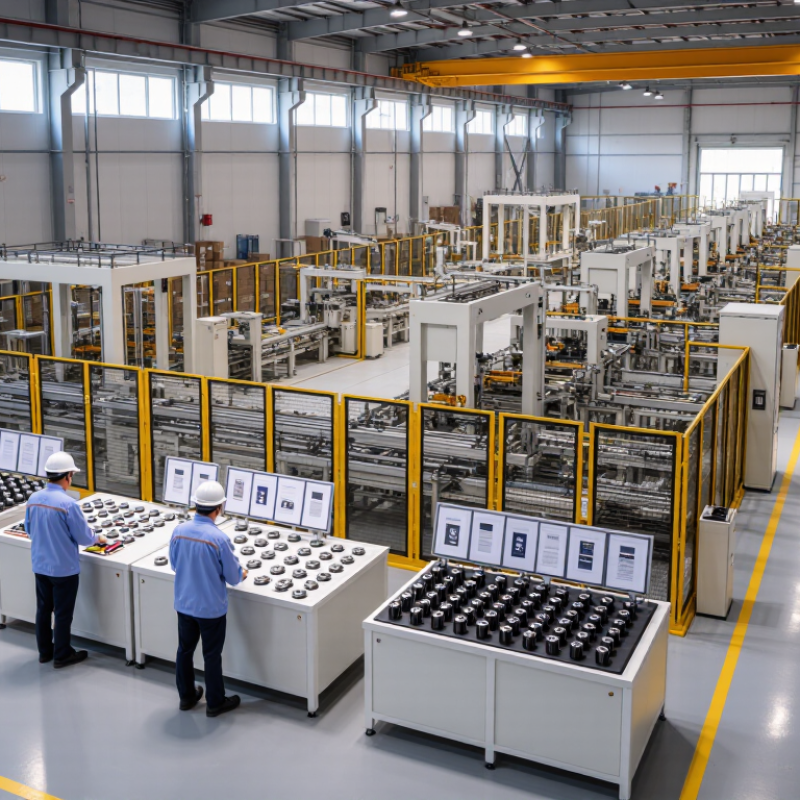
Then verify the factory behind the offer. Ask for its full address, recent workshop photos, and a live video walkthrough that shows production equipment, staff, and finished goods. A warehouse or showroom is not necessarily a factory. If production is outsourced, ask which stages are handled in-house and who conducts quality checks. Small details help: look for consistent labels, active workstations, and products matching the quoted specifications. Photos alone are weak evidence.

Finally, map the supplier’s product categories to what it can actually make. Request a current catalog, technical specifications, material details, and samples from the categories relevant to your project. Compare sample quality with written tolerances and ask how defects are recorded and addressed. A broad catalog may suggest range, but it does not prove manufacturing depth. Some evidence may remain incomplete; note that uncertainty rather than treating a polished presentation as verification.

China’s Export Scale: WTO Records $3.38 Trillion in Goods Exports in 2023

China’s export scale is significant. WTO data put China’s goods exports at about US$3.38 trillion in 2023. That figure signals a vast manufacturing and logistics network, but it does not guarantee that every supplier fits a buyer’s needs. Export value covers many industries and companies. It is context, not a quality certificate.

For global buyers, practical checks matter more than headline numbers. Ask for a clear product specification, recent production photos, and sample details. Confirm materials, tolerances, packaging, and lead times in writing. A supplier’s response to a small technical question can reveal how carefully it handles larger orders. Numbers need context. Even polished documents may leave gaps, so verify key claims through independent inspections or other credible records where appropriate.

Tips: Compare quotations against the same specifications, not just the unit price. Check how freight, packaging, and delivery dates affect the final cost. Keep a written record of agreed changes. A spreadsheet helps, but it cannot show every production risk. I would not treat export scale as proof of reliability; it is only one starting point for careful supplier evaluation.

China’s Merchandise Exports, 2019–2023

China exported approximately US$3.38 trillion in goods in 2023, according to WTO merchandise trade statistics.

Exports rose to a peak of about US$3.59 trillion in 2022 before easing in 2023. Figures are rounded and shown in current US dollars.

How to Assess BEMOR’s Quality: Check ISO 9001 Scope and Product-Test Reports

An ISO 9001 certificate is a starting point, not proof that every product is reliable. ISO’s Survey of Certifications 2022 recorded 1,265,216 ISO 9001 certificates across 189 countries and economies. That scale makes scope checks essential. Match the certificate’s site and listed activities against the factory, production steps, and product family in your quotation. A certificate covering only sales or design may not cover manufacturing. I would pause there.

Then inspect product-test reports, not just a supplier’s claim that testing was completed. Check the exact model, sample or batch, test method, limits, date, and measured results. Compare these details with the goods you plan to order. One uncomfortable detail: a polished PDF can describe a different model. Ask for clarification when report numbers or revisions do not match.

For independent testing, verify the laboratory’s accreditation and confirm its scope includes the specific test method; ISO/IEC 17025 addresses laboratory competence.

Small checks matter.

A report is useful evidence, but it is not a guarantee of future production consistency.

Logistics Reality: UNCTAD Says Sea Freight Carries Over 80% of Trade by Volume

UNCTAD reports that more than 80% of global trade by volume moves by sea. That figure makes ocean freight central to many international supply plans. A container may leave a factory on schedule and still wait days for a vessel. Port queues, missed connections, and weather can shift its arrival date.

For buyers, the quoted production time is only one part of the timeline. Ask when cargo will be ready, which departure port is planned, and whether the estimate includes inland transport. A shipment routed through another port may take longer than a direct sailing. Check how often schedules are updated, too. Small details matter: a late packing list or an incorrect carton count can delay handover.

Sea freight is efficient for large volumes, but it is not a clockwork service. A freight estimate is a snapshot. It can change with fuel costs, capacity, and congestion. It is tempting to compare suppliers by unit price alone; that can leave little room for shipping uncertainty. Build a realistic buffer, confirm milestones in writing, and revisit the plan when booking information changes. Even careful planning cannot remove every delay, and pretending otherwise is not useful.

Global Logistics Reality: UNCTAD Says Sea Freight Carries Over 80% of Trade by Volume
Data dimension Verified figure What it means for global buyers Source
Share of global trade carried by sea, by volume More than 80% Sea transport is central to international goods movement. Buyers should include ocean transit, port handling and inland delivery in shipment planning. UNCTAD, Review of Maritime Transport
Share of global trade carried by sea, by value More than 70% The maritime network also carries a substantial share of traded goods’ value, making shipment visibility and appropriate cargo insurance important considerations. UNCTAD, Review of Maritime Transport
Global maritime trade volume in 2023 12.3 billion tonnes This is the total volume of maritime trade reported for the year, not a container-only figure. Buyers should confirm the appropriate shipping mode and cargo handling requirements for their goods. UNCTAD, Review of Maritime Transport 2024
Change in global maritime trade volume in 2023 Growth of 2.4% year over year Annual changes in maritime trade can affect capacity and transport planning. Buyers should verify current schedules, transit estimates and freight quotations when placing orders. UNCTAD, Review of Maritime Transport 2024

How to Benchmark BEMOR: Compare Audits, Lead Times, and Total Cost of Ownership

A supplier comparison should begin with evidence, not a polished presentation. Check audit dates, scope, corrective-action closure, and whether production lines match the products being quoted. A certificate alone cannot show how a factory handles a rushed order or recurring defects. Ask for recent defect and on-time-delivery records, then verify samples against written specifications. Keep the comparison consistent. Different audit scopes can make two suppliers look more alike than they are.

Lead times need the same scrutiny. Record the promised production window, shipping time, and actual delivery dates for comparable orders. The World Bank’s 2023 Logistics Performance Index examines customs, infrastructure, shipment tracking, and timeliness, underscoring that transit reliability depends on more than factory speed. For total cost of ownership, include tooling, inspection, freight, duties, rework, and the cost of holding extra stock. McKinsey Global Institute’s 2020 supply-chain analysis estimated that disruptions lasting a month or longer occur about every 3.7 years on average. That risk deserves a place in the cost model. A spreadsheet still cannot predict every delay. Review assumptions with real shipment records, and revisit them after each order.

Article Source: