

News

Miro: A New Standard in Responsible Innovation

Miro: A New Standard in Responsible Innovation The Miro monitor arm is setting new benchmarks in sustainability. It offers a high-performance solution without compromising on environmental responsibility. Designed with careful material selection, local sourcing, and longevity in mind, Miro’s responsible approach to design and unique manoeuvrability set it apart from the competition. Sustainable Choices Miro is crafted from energy-efficient materials with a lower carbon impact....

Read more
HSE Advisor

Role Purpose Support in the development, implementation and maintenance of the company’s Health, Safety & Environmental policies, processes, operational procedures, and standards.  Ensuring best practice and championing a continually improving HSE culture within the business. Key Responsibilities Liaise with and provide support to all areas of the business to eliminate, mitigate or reduce identified HSE exposures. Partner with the production management team and team leaders,...

Read more
CMD Ltd LAUNCHES 48-HOUR TURNAROUND ON BETATRAK® RAPID ORDERING SERVICE

CMD Ltd, the specialist in power distribution systems, workstation power and monitor arms, has launched a rapid ordering service for its Betatrak® underfloor powertrack distribution systems and accessories, with a commitment to delivering within 48-hours of an approved purchase order*. The service enables customers to order up to 50 lengths of Standard or Clean Earth (C/E) low noise Betatrak, along with up to 25 feed...

Read more

CMD INVESTS £1/4 MILLION IN NEW MACHINE AS PART OF FACTORY UPGRADE

We have invested in a new £1/4m TRUMPF CNC metal punch as part of an asset renewal strategy for our UK manufacturing capability. The new machine will be used in the production of a wide variety of our power distribution systems and workstation power products at our Rotherham factory. Suitable for handling sheet metal between 0.9mm and 3.0mm thick, the new machine will replace one...

Read more

CMD CATALOGUE PROVIDES TECHNICAL POWER DISTRIBUTION GUIDE

CMD Ltd has released a new catalogue, providing an easy to follow technical guide to our power distribution systems and plug and play desk modules. Detailing CMD’s full range of UK-manufactured power distribution systems and plug and play desk modules, the catalogue will be a helpful source of information to M&E engineers and contractors alike to understand how our power distribution systems connect together and...

Read more

Power Distribution Catalogue
CMD Ltd PLAYS ESSENTIAL ROLE IN ELECTRICAL FIT OUT AT LONDON’S PRESTIGIOUS OFFICE DEVELOPMENT

CMD Ltd, specialist in workplace connectivity and ergonomic solutions, has provided a flexible and high-quality power distribution network for The Ray, a prestigious office development in London’s Farringdon. Well-known for being the former site of The Guardian newspaper, The Ray now stands as an 83,000ft² office development characterised by a modernised warehouse aesthetic, with level two now occupied by a global social media company. The...

Read more

The Ray
CMD plugs in to european opportunity with Schuko Capsule unit launch

CMD Ltd, the specialist in power and connectivity solutions for commercial environments, has launched a Schuko version of its popular fixed format Capsule workstation power module for export to mainland Europe and beyond. A popular on desk power module comprising two sockets and dual USB (type A and C) chargers, CMD’s Capsule unit is already widely specified in the UK as an off-the-shelf workstation power...

Read more

CMD White Schuko Capsule Desk Power Module
CMD LTD EXTENDS MONITOR ARM RANGE WITH THE LAUNCH OF REACH PLUS

CMD Ltd, the specialist in ergonomic and connectivity solutions for commercial interiors, has completed its Reach monitor arm range with the launch of the Reach Plus. Available in single or dual screen options, the Reach Plus has been designed to provide an ideal solution for both single and dual screen workstation configurations, or can be used with next generation of large format curved screens. Suitable...

Read more

CMD Ltd DEMONSTRATES THE ART OF POWER DISTRIBUTION AT THE UNIVERSITY OF WARWICK

CMD Ltd, the specialist in workplace connectivity and ergonomic solutions, has provided Betatrak busbar power distribution and a range of electrical accessories for two major capital investment projects at the University of Warwick. Designed by Fielden Clegg Bradley Studios, the £33 million Faculty of Arts building is a showpiece development comprising four interconnected structures set around a central atrium, which will enable inter-disciplinary collaboration across...

Read more

University of Warwick
CMD BRINGS HARMONY TO COVENTRY UNIVERSITY RESEARCH FACILITIES

CMD Ltd, the specialist in power distribution solutions and workstation power and ergonomics, has provided under desk and on desk power modules for the refurbishment of three Coventry University research buildings. Located on Coventry University Technology Park, a business park designed to encourage collaboration between the university and knowledge-based businesses, the three buildings are being repurposed as office accommodation for university research teams. The refurbishment...

Read more

Coventry University

What Types of Titanium Metal Sheet Are Available?

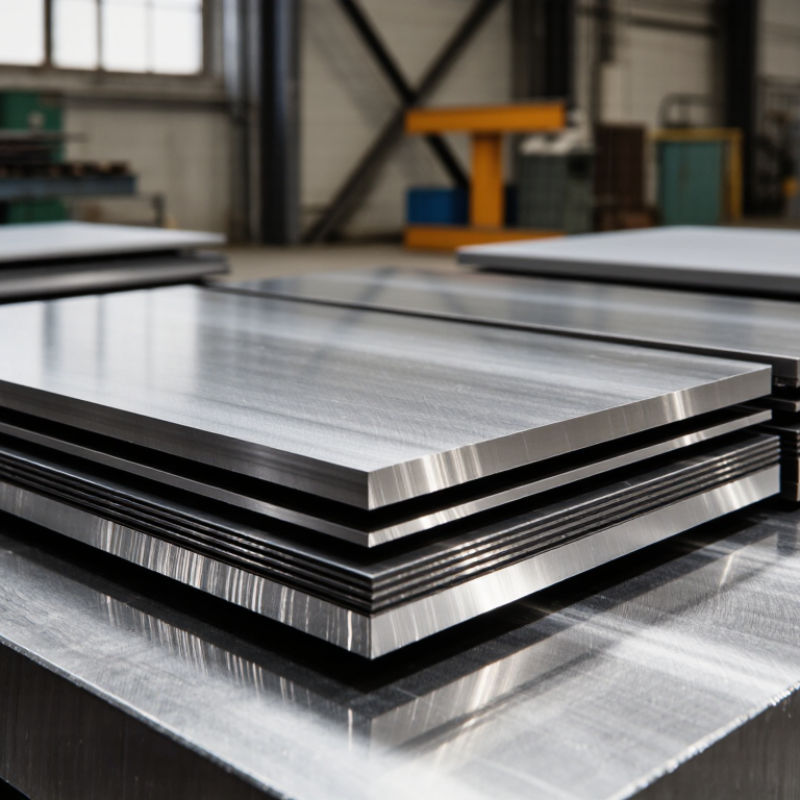
Titanium Metal Sheet is not a single, uniform product. Buyers can choose commercially pure grades, such as Grade 1 or Grade 2, or alloyed grades, including Grade 5 Ti-6Al-4V. These options differ in strength, formability, corrosion performance, and intended fabrication route. ASTM B265 provides the industry specification for titanium and titanium alloy strip, sheet, and plate, including requirements for chemistry, mechanical properties, dimensions, and surface condition. Details matter. A grade name alone does not confirm that a sheet suits a specific component; thickness, temper, finish, and inspection records also deserve attention.

Market data helps explain the material’s wider supply context. The U.S. Geological Survey’s Mineral Commodity Summaries 2025 reports on global titanium mineral and sponge production, offering a useful view of the upstream industry. It does not classify finished sheet products, so it should not be treated as a sheet-buying guide. That distinction is easy to overlook. In practice, the available sheet types are better compared by grade, manufacturing condition, and application. A thin sheet intended for forming may need different properties from a thicker sheet used in a highly loaded part. This guide outlines the main types, their typical characteristics, and the checks that help match material to use. Exact availability varies by supplier, and published specifications should be verified against current mill documentation.

What Types of Titanium Metal Sheet Are Available?

Titanium Sheet Types by Composition and Grade

Titanium sheet is commonly classified as commercially pure or alloyed, then specified by grade. Commercially pure grades contain mostly titanium, with controlled amounts of oxygen, iron, and other elements. Grade 1 is soft and highly formable, while Grade 2 offers a useful balance of strength and corrosion resistance. Composition matters. Even small changes can affect how sheet bends or performs in service.

Alloyed grades add elements to change mechanical properties. Grade 5, or Ti-6Al-4V, provides higher strength but is generally less formable than commercially pure grades. Grade 9, Ti-3Al-2.5V, offers moderate strength and can suit formed components. Grade 7 includes palladium to improve corrosion resistance in certain environments. There is no universally best grade; the trade-off is easy to underestimate.

Tips: Match the grade to the actual exposure, forming steps, and required strength. Check the applicable material specification, thickness, and supply condition before ordering. A grade name alone may not describe every requirement, so confirm details with the material supplier or engineer.

Commercially Pure Titanium Sheets and Their Grades

Commercially pure titanium sheets are not chemically pure titanium; they contain controlled trace elements. Grades 1 through 4 differ in composition and mechanical properties, especially strength and formability. Grade 1 is the softest and most formable, making it useful for parts with tight bends or complex shapes. It also offers strong corrosion resistance in many environments. Good for forming.

Grade 2 is a widely used middle ground, combining useful strength, weldability, and corrosion resistance. Grade 3 is stronger, but forming it may require more force and careful tooling. Grade 4 has the highest strength among these commercially pure grades, though it is less forgiving during forming. Not interchangeable.

For a sheet selection, consider the finished shape, service environment, thickness, and joining method. A deep-drawn component may favor Grade 1, while a more strength-focused design may call for Grade 2, 3, or 4. These are starting points, not guarantees. Check the applicable sheet specification and review the material certificate for chemistry and mechanical properties. A detail easy to overlook: actual performance can depend on fabrication and service conditions, not grade alone.

Titanium Alloy Sheets: Alpha, Alpha-Beta, and Beta

What Types of Titanium Metal Sheet Are Available?
Titanium Alloy Sheets: Alpha, Alpha-Beta, and Beta

Titanium sheet grades are commonly grouped by their crystal structure, which influences strength, forming behavior, and heat-treatment response. Alpha alloys, including commercially pure titanium, are generally weldable and resist corrosion well. They suit formed parts exposed to moisture or chemicals. ASTM B265 covers titanium and titanium-alloy sheet, strip, and plate, with grade-specific requirements. Check the grade, thickness, and condition—not just the alloy family.

Alpha-beta alloys combine both structures. Ti-6Al-4V is a widely used example, valued for its balance of strength and formability. ASTM B265 specifies a minimum tensile strength of 895 MPa for Grade 5 sheet. That is a useful reference, not a guarantee for every finished part; processing and material condition matter. Beta alloys can offer high strength and good formability after solution treatment and aging, but their properties depend strongly on composition and heat treatment. Details matter.

Supply context helps explain why sourcing deserves care. The USGS Mineral Commodity Summaries 2024 estimated global titanium sponge production at about 300,000 metric tons in 2023. Sponge is not sheet, but it is an upstream input, and conversion capacity also shapes availability. For a real selection, ask for the mill test certificate and verify the specification, thickness tolerance, and heat-treatment condition. I would not choose from a datasheet headline alone. Small differences matter.

Sheet Types by Thickness, Surface Finish, and Processing

Titanium sheet is commonly selected by thickness, surface finish, and processing route. Thin sheet bends readily and suits formed covers or lightweight panels, but it can wrinkle under uneven pressure. Thicker sheet feels more rigid and may need stronger cutting and forming equipment. Fit matters. Available thickness ranges vary by supplier and material specification, so confirm the actual dimensions before designing parts.

Surface finish affects both appearance and preparation. Mill-finished sheet often shows a practical, slightly textured look. Pickled surfaces have had scale removed, while polished finishes are smoother and more reflective. Processing also changes performance: hot-rolled stock is often used for heavier sections, while cold-rolled sheet can provide tighter thickness control and a cleaner surface. Annealing may improve formability, though the right condition depends on the alloy and intended operation. These categories overlap; a polished sheet may still require further forming.

Tips: Match the finish to the next step. For welding or bonding, check surface cleanliness and follow suitable preparation guidance. Inspect edges for burrs, and confirm flatness if the sheet must sit against a close-fitting frame. A supplier’s data sheet helps, but it may not answer every shop-floor question. Ask for the material grade, thickness tolerance, and processing condition. Don’t assume appearance tells the whole story.

What Types of Titanium Metal Sheet Are Available? — Sheet Types by Thickness, Surface Finish, and Processing
Sheet Type Typical Thickness Common Grades Typical Surface Finish Common Processing Characteristics and Typical Uses
Thin-gauge sheet Approximately 0.1–0.5 mm Commercially pure Grades 1 and 2; Grade 5 alloy also available Mill finish; bright or polished finish may be specified Cold rolling, annealing, slitting, and precision cutting Lightweight and formable, especially in commercially pure grades. Used for formed components, diaphragms, and lightweight fabrication where the specified grade and thickness meet design requirements.
Light sheet Approximately 0.5–1.5 mm Grades 1–4; Grade 5 for higher-strength applications Mill, pickled, or polished Cold rolling or hot rolling, annealing, leveling, and shearing A versatile range for formed parts and corrosion-resistant enclosures. Grades 1 and 2 are commonly selected for formability; Grades 3 and 4 offer higher strength among commercially pure grades.
Medium-gauge sheet Approximately 1.5–3.0 mm Grades 2–4; Grade 5 and Grade 7 are also available for suitable applications Mill, pickled, or blasted Hot or cold rolling, annealing, leveling, and plasma, laser, or waterjet cutting Used for fabricated panels, chemical-process components, and structural parts. Grade 7 contains a small palladium addition for improved corrosion resistance in certain reducing environments.
Heavy-gauge sheet Approximately 3.0–4.76 mm (0.1875 in) Grades 2–4; Grade 5 for higher strength Mill, pickled, or blasted Hot rolling, annealing, flattening, and mechanical or thermal cutting Offers greater rigidity than thinner sheet. Product classification and supply form can vary with the applicable specification and producer; thicker material may be supplied or specified as plate.
Pickled sheet Available across multiple gauges Commonly Grades 1–4 and Grade 5 Pickled, with a clean, matte appearance Acid pickling removes oxide scale and heat-treatment scale; rinsing and drying follow Selected when a cleaner surface is needed after hot processing or annealing. Pickling changes the surface condition, not the titanium grade or base-metal thickness specification.
Polished sheet Available across selected gauges Commonly Grades 1 and 2; other grades may be specified Mechanically polished or bright finished; appearance depends on the specified finish Surface grinding or polishing, followed by inspection and protective handling Used where a smoother or more reflective surface is required. Specify the finish and acceptance criteria, since “polished” does not describe one universal roughness level.
Patterned or textured sheet Available in selected thicknesses Grade 1, Grade 2, and other grades subject to availability Embossed, patterned, or textured Roll embossing or other forming processes; may be supplied with a protective film Chosen for appearance or surface texture. Confirm the pattern, usable dimensions, and whether the stated thickness refers to the base metal or includes the raised pattern.
Cut-to-size sheet blanks Depends on the starting sheet gauge Grade selected to match the required specification As-rolled, pickled, polished, or another specified finish Shearing, laser cutting, waterjet cutting, or plasma cutting, depending on thickness and edge requirements Supplied to specified dimensions for fabrication. Cutting method, edge condition, dimensional tolerances, and any heat-affected-zone requirements should be stated on the order.
Note: Thickness ranges above are practical examples, not universal product limits or a substitute for a material standard. Availability, tolerances, grade, finish, and whether material is classified as sheet or plate depend on the applicable specification and order requirements. Verify the required titanium grade and standard before purchase.

Choosing a Titanium Sheet Type for Its Intended Use

Choosing titanium sheet starts with the job, not the grade name. For deep-drawn covers, chemical tanks, or heat-exchanger parts, commercially pure Grade 1 or Grade 2 often offers useful formability and corrosion resistance. Grade 1 bends readily; Grade 2 provides more strength while remaining workable. Still, alloy choice alone cannot predict forming results. Sheet thickness, temper, tooling, and bend radius matter.

For weight-sensitive, load-bearing parts, Grade 5 titanium (Ti-6Al-4V) is a common option. ASTM International’s B265 specification lists minimum tensile strengths of 345 MPa for Grade 2 and 895 MPa for Grade 5 sheet. Those figures describe specification limits, not guaranteed performance in every finished component. A designer should also check yield strength, fatigue conditions, temperature, and the supplier’s test certificate. Stronger is not always better.

Corrosive service needs a closer look. Grade 7, which contains palladium, can suit some reducing-acid environments, but compatibility depends on concentration and temperature. For welded equipment, confirm the grade, surface condition, and fabrication procedure before ordering. I would request sample bends when forming behavior is uncertain. A small trial can expose springback or edge cracking early. It is a plain check, but often overlooked. ASTM B265 covers sheet dimensions and material requirements; the actual purchase specification should state grade, thickness, finish, and inspection needs.