

News

Miro: A New Standard in Responsible Innovation

Miro: A New Standard in Responsible Innovation The Miro monitor arm is setting new benchmarks in sustainability. It offers a high-performance solution without compromising on environmental responsibility. Designed with careful material selection, local sourcing, and longevity in mind, Miro’s responsible approach to design and unique manoeuvrability set it apart from the competition. Sustainable Choices Miro is crafted from energy-efficient materials with a lower carbon impact....

Read more
HSE Advisor

Role Purpose Support in the development, implementation and maintenance of the company’s Health, Safety & Environmental policies, processes, operational procedures, and standards.  Ensuring best practice and championing a continually improving HSE culture within the business. Key Responsibilities Liaise with and provide support to all areas of the business to eliminate, mitigate or reduce identified HSE exposures. Partner with the production management team and team leaders,...

Read more
CMD Ltd LAUNCHES 48-HOUR TURNAROUND ON BETATRAK® RAPID ORDERING SERVICE

CMD Ltd, the specialist in power distribution systems, workstation power and monitor arms, has launched a rapid ordering service for its Betatrak® underfloor powertrack distribution systems and accessories, with a commitment to delivering within 48-hours of an approved purchase order*. The service enables customers to order up to 50 lengths of Standard or Clean Earth (C/E) low noise Betatrak, along with up to 25 feed...

Read more

CMD INVESTS £1/4 MILLION IN NEW MACHINE AS PART OF FACTORY UPGRADE

We have invested in a new £1/4m TRUMPF CNC metal punch as part of an asset renewal strategy for our UK manufacturing capability. The new machine will be used in the production of a wide variety of our power distribution systems and workstation power products at our Rotherham factory. Suitable for handling sheet metal between 0.9mm and 3.0mm thick, the new machine will replace one...

Read more

CMD CATALOGUE PROVIDES TECHNICAL POWER DISTRIBUTION GUIDE

CMD Ltd has released a new catalogue, providing an easy to follow technical guide to our power distribution systems and plug and play desk modules. Detailing CMD’s full range of UK-manufactured power distribution systems and plug and play desk modules, the catalogue will be a helpful source of information to M&E engineers and contractors alike to understand how our power distribution systems connect together and...

Read more

Power Distribution Catalogue
CMD Ltd PLAYS ESSENTIAL ROLE IN ELECTRICAL FIT OUT AT LONDON’S PRESTIGIOUS OFFICE DEVELOPMENT

CMD Ltd, specialist in workplace connectivity and ergonomic solutions, has provided a flexible and high-quality power distribution network for The Ray, a prestigious office development in London’s Farringdon. Well-known for being the former site of The Guardian newspaper, The Ray now stands as an 83,000ft² office development characterised by a modernised warehouse aesthetic, with level two now occupied by a global social media company. The...

Read more

The Ray
CMD plugs in to european opportunity with Schuko Capsule unit launch

CMD Ltd, the specialist in power and connectivity solutions for commercial environments, has launched a Schuko version of its popular fixed format Capsule workstation power module for export to mainland Europe and beyond. A popular on desk power module comprising two sockets and dual USB (type A and C) chargers, CMD’s Capsule unit is already widely specified in the UK as an off-the-shelf workstation power...

Read more

CMD White Schuko Capsule Desk Power Module
CMD LTD EXTENDS MONITOR ARM RANGE WITH THE LAUNCH OF REACH PLUS

CMD Ltd, the specialist in ergonomic and connectivity solutions for commercial interiors, has completed its Reach monitor arm range with the launch of the Reach Plus. Available in single or dual screen options, the Reach Plus has been designed to provide an ideal solution for both single and dual screen workstation configurations, or can be used with next generation of large format curved screens. Suitable...

Read more

CMD Ltd DEMONSTRATES THE ART OF POWER DISTRIBUTION AT THE UNIVERSITY OF WARWICK

CMD Ltd, the specialist in workplace connectivity and ergonomic solutions, has provided Betatrak busbar power distribution and a range of electrical accessories for two major capital investment projects at the University of Warwick. Designed by Fielden Clegg Bradley Studios, the £33 million Faculty of Arts building is a showpiece development comprising four interconnected structures set around a central atrium, which will enable inter-disciplinary collaboration across...

Read more

University of Warwick
CMD BRINGS HARMONY TO COVENTRY UNIVERSITY RESEARCH FACILITIES

CMD Ltd, the specialist in power distribution solutions and workstation power and ergonomics, has provided under desk and on desk power modules for the refurbishment of three Coventry University research buildings. Located on Coventry University Technology Park, a business park designed to encourage collaboration between the university and knowledge-based businesses, the three buildings are being repurposed as office accommodation for university research teams. The refurbishment...

Read more

Coventry University

7 Tips for Choosing Cinema Seating Manufacturers

Choosing the right Cinema Seating Manufacturers is a practical investment in comfort, durability, and audience experience. Comscore’s 2024 year-end industry reporting estimated global box office revenue at about $30 billion, underscoring the scale of theatrical exhibition. That figure does not measure seating quality, of course. It does show why cinemas compete to make each visit feel worth the trip.

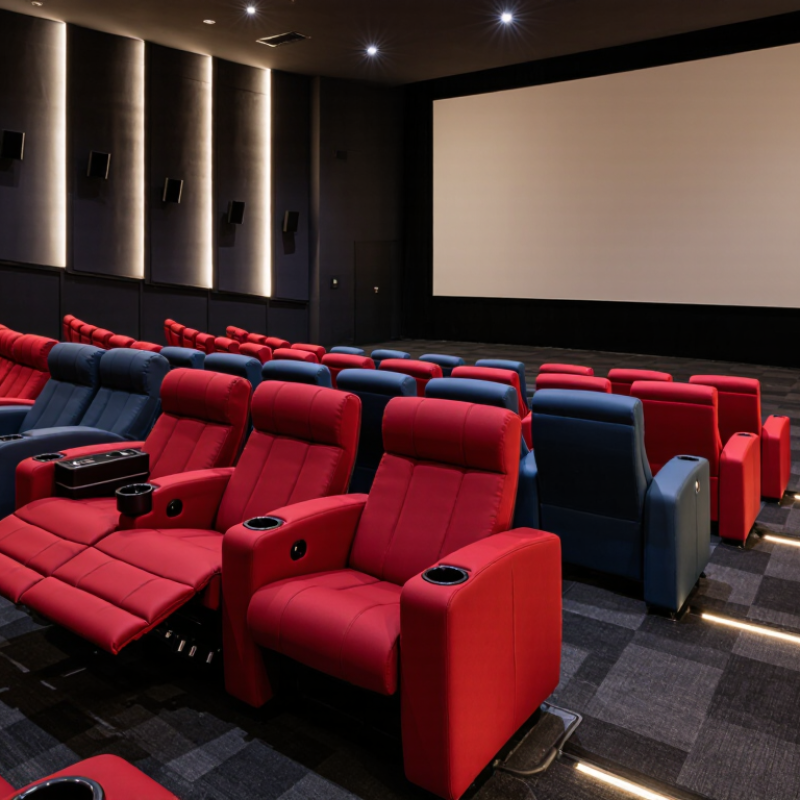
Former National Association of Theatre Owners president John Fithian described the industry’s changing environment this way: “The movie theater business is not dead. It is not dying. It is changing.” Seating choices are part of that change. A buyer should look beyond glossy upholstery samples and compare seat dimensions, frame construction, service access, warranties, and replacement-part availability. Comfort is measurable. Ask for product specifications and, where possible, inspect a working installation. Notice how the seat moves, how quietly it returns, and whether cupholders feel secure.

The best selection depends on room layout, audience needs, cleaning routines, and the manufacturer’s ability to support the installation over time. Trade reports can frame market conditions, but they cannot verify a supplier’s claims. References and clear documentation matter. Small details matter.

There is no universal “best” seat. A premium recliner may suit one venue, while a compact, robust model better serves another. Even a careful shortlist can miss a detail that becomes obvious only after opening night. These seven tips will help buyers ask sharper questions before committing.

7 Tips for Choosing Cinema Seating Manufacturers

Understanding Cinema Seating Requirements and Venue Needs

Choosing cinema seating starts with the room, not the catalogue. Map the screen, exits, columns, aisles, and accessible positions before comparing models. Measure seat width and row pitch with armrests down, then test the full recline. Nominal dimensions can hide a tight aisle. Small details matter. Allow room for ushers and cleaning carts, too.

Audience needs shape the layout. The World Health Organization’s 2022 Global Report on Health Equity for Persons with Disabilities estimates that 1.3 billion people, or 16% of the global population, experience significant disability. This supports planning beyond minimum accessible positions: consider clear routes, companion seating, transfer options, and useful sightlines in different parts of the auditorium. Have qualified design professionals check local access and fire requirements; a supplier’s standard drawing is not a compliance review.

Demand also varies by venue. The International Union of Cinemas’ 2024 annual report recorded about 861 million admissions across its territories in 2023. High-turnover sites may need durable upholstery, replaceable parts, and easy cleaning access, while smaller venues may favor wider spacing or recline. A full-size mock-up can reveal awkward cup-holder reach or knees too close to the row ahead. Seat width is easy to over-prioritize; more width can reduce capacity or aisle comfort. Recheck the complete layout against measured room dimensions.

7 Tips for Choosing Cinema Seating Manufacturers - Understanding Cinema Seating Requirements and Venue Needs

Tip Venue Requirement What to Check with the Manufacturer Useful Planning Consideration Evidence to Request
1. Match seating to the auditorium layout Room width, row spacing, aisle locations, platform position, and screen sightlines affect seat selection and capacity. Ask for dimensioned seat and row-layout drawings, including seat width, arm spacing, and the space needed for folding seats. As an early planning allowance, many projects compare row pitches around 900–1,100 mm; the right figure depends on the room, seat design, circulation, and applicable rules. Scaled layout drawings and a review against the venue’s measured floor plan.
2. Confirm comfort for the expected audience Show duration, audience profile, and ticket positioning influence preferred cushioning, lumbar support, seat width, and recline. Compare seat dimensions, foam specifications, upholstery options, recline range, and armrest configuration using a physical sample where possible. Wider or reclining seats can improve comfort but may reduce the number of seats that fit and change required row spacing. Product drawings, material specifications, and an in-person sample evaluation.
3. Design for accessibility and safe circulation Accessible seating, companion positions, transfer routes, and clear paths must work with the complete auditorium plan. Check whether seat modules, removable arms, and layout options can support the project’s accessibility plan and local building requirements. Requirements vary by jurisdiction and project; verify aisle widths, accessible locations, and egress with the design team and relevant authorities. Project-specific plans reviewed by the architect or code professional.
4. Evaluate durability and ease of maintenance High audience turnover, food and drink service, and frequent cleaning can accelerate wear on upholstery, hinges, and armrests. Ask about upholstery abrasion and cleaning guidance, replaceable components, fasteners, and access to spare parts. Select materials based on the venue’s cleaning products and maintenance routine; confirm compatibility before specifying them. Material data sheets, care instructions, and a written spare-parts policy.
5. Verify fire and product compliance Upholstery, foam, and complete seating assemblies may be subject to venue-specific fire, safety, and product requirements. Identify which standards apply to the project and confirm that the offered materials and finished product have relevant test documentation. Requirements differ by location and building type. Do not assume a material certificate alone proves compliance of the complete assembly. Current test reports and compliance documents applicable to the specified configuration.
6. Assess installation and project coordination Delivery access, floor conditions, installation sequence, and construction schedules can affect installation time and cost. Clarify site-measurement responsibilities, fixing details, packaging, delivery phases, installation scope, and coordination with other trades. Confirm floor levels and substrate requirements early, especially where seats are fixed to stepped or sloped floors. Installation method statement, site checklist, delivery plan, and itemized quotation.
7. Compare lifecycle support, not just purchase price Downtime, maintenance labor, replacement parts, and warranty coverage influence the long-term value of cinema seating. Review warranty terms, exclusions, response process, parts availability, repair instructions, and the expected service life of key components. Compare total ownership costs, including installation, cleaning, routine repairs, and replacement parts—not only the initial unit price. Written warranty, service contacts, parts list, and a lifecycle cost breakdown.

Evaluating Seat Design, Comfort, and Accessibility

When evaluating cinema seating manufacturers, look beyond attractive renderings. Ask for drawings that show seat width, row spacing, recline range, and the space needed for maintenance. A full-scale sample can reveal details a drawing misses, such as a hard armrest edge or a cup holder that catches a coat sleeve. Test it.

Comfort varies with body size and film length. Sit in the seat for at least twenty minutes, then check lumbar support, cushion firmness, and how easily the back returns upright. Ask how upholstery and foam perform after repeated use, and request clear cleaning and replacement guidance. A plush seat may feel impressive in a showroom but become tiring if it offers poor support.

Accessibility should be part of the layout, not an afterthought. Review wheelchair spaces, companion seating, aisle access, and routes to exits with people who use these spaces. Confirm that seat controls and cup holders are reachable from different positions. If possible, test a mock-up with varied users. One awkward detail can matter more than a polished specification sheet, and no single design will suit everyone. That trade-off deserves honest discussion before production begins.

Accessible Seating Minimums by Assembly-Area Capacity

Use these ADA minimums as an accessibility checkpoint when evaluating cinema seating layouts. The figures are based on the 2010 ADA Standards for Accessible Design, Section 221.2.1.1; confirm project-specific requirements with a qualified accessibility professional.

Comparing Materials, Durability, and Maintenance

When comparing cinema seating manufacturers, start with the fabric test, not the brochure’s “heavy-duty” label. The Association for Contract Textiles’ Voluntary Performance Guidelines use 30,000 Wyzenbeek double rubs or 40,000 Martindale cycles as benchmarks for woven upholstery. These are different test methods; don’t compare their numbers directly. Ask for the test method, result, and fabric sample. A scratchy swatch or loose seam can matter more to guests than a polished specification sheet.

Check the frame and moving parts too. ANSI/BIFMA X5.4 evaluates public seating for durability and stability, giving buyers a useful reference when reviewing a manufacturer’s test documentation. For a cinema, inspect hinge points, armrests, cup holders, and seat-return mechanisms. Ask how these parts are tested and whether replacements can be fitted without removing an entire row. Small failures can create frustrating maintenance calls.

Cleaning needs equal attention. Request approved cleaning agents and instructions for spills, especially on textured fabric where popcorn salt and drink residue collect. Ask whether upholstery panels can be replaced individually. A strong abrasion rating does not prove resistance to stains or disinfectants. That gap is easy to overlook. A modest, replaceable component may serve a busy auditorium better than a premium material that is difficult to repair.

Assessing Manufacturing Quality and Customization Options

A cinema seat may look simple, but its frame, hinges, and upholstery face repeated daily use. Ask manufacturers how they check weld consistency, fastener strength, and reclining mechanisms. Request recent inspection records and test reports for the proposed model. A sample seat can reveal loose stitching or stiff movement that a brochure will not show. Small details matter.

Customization should solve real room and audience needs, not just change colors. Discuss row spacing, seat width, armrest design, cup holders, and accessible seating arrangements. Ask whether custom dimensions affect stability, maintenance, or replacement-part availability. Compare upholstery swatches under the room’s lighting, and check how easily staff can clean them. A perfect-looking fabric may wear poorly; that trade-off deserves a frank discussion.

Tips: Share a floor plan and expected use before requesting a quote. Confirm which options are standard, made to order, or likely to extend lead times. Ask for a written specification, warranty terms, and a clear process for handling defects. If a manufacturer cannot explain its quality checks plainly, pause and ask again.

Verifying Supplier Experience, Service, and Total Cost

Choosing cinema seating is a long-term operating decision, not just a catalog comparison. The Motion Picture Association’s 2023 THEME Report recorded $33.9 billion in global box-office revenue, up 30% from 2022. That figure signals the scale of cinema operations, but it does not prove a supplier can deliver. Ask for references from venues with similar seat counts, aisle layouts, and daily use. Request dates, installation scope, and permission to contact those clients. Ask for proof.

Service matters after opening night. Get response-time commitments in writing, along with clear warranty exclusions and a parts-availability plan. Check whether replacement covers, hinges, and armrests can be matched later. A small mismatch can look obvious across a row. If possible, inspect an installed seat and test its recline, noise, and cleaning access. Numbers need context.

Compare total cost over your own planning period, not only the unit price. Include freight, installation, floor fixing, maintenance, upholstery cleaning, spare parts, and expected downtime. Ask suppliers to price the same specification and list assumptions separately. Then check whether the lowest offer excludes work your venue will still need. I would not treat a neat spreadsheet as certainty; site conditions and usage vary. Request a written estimate, then challenge the assumptions.