

News

Miro: A New Standard in Responsible Innovation

Miro: A New Standard in Responsible Innovation The Miro monitor arm is setting new benchmarks in sustainability. It offers a high-performance solution without compromising on environmental responsibility. Designed with careful material selection, local sourcing, and longevity in mind, Miro’s responsible approach to design and unique manoeuvrability set it apart from the competition. Sustainable Choices Miro is crafted from energy-efficient materials with a lower carbon impact....

Read more
HSE Advisor

Role Purpose Support in the development, implementation and maintenance of the company’s Health, Safety & Environmental policies, processes, operational procedures, and standards.  Ensuring best practice and championing a continually improving HSE culture within the business. Key Responsibilities Liaise with and provide support to all areas of the business to eliminate, mitigate or reduce identified HSE exposures. Partner with the production management team and team leaders,...

Read more
CMD Ltd LAUNCHES 48-HOUR TURNAROUND ON BETATRAK® RAPID ORDERING SERVICE

CMD Ltd, the specialist in power distribution systems, workstation power and monitor arms, has launched a rapid ordering service for its Betatrak® underfloor powertrack distribution systems and accessories, with a commitment to delivering within 48-hours of an approved purchase order*. The service enables customers to order up to 50 lengths of Standard or Clean Earth (C/E) low noise Betatrak, along with up to 25 feed...

Read more

CMD INVESTS £1/4 MILLION IN NEW MACHINE AS PART OF FACTORY UPGRADE

We have invested in a new £1/4m TRUMPF CNC metal punch as part of an asset renewal strategy for our UK manufacturing capability. The new machine will be used in the production of a wide variety of our power distribution systems and workstation power products at our Rotherham factory. Suitable for handling sheet metal between 0.9mm and 3.0mm thick, the new machine will replace one...

Read more

CMD CATALOGUE PROVIDES TECHNICAL POWER DISTRIBUTION GUIDE

CMD Ltd has released a new catalogue, providing an easy to follow technical guide to our power distribution systems and plug and play desk modules. Detailing CMD’s full range of UK-manufactured power distribution systems and plug and play desk modules, the catalogue will be a helpful source of information to M&E engineers and contractors alike to understand how our power distribution systems connect together and...

Read more

Power Distribution Catalogue
CMD Ltd PLAYS ESSENTIAL ROLE IN ELECTRICAL FIT OUT AT LONDON’S PRESTIGIOUS OFFICE DEVELOPMENT

CMD Ltd, specialist in workplace connectivity and ergonomic solutions, has provided a flexible and high-quality power distribution network for The Ray, a prestigious office development in London’s Farringdon. Well-known for being the former site of The Guardian newspaper, The Ray now stands as an 83,000ft² office development characterised by a modernised warehouse aesthetic, with level two now occupied by a global social media company. The...

Read more

The Ray
CMD plugs in to european opportunity with Schuko Capsule unit launch

CMD Ltd, the specialist in power and connectivity solutions for commercial environments, has launched a Schuko version of its popular fixed format Capsule workstation power module for export to mainland Europe and beyond. A popular on desk power module comprising two sockets and dual USB (type A and C) chargers, CMD’s Capsule unit is already widely specified in the UK as an off-the-shelf workstation power...

Read more

CMD White Schuko Capsule Desk Power Module
CMD LTD EXTENDS MONITOR ARM RANGE WITH THE LAUNCH OF REACH PLUS

CMD Ltd, the specialist in ergonomic and connectivity solutions for commercial interiors, has completed its Reach monitor arm range with the launch of the Reach Plus. Available in single or dual screen options, the Reach Plus has been designed to provide an ideal solution for both single and dual screen workstation configurations, or can be used with next generation of large format curved screens. Suitable...

Read more

CMD Ltd DEMONSTRATES THE ART OF POWER DISTRIBUTION AT THE UNIVERSITY OF WARWICK

CMD Ltd, the specialist in workplace connectivity and ergonomic solutions, has provided Betatrak busbar power distribution and a range of electrical accessories for two major capital investment projects at the University of Warwick. Designed by Fielden Clegg Bradley Studios, the £33 million Faculty of Arts building is a showpiece development comprising four interconnected structures set around a central atrium, which will enable inter-disciplinary collaboration across...

Read more

University of Warwick
CMD BRINGS HARMONY TO COVENTRY UNIVERSITY RESEARCH FACILITIES

CMD Ltd, the specialist in power distribution solutions and workstation power and ergonomics, has provided under desk and on desk power modules for the refurbishment of three Coventry University research buildings. Located on Coventry University Technology Park, a business park designed to encourage collaboration between the university and knowledge-based businesses, the three buildings are being repurposed as office accommodation for university research teams. The refurbishment...

Read more

Coventry University

2026 Top Solar Disconnect Switches for Global Buyers?

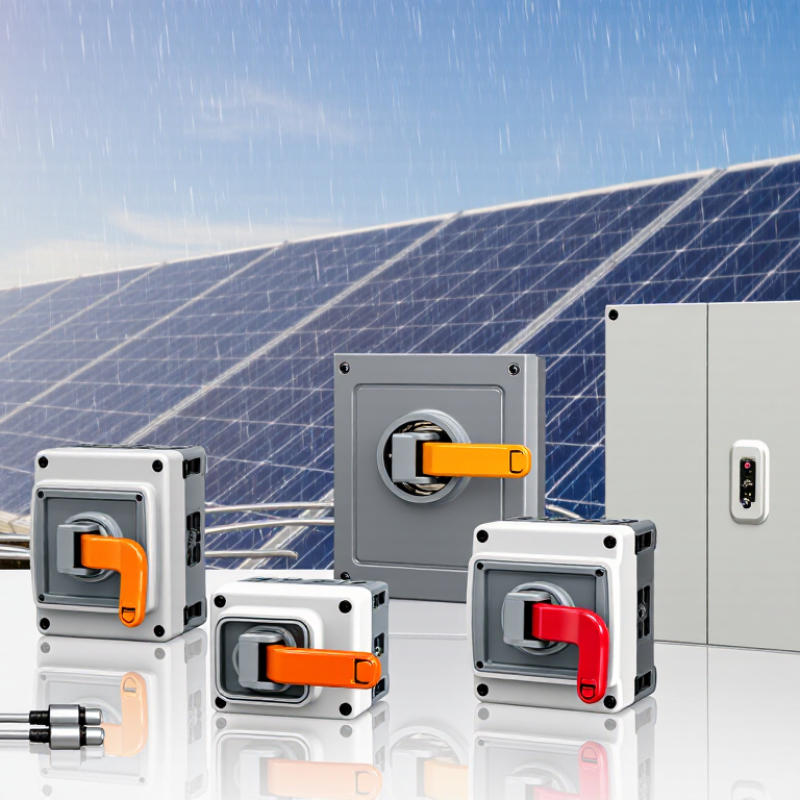
Global solar deployment is accelerating, but dependable switching equipment remains easy to underestimate. The IEA’s Renewables 2024 report recorded nearly 510 GW of renewable capacity additions in 2023. Solar photovoltaic systems represented about three quarters of that expansion. IRENA’s Renewable Capacity Statistics 2025 reported approximately 452 GW of new solar capacity added in 2024. These figures strengthen demand for safer, better-specified Solar Disconnect Switch products across utility, commercial, and residential projects.

A suitable switch must match the array’s maximum voltage, continuous current, pole configuration, and fault conditions. Regional requirements also matter. IEC 60947-3, IEC 60364-7-712, UL 98B, and local electrical codes may apply differently. Buyers should verify certification scope instead of trusting a familiar logo. Enclosure ratings deserve equal attention. A rooftop switch can face ultraviolet exposure, driving rain, dust, and temperatures above 50°C. Some installations also require visible isolation and lockable handles for maintenance safety.

The 2026 market will probably reward practical reliability over attractive catalogs. Probably. A compact enclosure is useful, but not if gloved technicians cannot operate it. High current ratings can look impressive, yet derating and cable size may change field performance. This guide compares leading Solar Disconnect Switch options through technical ratings, standards, environmental protection, installation flexibility, and supplier evidence. It also questions a common assumption: the most expensive product is not automatically the safest choice. Verified test reports, traceable certifications, warranty terms, and real project experience provide stronger buying evidence. Product data still needs independent checking before procurement.

2026 Top Solar Disconnect Switches for Global Buyers?

Solar Disconnect Switches: Purpose, Types, and Core Safety Functions

2026 Top Solar Disconnect Switches for Global Buyers
Solar Disconnect Switches: Purpose, Types, and Core Safety Functions

A solar disconnect switch separates photovoltaic circuits from an inverter, battery, or building wiring. This isolation supports safer maintenance, fault checks, and emergency response. It does not replace overcurrent protection or proper system grounding. The switch must interrupt direct current safely, because DC arcs can continue after contacts open. Choose a device with suitable voltage, current, pole configuration, and load-break rating. A switch rated only for AC may fail in a solar DC circuit.

Common options include DC disconnects, AC disconnects, and combined enclosures. DC models isolate modules from inverters. AC models separate inverters from distribution panels. Combined units save space, but their internal layout needs careful inspection. Rooftop systems may also require rapid shutdown equipment, depending on local electrical rules. Enclosure ratings matter outdoors. Dust, rain, sunlight, salt, and heat can weaken poor materials. Field inspections often find loose terminals and unclear labels. Small details matter.

Tips: Confirm the circuit’s maximum voltage and current before selection. Check certification requirements for the installation country. Use a visible, lockable handle where practical. Keep the switch accessible and clearly labeled. Test operation during commissioning, then inspect terminals periodically. A perfect installation can still age badly. That part is easy to underestimate.

Key Specifications Global Buyers Should Compare in 2026

2026 Top Solar Disconnect Switches for Global Buyers

Solar capacity is expanding quickly, making disconnect switch selection more demanding. IRENA reported about 452 GW of new solar capacity in 2024. That growth increases pressure on installers, inspectors, and equipment buyers. A switch is not merely an emergency handle beside an inverter. It must interrupt direct current safely under real operating conditions.

Global buyers should compare rated voltage, continuous current, pole configuration, and DC utilization category. Check whether the device supports the system’s maximum open-circuit voltage, including cold-weather correction. Enclosure protection also matters. IP65 may suit dusty outdoor walls, while coastal projects require stronger corrosion resistance. Temperature range, cable entry size, terminal design, and mechanical endurance deserve equal attention. IEC 60947-3 alignment is a useful starting point, but local certification may still be required. IEA’s Renewables 2024 report expects solar to provide most new renewable capacity through 2030. Small specification errors could therefore affect many installations.

Tips: Request test reports, not only catalogue claims. Confirm breaking capacity at the actual DC voltage. Inspect the switch after transport; cracked seals are easy to miss. Compare torque instructions and conductor compatibility. A higher current rating is not automatically safer. Sometimes, it hides poor coordination with fuses or inverters. Buyers should also verify visible isolation, lockout provisions, and UV resistance. These details seem minor, yet field experience shows they often decide maintenance quality. I may be overly cautious, but a cheaper switch becomes expensive when replacement requires shutting down a rooftop array.

2026 Top Solar Disconnect Switches for Global Buyers? – Key Specifications Global Buyers Should Compare in 2026

Switch Category Typical Solar Application Poles Typical DC Voltage Rating Typical Current Rating DC Utilization Category Ingress Protection Operating Temperature Relevant Standards Key Buying Considerations
PV String DC Isolator Rooftop and small commercial PV strings 2–4 600–1,000 V DC 16–32 A DC-21B or equivalent PV switching duty IP65–IP66 for outdoor enclosures Approximately −25°C to +60°C IEC 60947-1, IEC 60947-3, IEC 60364-7-712 Verify the voltage at the lowest site temperature and the actual string short-circuit current.
Enclosed Rooftop Disconnect Building-mounted module or inverter isolation 2–4 600–1,500 V DC 25–63 A PV-specific DC isolating duty IP65–IP66, with UV-resistant enclosure material Approximately −25°C to +60°C IEC 60947-3 and applicable national installation rules Check lockable handles, cable entry space, condensation control, and UV resistance.
Inverter DC Disconnect Isolation at the DC input of string or hybrid inverters 2–4, depending on circuit arrangement 600–1,500 V DC 32–100 A DC-21B or higher where specified by the design IP20 inside equipment; IP65 or higher when externally enclosed Typically −25°C to +60°C IEC 60947-3, IEC 62109 installation requirements where applicable Match the number of MPPT circuits, polarity arrangement, and inverter maximum DC input.
Battery-Ready DC Isolator Solar-plus-storage systems and battery inverter circuits 2–4 150–1,500 V DC, system dependent 63–250 A DC switching category specified for the battery circuit IP20 in cabinets; IP55–IP66 for external installations Often −20°C to +50°C; confirm battery-system limits IEC 60947-3 and relevant battery-storage installation requirements Confirm continuous current, prospective fault current, pre-charge requirements, and polarity.
Utility-Scale Array Isolator Combiner boxes, tracker rows, and central-inverter arrays 2–8 or more, subject to system architecture 1,000–1,500 V DC 63–400 A PV-rated DC switching duty with tested load-break capability IP54–IP66, depending on enclosure location Approximately −25°C to +55°C, with derating as required IEC 60947-1, IEC 60947-3, IEC 62548 design guidance Review derating, thermal performance, mechanical endurance, arc control, and maintenance access.
Firefighter / Emergency PV Disconnect Rapid shutdown or emergency isolation at accessible locations 2–4 Up to 1,000–1,500 V DC, design dependent 16–63 A PV-rated isolation with clearly defined emergency function IP65–IP66 for outdoor mounting Approximately −25°C to +60°C IEC 60947-3 plus applicable local fire and electrical codes Confirm emergency labeling, visible position indication, remote-control compatibility, and local code acceptance.
Buyer note: Ratings shown are common specification ranges for solar DC disconnect applications, not a substitute for project-specific selection. Final verification should include maximum open-circuit voltage, short-circuit current, continuous operating current, ambient temperature, installation altitude, enclosure requirements, and the electrical codes applicable in the destination market.

How to Match a Disconnect Switch to Solar System Requirements

2026 Top Solar Disconnect Switches for Global Buyers

How to Match a Disconnect Switch to Solar System Requirements

Solar growth makes switch selection less forgiving. IRENA reported 345.5 GW of solar capacity added globally in 2023, representing about 73% of new renewable capacity. Every added array needs isolation equipment matched to real operating conditions. Start with the system’s maximum DC voltage, continuous current, and fault current. Do not size from the inverter label alone. Check string calculations, parallel inputs, and cold-weather voltage rise.

For rooftop systems, select a switch with a verified DC rating, suitable pole configuration, and visible isolation position. IEC 60947-3 provides a useful reference for switch-disconnectors. IEC 60364-7-712 addresses photovoltaic installation requirements.

Enclosure protection also matters. Dust, rain, salt air, and roof heat can shorten service life. A sealed enclosure may need an appropriate IP rating, UV resistance, and a temperature derating review. Small details matter.

Installation experience exposes a common mistake. Buyers often compare current ratings, then ignore arc interruption performance. That approach is incomplete. The switch must interrupt the actual DC circuit safely. Confirm compatibility with cable size, terminal design, and the installer’s maintenance procedure. The IEA’s Renewables 2024 report expects solar PV to drive most renewable expansion through 2030. Demand will rise, but procurement speed should not replace verification. A perfect datasheet can still disappoint in a hot, crowded combiner box. I would recheck every assumption.

Installation, Compliance, and Environmental Considerations by Region

2026 Top Solar Disconnect Switches for Global Buyers

Installation, Compliance, and Environmental Considerations by Region

Solar disconnect switches must match the system voltage, current, and fault conditions, not just the panel count. Field inspections often find undersized DC isolators installed in cramped, sun-heated enclosures. Clear labeling and reachable placement can prevent dangerous delays during maintenance. Installers should follow local electrical rules and verify certification with the relevant authority before shipment.

Regional requirements can differ sharply. North American projects commonly follow national electrical rules and recognized product certifications. European installations may require conformity with applicable low-voltage requirements and IEC-based testing. Australia and New Zealand often apply their own wiring rules and product approvals. These frameworks overlap, but they are not interchangeable. A perfect global specification is unrealistic.

Environmental conditions also influence selection. Coastal sites need corrosion-resistant materials and sealed cable entries. Desert projects require UV stability, dust protection, and reliable operation after extreme daytime heating. Cold regions may need low-temperature testing and flexible seals. High-altitude installations can require additional derating. Enclosures should provide an appropriate ingress rating, but installers sometimes treat that rating as permanent protection. Gaskets age, and maintenance matters.

Tips: Confirm DC-rated switching capability, short-circuit performance, enclosure rating, and temperature limits. Keep records of certificates, torque settings, inspection dates, and replacement parts. Ask local engineers to review the design early. Small documentation gaps can become costly approval problems.

Evaluating Manufacturers, Costs, Reliability, and Long-Term Value

Global buyers choosing solar disconnect switches in 2026 should examine more than the purchase price. In field inspections, I have seen low-cost units develop stiff handles after repeated heat exposure. A reliable switch should provide clear isolation, secure terminal spacing, and a housing suited to outdoor conditions. Check current ratings, voltage limits, enclosure protection, and documented test results. Certification should match the installation market, not merely appear on a sales sheet.

Manufacturer evaluation requires practical evidence. Ask for production traceability, routine inspection records, sample testing, and replacement-part support. A responsive engineering team can resolve wiring questions before they become costly site delays. However, factory claims need independent verification. Request samples and inspect the contact movement, screw quality, labels, and torque guidance. Small details matter. One imperfect label can slow maintenance.

Cost analysis should include freight, installation time, testing, spare units, and future replacement labor. A slightly higher purchase price may reduce downtime in remote solar arrays. Long-term value also depends on stable materials, corrosion resistance, and mechanical endurance. Review warranty exclusions carefully, especially those involving temperature, moisture, or incorrect tightening. No shortlist is perfect. I would still challenge optimistic service-life estimates when supporting data is limited. Track switch performance during inspections, record unusual heating, and compare results across operating seasons. This evidence improves the next procurement decision.