

News

Miro: A New Standard in Responsible Innovation

Miro: A New Standard in Responsible Innovation The Miro monitor arm is setting new benchmarks in sustainability. It offers a high-performance solution without compromising on environmental responsibility. Designed with careful material selection, local sourcing, and longevity in mind, Miro’s responsible approach to design and unique manoeuvrability set it apart from the competition. Sustainable Choices Miro is crafted from energy-efficient materials with a lower carbon impact....

Read more
HSE Advisor

Role Purpose Support in the development, implementation and maintenance of the company’s Health, Safety & Environmental policies, processes, operational procedures, and standards.  Ensuring best practice and championing a continually improving HSE culture within the business. Key Responsibilities Liaise with and provide support to all areas of the business to eliminate, mitigate or reduce identified HSE exposures. Partner with the production management team and team leaders,...

Read more
CMD Ltd LAUNCHES 48-HOUR TURNAROUND ON BETATRAK® RAPID ORDERING SERVICE

CMD Ltd, the specialist in power distribution systems, workstation power and monitor arms, has launched a rapid ordering service for its Betatrak® underfloor powertrack distribution systems and accessories, with a commitment to delivering within 48-hours of an approved purchase order*. The service enables customers to order up to 50 lengths of Standard or Clean Earth (C/E) low noise Betatrak, along with up to 25 feed...

Read more

CMD INVESTS £1/4 MILLION IN NEW MACHINE AS PART OF FACTORY UPGRADE

We have invested in a new £1/4m TRUMPF CNC metal punch as part of an asset renewal strategy for our UK manufacturing capability. The new machine will be used in the production of a wide variety of our power distribution systems and workstation power products at our Rotherham factory. Suitable for handling sheet metal between 0.9mm and 3.0mm thick, the new machine will replace one...

Read more

CMD CATALOGUE PROVIDES TECHNICAL POWER DISTRIBUTION GUIDE

CMD Ltd has released a new catalogue, providing an easy to follow technical guide to our power distribution systems and plug and play desk modules. Detailing CMD’s full range of UK-manufactured power distribution systems and plug and play desk modules, the catalogue will be a helpful source of information to M&E engineers and contractors alike to understand how our power distribution systems connect together and...

Read more

Power Distribution Catalogue
CMD Ltd PLAYS ESSENTIAL ROLE IN ELECTRICAL FIT OUT AT LONDON’S PRESTIGIOUS OFFICE DEVELOPMENT

CMD Ltd, specialist in workplace connectivity and ergonomic solutions, has provided a flexible and high-quality power distribution network for The Ray, a prestigious office development in London’s Farringdon. Well-known for being the former site of The Guardian newspaper, The Ray now stands as an 83,000ft² office development characterised by a modernised warehouse aesthetic, with level two now occupied by a global social media company. The...

Read more

The Ray
CMD plugs in to european opportunity with Schuko Capsule unit launch

CMD Ltd, the specialist in power and connectivity solutions for commercial environments, has launched a Schuko version of its popular fixed format Capsule workstation power module for export to mainland Europe and beyond. A popular on desk power module comprising two sockets and dual USB (type A and C) chargers, CMD’s Capsule unit is already widely specified in the UK as an off-the-shelf workstation power...

Read more

CMD White Schuko Capsule Desk Power Module
CMD LTD EXTENDS MONITOR ARM RANGE WITH THE LAUNCH OF REACH PLUS

CMD Ltd, the specialist in ergonomic and connectivity solutions for commercial interiors, has completed its Reach monitor arm range with the launch of the Reach Plus. Available in single or dual screen options, the Reach Plus has been designed to provide an ideal solution for both single and dual screen workstation configurations, or can be used with next generation of large format curved screens. Suitable...

Read more

CMD Ltd DEMONSTRATES THE ART OF POWER DISTRIBUTION AT THE UNIVERSITY OF WARWICK

CMD Ltd, the specialist in workplace connectivity and ergonomic solutions, has provided Betatrak busbar power distribution and a range of electrical accessories for two major capital investment projects at the University of Warwick. Designed by Fielden Clegg Bradley Studios, the £33 million Faculty of Arts building is a showpiece development comprising four interconnected structures set around a central atrium, which will enable inter-disciplinary collaboration across...

Read more

University of Warwick
CMD BRINGS HARMONY TO COVENTRY UNIVERSITY RESEARCH FACILITIES

CMD Ltd, the specialist in power distribution solutions and workstation power and ergonomics, has provided under desk and on desk power modules for the refurbishment of three Coventry University research buildings. Located on Coventry University Technology Park, a business park designed to encourage collaboration between the university and knowledge-based businesses, the three buildings are being repurposed as office accommodation for university research teams. The refurbishment...

Read more

Coventry University

2026 Top Oilless Reciprocating Compressor Suppliers?

Choosing the 2026 top Oilless Reciprocating Compressor suppliers requires more than comparing catalog prices. Buyers need evidence from real operating environments, not polished claims alone. An Oilless Reciprocating Compressor should deliver clean, stable air while reducing oil contamination risks in sensitive applications. Medical facilities, laboratories, food plants, electronics factories, and precision workshops may each require different performance priorities.

This guide examines supplier experience, manufacturing capability, product reliability, and after-sales support. It considers airflow, pressure stability, duty cycle, noise, cooling design, and maintenance access. Field service matters, especially when a compressor supports continuous production. A supplier with documented testing, responsive engineers, and clear warranty terms deserves closer attention. Certifications can strengthen confidence, but they should be checked against the exact model and market requirements.

Details matter.

The leading supplier is not automatically the best fit for every buyer. A compact workshop may value low noise and simple controls, while a hospital may demand redundancy and strict cleanliness. Energy consumption also deserves careful review because laboratory testing may differ from daily plant conditions. Some supplier information can be incomplete, outdated, or overly optimistic. That limitation should be acknowledged rather than hidden. This overview therefore encourages practical verification through technical drawings, performance data, customer references, sample testing, and total cost analysis. The goal is not to promote a single manufacturer. It is to help readers identify dependable partners for 2026, with clearer expectations and fewer costly surprises.

2026 Top Oilless Reciprocating Compressor Suppliers?

What Are Oilless Reciprocating Compressors?

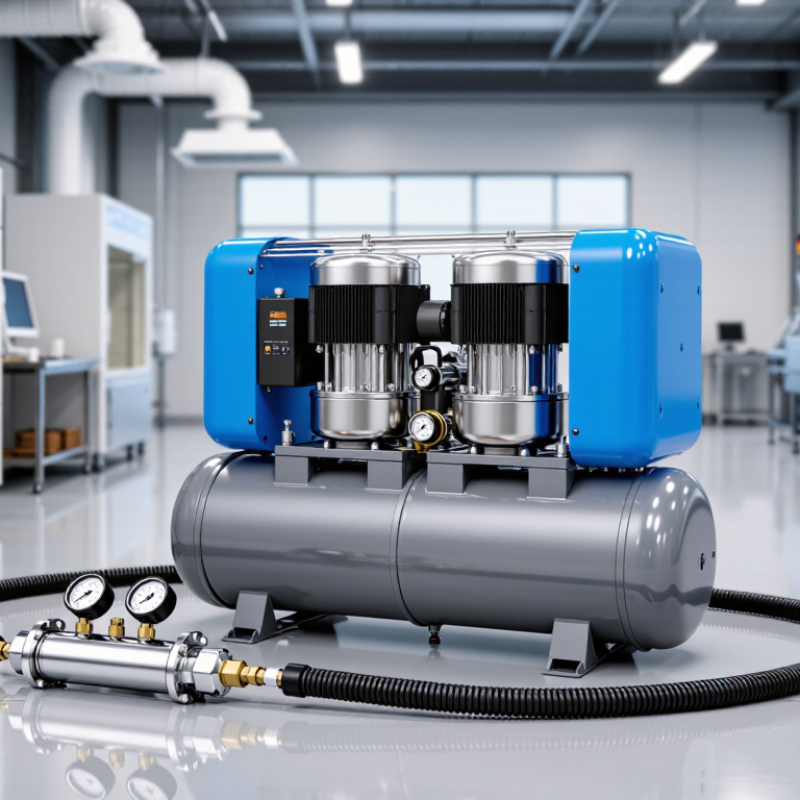
An oilless reciprocating compressor compresses air without injecting lubricating oil into the cylinder chamber. A piston moves back and forth inside a cylinder, drawing in and pressurizing air through valves. Sealing rings, piston materials, and cylinder coatings reduce friction without conventional oil lubrication.

This design helps protect compressed air from oil contamination. It suits laboratories, medical equipment, electronics production, food processing, and clean workshops. The outlet air still needs filtration, drying, and regular testing. “Oilless” does not mean maintenance-free. Wear particles, moisture, and intake pollutants can still affect air quality.

In practical inspections, temperature, vibration, discharge pressure, and valve noise reveal much about compressor condition. A rising outlet temperature may indicate worn rings, restricted cooling, or poor ventilation. Capacity also matters. An undersized unit may run continuously, while an oversized unit can cycle inefficiently. The quietest compressor is not always the best choice.

Buyers should examine duty cycle, required pressure, airflow, receiver size, noise limits, and service access. Materials deserve attention too, especially when the compressor operates in humid or dusty rooms. Manufacturer test data should explain air purity, performance tolerances, and replacement intervals. Some specifications look precise but hide operating assumptions. Checking them against real site conditions is essential.

2026 Top Oilless Reciprocating Compressor Suppliers? What Are Oilless Reciprocating Compressors?

Oilless reciprocating compressors use engineered self-lubricating materials, sealed bearings, or isolated lubrication systems to keep oil away from the compression chamber. The chart shows representative operating-pressure points commonly associated with major application categories. Actual requirements vary by equipment design, air quality class, flow rate, and duty cycle.

Key Criteria for Evaluating Suppliers in 2026

2026 Top Oilless Reciprocating Compressor Suppliers?

Key Criteria for Evaluating Suppliers in 2026

Selecting an oilless reciprocating compressor supplier requires more than comparing catalog prices. The U.S. Department of Energy reports that compressed-air leaks can waste 20–30% of compressor output. Therefore, suppliers should provide measured efficiency data, leakage guidance, and realistic lifecycle calculations. Ask for power consumption at your actual pressure, flow, duty cycle, and ambient temperature. Generic “energy-saving” claims are weak evidence.

Air purity deserves equal attention. An oilless compressor does not automatically produce contamination-free air. Piston rings, seals, coatings, and intake conditions still affect particle and vapor levels. Require independent test results against ISO 8573-1, including defined operating conditions. Check whether testing covers startup, continuous operation, and filter loading. Small details matter.

Supplier reliability should be tested through service records, not polished presentations. Request field data for mean time between failures, spare-part availability, technician response times, and warranty exclusions. The U.S. DOE’s Improving Compressed Air System Performance guide emphasizes maintenance, pressure management, and leak control as major performance factors. A supplier ignoring these areas may sell a strong compressor but deliver a weak system.

Do not trust every forecast.

A practical factory trial can reveal noise, heat, vibration, and maintenance access. I would also examine three comparable installations, preferably after two years of operation. Some evaluation methods still overvalue purchase price. That is a mistake worth revisiting in 2026.

Leading Oilless Reciprocating Compressor Suppliers

Leading oilless reciprocating compressor suppliers are gaining attention as manufacturers seek cleaner air and lower contamination risks. The global oil-free compressor market was valued at approximately USD 13.5 billion in 2023, according to Grand View Research. Its forecast indicates steady growth through 2030, supported by food processing, healthcare, electronics, and laboratory demand.

Reliable suppliers should provide oil-free cylinder designs, corrosion-resistant materials, and verified air-quality testing. ISO 8573-1 compliance matters, especially where compressed air contacts products or instruments.

Buyers should also examine duty cycle, discharge temperature, noise levels, and service access. A compact unit may look efficient beside a production line, yet poor cooling can increase maintenance frequency.

The best evaluation is practical.

A 2024 MarketsandMarkets report identifies energy efficiency and contamination control as major compressor purchasing factors. Supplier strength, however, is not proven by specifications alone. Request factory test records, replacement-part availability, and documented performance under local humidity and temperature conditions.

Some suppliers publish impressive laboratory figures, but field results can differ. That gap deserves closer questioning. Ask for installed references, realistic sound measurements, and a clear warranty scope before selecting a long-term oilless reciprocating compressor supplier.

Product Comparison: Performance, Reliability, and Cost

2026 Top Oilless Reciprocating Compressor Suppliers?

Performance should be measured at the point of use, not only in brochures. The U.S. Department of Energy reports that compressed air may consume about 10% of industrial electricity. Its guidance also notes that energy can exceed 70% of lifecycle cost. Therefore, a slightly higher purchase price may be reasonable when the compressor delivers stable output with lower specific power.

Oil-free design supports cleaner air, but it does not automatically prove air purity. ISO 8573-1 classifies particles, water, and oil separately. Buyers should request certified outlet-air data, pressure dew point, flow stability, and test conditions. A useful comparison includes noise, cooling requirements, service intervals, and performance at partial load. Small details matter. A cold morning can expose weak controls.

Reliability depends on more than rated hours. Check cylinder materials, valve accessibility, thermal protection, spare-part availability, and local technical support. The U.S. DOE Compressed Air Sourcebook warns that leakage can waste a substantial share of compressor output, often reaching 20–30% in poorly managed systems. That makes system design as important as supplier selection. Lifecycle costing should include electricity, filters, maintenance labor, downtime, and disposal. I would not trust a low-cost quote without a measured duty cycle. Some comparisons still overlook standby losses and installation pressure drops. That is an avoidable mistake.

How to Select the Right Supplier for Your Application

2026 Top Oilless Reciprocating Compressor Suppliers? How to Select the Right Supplier for Your Application

Supplier selection should begin with the application, not a popularity ranking. A medical-air system may require strict cleanliness, while a workshop may prioritize compact size and low maintenance. Define pressure, flow, duty cycle, inlet conditions, noise limits, and ambient temperature. Then request test data for those exact conditions. The U.S. Department of Energy reports that compressed-air systems can consume about 10% of industrial electricity. Its guidance also notes that leaks may waste 20–30% of compressor output. Efficiency deserves serious attention.

Ask whether “oilless” applies to the compression chamber, crankcase, seals, and delivered air. These details matter. For sensitive processes, specify the required ISO 8573-1 air-quality class and request independent verification. Class 0 is not a universal promise of zero contamination. It must include defined limits and operating conditions. A reliable supplier should provide performance curves, noise data, service intervals, spare-parts availability, and commissioning support. Look for evidence from comparable installations, not polished claims.

Check lifecycle cost over several years. A lower purchase price may hide higher electricity use or difficult valve replacement. Ask for a realistic energy model at partial load. Field conditions are rarely perfect. Dust, voltage variation, and frequent starts can change results. One weak assumption is expecting laboratory efficiency on a poorly maintained site. Request a site survey and a written acceptance test. No supplier is perfect, but transparent limits reveal professional judgment.

2026 Top Oilless Reciprocating Compressor Suppliers? - How to Select the Right Supplier for Your Application

Application-based supplier selection benchmark for oil-less reciprocating compressors. Values are typical engineering ranges and should be confirmed against the supplier’s technical data sheet, test report, and applicable standards.

Application Segment Typical Working Pressure Typical Air Flow Recommended Duty Profile Air Quality Requirement Cooling and Installation Supplier Evidence to Request Key Selection Priority
Dental and Small Medical Equipment 6–8 bar
87–116 psi
50–250 L/min Intermittent to moderate duty; receiver sizing is important for short demand peaks. Oil-free compression
Low moisture and particulate contamination; final air treatment may still be required.
Air-cooled; install in a clean, dry, ventilated area with limited ambient dust. Oil-free design description, acoustic data, moisture-control method, maintenance schedule, and conformity documentation. Low noise, compact footprint, stable pressure, and hygienic air handling.
Laboratory and Instrument Air 4–10 bar
58–145 psi
30–500 L/min Continuous or frequent cycling; select a model with suitable thermal protection. Clean, dry air; specify the required ISO 8573-1 purity class according to the instrument manufacturer. Prefer low-vibration installation; provide adequate ventilation and accessible drainage for condensate equipment. ISO 8573-1 test information where applicable, dew-point performance, vibration data, and service-part availability. Air purity, low vibration, pressure stability, and repeatable performance.
Food and Beverage Processing 6–10 bar
87–145 psi
200–2,000 L/min Medium to high duty; redundancy may be needed for critical production lines. Oil-free compression is preferred where compressed air can contact products or packaging; filtration and drying must match the process risk. Use corrosion-resistant components where washdown or high humidity is present; avoid placing the compressor near heat sources. Material declarations, hygiene-related documentation, risk assessment, cleaning guidance, and air-quality verification procedures. Contamination control, dependable operation, cleanability, and service response.
Electronics and Precision Assembly 5–8 bar
73–116 psi
100–1,500 L/min Continuous or high-cycle duty with low tolerance for pressure fluctuation. Very low oil carryover, controlled particles, and low humidity; define the required purity class before purchase. Install on a rigid, vibration-controlled base; use suitable intake filtration for cleanroom-adjacent applications. Particle and oil-content test data, vibration limits, pressure stability, intake-filter specifications, and preventive-maintenance intervals. Purity, low vibration, low heat generation, and consistent pressure.
Workshop and General Pneumatic Tools 7–10 bar
102–145 psi
300–3,000 L/min Intermittent to heavy intermittent duty, depending on tool demand and receiver capacity. Oil-free air may be required for painting, instrumentation, or contamination-sensitive tools; general tools may require less stringent treatment. Air-cooled installation with sufficient clearance; consider ambient temperature, dust, and compressor cycling frequency. FAD measurement conditions, motor protection, receiver compatibility, noise level, warranty terms, and local repair capability. Total cost of ownership, durability, delivered flow, and accessible maintenance.
Automotive Service and Body Repair 8–12 bar
116–174 psi
500–4,000 L/min High intermittent demand; select based on simultaneous tool usage rather than motor power alone. For spray finishing, use appropriate particulate, coalescing, and desiccant or refrigerated drying stages as required. Provide sufficient ventilation and condensate management; protect the intake from paint fumes and workshop dust. Delivered-air flow at stated pressure, dryer compatibility, filtration layout, duty-cycle limits, and spare-parts lead time. Peak-flow capability, moisture control, ruggedness, and fast service support.
Portable and Remote-Site Equipment 5–10 bar
73–145 psi
100–1,200 L/min Variable duty; prioritize thermal protection and reliable starting under site conditions. Oil-free compression reduces the risk of lubricant contamination, but filtration and drying remain application-dependent. Check ambient-temperature range, ingress protection, transport restraints, power supply, and generator compatibility. Operating-temperature range, electrical-starting data, enclosure rating, transport certification, and field-service procedures. Portability, power compatibility, environmental protection, and serviceability.
Critical Process and Backup Air Systems 6–12 bar
87–174 psi
500–5,000+ L/min Continuous duty or standby operation; lead-lag sequencing and redundancy should be evaluated. Define air purity, dew point, and allowable oil or particle levels in writing before supplier comparison. Provide a dedicated mechanical room or well-ventilated area; include receiver capacity, dryers, drains, and bypass arrangements. Reliability history, performance testing, alarm functions, redundancy options, commissioning plan, and response-time commitments. Availability, lifecycle support, monitoring, redundancy, and documented performance.
Selection note: Compare suppliers using delivered free-air delivery, pressure at the point of use, noise, energy consumption, air treatment requirements, maintenance intervals, warranty coverage, spare-parts availability, and local technical support. “Oil-less” or “oil-free” should be verified from the compressor design and the complete air-treatment system rather than assumed from marketing terminology alone.