

News

Miro: A New Standard in Responsible Innovation

Miro: A New Standard in Responsible Innovation The Miro monitor arm is setting new benchmarks in sustainability. It offers a high-performance solution without compromising on environmental responsibility. Designed with careful material selection, local sourcing, and longevity in mind, Miro’s responsible approach to design and unique manoeuvrability set it apart from the competition. Sustainable Choices Miro is crafted from energy-efficient materials with a lower carbon impact....

Read more
HSE Advisor

Role Purpose Support in the development, implementation and maintenance of the company’s Health, Safety & Environmental policies, processes, operational procedures, and standards.  Ensuring best practice and championing a continually improving HSE culture within the business. Key Responsibilities Liaise with and provide support to all areas of the business to eliminate, mitigate or reduce identified HSE exposures. Partner with the production management team and team leaders,...

Read more
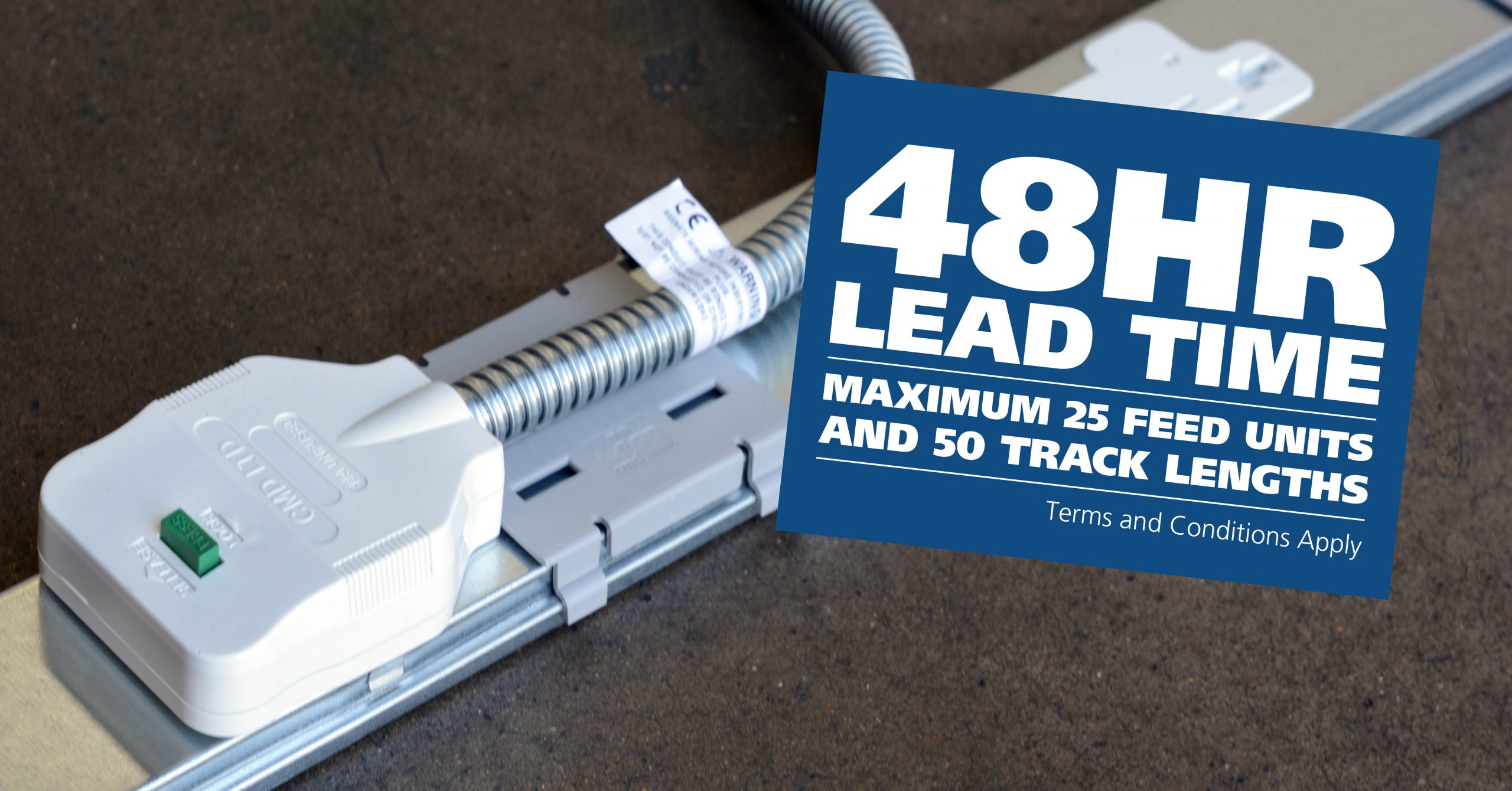
CMD Ltd LAUNCHES 48-HOUR TURNAROUND ON BETATRAK® RAPID ORDERING SERVICE

CMD Ltd, the specialist in power distribution systems, workstation power and monitor arms, has launched a rapid ordering service for its Betatrak® underfloor powertrack distribution systems and accessories, with a commitment to delivering within 48-hours of an approved purchase order*. The service enables customers to order up to 50 lengths of Standard or Clean Earth (C/E) low noise Betatrak, along with up to 25 feed...

Read more
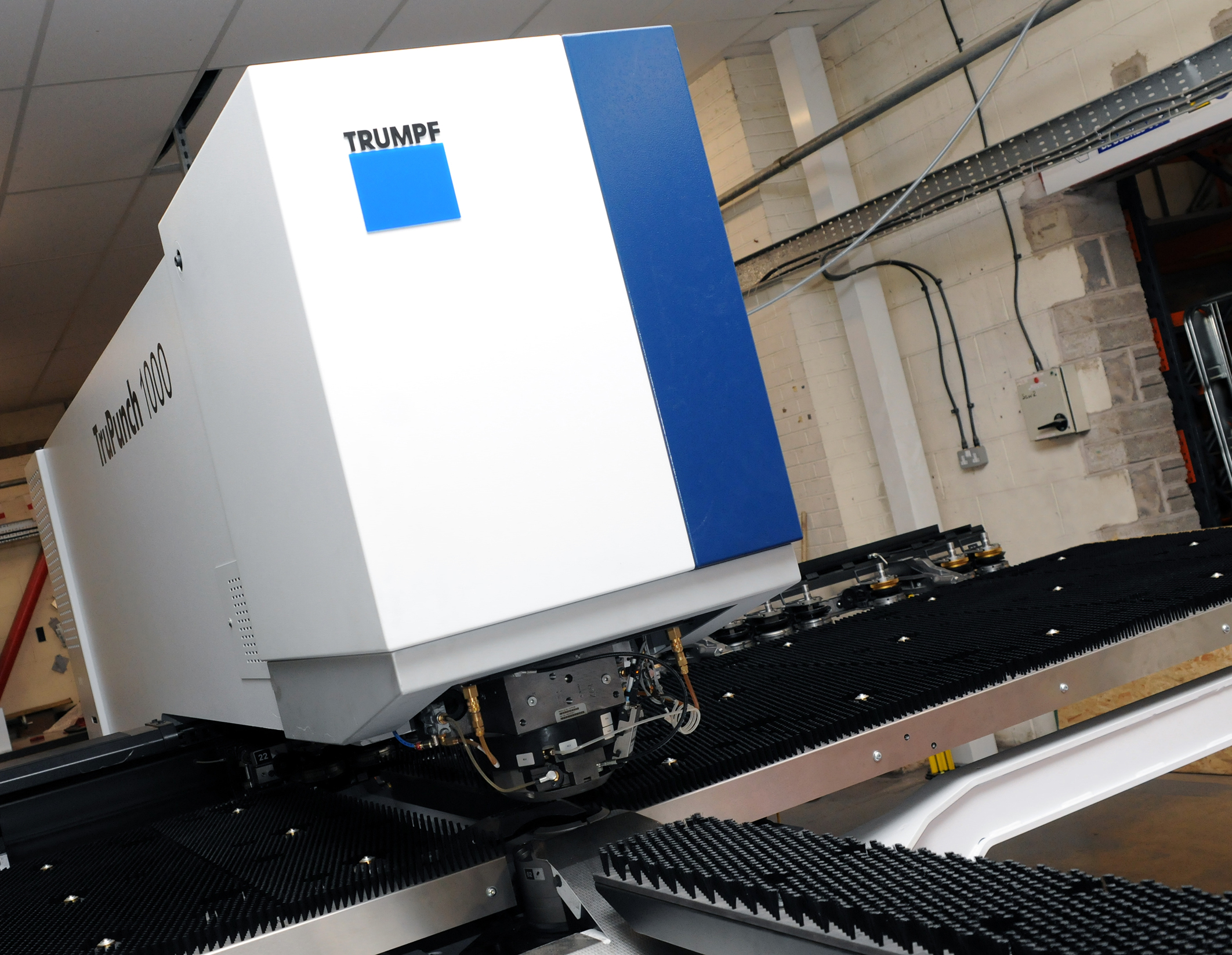
CMD INVESTS £1/4 MILLION IN NEW MACHINE AS PART OF FACTORY UPGRADE

We have invested in a new £1/4m TRUMPF CNC metal punch as part of an asset renewal strategy for our UK manufacturing capability. The new machine will be used in the production of a wide variety of our power distribution systems and workstation power products at our Rotherham factory. Suitable for handling sheet metal between 0.9mm and 3.0mm thick, the new machine will replace one...

Read more
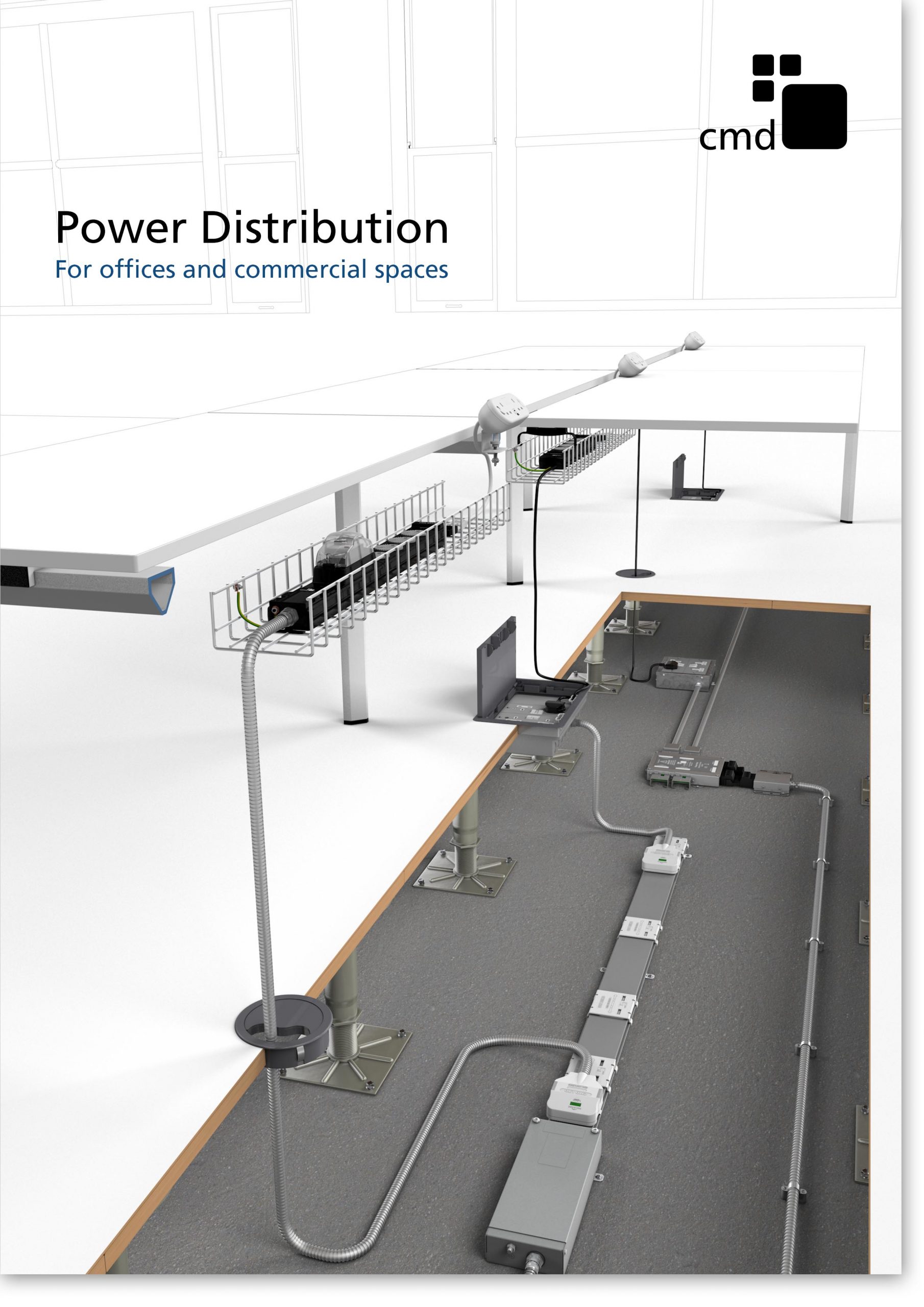
CMD CATALOGUE PROVIDES TECHNICAL POWER DISTRIBUTION GUIDE

CMD Ltd has released a new catalogue, providing an easy to follow technical guide to our power distribution systems and plug and play desk modules. Detailing CMD’s full range of UK-manufactured power distribution systems and plug and play desk modules, the catalogue will be a helpful source of information to M&E engineers and contractors alike to understand how our power distribution systems connect together and...

Read more
Power Distribution Catalogue
CMD Ltd PLAYS ESSENTIAL ROLE IN ELECTRICAL FIT OUT AT LONDON’S PRESTIGIOUS OFFICE DEVELOPMENT

CMD Ltd, specialist in workplace connectivity and ergonomic solutions, has provided a flexible and high-quality power distribution network for The Ray, a prestigious office development in London’s Farringdon. Well-known for being the former site of The Guardian newspaper, The Ray now stands as an 83,000ft² office development characterised by a modernised warehouse aesthetic, with level two now occupied by a global social media company. The...

Read more

The Ray
CMD plugs in to european opportunity with Schuko Capsule unit launch

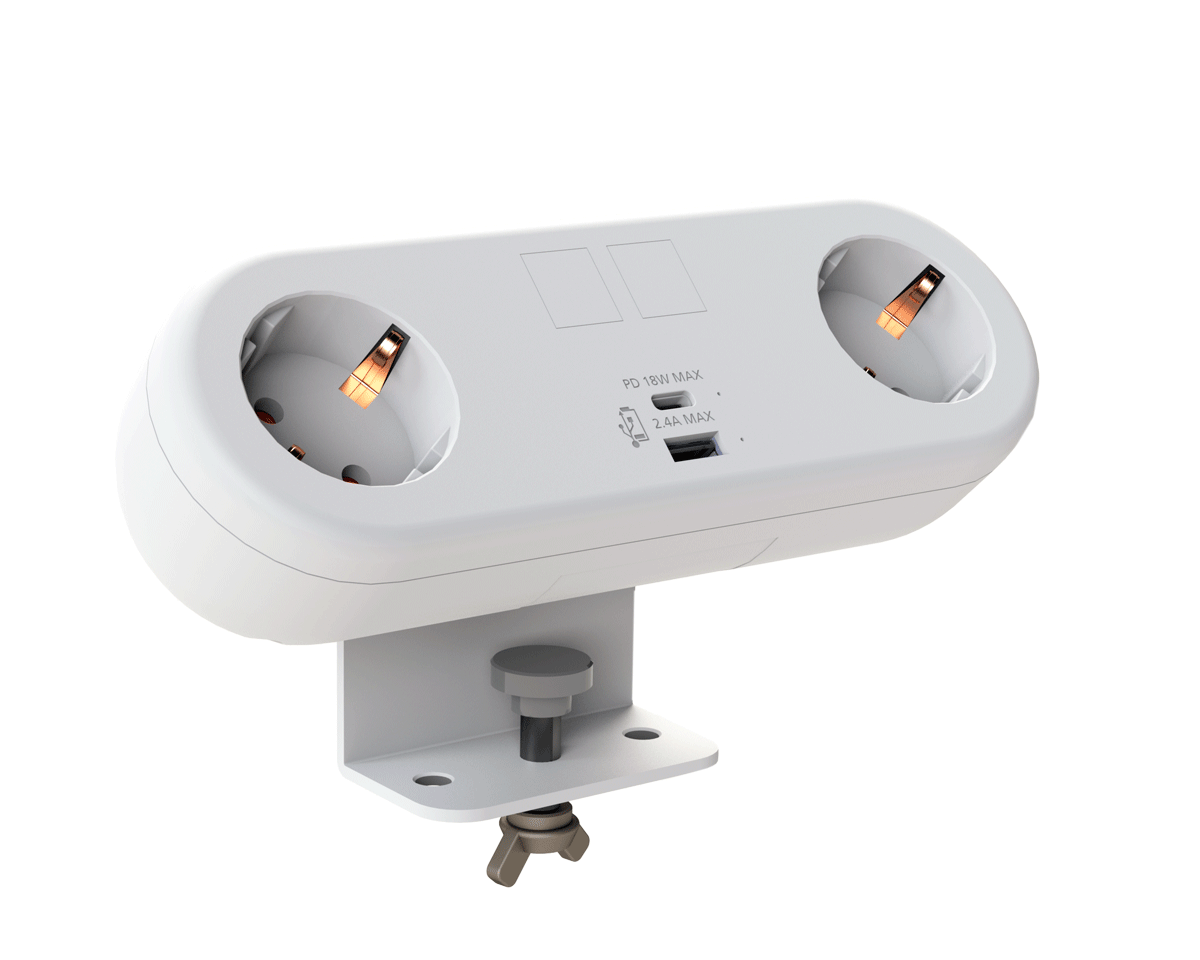
CMD Ltd, the specialist in power and connectivity solutions for commercial environments, has launched a Schuko version of its popular fixed format Capsule workstation power module for export to mainland Europe and beyond. A popular on desk power module comprising two sockets and dual USB (type A and C) chargers, CMD’s Capsule unit is already widely specified in the UK as an off-the-shelf workstation power...

Read more
CMD White Schuko Capsule Desk Power Module
CMD LTD EXTENDS MONITOR ARM RANGE WITH THE LAUNCH OF REACH PLUS

CMD Ltd, the specialist in ergonomic and connectivity solutions for commercial interiors, has completed its Reach monitor arm range with the launch of the Reach Plus. Available in single or dual screen options, the Reach Plus has been designed to provide an ideal solution for both single and dual screen workstation configurations, or can be used with next generation of large format curved screens. Suitable...

Read more

CMD Ltd DEMONSTRATES THE ART OF POWER DISTRIBUTION AT THE UNIVERSITY OF WARWICK

CMD Ltd, the specialist in workplace connectivity and ergonomic solutions, has provided Betatrak busbar power distribution and a range of electrical accessories for two major capital investment projects at the University of Warwick. Designed by Fielden Clegg Bradley Studios, the £33 million Faculty of Arts building is a showpiece development comprising four interconnected structures set around a central atrium, which will enable inter-disciplinary collaboration across...

Read more

University of Warwick
CMD BRINGS HARMONY TO COVENTRY UNIVERSITY RESEARCH FACILITIES

CMD Ltd, the specialist in power distribution solutions and workstation power and ergonomics, has provided under desk and on desk power modules for the refurbishment of three Coventry University research buildings. Located on Coventry University Technology Park, a business park designed to encourage collaboration between the university and knowledge-based businesses, the three buildings are being repurposed as office accommodation for university research teams. The refurbishment...

Read more

Coventry University

2026 Top Hardening Oven Types for Global Buyers?

Choosing the right Hardening Oven in 2026 requires more than comparing heating temperatures or catalog prices. Global buyers face different production volumes, energy costs, workplace requirements, and service conditions. A compact batch oven may suit a toolroom, while a continuous conveyor system may support high-volume automotive components.

This guide introduces the leading hardening oven types for international purchasing decisions. It considers electric, gas-fired, vacuum, atmosphere-controlled, and conveyor-based designs. Each option affects temperature uniformity, loading time, surface protection, maintenance, and total operating cost. Practical details matter. A well-designed chamber should maintain stable heat across every rack position. Reliable thermocouples and documented calibration records also support repeatable results.

Supplier experience deserves close attention. Buyers should review factory testing, heat-treatment data, spare-parts availability, installation support, and customer references. Certifications can help, but they do not replace technical verification. Local electrical, ventilation, emissions, and workplace rules must be confirmed before shipment. Requirements differ widely between markets.

There is no universal winner.

Even experienced purchasers can overlook airflow during peak loading. A furnace that performs well in an empty chamber may behave differently with dense steel baskets. Energy savings can also appear attractive until maintenance and downtime are included. This article therefore compares equipment strengths, limitations, and suitable applications with a practical viewpoint. It also encourages buyers to question supplier claims, request measurable performance evidence, and define acceptance criteria before signing a purchase contract. Reliable results begin with careful specifications, not impressive photographs.

2026 Top Hardening Oven Types for Global Buyers?

What Is a Hardening Oven and How Does It Work?

A hardening oven is industrial equipment that heats steel above its critical transformation temperature. The controlled heat changes the metal’s internal structure. After soaking, the workpiece is quenched in oil, water, gas, or another approved medium. This rapid cooling creates martensite, increasing hardness. Tempering then reduces brittleness and restores practical toughness.

The heating cycle needs more than high temperature. Sensors monitor chamber temperature, load temperature, atmosphere, and holding time.

Batch ovens suit varied parts and smaller production runs. Continuous ovens support higher volumes with steady loading and unloading.

Vacuum ovens limit oxidation and surface contamination. Controlled-atmosphere ovens use gases to protect the steel surface. The choice depends on alloy, geometry, production rate, and required distortion limits.

The U.S. Department of Energy’s Industrial Decarbonization Roadmap reports that process heating uses about 51% of manufacturing energy. The IEA’s Energy Technology Perspectives 2024 also identifies industry as responsible for roughly one-quarter of global energy-related emissions. These figures make efficiency important, not decorative.

Buyers should examine insulation, heat recovery, temperature uniformity, quench control, and maintenance access. A lower purchase price can hide higher energy and rework costs.

ASTM E220 testing can help verify temperature measurement accuracy. ISO 683-1 remains useful when specifying steel hardening requirements.

One warning matters: a perfect furnace specification may still fail with poor loading patterns. Real trials are necessary.

Key Hardening Oven Types Available to Global Buyers in 2026

Key Hardening Oven Types Available to Global Buyers in 2026

Global buyers are choosing hardening ovens based on throughput, steel grade, atmosphere control, and energy use. The World Steel Association reported about 1.88 billion tonnes of crude steel production in 2024. This scale keeps demand strong for reliable heat-treatment equipment.

Batch ovens suit mixed orders, repair work, and smaller production runs. They offer flexible loading, but cycle time can vary. Continuous mesh-belt ovens support high-volume fasteners, gears, and stamped parts. Pusher and rotary-hearth designs handle heavier components with controlled movement. Vacuum hardening ovens reduce oxidation and surface discoloration. They need higher capital investment and careful pump maintenance. Atmosphere ovens provide carbon control during heating. The gas system must be monitored closely.

Energy deserves more attention. The IEA Energy Efficiency 2023 report estimated that industry uses roughly 37% of global final energy. Better insulation, efficient burners, heat recovery, and shorter transfer times can reduce operating costs. Small gains matter.

Buyers should request temperature uniformity surveys, atmosphere records, cooling-rate data, and maintenance access. AMS2750H supports pyrometry control in aerospace-related processing, while NFPA 86 addresses industrial oven safety. Local electrical and gas requirements still differ. A specification copied from another country may fail in practice. That is an uncomfortable detail. Choose the oven after testing real parts, not only brochures.

2026 Top Hardening Oven Types for Global Buyers

Representative steel hardening setpoints by oven type. Actual temperatures depend on alloy grade, part geometry, atmosphere, and required mechanical properties.

Vacuum, atmosphere, continuous belt, air-circulation, and salt-bath systems commonly support steel austenitizing or hardening processes in the approximate 780–1,050°C range. The values shown are representative process setpoints for global equipment comparison, not maximum equipment ratings.

How to Compare Heating Methods, Temperature Control, and Energy Use

2026 Top Hardening Oven Types for Global Buyers

How to Compare Heating Methods, Temperature Control, and Energy Use

Choosing a hardening oven starts with the heating method, not the advertised maximum temperature. Electric convection ovens heat parts through circulating air and offer steady performance for many metal loads. Gas-fired systems can reduce operating costs where fuel is affordable, but they require careful combustion control and ventilation planning. Infrared heating responds quickly, although shadows and uneven spacing may create cold areas. Vacuum ovens suit sensitive processes, yet their purchase and maintenance costs are usually higher.

Temperature control deserves closer inspection. Ask whether the oven uses multiple heating zones, calibrated thermocouples, and automatic ramp-and-soak programs. A chamber showing 600°C on its display may still produce uneven results near the door. Load testing matters. Place sensors inside dense baskets, not only near empty chamber walls. Small details count.

Energy use depends on more than the heater rating. Check insulation thickness, door leakage, standby consumption, airflow settings, and heat recovery options. A well-insulated oven can waste less energy during repeated cycles. However, energy estimates often assume ideal loading. Real production is messier. Parts may enter cold, spaced poorly, or remain idle between batches. Request cycle-based data, including warm-up time and energy per kilogram. Compare service access, controller records, and temperature uniformity reports too. The cheapest quotation can become expensive when rejected parts and long recovery times appear.

Which Industries and Materials Require Each Oven Type?

Hardening oven selection depends on the material, part geometry, and production rhythm. Convection ovens suit carbon and alloy steels needing uniform heating before quenching. They support automotive gears, shafts, fasteners, and general machine parts. Forced air circulation reduces hot spots around trays, but loading patterns still matter. A crowded chamber can create uneven hardness. Loading matters.

Vacuum hardening ovens serve toolmaking, aerospace, and medical-equipment production where clean surfaces matter. They process stainless steels, high-speed steels, die steels, and precision components with limited oxidation. Vacuum heating helps protect sharp edges and tight tolerances. However, complex loads may heat slowly, requiring temperature checks near the coldest zone. Not always. It is expensive insurance when rework costs more.

Atmosphere-controlled ovens suit automotive, bearing, and spring manufacturing. They harden steels while reducing scaling and carbon loss through controlled gas chemistry. Continuous conveyor ovens fit high-volume fasteners and small parts. Batch ovens suit varied sizes and short production runs. Infrared ovens heat thin metal sections quickly, especially in fabrication and electrical components. Thick parts may remain cooler inside. Real production rarely follows the brochure. Trial loads, hardness mapping, and maintenance records should guide the final choice. One overlooked issue is future material change.

How to Select a Hardening Oven for Capacity, Compliance, and Cost

2026 Top Hardening Oven Types for Global Buyers

How to Select a Hardening Oven for Capacity, Compliance, and Cost

Selecting a hardening oven starts with production reality, not brochure temperature. Batch ovens suit mixed parts, repair work, and changing recipes. Continuous ovens support steady volumes and shorter handling time. Vacuum ovens can reduce oxidation, but their purchase and maintenance costs are higher. Start with the workload. Map hourly load, part size, loading pattern, atmosphere, and required cooling rate.

Capacity figures can mislead. A chamber may hold 500 kilograms, yet fixtures, spacing, and airflow reduce usable capacity. Ask for temperature uniformity data at your actual workload. Request cycle records, alarm histories, and calibration procedures. Operators should reach controls safely, with guarded doors and clear emergency access. Small details matter. A trial load often reveals problems that specifications hide.

Compliance varies by destination and installation site. Check electrical standards, worker protection rules, emissions controls, and documentation duties with a qualified local engineer. Keep material certificates and digital batch records for audits. Cost should include energy, staffing, refractory replacement, calibration, downtime, and spare parts. Budget for downtime. A cheaper oven may become expensive after repeated heating-element failures. One planning mistake is ignoring unloading labor, especially when parts require careful cooling. That oversight can distort both capacity calculations and payback estimates.