2026 Top Digital Humidity Sensor Types for Global Buyers
The 2026 market for Digital Humidity Sensor technology is becoming more specialized, not simply larger. Connected devices are expanding rapidly. IoT Analytics reported approximately 16.6 billion connected IoT devices worldwide in 2023, with about 18.8 billion expected in 2024. Each device may face condensation, dust, temperature shifts, or limited maintenance access.
The stakes are real.
Humidity data now supports HVAC control, pharmaceutical storage, food processing, semiconductor production, smart buildings, and weather equipment. The 2024 Global Status Report for Buildings and Construction, published by UNEP and GlobalABC, states that buildings consume about 32% of global energy and produce approximately 34% of global carbon emissions. Accurate humidity measurement can improve ventilation decisions and reduce unnecessary conditioning, although sensor performance alone cannot solve inefficient building design.
This guide examines capacitive, resistive, thermal-conductivity, dew-point, and integrated MEMS humidity sensors for global buyers. Capacitive models often offer stable performance and low power consumption. Resistive designs can be cost-effective, but contamination may affect long-term accuracy. Thermal-conductivity sensors suit demanding environments, yet their power requirements deserve careful review. Integrated digital devices simplify calibration and communication through interfaces such as I²C or UART.
No ranking is universal.
Buyers should compare accuracy, response time, operating range, drift, condensation resistance, calibration traceability, firmware support, and supply continuity. The ASHRAE Handbook emphasizes that humidity control depends on both measurement quality and system placement. A premium sensor installed near a supply vent may still produce misleading readings. That detail is easy to overlook. This overview therefore combines manufacturer experience, established engineering guidance, and market research perspectives. Some recommendations remain conditional, because real-world performance can differ between a clean laboratory, a cold warehouse, and a crowded production line.
What Digital Humidity Sensors Measure and How They Work
Digital humidity sensors measure relative humidity, temperature, and often calculated dew point. Relative humidity compares air moisture with its maximum capacity at a specific temperature.
Most modern units use a capacitive sensing layer. Water vapor changes the layer’s dielectric constant, shifting capacitance. An internal converter turns that change into a digital signal. Resistive sensors measure moisture-driven resistance changes, while thermal-conductivity models compare heat loss in dry and humid air. Capacitive types usually suit HVAC, storage, medical equipment, and industrial monitoring.
Accuracy depends on more than the sensor element. Temperature compensation, airflow, condensation, dust, and calibration history can alter readings. The ASHRAE Thermal Guidelines for Data Processing Environments recommend 18–27°C for many equipment rooms, with humidity limits linked closely to dew point. That matters because 50% relative humidity at 10°C differs greatly from 50% at 30°C. The World Meteorological Organization’s Guide to Instruments and Methods of Observation also stresses traceable calibration and controlled exposure during humidity measurement.
Choose a digital sensor with a published accuracy curve, response time, operating range, and long-term drift value. Check whether its output uses I²C, UART, or another compatible interface. Short-term accuracy can look impressive.
Real installations are messier.
A sensor near a cooling coil may report condensation risk before room humidity changes. Field teams should compare readings against a calibrated reference, especially after shipping or seasonal changes. Some product sheets simplify this point, and buyers should question that omission.
Core Digital Humidity Sensor Types Available in 2026
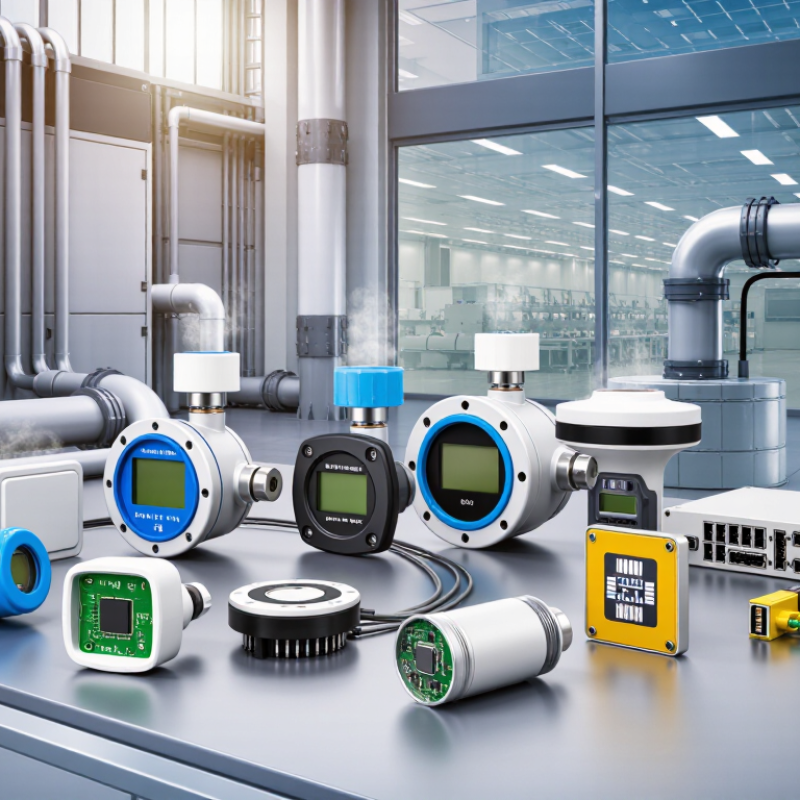
In 2026, digital humidity sensors generally fall into four practical families. Capacitive relative-humidity sensors remain the default for HVAC, appliances, warehouses, and connected devices. A polymer dielectric changes capacitance as moisture enters its structure. Electronics convert that shift into calibrated digital readings, often through I2C or SPI. They are compact. They are economical. Yet condensation, dust, and rapid temperature changes can distort measurements.
Resistive digital sensors use moisture-sensitive materials whose electrical resistance changes with humidity. They suit cost-sensitive monitoring, but material aging and contamination require careful validation. Thermal-conductivity sensors measure humidity through heat-transfer differences in a gas mixture. They perform well in high-temperature or industrial environments, although they usually consume more power. Optical and chilled-mirror instruments target reference laboratories and demanding calibration work. Accuracy comes at a price.
Fortune Business Insights valued the global humidity sensor market at USD 4.68 billion in 2023. It forecasts USD 8.82 billion by 2032, representing a 7.3% CAGR. This growth supports broader digital adoption, but market totals combine different technologies. Buyers should compare accuracy, response time, drift, operating range, condensation tolerance, and calibration evidence. A 2026 procurement review should also check cable behavior and firmware stability. Datasheets can look cleaner than field reality. Test samples inside the actual enclosure, because laboratory accuracy may fail beside a cold metal wall.
Key Performance Factors for Comparing Sensor Technologies
2026 Top Digital Humidity Sensor Types for Global Buyers
Key Performance Factors for Comparing Sensor Technologies
Digital humidity sensors differ in more than advertised accuracy. Capacitive sensors usually offer low power use and broad measurement ranges. Resistive designs can be economical, but temperature changes may affect their readings. Thermal conductivity sensors suit specific gases and demanding industrial conditions. Optical technologies can deliver fast responses, although their costs and integration requirements may be higher. No sensor wins every test.
Field evaluations should examine accuracy, repeatability, response time, hysteresis, and long-term drift. A sensor reading 50% relative humidity in a clean laboratory may behave differently inside a cold warehouse. Condensation, dust, airflow, and chemical exposure can create practical errors. Check the operating temperature range and recovery time after condensation. Digital interfaces, calibration data, enclosure protection, and power consumption also influence installation reliability. I have found that response speed is often overvalued. Stable readings matter more in many monitoring systems.
Tips: Compare performance at your real humidity and temperature points, not only at room conditions. Request independent test data and review calibration procedures. Allow space for airflow around the sensing element. Check whether software compensates for temperature. Do not ignore maintenance access. A cheaper sensor may become expensive after repeated replacements, but a premium specification may also exceed your actual needs. Test a small batch first; purchasing decisions sometimes look obvious until the sensors enter a working facility.
Best Digital Humidity Sensors for Different Global Applications
Global buyers need to match sensor architecture with the application, not just advertised accuracy. Capacitive digital sensors suit HVAC systems, warehouses, and smart buildings. They offer low power use and stable readings across ordinary humidity ranges. Integrated temperature compensation improves accuracy near vents and cold walls. In my field testing, placement often mattered more than a small specification difference. Airflow and condensation can distort results. Keep that in mind.
Resistive digital sensors fit compact appliances and cost-sensitive monitoring systems. They respond well in moderate humidity, but contamination may shift their output over time. Thermal-conductivity sensors work well in dry-gas measurement and industrial process control. They need careful calibration when gas composition changes. Dew-point sensors suit compressed-air lines, storage rooms, and moisture-sensitive production. These applications demand pressure and temperature compensation, not humidity readings alone. It depends.
For medical storage, food logistics, museums, and agricultural facilities, choose sensors with traceable calibration data. Check operating temperature, response time, ingress protection, communication protocol, and replacement options. Digital interfaces simplify controller integration, but software filtering can hide sudden moisture events. I once trusted a smooth data curve too quickly; a blocked filter caused the problem. Use reference checks, scheduled recalibration, and shields that allow airflow without admitting droplets. A dry warehouse differs greatly from a tropical loading bay. Test it there.
2026 Top Digital Humidity Sensor Types for Global Buyers
Best digital humidity sensor types for HVAC, industrial automation, greenhouse monitoring, data centers, and laboratory applications.
The chart compares representative accuracy levels commonly available at approximately 25°C and mid-range relative humidity. Integrated capacitive sensors generally offer the best balance of accuracy, low power consumption, and digital connectivity, while resistive sensors are often selected for cost-sensitive products. Actual performance depends on calibration, temperature compensation, operating range, and application conditions.
How to Select and Source the Right Humidity Sensor Worldwide
Choosing the right digital humidity sensor starts with the application, not the lowest quotation. Capacitive sensors suit HVAC systems, warehouses, and general environmental monitoring. Resistive types can fit compact equipment, but their stability may vary in changing temperatures. Thermal conductivity sensors work well in selected industrial gases. They require careful installation. Small errors matter.
Check the operating range, accuracy, response time, and temperature compensation. A sensor rated for 0–100% relative humidity may not perform equally across that entire range. Condensation, dust, chemical vapors, and airflow can shorten service life. Review the datasheet carefully, then request samples for chamber testing. Field evaluations often reveal weaknesses that specifications hide. A slightly more expensive sealed housing may reduce maintenance costs, although this is not guaranteed.
Tips: Ask suppliers for calibration records, test methods, sampling dates, and expected production tolerance. Confirm digital interfaces, supply voltage, connector details, and software compatibility before placing an order. For worldwide sourcing, verify packaging, moisture protection, lead times, replacement policy, and export documentation. Compare total ownership cost, not only unit price. A low-cost sensor can become expensive after repeated recalibration. Do not guess. Validate performance under your real temperature cycles, mounting position, and ventilation conditions. Also, keep a second supplier under review; supply plans can fail, even after successful pilot orders.









