

News

Miro: A New Standard in Responsible Innovation

Miro: A New Standard in Responsible Innovation The Miro monitor arm is setting new benchmarks in sustainability. It offers a high-performance solution without compromising on environmental responsibility. Designed with careful material selection, local sourcing, and longevity in mind, Miro’s responsible approach to design and unique manoeuvrability set it apart from the competition. Sustainable Choices Miro is crafted from energy-efficient materials with a lower carbon impact....

Read more
HSE Advisor

Role Purpose Support in the development, implementation and maintenance of the company’s Health, Safety & Environmental policies, processes, operational procedures, and standards.  Ensuring best practice and championing a continually improving HSE culture within the business. Key Responsibilities Liaise with and provide support to all areas of the business to eliminate, mitigate or reduce identified HSE exposures. Partner with the production management team and team leaders,...

Read more
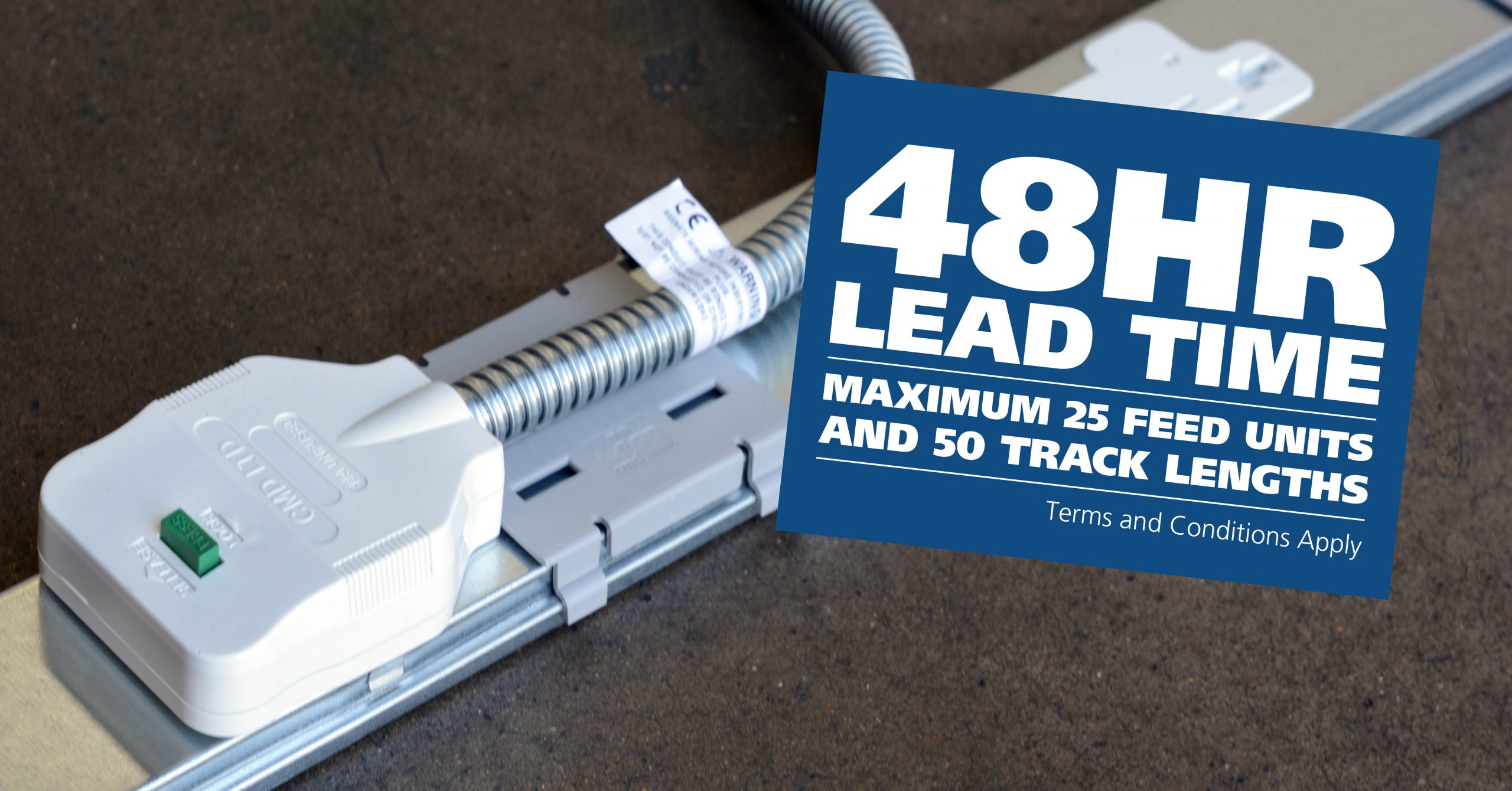
CMD Ltd LAUNCHES 48-HOUR TURNAROUND ON BETATRAK® RAPID ORDERING SERVICE

CMD Ltd, the specialist in power distribution systems, workstation power and monitor arms, has launched a rapid ordering service for its Betatrak® underfloor powertrack distribution systems and accessories, with a commitment to delivering within 48-hours of an approved purchase order*. The service enables customers to order up to 50 lengths of Standard or Clean Earth (C/E) low noise Betatrak, along with up to 25 feed...

Read more
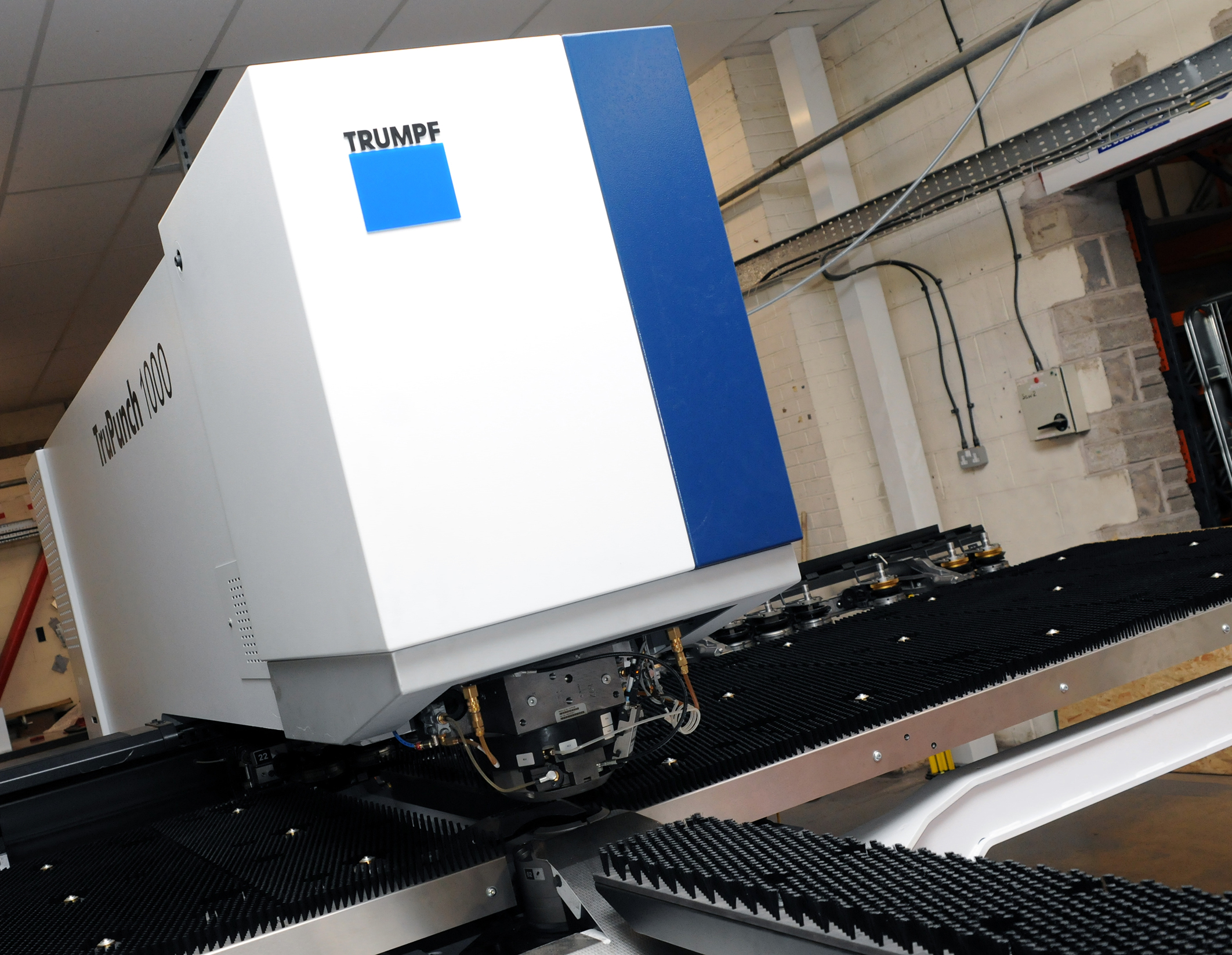
CMD INVESTS £1/4 MILLION IN NEW MACHINE AS PART OF FACTORY UPGRADE

We have invested in a new £1/4m TRUMPF CNC metal punch as part of an asset renewal strategy for our UK manufacturing capability. The new machine will be used in the production of a wide variety of our power distribution systems and workstation power products at our Rotherham factory. Suitable for handling sheet metal between 0.9mm and 3.0mm thick, the new machine will replace one...

Read more
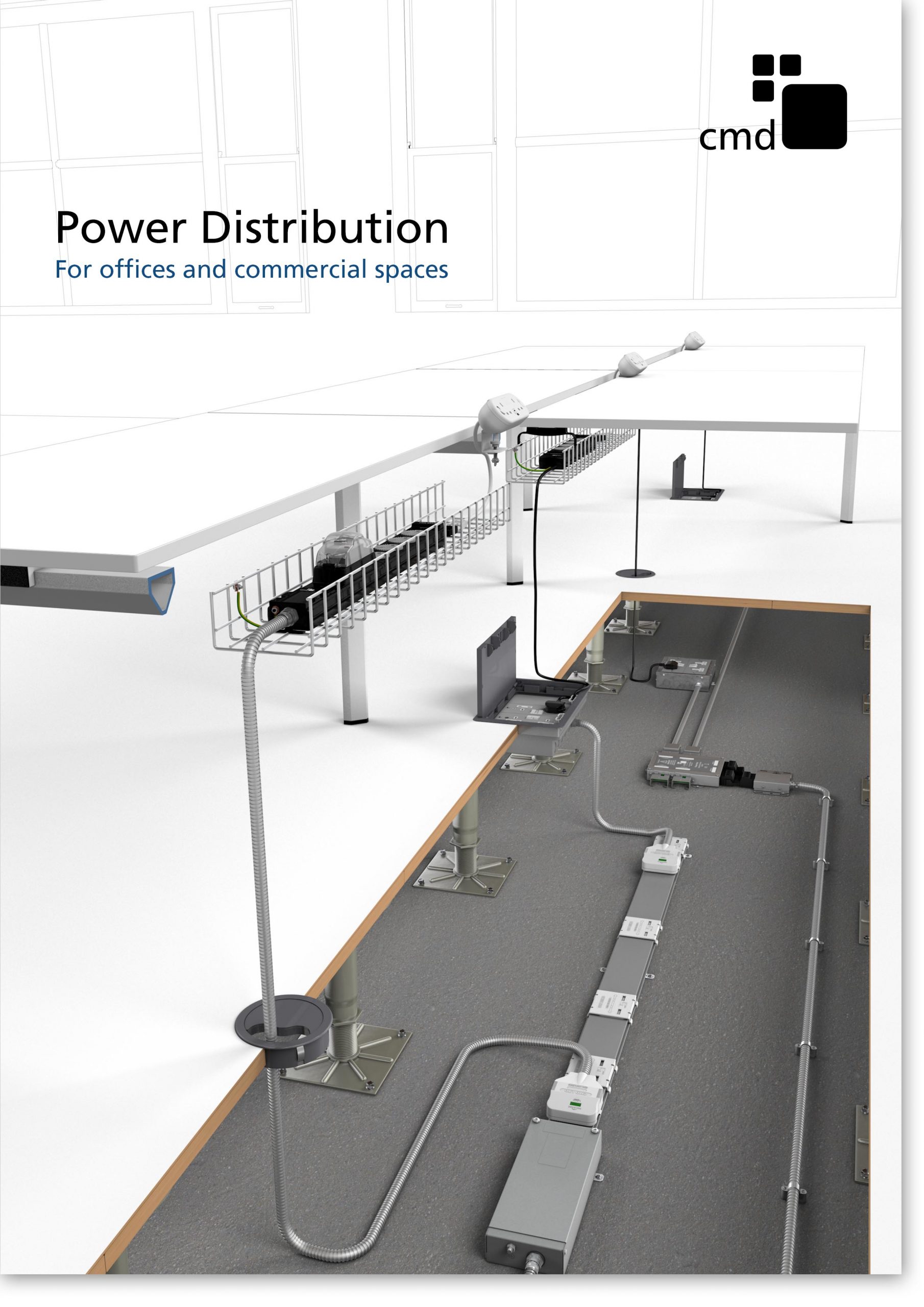
CMD CATALOGUE PROVIDES TECHNICAL POWER DISTRIBUTION GUIDE

CMD Ltd has released a new catalogue, providing an easy to follow technical guide to our power distribution systems and plug and play desk modules. Detailing CMD’s full range of UK-manufactured power distribution systems and plug and play desk modules, the catalogue will be a helpful source of information to M&E engineers and contractors alike to understand how our power distribution systems connect together and...

Read more
Power Distribution Catalogue
CMD Ltd PLAYS ESSENTIAL ROLE IN ELECTRICAL FIT OUT AT LONDON’S PRESTIGIOUS OFFICE DEVELOPMENT

CMD Ltd, specialist in workplace connectivity and ergonomic solutions, has provided a flexible and high-quality power distribution network for The Ray, a prestigious office development in London’s Farringdon. Well-known for being the former site of The Guardian newspaper, The Ray now stands as an 83,000ft² office development characterised by a modernised warehouse aesthetic, with level two now occupied by a global social media company. The...

Read more

The Ray
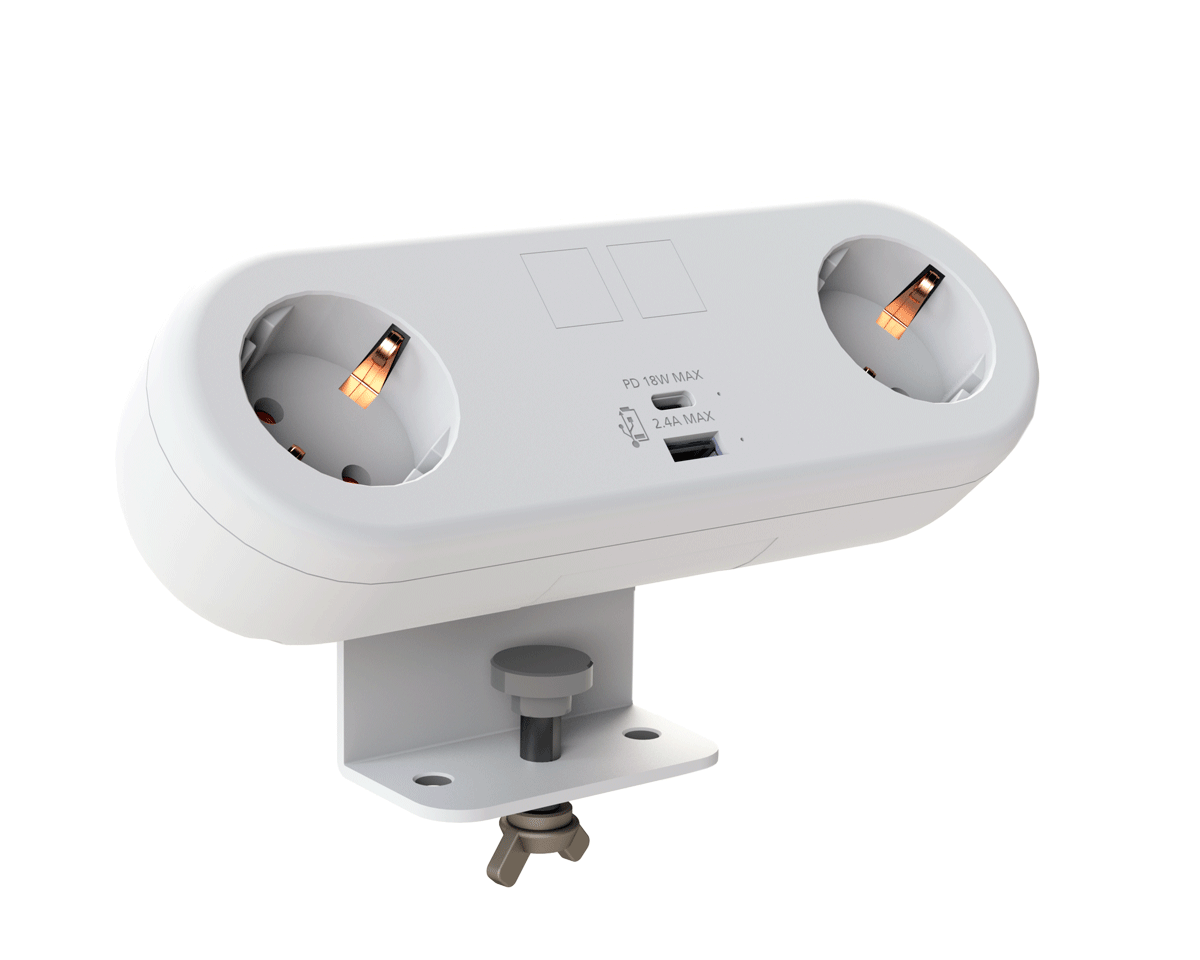
CMD plugs in to european opportunity with Schuko Capsule unit launch

CMD Ltd, the specialist in power and connectivity solutions for commercial environments, has launched a Schuko version of its popular fixed format Capsule workstation power module for export to mainland Europe and beyond. A popular on desk power module comprising two sockets and dual USB (type A and C) chargers, CMD’s Capsule unit is already widely specified in the UK as an off-the-shelf workstation power...

Read more
CMD White Schuko Capsule Desk Power Module
CMD LTD EXTENDS MONITOR ARM RANGE WITH THE LAUNCH OF REACH PLUS

CMD Ltd, the specialist in ergonomic and connectivity solutions for commercial interiors, has completed its Reach monitor arm range with the launch of the Reach Plus. Available in single or dual screen options, the Reach Plus has been designed to provide an ideal solution for both single and dual screen workstation configurations, or can be used with next generation of large format curved screens. Suitable...

Read more

CMD Ltd DEMONSTRATES THE ART OF POWER DISTRIBUTION AT THE UNIVERSITY OF WARWICK

CMD Ltd, the specialist in workplace connectivity and ergonomic solutions, has provided Betatrak busbar power distribution and a range of electrical accessories for two major capital investment projects at the University of Warwick. Designed by Fielden Clegg Bradley Studios, the £33 million Faculty of Arts building is a showpiece development comprising four interconnected structures set around a central atrium, which will enable inter-disciplinary collaboration across...

Read more

University of Warwick
CMD BRINGS HARMONY TO COVENTRY UNIVERSITY RESEARCH FACILITIES

CMD Ltd, the specialist in power distribution solutions and workstation power and ergonomics, has provided under desk and on desk power modules for the refurbishment of three Coventry University research buildings. Located on Coventry University Technology Park, a business park designed to encourage collaboration between the university and knowledge-based businesses, the three buildings are being repurposed as office accommodation for university research teams. The refurbishment...

Read more

Coventry University

2026 Top Drain Pump Types for Global Buyers

For global buyers, selecting a Drain Pump is rarely a simple catalog decision. A compact model may remove water quickly, yet struggle with lint, hair, or repeated hot cycles. In field evaluations, technicians often inspect the installation before praising the motor. Hose length, discharge height, inlet design, and cleaning access can change real performance. Small details matter.

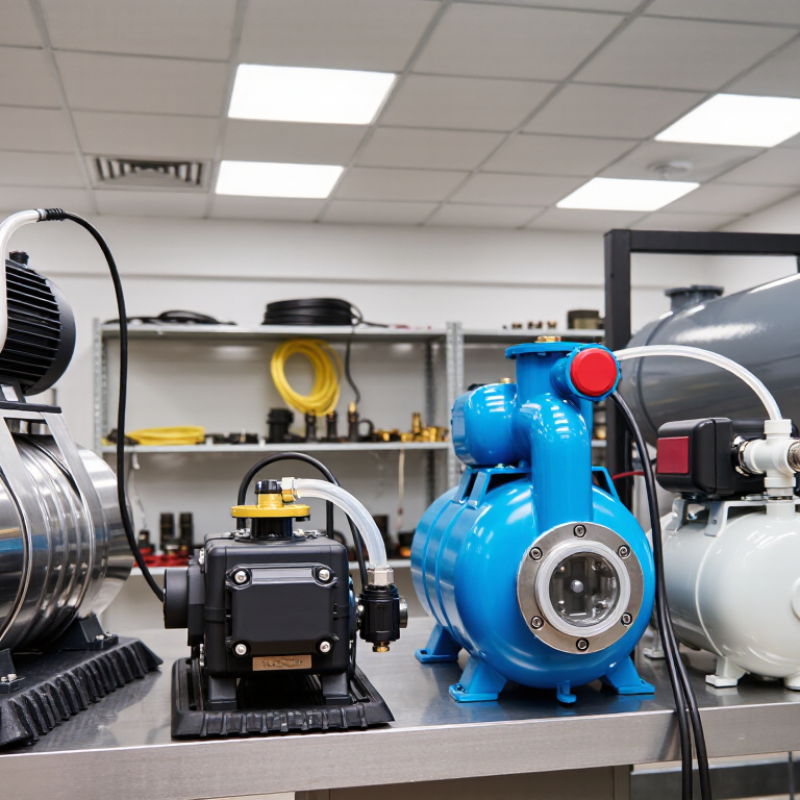
This guide examines leading drain pump types expected to interest buyers in 2026. It covers submersible, centrifugal, diaphragm, condensate, washing machine, and HVAC drainage models. Each design serves different conditions. A submersible pump may suit flooded pits, while a condensate pump fits narrow equipment spaces. Centrifugal units can deliver strong flow, but they may dislike air locks or heavy debris. Diaphragm pumps offer useful flexibility, though their noise and maintenance needs deserve attention. The comparison considers flow rate, head height, voltage, materials, thermal protection, duty cycle, and service access.

Reliable purchasing requires more than reading advertised capacity. Buyers should compare manufacturer datasheets, test records, installer experience, and maintenance histories. Local electrical requirements and operating temperatures also need verification. A trusted supplier should explain performance limits clearly, not hide them behind impressive numbers. That sounds obvious.

No single pump fits every market or building. Some published ratings use ideal laboratory conditions, so actual results may differ. This guide therefore treats specifications as practical references, not absolute promises. It also highlights common selection mistakes, including undersized motors, poor hose routing, and neglected cleaning. With careful evaluation, global buyers can choose a Drain Pump that performs steadily, survives demanding cycles, and remains easier to maintain over time.

2026 Top Drain Pump Types for Global Buyers

Drain Pump Basics: Functions, Components, and Key Performance Terms

Drain Pump Basics: Functions, Components, and Key Performance Terms

A drain pump moves wastewater from a low point to a suitable discharge line. It supports washing machines, dishwashers, condensate systems, and compact treatment equipment.

In field inspections, the pump often fails because the outlet hose is restricted, not because the motor is weak. Small details matter.

The main components include an electric motor, impeller, pump housing, inlet, outlet, shaft seal, and electrical connections. Some models also use a float switch or water-level sensor.

The impeller creates pressure and moves water through the discharge path. The seal protects the motor from moisture. It can wear faster when debris enters the chamber.

Flow rate shows how much water the pump moves over time. Head indicates the vertical distance and resistance the pump can overcome. Read both figures together. A high flow rate means little if the pipe rises several meters. Duty cycle describes how long the pump can operate before cooling. Noise, power consumption, fluid temperature, and solids-handling ability also affect selection.

Global buyers should compare performance curves, not isolated numbers.

Test conditions may differ between suppliers. That is easy to miss. Confirm voltage, frequency, connection size, protection rating, and certification requirements for the target market. In practical testing, measure flow at the actual hose length and lift. A pump may perform well on a bench, yet struggle after installation. That gap deserves careful review.

Main Drain Pump Types and Their Operating Principles

2026 Top Drain Pump Types for Global Buyers

Main Drain Pump Types and Their Operating Principles

Centrifugal drain pumps are widely used for clean or lightly contaminated water. An impeller spins inside a chamber and creates pressure through centrifugal force. Water enters near the center and moves toward the outlet. These pumps offer steady flow and simple maintenance. However, hair, lint, or thick sludge can reduce performance quickly. Buyers should check the passage size, flow rate, head height, and motor protection.

Positive displacement pumps move a fixed volume during each cycle. Diaphragm pumps use a flexible membrane that alternately creates suction and discharge pressure. Peristaltic pumps squeeze a flexible tube with rotating rollers. Both designs suit controlled dosing or fluids with higher viscosity. Their flow remains more stable at changing pressures, but seals, membranes, and tubes eventually wear. That detail is easy to underestimate.

Submersible drain pumps operate while fully immersed. The surrounding water cools the motor, while a float switch can start or stop pumping automatically. They are practical for basements, tanks, pits, and emergency drainage. Installation depth and cable protection matter greatly. In field use, poor positioning often causes more trouble than pump capacity. A larger pump is not always better. It may cycle too frequently, consume more energy, or clog the discharge line. Global buyers should compare tested operating data, service access, spare-part availability, and local electrical requirements. Manufacturer claims help, but measured performance under real conditions deserves more trust.

2026 Top Drain Pump Types for Global Buyers

Main Drain Pump Types and Their Operating Principles

The chart compares representative discharge-head ranges commonly found in general-purpose drain-pump configurations. Centrifugal and vortex pumps move liquid by converting impeller rotation into flow, while submersible pumps operate below the liquid level to reduce priming requirements. Diaphragm pumps use reciprocating diaphragm movement to create suction and discharge, and cutter pumps combine centrifugal action with a cutting mechanism for solids-laden wastewater. Actual performance varies with pump size, motor power, fluid properties, solids content, pipe resistance, and installation conditions.

How to Compare Drain Pumps for Different Water Removal Needs

2026 Top Drain Pump Types for Global Buyers

How to Compare Drain Pumps for Different Water Removal Needs

Choosing a drain pump starts with the water, not the product label. Clear condensate needs different handling than laundry water containing lint, hair, or small solids. Compare the rated flow at your actual discharge height. A pump moving 30 liters per minute at zero lift may perform very differently at three meters. Check the total head, pipe length, bends, and outlet size together. Small details matter.

For basement seepage, select a submersible pump with reliable float control and corrosion-resistant materials. For kitchens or compact utility rooms, a compact automatic pump may fit better, but its tank needs regular cleaning. Sewage or heavily contaminated water requires a solids-handling design and suitable safety controls. Match the voltage and frequency to the installation country. I have seen buyers focus on maximum flow and overlook duty cycle. That mistake can cause overheating during long drainage periods.

Tips: Write down the water type, hourly volume, lifting height, power supply, and expected operating time. Then compare curves, not only headline numbers. Ask for test conditions and protection ratings. Listen for noise requirements in occupied spaces. Leave access for maintenance. A pump that is slightly slower may be more dependable. That is not always obvious. Also, installation quality can outweigh a small efficiency advantage, so review the manual with a qualified technician before purchase.

Global Buyer Guide to Capacity, Power, Materials, and Compatibility

Global buyers should size a drain pump from duty conditions, not wattage alone. A useful starting point is rated capacity in litres per minute, paired with total head in metres. The U.S. Department of Energy’s Improving Pumping System Performance sourcebook estimates pumping systems can represent 25–50% of industrial electricity use. That figure does not describe small appliance pumps directly. It does, however, justify checking hydraulic efficiency instead of buying the highest-power model. Small differences matter.

For condensate, appliance drainage, and light wastewater, compare 10–30 L/min units with their actual lift. A pump moving 20 L/min at zero head may deliver far less at 3 metres. Ask for a performance curve, not a single headline number. Compact motors often draw 30–250 W, but voltage and frequency must match.

IEC 60335-2-41 provides a useful safety reference for many household and similar pumps. It cannot replace local certification.

Material selection follows the liquid. Polypropylene and reinforced nylon suit ordinary water; stainless steel improves resistance around heat and mild chemicals. Seal elastomers still deserve scrutiny. Check temperature, pH, suspended solids, hose diameter, float-switch logic, and continuous-duty rating. UN-Water’s 2024 report places agriculture at about 70% of global freshwater withdrawals. Conditions vary sharply by region. A pump may fit the pipe but fail from clogging, cycling, or poor ventilation. Test samples under real lift and temperature before volume orders.

Installation, Maintenance, Safety, and 2026 Purchasing Considerations

Drain Pump Types for Global Buyers in 2026

Installation, Maintenance, Safety, and 2026 Purchasing Considerations

Choosing a drain pump starts with the wastewater, not the price. Submersible pumps suit flooded pits and compact equipment rooms. Centrifugal models handle steady flow with fewer moving parts. Diaphragm pumps can manage thicker liquids, but their pulse may require extra control. Check flow rate, lifting height, voltage, frequency, pipe diameter, and fluid temperature before ordering.

During installation, secure the pump on a stable base. Keep the inlet clear of cloth, grit, and loose cables. A check valve can reduce backflow. Leave enough space for inspection and removal.

Maintenance should include cleaning the strainer, testing the float switch, and checking seals for leaks. Listen for new vibration or grinding. These sounds often appear before failure.

Disconnect power before opening the housing. Use dry hands and suitable protective equipment. Never bypass thermal protection or operate a pump without required cooling.

Buyers in 2026 should request wiring diagrams, performance curves, spare-part lists, and service guidance. Confirm compatibility with local electrical conditions and wastewater practices. A low purchase price can become expensive after repeated repairs. Specifications can also be misunderstood. I have seen teams select capacity without checking actual pipe resistance.

Tips: Measure twice. Keep it accessible. Test the alarm before commissioning. Record cleaning dates and unusual noise. Select serviceable parts, even when the initial quotation looks less attractive.