

News

Miro: A New Standard in Responsible Innovation

Miro: A New Standard in Responsible Innovation The Miro monitor arm is setting new benchmarks in sustainability. It offers a high-performance solution without compromising on environmental responsibility. Designed with careful material selection, local sourcing, and longevity in mind, Miro’s responsible approach to design and unique manoeuvrability set it apart from the competition. Sustainable Choices Miro is crafted from energy-efficient materials with a lower carbon impact....

Read more
HSE Advisor

Role Purpose Support in the development, implementation and maintenance of the company’s Health, Safety & Environmental policies, processes, operational procedures, and standards.  Ensuring best practice and championing a continually improving HSE culture within the business. Key Responsibilities Liaise with and provide support to all areas of the business to eliminate, mitigate or reduce identified HSE exposures. Partner with the production management team and team leaders,...

Read more
CMD Ltd LAUNCHES 48-HOUR TURNAROUND ON BETATRAK® RAPID ORDERING SERVICE

CMD Ltd, the specialist in power distribution systems, workstation power and monitor arms, has launched a rapid ordering service for its Betatrak® underfloor powertrack distribution systems and accessories, with a commitment to delivering within 48-hours of an approved purchase order*. The service enables customers to order up to 50 lengths of Standard or Clean Earth (C/E) low noise Betatrak, along with up to 25 feed...

Read more

CMD INVESTS £1/4 MILLION IN NEW MACHINE AS PART OF FACTORY UPGRADE

We have invested in a new £1/4m TRUMPF CNC metal punch as part of an asset renewal strategy for our UK manufacturing capability. The new machine will be used in the production of a wide variety of our power distribution systems and workstation power products at our Rotherham factory. Suitable for handling sheet metal between 0.9mm and 3.0mm thick, the new machine will replace one...

Read more

CMD CATALOGUE PROVIDES TECHNICAL POWER DISTRIBUTION GUIDE

CMD Ltd has released a new catalogue, providing an easy to follow technical guide to our power distribution systems and plug and play desk modules. Detailing CMD’s full range of UK-manufactured power distribution systems and plug and play desk modules, the catalogue will be a helpful source of information to M&E engineers and contractors alike to understand how our power distribution systems connect together and...

Read more

Power Distribution Catalogue
CMD Ltd PLAYS ESSENTIAL ROLE IN ELECTRICAL FIT OUT AT LONDON’S PRESTIGIOUS OFFICE DEVELOPMENT

CMD Ltd, specialist in workplace connectivity and ergonomic solutions, has provided a flexible and high-quality power distribution network for The Ray, a prestigious office development in London’s Farringdon. Well-known for being the former site of The Guardian newspaper, The Ray now stands as an 83,000ft² office development characterised by a modernised warehouse aesthetic, with level two now occupied by a global social media company. The...

Read more

The Ray
CMD plugs in to european opportunity with Schuko Capsule unit launch

CMD Ltd, the specialist in power and connectivity solutions for commercial environments, has launched a Schuko version of its popular fixed format Capsule workstation power module for export to mainland Europe and beyond. A popular on desk power module comprising two sockets and dual USB (type A and C) chargers, CMD’s Capsule unit is already widely specified in the UK as an off-the-shelf workstation power...

Read more

CMD White Schuko Capsule Desk Power Module
CMD LTD EXTENDS MONITOR ARM RANGE WITH THE LAUNCH OF REACH PLUS

CMD Ltd, the specialist in ergonomic and connectivity solutions for commercial interiors, has completed its Reach monitor arm range with the launch of the Reach Plus. Available in single or dual screen options, the Reach Plus has been designed to provide an ideal solution for both single and dual screen workstation configurations, or can be used with next generation of large format curved screens. Suitable...

Read more

CMD Ltd DEMONSTRATES THE ART OF POWER DISTRIBUTION AT THE UNIVERSITY OF WARWICK

CMD Ltd, the specialist in workplace connectivity and ergonomic solutions, has provided Betatrak busbar power distribution and a range of electrical accessories for two major capital investment projects at the University of Warwick. Designed by Fielden Clegg Bradley Studios, the £33 million Faculty of Arts building is a showpiece development comprising four interconnected structures set around a central atrium, which will enable inter-disciplinary collaboration across...

Read more

University of Warwick
CMD BRINGS HARMONY TO COVENTRY UNIVERSITY RESEARCH FACILITIES

CMD Ltd, the specialist in power distribution solutions and workstation power and ergonomics, has provided under desk and on desk power modules for the refurbishment of three Coventry University research buildings. Located on Coventry University Technology Park, a business park designed to encourage collaboration between the university and knowledge-based businesses, the three buildings are being repurposed as office accommodation for university research teams. The refurbishment...

Read more

Coventry University

2026 Top Explosion Proof Box Buying Guide for Global Buyers?

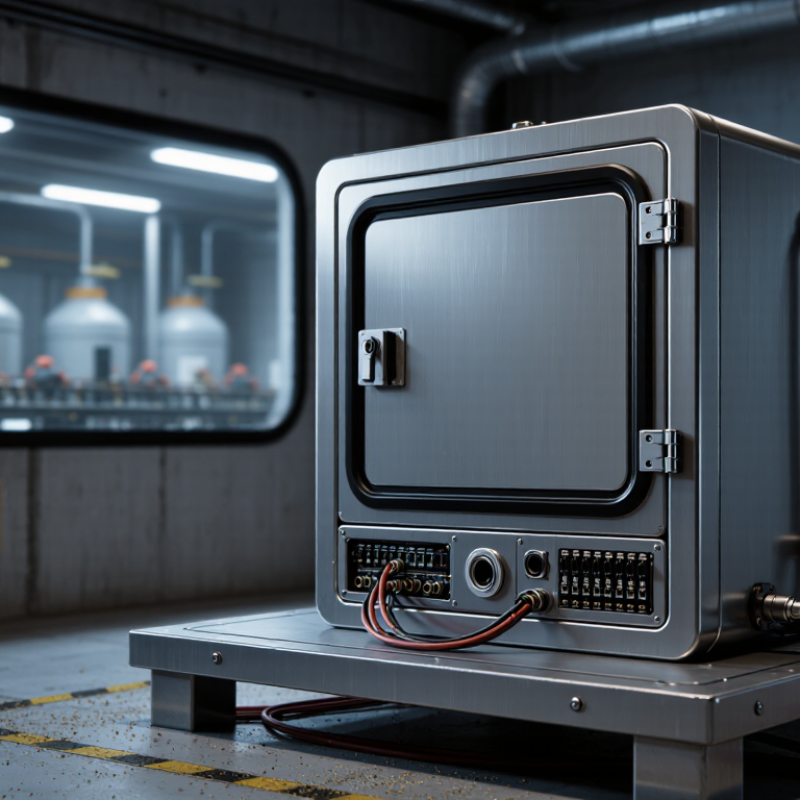
Buying an Explosion Proof Box in 2026 requires more than comparing prices, materials, and delivery dates. Global buyers must understand where the enclosure will operate. Dusty grain plants, offshore platforms, battery rooms, and chemical processing areas create different hazards. Temperature, gas groups, dust layers, impact risk, and moisture exposure all influence the correct design.

Dr. Richard Roberts, a hazardous-area engineering specialist, states, “An enclosure is only effective when its protection method matches the hazard around it.” This principle deserves attention. A strong steel body cannot compensate for unsuitable certification, weak cable entries, or poor installation practices. Buyers should examine Ex protection concepts, ingress protection, temperature ratings, terminal capacity, gasket quality, and traceable test documentation. They should also confirm whether the product suits the destination market and the site’s classification requirements.

Details matter. A door may feel solid, yet a damaged gasket can allow moisture inside. A cable gland may fit mechanically but fail the required protection level. Stainless steel can resist corrosion, but its grade and surface finish still need review. Supplier experience matters too. Ask for drawings, certificates, inspection records, and realistic lead times. Do not rely on polished product photos.

There is no perfect checklist. Some purchasing decisions remain difficult, especially when certification, customization, and budget conflict. This guide may not answer every site-specific question. It can, however, help global buyers compare Explosion Proof Box solutions more carefully, identify hidden risks, and seek competent technical verification before ordering.

2026 Top Explosion Proof Box Buying Guide for Global Buyers?

What Is an Explosion Proof Box and Where Is It Used?

An explosion-proof box is a certified enclosure for electrical equipment in hazardous environments. It limits ignition risks from sparks, heat, or electrical faults. If an internal fault occurs, the enclosure helps contain flames and prevents them from igniting surrounding gases or dust. It does not remove every workplace hazard. Safe operation still depends on correct installation, inspection, and maintenance.

These boxes are used in oil and gas facilities, chemical processing areas, paint rooms, grain handling sites, and some battery rooms. Picture a control box beside a filling line, covered with fine powder or exposed to solvent vapors. Its enclosure material, sealing method, and cable entries must match that environment. Gas and dust hazards require different protection methods. The area classification must be confirmed before purchasing.

A reliable buying decision starts with certification documents from an accepted testing authority. Check the protection type, gas or dust group, temperature class, and operating range. Review the ingress rating, corrosion resistance, mounting method, and available cable glands. A box that fits the device may still fail because its entries are poorly sealed. Field inspections often find this mistake. It is easy to focus on the metal body and overlook the smallest opening. Buyers should also verify local approval requirements, maintenance access, and replacement-part availability. Some specifications look impressive but provide little value in wet, dusty, or chemically aggressive conditions. The right enclosure is not always the largest or most expensive one.

How to Identify Hazardous Area Classifications and Protection Ratings

2026 Top Explosion Proof Box Buying Guide for Global Buyers

How to Identify Hazardous Area Classifications and Protection Ratings

Choosing an explosion proof box begins with the hazardous area classification, not the enclosure material. Gas and vapor risks commonly use Zones 0, 1, and 2, or Class I, Division 1 and 2. Dust hazards may use Zones 20, 21, and 22, or Class II divisions. These systems are not interchangeable. Confirm the site standard before comparing products.

Read the complete certification plate. It should identify the protection method, gas or dust group, temperature class, ambient range, and certificate reference. Ex d indicates flameproof construction. Ex e supports increased safety. Ex i limits electrical energy through intrinsic safety. Ex p uses controlled pressurization. The right method depends on the equipment and installation conditions.

IP ratings show resistance to water and dust ingress. They do not prove explosion protection. An IP66 enclosure may resist powerful water jets, but it can still be unsuitable for a classified area. Check cable glands, unused entries, fasteners, seals, and grounding points as one system. Small details matter.

A frequent buying mistake is matching only the enclosure size. Field conditions can change the decision. Outdoor sunlight, corrosive chemicals, vibration, and winter temperatures may affect performance. I have seen specifications overlook cable entry temperature limits. That detail deserves another review. Ask for current certificates, installation instructions, and local approval requirements before placing an international order. Global compliance is rarely simple.

2026 Top Explosion Proof Box Buying Guide for Global Buyers

Hazardous Area Classifications and Protection Ratings

The chart maps hazardous-area zones to the minimum Equipment Protection Level (EPL) commonly specified by IEC 60079 standards. Zone 0 and Zone 20 require the highest protection level, while Zone 2 and Zone 22 apply to areas where an explosive atmosphere is unlikely during normal operation and, if it occurs, exists only briefly. EPL values are shown as an ordinal scale for comparison: 3 = highest, 2 = intermediate, and 1 = lower level within the chart. Final enclosure selection must also consider gas or dust group, temperature class, ambient conditions, ingress protection, certification region, and installation requirements.

Which Materials, Enclosures, and Entry Features Should Buyers Compare?

The 2024 MarketsandMarkets report forecasts the explosion-proof equipment market to grow at roughly 6% annually through 2029. Definitions vary, however. Buyers should compare tested protection, not market headlines. IEC 60079-0 sets general equipment requirements, while IEC 60079-1 covers flameproof enclosures. Ask for current certificates, temperature class, gas group, and ambient limits.

Material choice depends on the site, not appearance. Stainless steel resists salt spray and frequent washing, but it increases weight and cost. Powder-coated aluminum is lighter and transfers heat effectively. In humid or corrosive areas, inspect coating thickness, hinges, fasteners, and drain arrangements. A strong box can still fail around a damaged coating. Check the enclosure’s IP rating under IEC 60529, especially where dust or water jets are expected.

Entry features deserve equal attention. Compare threaded cable entries, barrier glands, sealing ranges, bonding points, and spare-entry plugs. Every unused opening needs compatible protection. Poorly matched glands can weaken ingress protection and cable retention. The enclosure should also provide practical clearance for bending cables and tightening terminals. A 2023 industrial safety analysis from a leading engineering insurer found that installation and maintenance errors remain recurring contributors to electrical incidents. That finding is easy to overlook. Buyers should review torque values, inspection access, replacement parts, and documentation before ordering. The cheapest specification may become expensive at the cable entry.

2026 Top Explosion Proof Box Buying Guide for Global Buyers — Which Materials, Enclosures, and Entry Features Should Buyers Compare?
A practical comparison of commonly used enclosure materials, hazardous-area protection concepts, ingress protection levels, and cable-entry features. Final selection must be verified against the area classification, gas or dust group, temperature class, ambient conditions, and applicable local certification requirements.
Enclosure Material Relative Weight Corrosion Performance Mechanical and Thermal Characteristics Typical Advantages Typical Limitations Suitable Environments Buyer Comparison Points
Carbon Steel High Requires a suitable coating or paint system; bare steel can rust in humid or corrosive environments. High rigidity and impact resistance. Good dimensional stability over a broad temperature range. Strong, economical, and suitable for large or heavy-duty boxes. Coating damage can lead to corrosion; heavier handling and installation requirements. Indoor industrial areas, protected outdoor locations, and applications where structural strength is prioritized. Compare coating thickness, surface preparation, salt-spray performance, drain provisions, hinge strength, and lifting or mounting points.
Stainless Steel 304 High Good general corrosion resistance; may be less suitable for persistent chloride exposure. Strong and durable with good resistance to impact and temperature changes. Low maintenance and suitable for hygienic or washdown areas. Can suffer localized corrosion in coastal, marine, or chloride-rich environments. Food-processing areas, general outdoor installations, clean industrial rooms, and moderate humidity. Check sheet thickness, weld quality, surface finish, gasket compatibility, and whether the environment contains chlorides or cleaning chemicals.
Stainless Steel 316L High Better resistance than 304 to many chloride-containing and marine environments because of its molybdenum content. High strength, good impact resistance, and stable performance in demanding outdoor conditions. Well suited to offshore, coastal, chemical, and washdown applications. Higher material cost and weight than aluminum or GRP; still requires correct design and maintenance in severe chemicals. Marine facilities, offshore platforms, coastal plants, chemical processing, and aggressive washdown areas. Verify actual alloy grade, weld and fastener material, surface finish, chloride exposure, and galvanic compatibility with accessories.
Cast Aluminum Alloy Low to medium Good atmospheric corrosion resistance when correctly treated; vulnerable to some chemicals and galvanic corrosion with dissimilar metals. Lightweight with good heat dissipation. Mechanical strength depends on alloy, casting quality, and wall thickness. Reduces handling load and can provide efficient heat transfer for internal equipment. May be more susceptible to impact or thread damage than steel; coating and isolation may be needed in specific environments. Outdoor electrical and instrumentation installations where weight reduction is important. Compare alloy grade, impact rating, coating, earthing continuity, thread strength, and compatibility with stainless-steel cable glands.
GRP / Fiberglass-Reinforced Polyester Low Very good resistance to many moisture, salt, and chemical environments; chemical compatibility must be checked individually. Non-metallic, electrically insulating, and resistant to many impacts. Thermal expansion is higher than metal. Lightweight, corrosion resistant, and suitable for electrically isolated installations. UV exposure, temperature cycling, impact energy, and surface aging depend on resin and reinforcement design. Coastal areas, wastewater plants, chemical facilities, and locations where metal corrosion is a major concern. Check UV stabilization, impact rating, operating temperature, flame behavior, wall thickness, mounting inserts, and electrical bonding requirements.
Explosion Protection Concepts to Compare
Protection Concept Common IEC 60079 Designation Primary Hazard Addressed How the Protection Works Typical Application Key Purchasing Requirements
Flameproof Enclosure Ex d Explosive gas atmospheres The enclosure contains an internal explosion and prevents flame transmission through the specified flame paths. Switchgear, control stations, junction boxes, and equipment containing potential ignition sources. Confirm gas group, temperature class, flame-path design, fastener specification, joint condition, and certified cable entries.
Increased Safety Ex e Explosive gas atmospheres Design measures reduce the probability of arcs, sparks, and excessive temperatures during normal operation. Terminal boxes, junction boxes, and equipment without normally sparking components. Verify terminal spacing, creepage and clearance, temperature rise, conductor capacity, and enclosure certification scope.
Dust Protection by Enclosure Ex t Combustible dust atmospheres The enclosure limits dust ingress and controls surface temperature to prevent ignition of the surrounding dust layer or cloud. Grain, food, pharmaceutical, woodworking, mining, and powder-processing facilities. Check dust group, maximum surface temperature, IP rating, gasket durability, dust-layer assumptions, and cleaning method.
Intrinsic Safety Interface Ex i Explosive gas or dust atmospheres Electrical energy and temperature are limited so ignition cannot occur under the specified fault conditions. Instrumentation, sensors, transmitters, and low-energy control circuits. Confirm entity parameters, barrier or isolator compatibility, cable capacitance and inductance, and approved installation method.
Pressurized or Purged Enclosure Ex p Explosive gas or dust atmospheres Protective gas maintains a specified pressure or continuous flow to prevent the hazardous atmosphere from entering. Large control cabinets, analyzers, computers, and equipment that cannot use a compact flameproof enclosure. Check purge sequence, pressure monitoring, alarm functions, protective-gas supply, leakage rate, and loss-of-pressure response.
Ingress Protection and Enclosure Construction
Feature Common Comparison Level What It Indicates Why It Matters Buyer Verification Checklist
Dust and Water Ingress IP66 Dust-tight and protected against powerful water jets from any direction. Suitable for many outdoor and washdown applications when the enclosure is correctly installed. Confirm the rating applies to the complete assembled box, including cable glands, plugs, hinges, windows, and drain devices.
Temporary Immersion IP67 Protected against temporary immersion under the test conditions defined by IEC 60529. Useful where short-term flooding or accidental submersion is possible. Do not assume IP67 automatically replaces IP66; verify whether both ratings are required for water jets and immersion.
Hazardous-Location Enclosure Classification NEMA 7, NEMA 9, or equivalent local classification North American enclosure classifications address specific hazardous gas or combustible-dust environments and are not direct substitutes for every IEC 60079 marking. Prevents incorrect comparison between regional certification systems. Match the enclosure approval to the jurisdiction, hazardous-location class or zone, gas or dust group, and temperature requirements.
Gaskets and Seals Oil-resistant, silicone, EPDM, or fluorocarbon options The seal material determines resistance to temperature, oils, solvents, weathering, and cleaning chemicals. A poor gasket can reduce ingress protection and shorten service life even when the enclosure material is suitable. Compare continuous temperature range, compression set, chemical compatibility, replacement availability, and joint design.
Inspection Window Certified glass or approved transparent panel Allows visual inspection without opening the enclosure. Reduces maintenance exposure and can preserve the enclosure protection during routine checks. Verify impact resistance, temperature rating, optical clarity, UV resistance, and whether the window is included in the hazardous-area certification.
Cable Entry and Connection Features
Entry Feature Typical Options Primary Benefit Application Considerations Buyer Questions
Certified Cable Glands Armored, unarmored, barrier, compound-sealed, or sealing-ring designs Maintains the enclosure protection and provides mechanical retention and environmental sealing. Gas and dust hazardous areas may require different gland construction and sealing methods. Is the gland certified for the selected protection concept, cable diameter, armor type, gas or dust group, and temperature class?
Thread Type Metric, NPT, or other regionally specified thread forms Ensures correct mechanical fit between the enclosure, gland, plug, and adapter. Thread mismatch can compromise sealing, installation time, and certification validity. Confirm thread standard, size, pitch, engagement length, tolerance, and whether adapters are permitted by the approval.
Unused Entry Plugs Certified stopping plugs matched to the enclosure protection Seals spare openings while maintaining the required protection level. Ordinary hardware-store plugs are not suitable for certified hazardous-area installations. Check certification, material compatibility, temperature range, torque requirement, and IP or enclosure rating.
Drain and Breather Certified drain, breather, or condensation-control device Helps remove accumulated moisture while limiting ingress. Placement and orientation affect drainage; adding an unapproved device may invalidate the enclosure rating. Confirm hazardous-area approval, IP rating, corrosion resistance, drainage direction, and maintenance access.
External Earth or Bonding Point Dedicated earth stud, internal earth terminal, or bonding connection Provides a reliable protective connection where required by the installation design. Metallic enclosures and cable armor may require specific bonding arrangements; non-metallic boxes may need separate measures. Check conductor size range, lug compatibility, corrosion resistance, accessibility, and continuity after coating or assembly.
Entry Plate or Removable Gland Plate Fixed entry face, removable plate, or modular cable-entry system Improves cable routing flexibility and can simplify installation and maintenance. Any removable plate, gasket, fastener, or cable-entry module must preserve the certified protection system. Compare available entry area, minimum spacing, bending radius, sealing method, spare capacity, and approved accessories.
Important purchasing note: IP protection and explosion protection are different properties. An IP66 enclosure is not automatically explosion-proof, and an enclosure with hazardous-area certification may lose its certified status if non-approved cable glands, plugs, windows, fasteners, or modifications are used. Request the complete certification documentation, marking details, installation instructions, temperature range, and approved accessory list before purchase.

How to Select the Right Explosion Proof Box for Global Standards

2026 Top Explosion Proof Box Buying Guide for Global Buyers

Selecting the right explosion proof box starts with the hazardous-area classification, not the enclosure shape. Confirm the gas or dust group, zone or division, equipment protection level, temperature class, and ambient temperature. IEC 60079-0 and IEC 60079-1 define key construction and testing requirements. ATEX and IECEx certificates support different market pathways, while North American projects may require Class, Division, or Zone markings. These systems are related, but they are not interchangeable.

The ILO reported 2.93 million work-related deaths and 395 million non-fatal injuries globally, using 2019 estimates published in 2023. That figure reinforces a practical point: enclosure selection is a safety decision, not only a purchasing decision. Check flame paths, wall thickness, impact rating, corrosion resistance, cable glands, and IP protection. A stainless enclosure may suit coastal humidity, while coated aluminum can reduce weight. However, material choice alone does not prove suitability. Certification scope matters. Paperwork can look complete while missing the exact gas group or temperature class. This is where buyers should slow down.

Tips: Request the full certificate, marking schedule, installation instructions, and routine test evidence. Compare the certificate with the project classification line by line. Do not assume an IECEx certificate automatically satisfies every local authority. Ask an authorized hazardous-area engineer to review uncertain cases. No shortcut is reliable.

What Should Buyers Check Before Ordering, Installing, and Maintaining It?

Before ordering an explosion-proof box, define the hazardous-area classification clearly. Confirm whether the environment contains gas, vapor, dust, or mixed risks. Check the required protection method, temperature class, enclosure material, and ingress protection rating.

Do not rely on catalog photographs. Request dimensional drawings, certification documents, cable-entry details, and test records. Verify the operating temperature range, internal equipment heat, and available mounting space. Small details matter. A box may fit the equipment but still fail because its cable glands or terminal spacing are unsuitable.

Installation quality can determine real-world performance. Follow the approved drawings and the manufacturer’s torque requirements. Use compatible glands, sealing parts, grounding connections, and blanking elements. Keep flame paths clean and undamaged.

Never drill or weld the enclosure without written engineering approval. Check door alignment before energizing the equipment. Inspect every fastener. A rushed installation is difficult to correct later. Local electrical rules and site permits must also be reviewed by qualified personnel.

Maintenance should follow a written schedule based on service conditions. Inspect corrosion, loose covers, damaged seals, blocked breathers, and cable movement. Remove dust carefully, especially around joints and threaded entries.

Record inspection dates, torque checks, repairs, and replacement parts. Any modification needs technical review and updated documentation. In practice, teams sometimes treat a certified box as maintenance-free. That assumption deserves challenge. Moisture, vibration, chemicals, and repeated opening can change its condition long before visible damage appears. Keep spare approved sealing components available, but replace them only with compatible parts.