

News

Miro: A New Standard in Responsible Innovation

Miro: A New Standard in Responsible Innovation The Miro monitor arm is setting new benchmarks in sustainability. It offers a high-performance solution without compromising on environmental responsibility. Designed with careful material selection, local sourcing, and longevity in mind, Miro’s responsible approach to design and unique manoeuvrability set it apart from the competition. Sustainable Choices Miro is crafted from energy-efficient materials with a lower carbon impact....

Read more
HSE Advisor

Role Purpose Support in the development, implementation and maintenance of the company’s Health, Safety & Environmental policies, processes, operational procedures, and standards.  Ensuring best practice and championing a continually improving HSE culture within the business. Key Responsibilities Liaise with and provide support to all areas of the business to eliminate, mitigate or reduce identified HSE exposures. Partner with the production management team and team leaders,...

Read more
CMD Ltd LAUNCHES 48-HOUR TURNAROUND ON BETATRAK® RAPID ORDERING SERVICE

CMD Ltd, the specialist in power distribution systems, workstation power and monitor arms, has launched a rapid ordering service for its Betatrak® underfloor powertrack distribution systems and accessories, with a commitment to delivering within 48-hours of an approved purchase order*. The service enables customers to order up to 50 lengths of Standard or Clean Earth (C/E) low noise Betatrak, along with up to 25 feed...

Read more

CMD INVESTS £1/4 MILLION IN NEW MACHINE AS PART OF FACTORY UPGRADE

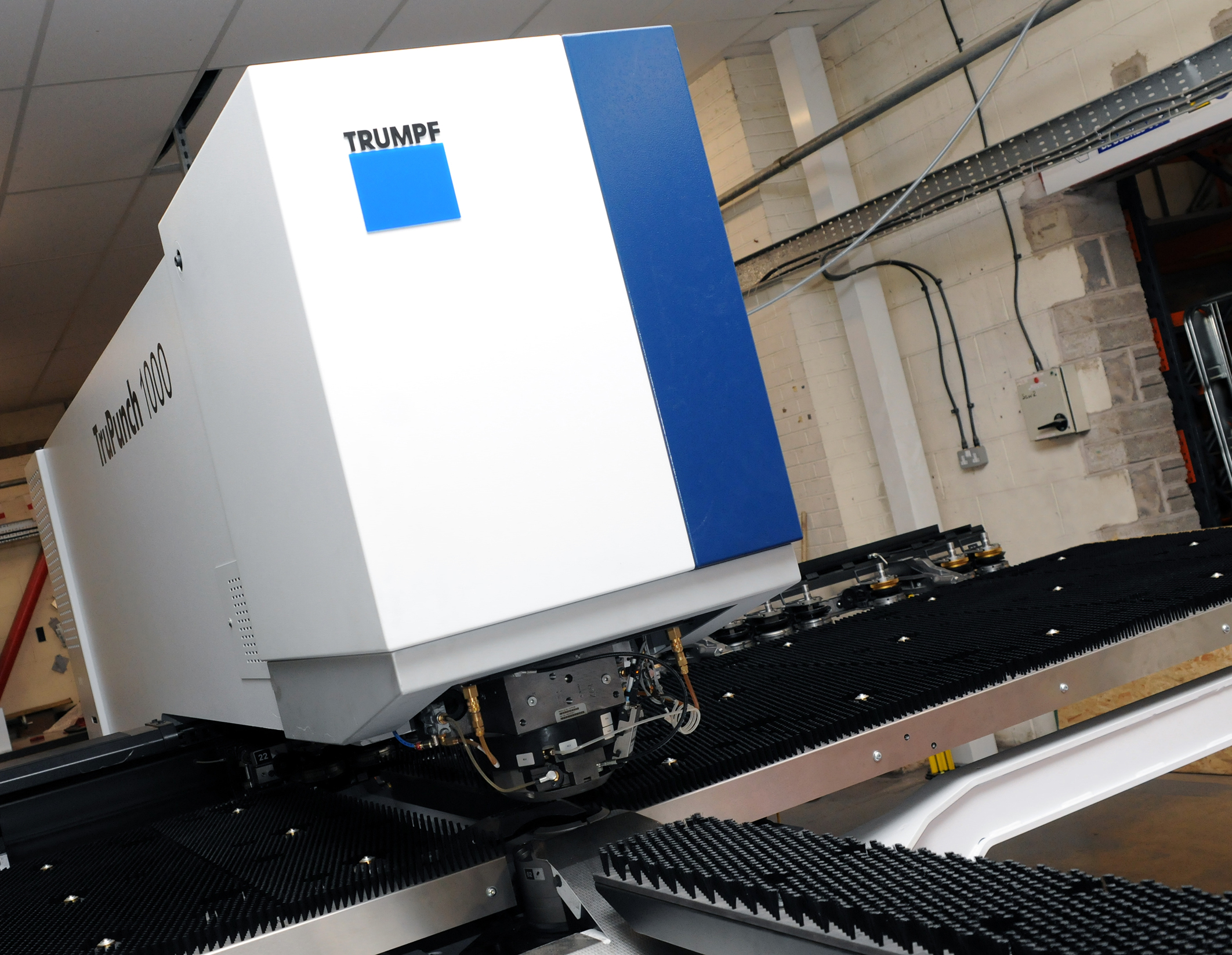
We have invested in a new £1/4m TRUMPF CNC metal punch as part of an asset renewal strategy for our UK manufacturing capability. The new machine will be used in the production of a wide variety of our power distribution systems and workstation power products at our Rotherham factory. Suitable for handling sheet metal between 0.9mm and 3.0mm thick, the new machine will replace one...

Read more
CMD CATALOGUE PROVIDES TECHNICAL POWER DISTRIBUTION GUIDE

CMD Ltd has released a new catalogue, providing an easy to follow technical guide to our power distribution systems and plug and play desk modules. Detailing CMD’s full range of UK-manufactured power distribution systems and plug and play desk modules, the catalogue will be a helpful source of information to M&E engineers and contractors alike to understand how our power distribution systems connect together and...

Read more

Power Distribution Catalogue
CMD Ltd PLAYS ESSENTIAL ROLE IN ELECTRICAL FIT OUT AT LONDON’S PRESTIGIOUS OFFICE DEVELOPMENT

CMD Ltd, specialist in workplace connectivity and ergonomic solutions, has provided a flexible and high-quality power distribution network for The Ray, a prestigious office development in London’s Farringdon. Well-known for being the former site of The Guardian newspaper, The Ray now stands as an 83,000ft² office development characterised by a modernised warehouse aesthetic, with level two now occupied by a global social media company. The...

Read more

The Ray
CMD plugs in to european opportunity with Schuko Capsule unit launch

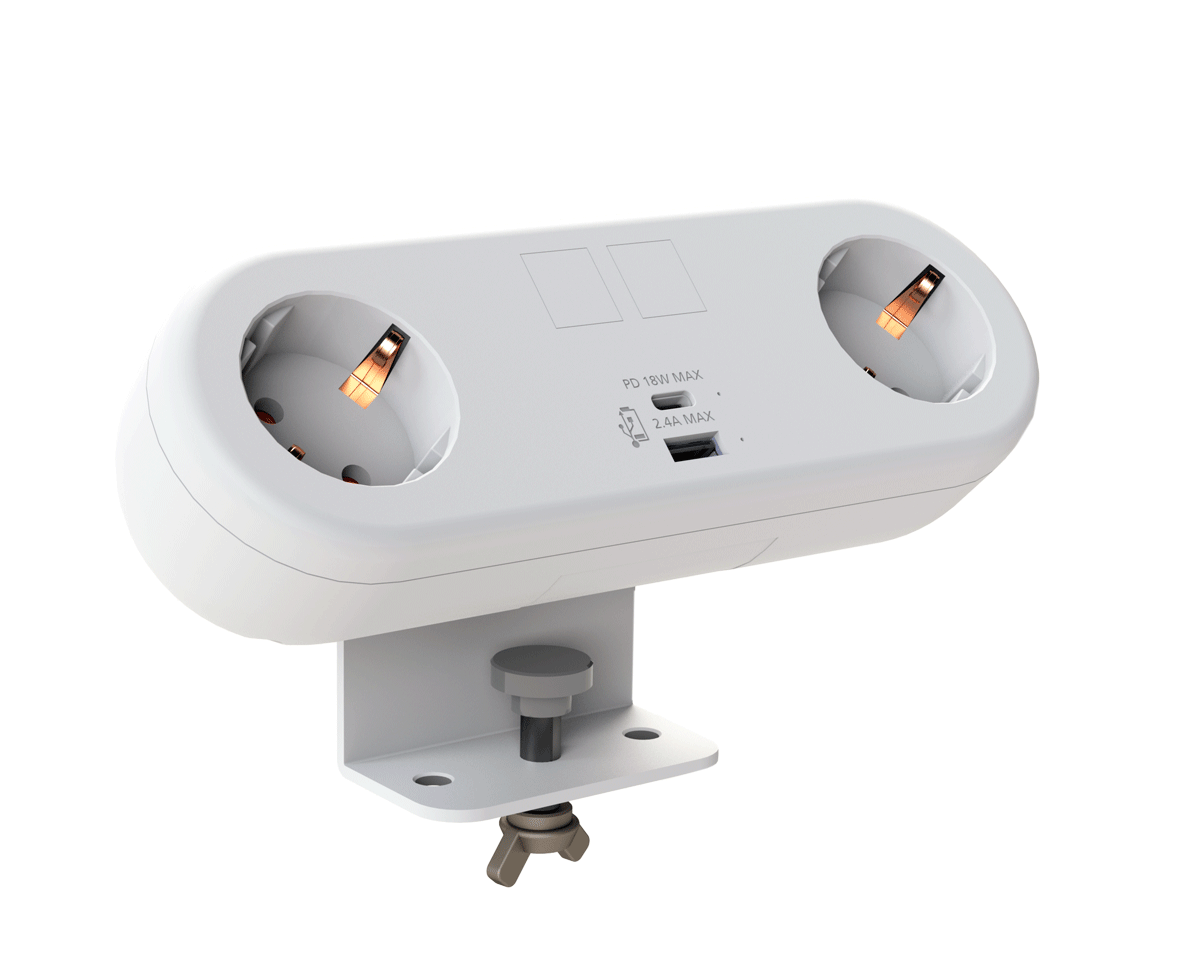
CMD Ltd, the specialist in power and connectivity solutions for commercial environments, has launched a Schuko version of its popular fixed format Capsule workstation power module for export to mainland Europe and beyond. A popular on desk power module comprising two sockets and dual USB (type A and C) chargers, CMD’s Capsule unit is already widely specified in the UK as an off-the-shelf workstation power...

Read more
CMD White Schuko Capsule Desk Power Module
CMD LTD EXTENDS MONITOR ARM RANGE WITH THE LAUNCH OF REACH PLUS

CMD Ltd, the specialist in ergonomic and connectivity solutions for commercial interiors, has completed its Reach monitor arm range with the launch of the Reach Plus. Available in single or dual screen options, the Reach Plus has been designed to provide an ideal solution for both single and dual screen workstation configurations, or can be used with next generation of large format curved screens. Suitable...

Read more

CMD Ltd DEMONSTRATES THE ART OF POWER DISTRIBUTION AT THE UNIVERSITY OF WARWICK

CMD Ltd, the specialist in workplace connectivity and ergonomic solutions, has provided Betatrak busbar power distribution and a range of electrical accessories for two major capital investment projects at the University of Warwick. Designed by Fielden Clegg Bradley Studios, the £33 million Faculty of Arts building is a showpiece development comprising four interconnected structures set around a central atrium, which will enable inter-disciplinary collaboration across...

Read more

University of Warwick
CMD BRINGS HARMONY TO COVENTRY UNIVERSITY RESEARCH FACILITIES

CMD Ltd, the specialist in power distribution solutions and workstation power and ergonomics, has provided under desk and on desk power modules for the refurbishment of three Coventry University research buildings. Located on Coventry University Technology Park, a business park designed to encourage collaboration between the university and knowledge-based businesses, the three buildings are being repurposed as office accommodation for university research teams. The refurbishment...

Read more


Coventry University

2026 Best Thermistor Electrical Circuit for Global Buyers?

As the demand for precise temperature management increases, the "Thermistor Electrical Circuit" plays a crucial role in various industries. According to a recent report by Global Market Insights, the thermistor market is projected to reach $2.5 billion by 2026. This growth is driven by advancements in automotive and medical devices, where accurate temperature monitoring is essential.

Industry expert Dr. Emily Tran states, "The efficiency of a thermistor electrical circuit can significantly impact device performance and reliability." Her insights reflect the growing recognition of thermistors in efficient circuit design. Despite their advantages, challenges remain. End-users often struggle with integration and calibration issues. Repeatedly, companies overlook the importance of selecting the right thermistor type for their application, leading to inefficient designs.

Understanding the nuances of thermistor electrical circuits is vital for global buyers. Enhanced awareness can drive improvements and foster innovation. As the market evolves, continued research and development will be essential to overcoming existing limitations and leveraging the full potential of thermistors in electrical circuits.

2026 Best Thermistor Electrical Circuit for Global Buyers?

Thermistor Basics: Understanding Its Role in Electrical Circuits

Thermistors are vital components in electrical circuits. They are temperature-sensitive resistors. Their resistance changes significantly with temperature. This characteristic makes them ideal for various applications.

In a circuit, thermistors can function as temperature sensors. They monitor and regulate heating systems. For instance, in HVAC systems, they help maintain comfortable temperatures. However, relying solely on thermistors can lead to inaccuracies. They may not respond quickly in fluctuating conditions. This limitation highlights the need for combining them with other sensors.

Thermistors can also be integral to safety features. They help prevent overheating in devices. Yet, poor placement can compromise their effectiveness. Proper installation and calibration are crucial for optimal performance. Understanding how to use thermistors effectively is essential for reliable circuit design. They offer numerous advantages but require careful consideration and planning.

Types of Thermistors: NTC vs. PTC and Their Applications

Thermistors are vital components in many electrical circuits. They come in two main types: NTC and PTC. NTC thermistors decrease resistance as temperature rises. They are widely used in temperature sensing and control systems. For instance, a recent report from the International Thermal Association highlights that NTC thermistors account for about 70% of the market in temperature measurement applications.

On the other hand, PTC thermistors increase resistance with temperature. These devices are crucial in circuit protection applications. In fact, according to industry statistics, PTC thermistors are projected to grow by over 8% annually by 2026. This growth is largely driven by their use in overcurrent protection in automotive and consumer electronics, showcasing their reliability.

While both types have distinct advantages, challenges exist. NTC thermistors can be sensitive to rapid temperature changes. This sensitivity may cause inaccurate readings in fluctuating environments. PTC thermistors, while excellent for protection, can sometimes trip too early under high load conditions. Understanding these nuances is key for engineers and designers aiming for precise and effective circuit designs.

2026 Thermistor Type Comparison: NTC vs. PTC

This chart illustrates the typical resistance levels of two popular types of thermistors: NTC (Negative Temperature Coefficient) and PTC (Positive Temperature Coefficient). NTC thermistors have lower resistance values, making them ideal for temperature sensing, while PTC thermistors exhibit high resistance and are often used for overcurrent protection.

Key Specifications: Resistance, B-Value, and Temperature Range Explained

When selecting thermistors for electrical circuits, understanding key specifications is crucial. Resistance is a primary parameter, influencing how the thermistor responds to temperature changes. Typically, thermistors fall into two categories: NTC (Negative Temperature Coefficient) and PTC (Positive Temperature Coefficient). NTC thermistors decrease resistance with rising temperatures, while PTC thermistors increase resistance. Knowing the required resistance value at a specific temperature is essential for circuit designers.

The B-value is another important specification. It indicates the thermistor's sensitivity to temperature variations. A higher B-value means a steeper resistance change with temperature shifts. This characteristic is pivotal for precise temperature measurements and control in various applications. It's beneficial for users to consult data sheets and perform experiments to understand their thermistor's performance in real-world conditions.

Temperature range is vital for practical applications. Each thermistor type has its operational limits. Exceeding these limits can lead to inaccuracies or failure. Users should consider not just the typical range but also environmental factors that might expose the thermistor to extreme temperatures. It's a good idea to verify the specified range against actual environmental conditions the sensor will encounter. Testing multiple thermistors under different scenarios can reveal surprising insights and promote better decision-making.

2026 Best Thermistor Electrical Circuit for Global Buyers

Thermistor Type Resistance (25°C) B-Value (K) Temperature Range (°C) Accuracy (%)
NTC Thermistor 10kΩ 3950 -40 to 125 ±1%
PTC Thermistor 5kΩ 3400 -20 to 85 ±2%
Thin-Film Thermistor 100kΩ 4000 -50 to 150 ±0.5%
Epoxy Thermistor 1kΩ 3950 -30 to 100 ±1.5%
Glass Thermistor 300kΩ 4400 -70 to 250 ±0.2%

Market Trends: Growing Demand for Thermistors in Global Electronics

The demand for thermistors is surging in the global electronics market. As devices become smarter and more energy-efficient, accurate temperature sensing is crucial. Thermistors offer high sensitivity, making them ideal for applications in automotive, medical, and consumer electronics. Their role in enhancing device performance and reliability cannot be understated.

Recent trends indicate that industries are increasingly integrating thermistors for precise temperature control. Energy management systems utilize them to monitor energy consumption effectively. This growing reliance highlights a need for higher quality standards in manufacturing. However, many producers struggle with consistency in performance metrics. Fluctuations in material quality can lead to variability in results, prompting industry experts to call for stricter guidelines.

Moreover, the global supply chain faces challenges. Sourcing high-grade materials for thermistors has become complex. Manufacturers must navigate geopolitical issues and fluctuating prices. These factors might affect product availability and innovation. As companies seek to meet the rising demand, the pressure on thermistor production quality intensifies. Stakeholders must collaborate to ensure that the market can provide reliable solutions.

Best Practices: Selecting the Right Thermistor for Your Electrical Design

When designing electrical circuits, selecting the right thermistor is crucial. Thermistors are essential in temperature sensing and control applications. Their resistance changes significantly with temperature, which makes them valuable for precise measurements. However, not all thermistors are created equal. Their characteristics can vary greatly, impacting performance in your specific application.

Consider the two primary types of thermistors: NTC (Negative Temperature Coefficient) and PTC (Positive Temperature Coefficient). NTC thermistors decrease in resistance as temperature rises, making them ideal for temperature measurement. PTC thermistors, on the other hand, increase resistance with temperature, which can be useful for overcurrent protection. Evaluating your circuit's requirements will dictate which type you should choose.

Take care to assess the temperature range and response time. These factors greatly affect accuracy and reliability. Many designers overlook this essential step, leading to poor circuit performance. It's also vital to consider packaging and size constraints. Don’t hesitate to consult industry standards. They can provide essential guidance. Balancing these elements can be challenging but is necessary for optimal design.